Maximilian Günther on Tackling Tempelhof: 'It's a Special Location'
Maximilian Günther calls Berlin's Tempelhof circuit 'a special location' ahead of the Formula E Berlin E-Prix — here's why it matters technically and personally.
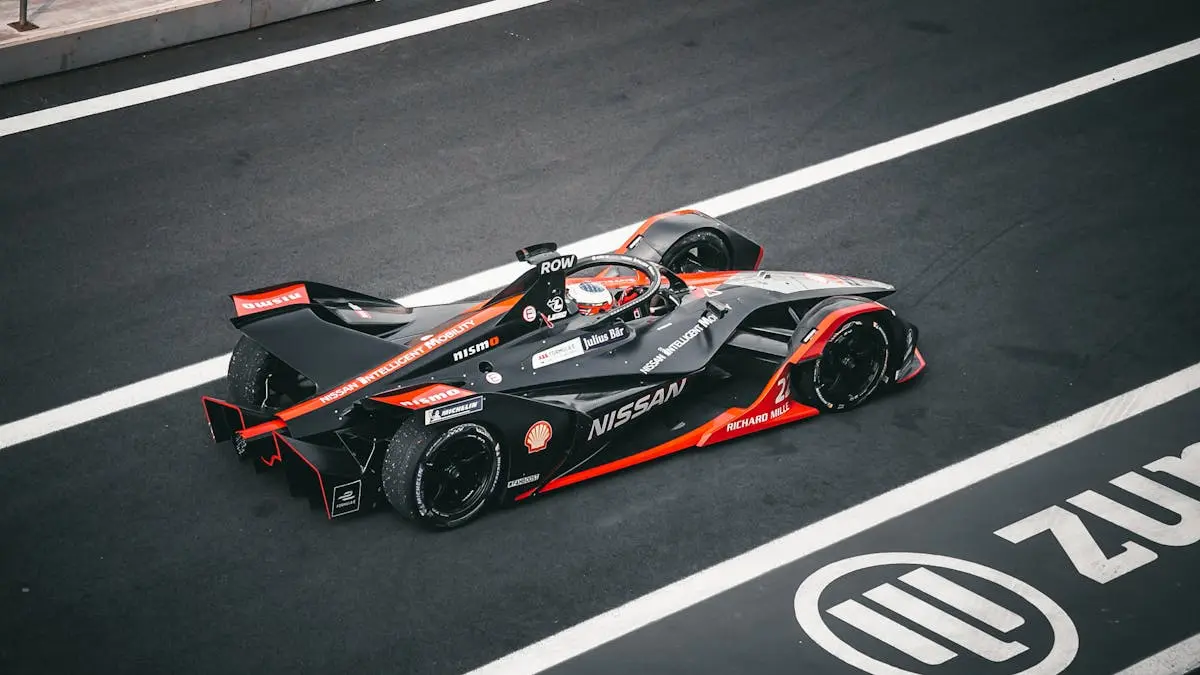
Few circuits on the Formula E calendar carry the historical and atmospheric weight of the Berlin E-Prix at Tempelhof Airport. For Mahindra Racing driver Maximilian Günther, the return to the German capital represents something deeply personal — a chance to race in front of a home crowd on a circuit that blends raw industrial heritage with the unique demands of Gen3 Evo machinery. In a recent feature with Formula E's official channels, Günther described the venue in characteristically understated but meaningful terms: 'It's a special location.' Those four words, however, carry an enormous amount of meaning for anyone who understands what Tempelhof represents in the context of motorsport, German history, and Formula E's own identity.
As the 2025/26 Formula E season progresses through its Season 12 calendar, the Berlin E-Prix looms large as one of the most anticipated events of the year. For Günther and his Mahindra Racing team, alongside teammate Edoardo Mortara, the Tempelhof round offers not just a chance to score valuable championship points but also to perform on a stage with unique emotional resonance. This deep-dive article explores what makes Tempelhof so demanding, what Günther's comments reveal about the mindset of a driver tackling a home race, and what the technical and strategic landscape looks like heading into this iconic round.
Why Tempelhof Is Unlike Any Other Formula E Venue
The Berlin Tempelhof Airport is a genuinely extraordinary piece of 20th-century history. Once one of the world's busiest airports and a symbol of both Weimar-era ambition and Cold War resilience, the vast structure and its surrounding tarmac now serve as one of the most evocative racing venues on the planet. Formula E has raced at Tempelhof on multiple occasions across its history, and the event has consistently delivered dramatic, unpredictable racing — in part because the circuit layout can be reconfigured between events, meaning drivers and teams cannot simply rely on data from previous visits.
For Maximilian Günther, who was born in Oberstaufen, Germany, the Berlin E-Prix carries that additional layer of meaning that any driver feels when competing in their home country. Describing it as 'a special location' is not just a diplomatic answer for a press release — it reflects the genuine cocktail of emotions that a racing driver navigates when the grandstands are filled with people who share your flag, your language, and in many cases, your passion for seeing a German driver succeed.
The Circuit Characteristics That Define Tempelhof
The Tempelhof circuit is notoriously demanding in several key ways that make it a true test of both car and driver. The layout typically features long, sweeping sections across the old runway tarmac, interspersed with tight, technical chicanes and hairpins that punish any loss of concentration. The surface itself can be uneven in places — a legacy of its aviation heritage — which places significant demands on the Hankook tyres and the setup of the Gen3 Evo car.
Energy management is paramount at Tempelhof. The combination of high-speed sections where the 350kW (470hp equivalent) powertrain is pushed to its limits, followed immediately by heavy braking zones, creates a complex energy recovery and deployment puzzle that teams must solve in real time. The Active All-Wheel Drive system available during qualifying, race starts, and ATTACK MODE adds another dimension to the strategic calculus, with teams needing to judge precisely when the additional traction and performance benefit of AWD deployment delivers the most value around this specific layout.
ATTACK MODE and Strategic Complexity at Berlin
One of the defining features of modern Formula E racing is the ATTACK MODE system, and Tempelhof's layout historically places the activation zone in a position that forces drivers to sacrifice significant lap time to collect the power boost. This trade-off — losing track position or time now versus gaining a performance advantage later — is one of the most intellectually demanding aspects of Formula E strategy, and it is one that Günther and the Mahindra Racing engineers will have studied in forensic detail.
At a circuit where overtaking opportunities, while present on the long straights, can be limited by the technical nature of the chicane sections, getting ATTACK MODE timing right can be the difference between a points finish and a frustrating afternoon. The Active AWD system's availability during ATTACK MODE adds an extra performance layer that teams must factor into their energy budgets with precision.
Günther's Season 12 Campaign and Mahindra's Trajectory
Maximilian Günther enters the Berlin round as one of the more experienced drivers on the current Formula E grid. Having raced in the series across multiple seasons and with multiple teams before settling at Mahindra Racing alongside the highly experienced Edoardo Mortara, Günther has developed a reputation as a strong qualifier and a driver capable of delivering results in adverse conditions.
Mahindra Racing, as a manufacturer team, has invested heavily in their Season 12 programme with the Gen3 Evo platform. The team has been working to close the performance gap to the frontrunners, and rounds like Berlin — where the circuit's characteristics can sometimes level the playing field between top and mid-tier machinery — represent genuine opportunities to punch above their weight in the championship standings.
Mortara, Günther's teammate, brings considerable experience of his own, and the intra-team dynamic at Mahindra is one that bears watching. Both drivers are capable of qualifying strongly, and on a circuit like Tempelhof, where starting position can have an outsized influence on race outcome due to the strategic complexity involved, getting both cars into strong grid positions in qualifying is a key priority.
The Home Race Psychological Factor
It would be reductive to dismiss the psychological dimension of a home race as mere sentiment. For a driver like Günther, racing in Berlin means an intensified media schedule, additional sponsor obligations, and the presence of family, friends, and national media scrutiny that simply does not exist at a street circuit in a distant city. Managing that additional cognitive and emotional load while remaining fully focused on the technical demands of qualifying and the race is a skill in itself — one that separates drivers who consistently deliver at home events from those who are occasionally overwhelmed by them.
Günther's framing of Tempelhof as 'a special location' suggests a driver who has processed that emotional weight and channelled it into positive motivation rather than pressure. That kind of mature, measured relationship with a high-profile home event is encouraging for Mahindra's prospects in Berlin.
Technical and Strategic Implications for the Berlin E-Prix
From a purely technical perspective, the Berlin E-Prix at Tempelhof presents several specific challenges that will shape how teams approach both the qualifying format and race strategy under the Season 12 Gen3 Evo regulations.
The Hankook tyre compound's behaviour on the Tempelhof surface will be closely monitored. The abrasive sections of the circuit, combined with the thermal demands of sustained high-speed running, can generate tyre degradation patterns that differ significantly from street circuits. Teams who correctly read tyre behaviour during practice sessions and adjust their qualifying and race setups accordingly will have a meaningful advantage.
Energy deployment strategy over a full race distance at Tempelhof requires careful pre-event modelling. The balance between regenerative braking efficiency in the heavy braking zones and maximum power deployment on the long straights must be optimised for the specific circuit layout. With Active AWD available at race start, teams will also be calculating how aggressively to use that system off the line without compromising energy reserves for the middle and final phases of the race.
For Günther and Mahindra specifically, a strong performance in Berlin would carry significance beyond championship points. It would reinforce the team's development trajectory and provide a confidence boost heading into the remaining rounds of Season 12, with the Gen4 era on the horizon for next season.
Key Takeaways
- Maximilian Günther has described the Berlin Tempelhof venue as 'a special location,' reflecting both its historical significance and its personal meaning as a home race for the German driver.
- The Tempelhof circuit's combination of long straights, technical chicanes, and variable surface creates a uniquely demanding challenge for Gen3 Evo machinery and Hankook tyres.
- ATTACK MODE strategy and Active AWD deployment timing are among the most critical tactical variables at Tempelhof, where the activation zone placement forces difficult trade-offs on track position.
- Mahindra Racing, with Günther and Edoardo Mortara, approaches Berlin as a genuine opportunity to deliver a strong championship result on a circuit that can neutralise some performance differences between teams.
- Managing the psychological and logistical pressures of a home race is a key factor for Günther, and his measured framing of Tempelhof suggests a driver channelling that pressure constructively.
- With the Gen4 era approaching next season, strong results in the remaining Season 12 rounds carry additional significance for team and driver morale and momentum.
Frequently Asked Questions
Why is the Berlin E-Prix at Tempelhof considered special in Formula E?
The Tempelhof Airport circuit is one of the most historically significant and atmospherically unique venues on the Formula E calendar. Its location on the tarmac of a former major international airport gives it a distinctive character, and the circuit layout can be reconfigured between events, ensuring drivers face fresh challenges each visit. Formula E has a long association with the Berlin round, which has consistently produced dramatic and unpredictable racing.
What makes Tempelhof technically challenging for Formula E drivers?
The Tempelhof circuit combines long high-speed runway sections with tight, technical chicanes and hairpins, creating a complex energy management puzzle for drivers and engineers. The surface can be uneven in places, placing specific demands on the Hankook tyre compounds. ATTACK MODE activation zones historically require drivers to sacrifice track position or lap time to collect the power boost, adding a significant strategic layer to race management.
How does Maximilian Günther approach racing in Germany as a home event?
Günther, who is German, has described Tempelhof as 'a special location,' indicating a mature and positive relationship with the additional pressures of a home race. Racing in front of a home crowd and under heightened national media attention requires careful psychological management alongside the usual technical demands, and Günther's measured tone suggests he views Berlin as a motivating rather than pressurising experience.
What is Mahindra Racing's competitive outlook for the Berlin E-Prix in Season 12?
Mahindra Racing, with Günther and Edoardo Mortara as their driver pairing, has been developing its Gen3 Evo programme throughout Season 12. Tempelhof is a circuit where the unique layout characteristics can sometimes reduce the performance gap between frontrunner and mid-field teams, making it a genuine points opportunity for Mahindra. A strong result in Berlin would reinforce the team's development progress ahead of the Gen4 era next season.
Conclusion
Maximilian Günther's description of Tempelhof as 'a special location' may be four simple words, but they encapsulate a complex truth about what the Berlin E-Prix means — to him as a German driver, to Mahindra Racing as a team seeking results, and to Formula E as a series that has always understood the power of racing in places with genuine historical and cultural weight.
As Season 12 of Formula E continues with its Gen3 Evo machinery, the Tempelhof round stands as one of the calendar's most compelling events. The unique technical demands of the circuit, the strategic complexity of ATTACK MODE and Active AWD deployment, and the atmospheric setting all combine to make Berlin a race that consistently rewards the most thorough preparation and the clearest minds under pressure.
For Günther, the opportunity to deliver a strong performance at home, to demonstrate that Mahindra Racing's Season 12 programme is on an upward trajectory, and to do so on a circuit he clearly holds in genuine affection, represents exactly the kind of high-stakes, high-meaning weekend that defines a racing driver's year. Whether that translates into championship points remains to be seen — but the motivation, at least, could not be clearer.
Written with AI assistance. How this site works