Williams FW20: The Car That Ended an F1 Dynasty
The Williams FW20 of 1998 ended a six-year dynasty — scoring just 38 points as Williams fell from champions to third. Here's why it still matters in 2026.
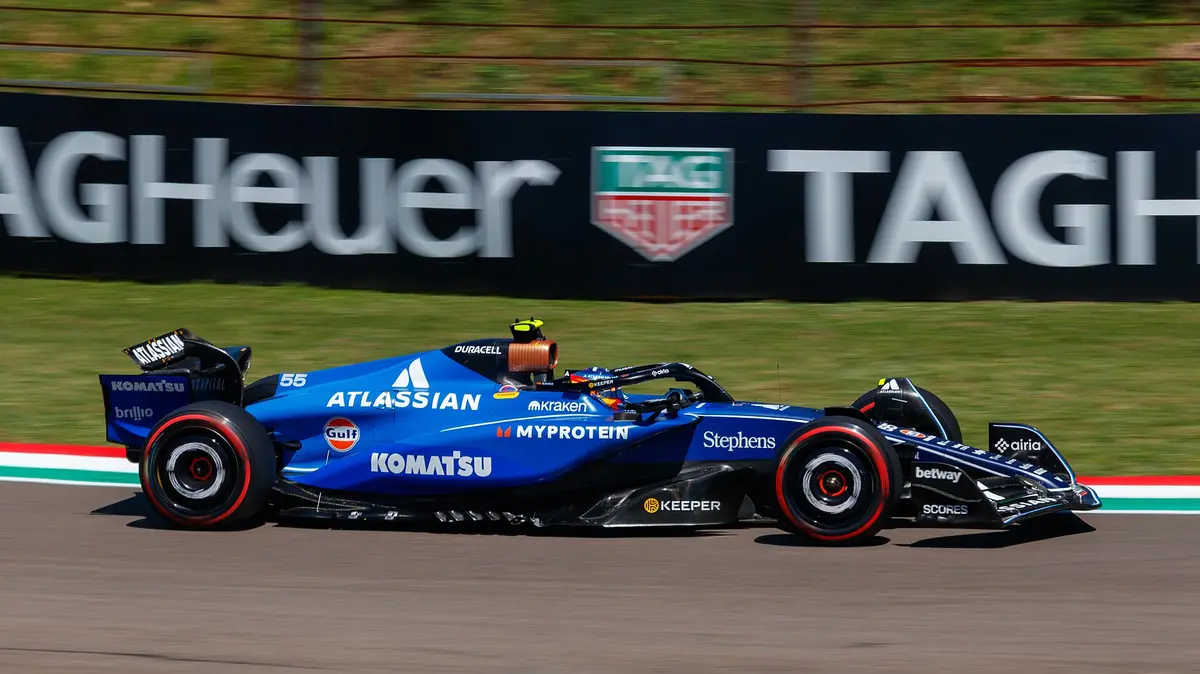
Photo: Jen_ross83 / CC-BY-4.0
Few moments in Formula 1 history carry the weight of 1998. For six extraordinary years between 1992 and 1997, Williams and Renault had constructed what many observers considered the most formidable partnership in the sport's modern era — a technical and commercial alliance that delivered Constructors' and Drivers' Championships with a ruthless consistency that left rivals scrambling. Then came the Williams FW20, and with it, the quiet, painful collapse of a dynasty that had defined an entire generation of grand prix racing. In 1998, Williams plummeted to third in the Constructors' standings, scoring just 38 points compared to the 165 accumulated by champions McLaren — the first time since their dominant run began that the Grove outfit had been so comprehensively marginalised. Understanding why the FW20 failed, and what that failure meant, remains one of the most instructive case studies in how rapidly fortunes can reverse at the pinnacle of motorsport.
As the 2026 F1 season unfolds under sweeping new technical regulations — active aerodynamics, overtake boost systems, and dramatically revised power unit architecture — the story of the Williams FW20 resonates with particular clarity. The teams and drivers currently fighting for supremacy, from Max Verstappen at Red Bull to Lando Norris at McLaren to Lewis Hamilton now in his second year at Ferrari, are navigating precisely the kind of regulatory and competitive inflection point that swallowed Williams whole in 1998. History, as ever in Formula 1, has a habit of rhyming.
The Dynasty That Came Before: Williams and Renault's Dominance
To appreciate the full significance of the Williams FW20's failure, one must first understand the extraordinary edifice that preceded it. From 1992 onwards, Williams and Renault built a partnership that redefined what was possible in Formula 1. The FW14B of 1992, driven by Nigel Mansell, was perhaps the most technically advanced car of its era — featuring active suspension, traction control, and a Renault V10 engine that was the envy of every team in the paddock. Mansell won the championship with a then-record number of victories, and the tone was set for what would follow.
Alain Prost continued the winning tradition in 1993. Damon Hill fought Michael Schumacher to the wire in both 1994 and 1995. Then Jacques Villeneuve delivered Williams' final Drivers' Championship in 1997, while the team secured Constructors' titles throughout much of this remarkable period. The Williams factory at Grove became synonymous with engineering excellence, and the Renault V10 was considered the definitive benchmark engine in modern Formula 1.
Then, at the end of 1997, Renault withdrew from the sport as a full works partner. It was the first crack in the foundation — and it would prove to be a catastrophic one.
The FW20: Where an Era Unravelled
The Williams FW20, campaigned throughout the 1998 season with Jacques Villeneuve and Heinz-Harald Frentzen, entered a radically different competitive landscape from the cars that had gone before it. The regulations themselves had shifted significantly — narrower cars, grooved tyres, and a fundamentally altered aerodynamic philosophy demanded a fresh approach from every team on the grid. In previous years, Williams had navigated regulatory change with composure and engineering superiority. In 1998, that superiority had evaporated almost entirely.
Critically, Renault's departure meant that Williams were running customer Mecachrome engines — specifically the Mecachrome GC37-01 V10 — units derived from the outgoing Renault V10 architecture but lacking the development impetus and factory support infrastructure that a full works partnership had previously provided. In a sport where engine performance is intimately linked to overall car competitiveness, this represented a profound structural disadvantage at precisely the wrong moment in the sport's evolution.
The Newey Factor: A Brain Drain That Changed History
The engine situation was damaging enough in isolation. But Williams had also suffered another grievous blow in the preceding period: the departure of Adrian Newey, who left Williams during 1997 to join McLaren. Newey, whose aerodynamic genius had been central to Williams' technical dominance, brought his considerable talents directly to a rival — and those rivals promptly used them to devastating effect.
Working with Newey, McLaren produced the MP4/13 for 1998 — a car that proved comprehensively suited to the new narrower regulations, and one powered by a fully committed Mercedes works engine programme. The MP4/13 won the Constructors' Championship emphatically, with Mika Häkkinen clinching the Drivers' title. Meanwhile, Ferrari, under Michael Schumacher and the technical leadership of Ross Brawn and Rory Byrne, had assembled its own formidable technical operation. Williams, stripped of its engine advantage and its lead aerodynamicist simultaneously, found itself outgunned on two of the most critical competitive axes in Formula 1.
The Numbers Tell the Story
The statistical collapse of the Williams FW20 was stark. Finishing third in the Constructors' Championship with just 38 points, at a time when McLaren amassed 165, illustrated the true scale of the regression. Frentzen managed a podium in Brazil — finishing second — and Villeneuve took a victory in Canada, but these were isolated moments of competitiveness in an otherwise difficult season. The gap between Williams and the frontrunners was not marginal; it was fundamental, rooted in both the machinery and the organisational decisions that had preceded it.
For a team that had, just twelve months earlier, been celebrating a Constructors' title and a Drivers' Championship with Villeneuve, the scale of the fall was almost incomprehensible at the time. The Williams FW20 did not simply underperform — it signalled the end of an era that the team has never fully recaptured in the decades since.
Why the FW20's Legacy Still Matters in 2026
The lessons embedded in the Williams FW20 story carry direct relevance for the 2026 F1 season. The current grid is undergoing its most significant regulatory overhaul in years — new power unit regulations, active aerodynamic systems, and the overtake boost mechanism have reshuffled the competitive deck in ways that will not become fully clear until several races into the season. Every team faces the same dilemma that Williams confronted in 1998: adapting to a new technical paradigm while simultaneously managing the human and commercial infrastructure decisions that ultimately determine whether a team leads or follows.
The Audi works team, making its Formula 1 debut in 2026 after rebranding from Sauber, faces precisely the kind of structural challenge that Williams encountered — integrating a new power unit programme into a competitive car under pressure. Cadillac, the new 11th team on the grid in 2026, is starting from scratch. Even established operations like Red Bull, who promoted Isack Hadjar to replace a departing seat, and Mercedes, now with Andrea Kimi Antonelli in his second season, are navigating transitions that carry echoes of 1998's volatility.
The Williams FW20 is a reminder that in Formula 1, no advantage — however comprehensive, however apparently entrenched — is permanent. Resource advantages can be squandered. Key personnel can be lost. Engine partners can depart. And when multiple disadvantages compound simultaneously, even the most dominant programme in the sport can collapse with startling speed.
Key Takeaways
- The Williams FW20 marked the end of Williams and Renault's era of dominance that had run from 1992 through 1997.
- Williams scored just 38 points in 1998, compared to 165 by champions McLaren — a collapse from title-winning form to third in the standings.
- The loss of Renault's works engine partnership left Williams with customer Mecachrome GC37-01 V10 units, representing a significant performance deficit.
- Adrian Newey's departure to McLaren during 1997 directly strengthened a key rival and weakened Williams' aerodynamic capability at a critical regulatory transition.
- The 1998 season demonstrated how simultaneously losing an engine partner and a lead aerodynamicist can prove catastrophic, even for the most dominant team in the sport.
- The FW20's story resonates strongly with the 2026 F1 season, where new regulations, power unit changes, and shifting personnel are reshaping the competitive order once again.
Frequently Asked Questions
What engine did the Williams FW20 use in 1998?
The Williams FW20 used the Mecachrome GC37-01 V10 engine, a customer unit derived from the Renault V10 architecture. This followed Renault's withdrawal as Williams' full works engine partner at the end of 1997, and the lack of factory development support represented a significant step back in performance relative to the fully committed Mercedes and Ferrari works programmes of that season.
Who drove the Williams FW20 during the 1998 season?
Jacques Villeneuve and Heinz-Harald Frentzen were the two drivers for Williams in 1998. Villeneuve had won the Drivers' Championship with Williams the previous year, while Frentzen had joined the team in 1997. Both drivers struggled to replicate the results of preceding seasons given the car's fundamental competitiveness deficit against McLaren and Ferrari.
Why did Adrian Newey leave Williams, and when did he join McLaren?
Adrian Newey departed Williams during the 1997 season to join McLaren, in a move that proved enormously consequential for both teams. At McLaren, Newey's aerodynamic expertise contributed directly to the MP4/13 that dominated the 1998 season. Williams have themselves acknowledged that allowing Newey to leave was a significant mistake in the team's long-term competitive history.
How does the Williams FW20 story relate to the 2026 F1 season?
The 2026 F1 season features the most sweeping regulatory changes in recent memory, including new power unit regulations and active aerodynamic systems, creating a competitive environment similar to the upheaval of 1998. Teams navigating personnel transitions, new engine partnerships, or structural changes — such as Audi's debut season or Cadillac's entry as a new constructor — face analogous pressures to those that undermined Williams when the FW20 failed to capitalise on a new regulatory era.
Conclusion
The Williams FW20 endures as one of Formula 1's most sobering cautionary tales. Not because it was a spectacularly bad car, but because of what it represented: the moment an apparently unassailable dynasty discovered that dominance in Formula 1 is always conditional, always contingent on the decisions made in the preceding seasons, and always vulnerable to the compound effect of losing key advantages simultaneously.
In 1998, Williams lost their engine partner, lost their lead aerodynamicist to a direct rival, and confronted a new regulatory environment without the tools that had made them great. The result was a third-place finish in the standings with 38 points — a number that would have seemed unthinkable just twelve months before. As the 2026 season redraws the competitive map of Formula 1 once more, the FW20's legacy is not merely historical curiosity. It is a live warning, as relevant today as it was the season it broke a dynasty.
In this article
Written with AI assistance. How this site works