2026 Miami Grand Prix: Regulations, Heat and Strategy
The 2026 Miami Grand Prix tests every team with a demanding mix of new F1 regulations, extreme Florida heat, and multi-layered strategic complexity after the five-week break.
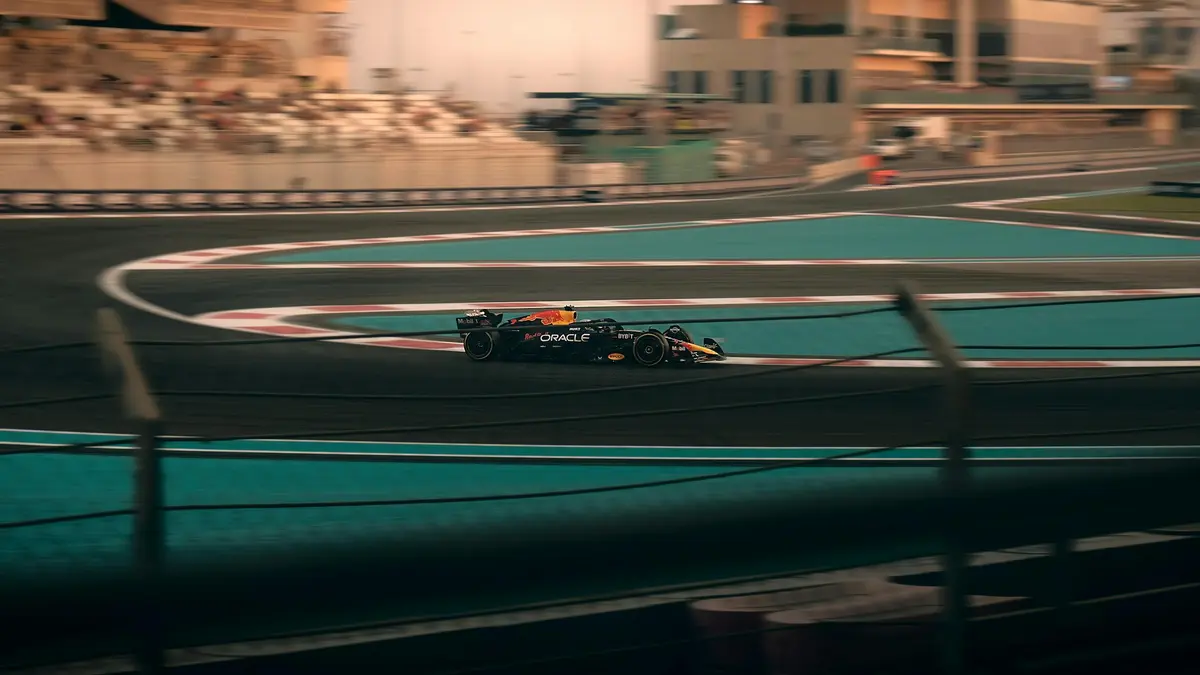
Formula 1 returns from its five-week mid-season break with one of the most technically demanding rounds on the calendar: the 2026 Miami Grand Prix. As the paddock reconvenes under the Florida sun, teams are not merely shaking off the rust of an extended hiatus — they are confronting a uniquely pressurised cocktail of regulatory complexity, extreme environmental conditions, and layered strategic decision-making that makes Miami a genuine watershed moment in the 2026 championship battle. For engineers, strategists, and drivers alike, this race weekend promises to be as much a test of preparation and adaptability as it is of raw pace.
The 2026 season is already defined by its sweeping regulatory overhaul — new power unit regulations, active aerodynamics, and the overtake boost system have fundamentally reshaped how teams approach every race weekend. Miami, with its punishing ambient temperatures, abrasive surface, and technically demanding layout, amplifies each of those regulatory variables to their absolute extreme. Understanding what teams face at the 2026 Miami Grand Prix requires unpacking each of those layers in turn.
Regulatory Complexity in the 2026 Miami Grand Prix
The 2026 Formula 1 season introduced the most significant technical reset in over a decade. New aerodynamic regulations centred on active aero systems require drivers and engineers to manage a constantly shifting aerodynamic platform — one that adjusts between high-downforce and low-drag configurations depending on circuit phase. At Miami, where long straights alternate with tight, technical infield sections, the demands placed on the active aero system are particularly acute. Teams must calibrate their aero maps not just for a single configuration, but for a dynamic, continuously adapting one.
Compounding this is the overtake boost system, a driver-deployable mechanism that provides a burst of additional electrical power to facilitate overtaking. Miami's circuit characteristics — a handful of genuine overtaking opportunities separated by slow, twisting sections — mean that the management and deployment of overtake boost becomes a genuine strategic weapon. Drivers who time their boost deployment incorrectly risk burning energy at suboptimal moments, while those who master the system can manufacture overtaking opportunities that the circuit would otherwise deny them.
New Power Unit Regulations: Energy Management at the Limit
The 2026 power unit regulations have tilted the balance further toward hybrid electrical output, with the electrical component of the power unit now contributing a substantially greater share of total power. In Miami's heat, thermal management of both the internal combustion element and the battery system reaches critical levels. Engineers must walk a tightrope between deploying sufficient electrical energy to remain competitive and protecting battery health across a race distance that, in high ambient temperatures, places relentless thermal stress on every component in the drivetrain.
For teams like Audi — entering their debut season in 2026 having rebranded from Sauber — and Cadillac, who are making their very first Formula 1 appearance as the championship's eleventh constructor, the Miami Grand Prix represents an especially steep learning curve. Both organisations are accumulating real-world data on how their power units and chassis behave under these precise regulatory and environmental conditions, with the development race for 2026 still very much alive.
Extreme Conditions: Heat, Humidity, and Tyre Degradation
Miami is notorious within the Formula 1 paddock for its unforgiving environmental profile. The combination of high ambient temperatures, elevated humidity, and a surface that generates significant tyre stress creates one of the most demanding physical environments on the calendar — for both machinery and the men behind the wheel.
Tyre Strategy as a Differentiator
In these conditions, tyre degradation becomes the central strategic variable. Compounds that perform predictably in the moderate temperatures of European circuits can behave very differently when asphalt temperatures soar in the Florida heat. Teams that have accurately modelled their tyre behaviour in the Miami environment — through simulation, historical data analysis, and the crucial learning sessions of practice — will carry a meaningful strategic advantage into qualifying and the race itself.
The interaction between Miami's heat and the 2026 regulations adds further complexity. Active aero systems generate aerodynamic load profiles that differ from the passive systems of previous generations, meaning the tyre contact patch experiences different stress patterns. This is relatively uncharted territory for all teams, and the five-week break will have been used intensively by every garage to refine their models and predictions.
Driver management of tyre temperatures becomes equally critical. For a driver like Fernando Alonso at Aston Martin — whose experience across multiple regulatory eras is unmatched on the current grid — the ability to read and manage tyre behaviour in real time remains an invaluable asset. Equally, younger drivers such as Isack Hadjar, promoted to Red Bull for 2026, and rookie-turned-sophomore Andrea Kimi Antonelli at Mercedes, face their sharpest examination yet of how quickly they can adapt to the physical and strategic demands of a high-attrition, high-temperature race environment.
The Five-Week Break: Reset, Development, and Momentum
The five-week hiatus preceding the Miami Grand Prix is not a rest period in any meaningful sense for the competing teams. Factory operations continue at full intensity, with aerodynamic development, power unit refinement, and strategic modelling all proceeding around the clock. For teams that entered the break with momentum, maintaining that rhythm while introducing new developments is a delicate balance; for those chasing the frontrunners, the break represents the clearest opportunity of the season to close the gap with a significant upgrade package.
McLaren, with Lando Norris and Oscar Piastri, have consistently demonstrated the ability to bring targeted developments to specific circuits. Miami's unique combination of demands — high-speed sections requiring aerodynamic efficiency, slow corners demanding mechanical grip, and thermal management challenges unlike almost anywhere else on the calendar — suits teams with a well-rounded, adaptable chassis. Ferrari, with Charles Leclerc and Lewis Hamilton now in his second year at the Scuderia, will be looking to convert pre-break pace into a decisive showing on a circuit that has historically rewarded Ferrari's characteristic strengths in traction and rear-end stability.
Red Bull and Max Verstappen, four-time world champion, approach Miami having had time to consolidate and refine. Verstappen's ability to extract performance from complex, high-degradation environments is well-documented, and his partnership with Isack Hadjar — the latter still accumulating experience at the sport's highest level — makes for a fascinating internal dynamic within the Red Bull garage.
Technical and Strategic Implications for the 2026 Title Race
The 2026 Miami Grand Prix arrives at a point in the season where the championship picture is still forming but the technical hierarchy is beginning to crystallise. Every race at this stage carries amplified importance: a strong result in Miami can shift momentum, validate development directions, and apply psychological pressure to rivals in a way that a mid-season European round simply cannot replicate.
The interplay between the active aero system, overtake boost deployment, energy management, and tyre strategy means that Miami will likely produce a race decided as much in the pit wall and the simulation suite as on the circuit itself. Teams with the deepest understanding of their car's behaviour in this precise regulatory environment — gained through meticulous preparation during the five-week break — will translate that analytical advantage into championship points.
For the newer entrants, Audi and Cadillac, Miami is a vital data-collection exercise. Every lap completed, every tyre set analysed, every energy deployment logged contributes to the institutional knowledge that will underpin their competitiveness not just for the remainder of 2026 but for seasons to come. Their engineers will be watching the frontrunners closely, measuring not just lap times but the strategic and technical choices that produce them.
Key Takeaways
- The 2026 Miami Grand Prix represents the first major test after a five-week break, demanding rapid recommissioning of both machinery and strategy under extreme conditions.
- Active aerodynamics and the overtake boost system — hallmarks of the 2026 regulations — reach peak complexity at Miami due to the circuit's mixed high-speed and technical character.
- Tyre degradation in Miami's heat is a primary strategic differentiator, with 2026's altered aerodynamic load profiles adding a layer of uncertainty to compound behaviour.
- Energy and thermal management of the new 2026 power units are critical in Florida's high-temperature, high-humidity environment.
- Audi and Cadillac, both navigating their inaugural 2026 campaigns, face Miami as a pivotal round for data acquisition and organisational learning.
- The five-week break amplifies the strategic and developmental stakes: teams arriving with refined upgrade packages and accurate tyre models hold a significant advantage.
Frequently Asked Questions
Why is the 2026 Miami Grand Prix considered especially challenging from a regulatory standpoint?
The 2026 Miami Grand Prix combines the season's sweeping new technical regulations — including active aerodynamics, the overtake boost system, and revised power unit rules — with one of the most demanding physical environments on the F1 calendar. Miami's heat, humidity, and abrasive track surface stress every system simultaneously, meaning teams must manage regulatory complexity and environmental extremes at the same time. There is little margin for error in calibration or strategy.
How does Miami's climate affect the 2026 F1 cars' power units and battery systems?
The 2026 power unit regulations place a greater emphasis on hybrid electrical output, which means battery thermal management is more critical than ever. Miami's high ambient and track temperatures accelerate heat build-up in both the internal combustion and electrical systems, requiring sophisticated cooling strategies. Teams that cannot adequately manage these thermal loads risk performance degradation or reliability issues across the race distance.
What role does the overtake boost system play at Miami specifically?
The overtake boost system allows drivers to deploy additional electrical power to facilitate passing, but Miami's circuit — with relatively limited overtaking zones — makes timing that deployment especially consequential. A mistimed boost can waste energy reserves that would be better deployed elsewhere, while a perfectly timed activation can create overtaking opportunities the circuit would otherwise not naturally offer. It becomes a genuine tactical weapon in the hands of the most experienced strategists.
How significant is the five-week break for teams heading into Miami?
Far from being a period of rest, the five-week break is an intensive window of factory-based development and simulation work. Teams use this time to refine aerodynamic packages, analyse tyre data, and model race strategies for the specific conditions of Miami. Those who arrive with the most accurately modelled understanding of their car's behaviour under 2026 regulations in Miami's environment carry a measurable competitive advantage.
Conclusion
The 2026 Miami Grand Prix is more than a return from a mid-season break — it is a genuine inflection point in one of the most technically complex Formula 1 seasons in living memory. The convergence of revolutionary new regulations, a punishing physical environment, and the heightened strategic demands of a high-attrition circuit creates conditions in which preparation, adaptability, and technical mastery matter as much as outright pace.
For the established frontrunners — McLaren, Ferrari, Red Bull, and Mercedes — Miami is an opportunity to assert hierarchy or upset it. For the newer forces of Audi and Cadillac, the Florida heat is a crucible for institutional growth. And for the drivers themselves, from seasoned champions to promising sophomores, the 2026 Miami Grand Prix is a reminder that in this new regulatory era, the most complete package — human and mechanical — will ultimately prevail.
As the paddock takes shape around the Hard Rock Stadium complex and preparations intensify, all eyes will be on how teams have spent their five weeks of downtime. In the 2026 championship, every detail matters — and in Miami, the details are everything.
In this article
Written with AI assistance. How this site works