Aston Martin AMR26 Crisis: Honda and Chassis Issues Explained
Aston Martin's 2026 F1 ambitions have been undermined by Honda power unit shortcomings and AMR26 chassis interventions, leaving the team with critically limited mileage.
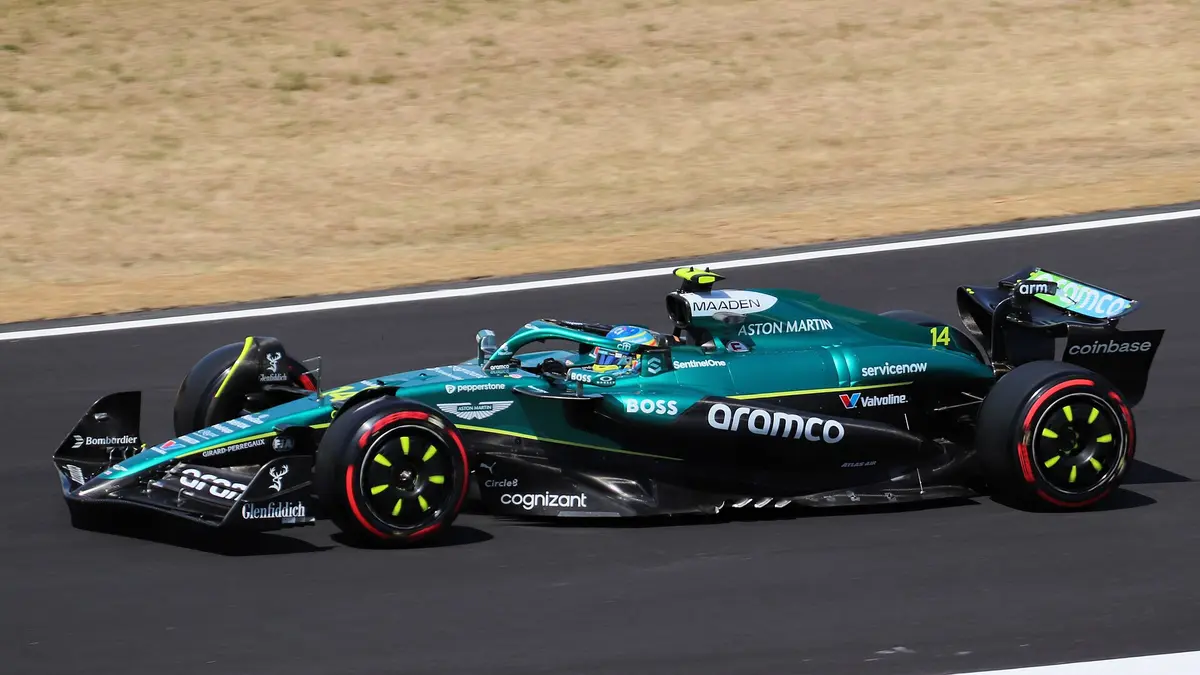
Photo: Liauzh / CC-BY-SA-4.0
The 2026 Formula 1 season was supposed to mark a turning point for Aston Martin. With sweeping new technical regulations reshaping the sport — active aerodynamics, revised power unit architecture, and a fundamental reset of the competitive order — the Silverstone-based outfit entered the year with genuine ambition. The goal, as outlined internally before a single lap had been completed in anger, was bold: dare to dream of a championship-challenging season. Yet before the AMR26 had even turned a wheel in competition, those lofty aspirations were colliding with a far grimmer reality. Honda's power unit shortcomings and concurrent chassis-side interventions have placed Aston Martin in a deeply challenging position early in the 2026 campaign, raising serious questions about the team's trajectory and the scale of work still required to find a competitive baseline.
A Dream Derailed Before It Began: Aston Martin's 2026 Pre-Season Reality
Few teams entered the 2026 season carrying as much expectation — or as much complexity — as Aston Martin. The wholesale regulation overhaul that defines the 2026 era promised a levelling of the field, and for a team that had invested heavily in infrastructure and talent across recent years, this was meant to be the moment to capitalise. The new technical framework, with its active aero systems and substantially redesigned power units, theoretically offered every constructor a genuine reset opportunity.
Instead, according to reporting from Autosport, Aston Martin found themselves dealing with Honda power unit shortcomings even before the season got underway. The nature and extent of those shortcomings have not been fully detailed publicly, but the implications are significant. In the 2026 era, the power unit is more central to overall car performance than ever before, with the revised energy deployment systems and the tight integration between hybrid elements and the internal combustion engine meaning that any deficit at the PU level cascades directly into lap time and race strategy.
What makes Aston Martin's situation particularly difficult is that Honda's issues did not exist in isolation. The team was also forced to intervene on the chassis side of the AMR26, compounding the already complex development picture. When both major performance pillars — engine and chassis — require simultaneous attention in the opening phase of a new regulatory era, the path to competitiveness becomes markedly longer and more arduous.
The AMR26's Limited Mileage: A Development Programme Under Pressure
Perhaps the most telling detail to emerge from the Autosport report is the confirmation that the AMR26 has logged very little mileage. In the context of the 2026 regulations — which represent the most comprehensive technical reset the sport has seen in over a decade — this is a particularly damaging situation. Teams with abundant pre-season testing kilometres are better positioned to understand how their cars behave across a spectrum of conditions, fuel loads, tyre compounds, and circuit characteristics. Limited mileage translates directly into limited data, and limited data in a new regulatory environment is an acute competitive disadvantage.
The 2026 regulations have introduced complexities that no team fully understood before the season began. Active aerodynamic systems, which now govern how the car manages drag and downforce through a dynamic deployment mechanism, require extensive correlation work between simulation and real-world behaviour. Every lap a team runs builds that correlation library. For Aston Martin, with the AMR26's mileage curtailed by the combination of Honda power unit concerns and chassis-related interventions, that library is thinner than the team would have hoped or planned for.
Chassis Interventions: What They Mean in Practice
The need to intervene on the chassis side of the AMR26 adds another dimension to the team's difficulties. In a season where every constructor is navigating entirely new aerodynamic and structural territory, making mid-development corrections to a chassis is an expensive and time-consuming process. It typically involves not only physical component work but also a reset of the simulation and modelling environment — CFD runs need to be re-baselined, wind tunnel programmes redirected, and correlation targets updated. All of this consumes precious resource at exactly the moment when the team needs to be building performance, not recovering ground.
Honda's Role and the Power Unit Picture
Aston Martin's partnership with Honda has been central to their long-term strategy. The Japanese manufacturer's commitment to the 2026 regulations was well established, but translating that commitment into a competitive power unit in the opening races of the season is a different challenge entirely. The 2026 PU regulations demand a different balance between the internal combustion element and the expanded electrical systems, and achieving that balance in a reliable, performance-optimised package from the very first race is extraordinarily difficult. Aston Martin, as a customer team, is to some extent dependent on Honda's rate of progress — a fact that underscores why the reported shortcomings are so consequential for the team's 2026 ambitions.
Context and Background: Aston Martin's 2026 Ambitions in a New Era
To understand the scale of disappointment embedded in Aston Martin's current situation, it is worth revisiting just how significant the 2026 regulatory shift was supposed to be for the team's competitive positioning. The Silverstone outfit has been on a significant investment curve over the past several years, constructing a new factory, expanding its technical department, and recruiting senior engineering talent. All of that investment was made with an eye towards the 2026 regulations as the moment when the team's growing capability could be truly tested against the established order.
Fernando Alonso, one of the most experienced and analytically sharp drivers in the sport's history, remains at the wheel alongside Lance Stroll. Alonso's ability to develop a car and provide precise technical feedback is an undeniable asset, and his presence at Aston Martin was always intended to serve a dual purpose: delivering points in the near term while helping shape the car's longer-term development direction. With the AMR26 facing structural challenges early in the season, Alonso's developmental expertise will be tested perhaps more than even the team anticipated when the year began.
The broader 2026 competitive landscape also provides important context. McLaren, Ferrari, and Red Bull all entered the season with their own challenges adapting to the new regulations, but each of those teams benefits from a deeper historical database and, in some cases, more mature power unit programmes. For Aston Martin to be competitive in this environment, they needed a clean pre-season and a solid baseline from which to develop. The combination of Honda shortcomings and chassis interventions has denied them both, making the task of closing any gap to the front considerably harder in what is already an extremely complex season for every team on the grid.
Technical and Strategic Implications for the Season Ahead
From a strategic standpoint, Aston Martin's early-season situation forces a recalibration of expectations and priorities. Rather than targeting race victories or sustained podium challenges from the opening rounds, the team's engineering leadership will likely need to focus on stabilising the AMR26's performance window, understanding the root causes of both the Honda power unit shortfalls and the chassis-side issues, and building a systematic development programme that can deliver progressive improvement across the season.
The limited mileage the AMR26 has accumulated makes this work even more delicate. Every race weekend now carries an elevated data-gathering priority alongside the competitive objective. Race engineers and the technical team back at Silverstone will be extracting maximum learning from each session — not just in terms of car setup and balance, but in terms of understanding how the active aero systems interact with the Honda PU's power delivery characteristics across different circuit types.
There is also a resource allocation question. Aston Martin, like all teams, operates within the constraints of the cost cap. Addressing both power unit shortcomings (in collaboration with Honda) and chassis-side interventions simultaneously demands careful prioritisation and planning. The team's ability to manage that dual development workload efficiently, without compromising either strand of improvement, will be a key determinant of how much progress they can make across the 2026 season. The outcome of those internal decisions will define whether Aston Martin can salvage something meaningful from a year that promised so much more at its outset.
Key Takeaways
- Aston Martin entered 2026 with clear ambitions to challenge at the front, buoyed by the comprehensive regulatory reset that defined the new era.
- Honda power unit shortcomings emerged before the season began, representing a significant and early blow to the team's competitive expectations.
- The AMR26 also required chassis-side interventions, compounding an already difficult pre-season development picture.
- Critically limited mileage for the AMR26 has reduced the team's correlation database at precisely the moment when extensive real-world data is most valuable.
- Fernando Alonso's technical feedback and development expertise will be crucial assets as the team works to understand and resolve its dual performance challenges.
- Aston Martin's 2026 season now centres on systematic recovery and development rather than the headline-grabbing results originally targeted.
Frequently Asked Questions
What are the main problems facing Aston Martin in the 2026 F1 season?
Aston Martin is dealing with two interconnected challenges: shortcomings with their Honda power unit and the need for interventions on the AMR26 chassis. Both issues emerged before or very early in the season, meaning the team has had limited time and mileage to establish a solid performance baseline under the new 2026 regulations.
Why does limited mileage on the AMR26 matter so much in 2026?
The 2026 technical regulations are the most substantial overhaul the sport has seen in years, introducing active aerodynamic systems and fundamentally revised power unit architecture. Teams need extensive on-track kilometres to correlate their simulation data with real-world car behaviour. Less mileage means less data, which in a brand-new regulatory environment represents a direct and tangible competitive disadvantage.
How do Honda's power unit issues affect Aston Martin specifically?
As a Honda power unit customer, Aston Martin's on-track performance is directly tied to the competitiveness and reliability of Honda's 2026 PU. Any shortfall in power output, energy deployment, or reliability constrains what the AMR26 can achieve regardless of how well the chassis performs. The tight integration of PU and chassis performance in the 2026 era means the two issues are mutually reinforcing challenges.
Can Aston Martin recover to challenge for points and podiums in 2026 despite this difficult start?
Recovery is possible but will require both Honda and the Aston Martin chassis team to identify and resolve their respective issues efficiently, ideally while the season is still in its earlier stages. Fernando Alonso's developmental experience gives the team a genuine asset in this process. However, the combination of limited pre-season mileage and dual development burdens means progress is likely to be gradual rather than immediate.
Conclusion
The story of Aston Martin's 2026 season, at least in its opening chapter, is one of ambition confronting adversity. The team arrived at the most significant regulatory reset in recent F1 history with genuine belief that years of infrastructure investment and talent acquisition could finally be translated into sustained competitiveness. Instead, Honda power unit shortcomings and the need for chassis-side interventions on the AMR26 have forced an early, unwelcome recalibration of what is realistically achievable in the near term.
What makes this situation particularly challenging is the compounding effect of limited mileage. In an era defined by entirely new technical principles, data is everything — and right now, Aston Martin has less of it than they need. The path forward demands patience, precision, and a structured approach to solving two complex problems simultaneously without allowing one to undermine progress on the other.
The AMR26 crisis is not necessarily fatal to Aston Martin's 2026 ambitions in the broadest sense. Seasons are long, regulations are new for everyone, and the rate of development across the field will be significant. But for a team that dared to dream before the season began, the early reality serves as a powerful reminder that in Formula 1, ambition must always be matched by execution — and right now, Aston Martin have considerable ground still to cover before those two things align.
Written with AI assistance. How this site works