Heinz-Harald Frentzen Wins 1997 San Marino Grand Prix
Heinz-Harald Frentzen claimed his first F1 victory on April 27, 1997, driving the Williams FW19 to defeat Michael Schumacher at the San Marino Grand Prix.
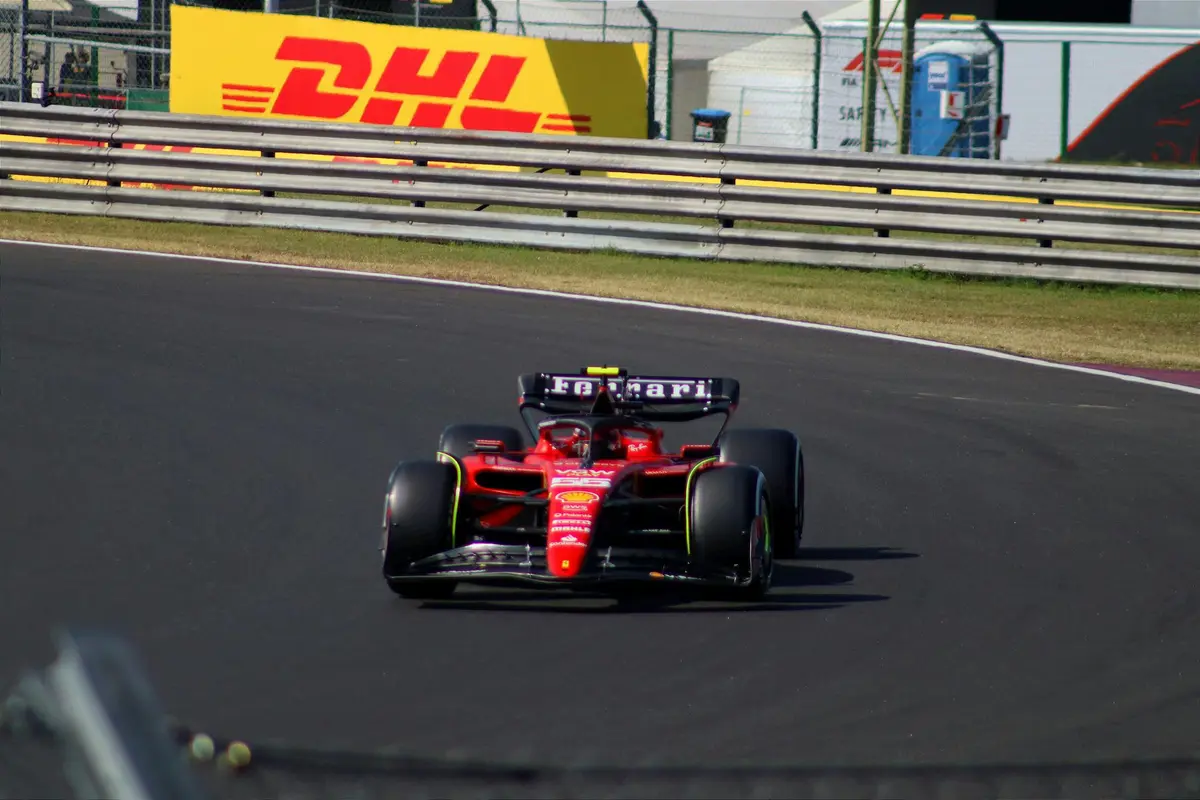
On This Day: April 27, 1997, witnessed a breakthrough moment at the Autodromo Enzo e Dino Ferrari as Heinz-Harald Frentzen secured his maiden Formula 1 victory. Driving the Williams FW19, the German driver fended off a relentless Michael Schumacher to prove his worth in the seat vacated by reigning champion Damon Hill.
The Arrival of the Silent Assassin
Entering the 1997 San Marino Grand Prix, the pressure on Heinz-Harald Frentzen was immense. Having been hand-picked by Frank Williams and Patrick Head to replace the popular 1996 World Champion Damon Hill, Frentzen had endured a difficult start to the season. While his teammate Jacques Villeneuve had already shown the pace of the Williams FW19 with victories, Frentzen had struggled to adapt to the idiosyncratic requirements of the Grove-based team's machinery. April 27th in Imola was the day that narrative changed forever.
The atmosphere in the paddock was thick with the scent of high-octane fuel and the piercing scream of V10 engines. This was an era where technical mastery was defined by the transition from the screaming V12s to the more efficient, yet equally visceral, 3.0-liter V10 power units. The Williams FW19, powered by the Renault RS9 engine, was widely considered the class of the field, featuring the aerodynamic brilliance of Adrian Newey, even as he was in the process of transitioning to McLaren. Opposite them stood the Ferrari F310B, a car that Michael Schumacher was dragging into contention through sheer force of will and the growing technical stability brought by Ross Brawn and Rory Byrne.
Qualifying: The Blue and White Dominance
Saturday’s qualifying session at Imola underscored the raw pace of the Williams FW19. Jacques Villeneuve claimed pole position with a staggering lap, demonstrating the car's superior aerodynamic efficiency through the high-speed chicanes of the Italian circuit. Heinz-Harald Frentzen secured the second spot on the grid, completing a Williams front-row lockout. This was the expected result, yet the shadow of Michael Schumacher loomed large. The Ferrari F310B qualified third, with the partisan Tifosi roaring every time the red car flashed past the pits.
The technical battle between Goodyear and Bridgestone was also heating up, though at this stage, Goodyear remained the dominant force for the front-runners. The track conditions were cool, favoring the Williams' ability to generate heat into their slicks. As the sun beat down on the Santerno valley on Sunday morning, the mechanical preparation reached its fever pitch. Mechanics worked late into the night, refining the active-ride-height nuances and the gear ratios of the transverse six-speed gearboxes.
Race Narrative: A Tactical Chess Match
When the lights went out on that Sunday afternoon, Jacques Villeneuve led the field into the Tamburello chicane. However, it was not a straightforward afternoon for the French-Canadian. As the race progressed, Villeneuve struggled with the balance of his car, eventually falling victim to a gearbox failure that would force his retirement on lap 40. This opened the door for Heinz-Harald Frentzen to step out of his teammate's shadow.
The mid-point of the race became a strategic duel. Michael Schumacher, utilizing the Ferrari F310B’s excellent low-speed traction, kept the pressure on. The pit stop cycles were crucial. In this era of refueling, every liter of fuel carried was a trade-off against lap time. Frentzen’s engineer, Sam Michael, monitored the telemetry with bated breath. Frentzen needed to punch out a series of qualifying-style laps in 'clean air' while Schumacher was held up in traffic or during the transition between pit stops.
The defining moment came during the second round of stops. Heinz-Harald Frentzen stayed out longer than Michael Schumacher, utilizing the lighter fuel load of the Williams FW19 to extend his lead. When he finally emerged from the pit lane, he was just ahead of the Ferrari. For the final twenty laps, it was a sprint to the finish. The gap fluctuated—1.5 seconds, then 1.2, then back to 2.0. Frentzen showed incredible composure, managing his brakes and the high-revving Renault V10 to ensure he didn't give the hungry Schumacher a single opening.
The Aftermath and Historical Legacy
Crossing the line to take the checkered flag, Heinz-Harald Frentzen became the 84th different winner in Formula 1 history. The relief was palpable on the Williams pit wall. For Frentzen, it was a validation of his talent, which many in the junior categories—including Michael Schumacher himself—had long acknowledged. It was often said in German karting circles that Frentzen was the naturally faster of the two, but Schumacher possessed the greater work ethic and psychological steel.
The 1997 San Marino Grand Prix also signaled that Ferrari was truly back as a title contender. While they lost the battle that day, the reliability and pace of the F310B proved that the Scuderia was no longer the disorganized outfit of the early 90s. For Williams, this victory was one of the final heights of their dominant era with Renault. By the end of the year, Renault would officially withdraw as an engine supplier, and the departure of Adrian Newey would mark the beginning of a slow transition for the team.
In the wider context of the 1997 season, this win kept the championship fight alive. It provided the points necessary for Williams to stay ahead in the Constructors' Championship, a title they would eventually win. Frentzen would go on to have a stellar 1999 season with Jordan, but his win on April 27, 1997, remains the quintessential 'Pure F1' moment—a mechanical masterclass at a legendary circuit.
Key Takeaways from Imola 1997
- Maiden Victory: This race marked the first of three career wins for Heinz-Harald Frentzen.
- Technical Supremacy: The Williams FW19, designed by Adrian Newey and powered by the Renault RS9 V10, proved its aerodynamic superiority over 62 laps.
- Ferrari Resurgence: Michael Schumacher's second-place finish confirmed the F310B was a legitimate threat to the Williams dominance.
- Renault’s Swan Song: This was part of the final championship-winning season for the factory Renault engine partnership with Williams in the 90s.
- Imola's Evolution: The race was held on the modified layout featuring the Tamburello and Villeneuve chicanes, implemented after the tragic events of 1994.
Frequently Asked Questions
Who finished on the podium at the 1997 San Marino GP?
The podium consisted of Heinz-Harald Frentzen (Williams-Renault) in first place, Michael Schumacher (Ferrari) in second, and Eddie Irvine (Ferrari) in third.
What engine did the Williams FW19 use?
The Williams FW19 was powered by the Renault RS9 3.0-liter V10 engine, which was known for its high power-to-weight ratio and reliability.
Why was this win important for Heinz-Harald Frentzen?
It was his first win in Formula 1 and served to silence critics who felt he could not handle the pressure of replacing the reigning champion, Damon Hill, at Williams.
How many laps was the 1997 San Marino Grand Prix?
The race was contested over 62 laps of the 4.930 km Autodromo Enzo e Dino Ferrari, totaling a race distance of approximately 305 kilometers.
Conclusion
The 1997 San Marino Grand Prix remains a landmark event in the annals of the sport's Golden Era. It was a race defined by mechanical precision, the raw power of V10 engines, and the intense psychological battle between two German rivals. April 27th will always be remembered by fans as the day Heinz-Harald Frentzen finally climbed the top step of the podium, proving that on his day, he was a match for anyone. As the engines cooled in the Imola paddock that evening, the 1997 season had been set on a trajectory of legendary competition that would last until the final corner of the final race. This was Formula 1 at its most authentic: man and machine in perfect, high-speed harmony.
#F1 #F1History #BringBackV10s #TifosiIn this article
Written with AI assistance. How this site works