Austria 2002 Ferrari Team Orders: F1's Most Controversial Race
Austria 2002 remains F1's most controversial race — Ferrari's team orders scandal, a million-dollar fine, and one journalist's unforgettable trackside debut at the Jochen Rindt Kurve.
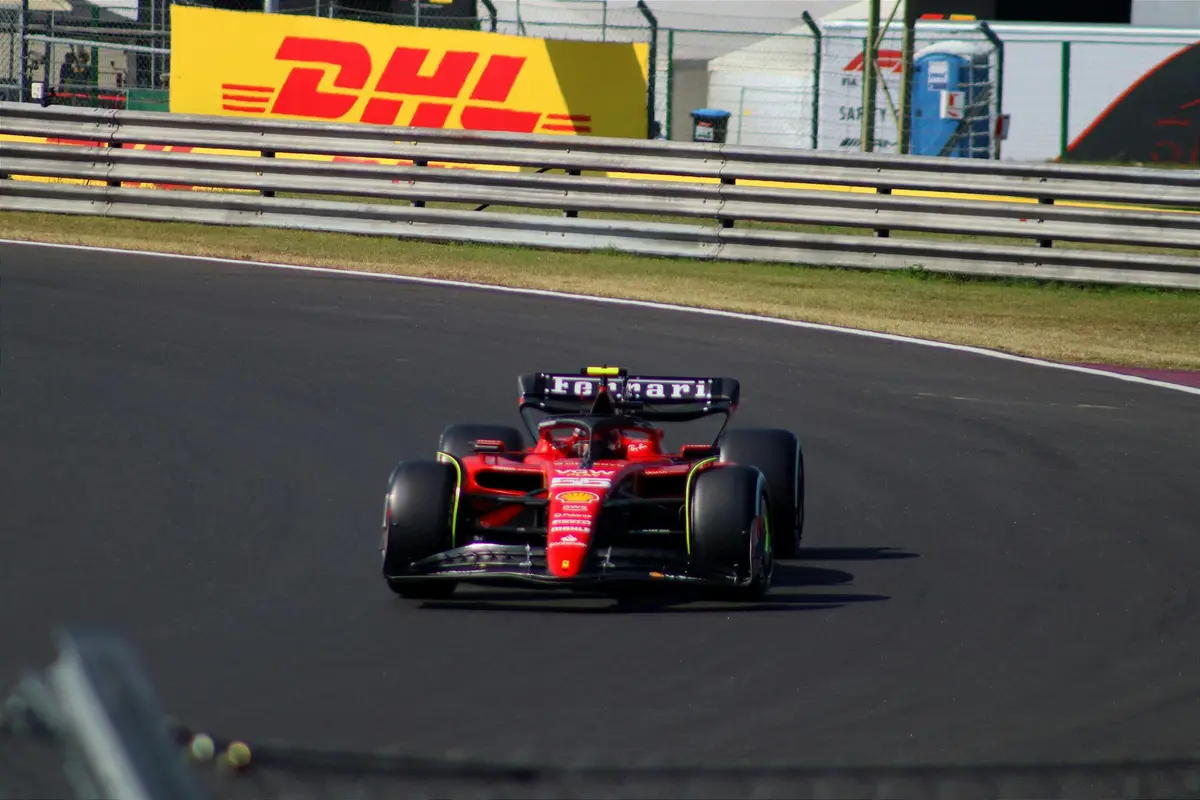
Some Formula 1 memories are forged in controversy, and none more so than the 2002 Austrian Grand Prix — a race that remains one of the most debated moments in the sport's long and colourful history. For the Autosport journalist whose very first working grand prix was Austria 2002, the memory carries a powerful dual significance: the public outrage of Ferrari's team orders on one hand, and on the other, the raw, almost visceral thrill of borrowing a tabard for qualifying and venturing into the trees behind the pits, standing on the inside of the Jochen Rindt Kurve by the barrier, watching Formula 1 cars being driven at maximum attack. It is that collision of controversy and beauty that makes Austria 2002 such a resonant landmark — not only in F1 history, but in the personal histories of those fortunate enough to have been there.
In a sport that has evolved dramatically through the decades — and perhaps nowhere more so than in the sweeping regulatory overhaul that defines the 2026 Formula 1 season — revisiting Austria 2002 is an exercise not just in nostalgia, but in understanding how the sport arrived at the governance structures, transparency measures, and ethical frameworks it operates under today. The Ferrari team orders scandal at the A1 Ring did not simply generate headlines for a week; it rewrote the rulebook, reshaped the relationship between teams and the governing body, and gave the broader public a window into the complex power dynamics that have always existed behind the polished exterior of the paddock.
What Actually Happened at the 2002 Austrian Grand Prix?
The 2002 Austrian Grand Prix, held at the A1 Ring in Zeltweg, is seared into collective memory for one defining moment: with Rubens Barrichello leading the race and seemingly on course for a deserved victory, Ferrari instructed him to yield position to his team-mate Michael Schumacher. Barrichello duly complied, slowing just before the finish line to allow Schumacher to cross first. The reaction from fans in the grandstands and watching at home was immediate and visceral — a chorus of boos greeted the podium ceremony, and Schumacher himself appeared visibly uncomfortable with the manner of the victory.
The fallout was significant. Ferrari, Schumacher, and Barrichello were collectively fined one million US dollars for their actions surrounding the incident — a penalty that covered both the race result manipulation and subsequent violations of podium protocol. The public shaming of team orders, which had existed in F1 for decades as an open secret, began in earnest. The controversy was directly linked to the formal prohibition on team orders being issued in a way that artificially influenced race results, enshrined in Article 39.1 of the Sporting Regulations. That rule, while later repealed and replaced with more nuanced language, fundamentally altered the public conversation around sporting integrity in Formula 1.
The Scale of the Punishment and Its Legacy
The combined fine of one million US dollars levied against Ferrari, Schumacher, and Barrichello was, at the time, one of the most significant financial penalties in the sport's history. It served as a loud signal from the FIA that the optics of team orders — even if the underlying practice was widespread — had crossed a line that could no longer be tolerated in an era of increasing commercial scrutiny and global television audiences. The governing body was acutely aware that Formula 1's appeal to casual and new fans depended on a credible sense of sporting competition, and Austria 2002 had undermined that credibility in the most public way imaginable.
The longer-term legacy of Austria 2002 is more nuanced. Article 39.1 was ultimately removed from the Sporting Regulations in 2010 — ironically exposed as toothless by the infamous 2008 Singapore Grand Prix "Crashgate" affair and various other episodes that demonstrated the difficulty of legislating team strategy. The repeal effectively acknowledged what insiders had always known: that the line between legitimate team strategy and unsportsmanlike manipulation is blurry and contextual. In the current 2026 Formula 1 landscape, teams operate under a revised framework that places greater emphasis on transparency and steward discretion rather than blanket prohibition.
The Jochen Rindt Kurve: A Journalist's Baptism by Speed
Yet for the journalist recounting their very first working grand prix, the abiding memory is not solely one of institutional embarrassment. It is one of exhilaration. Borrowing a tabard — the access vest that grants passage to restricted areas of a circuit — and finding a vantage point in the trees on the inside of the Jochen Rindt Kurve offered a perspective that very few people ever experience: Formula 1 cars at full attack, fractions of a second from the barrier, their mechanical intensity made intimate by sheer proximity.
The Jochen Rindt Kurve is named in honour of Austria's only Formula 1 World Champion. Rindt, who died following an accident during practice at the 1970 Italian Grand Prix at Monza, had accumulated enough championship points before his death to be awarded the 1970 Drivers' Championship posthumously — making him the only posthumous World Champion in the sport's history. The corner named in his memory at the A1 Ring carries with it both the glory and the tragedy that have always defined Formula 1's relationship with speed.
At qualifying pace, a Formula 1 car entering a high-speed curve is a lesson in controlled violence: the aerodynamic loads pressing the car into the tarmac, the tyres generating lateral forces that no unassisted human body could endure, and the engine note shifting in ways that no television broadcast can faithfully reproduce. Standing metres from the barrier, in the trees, watching those cars in qualifying trim — this is how a career in motorsport journalism truly begins.
Why Austria 2002 Still Matters in 2026
In the context of the 2026 Formula 1 season — a year defined by the most radical technical reset since 1983, including entirely new active aerodynamic regulations, the "overtake boost" power deployment system, and the debut of both Audi as a works constructor and Cadillac as a new eleventh team — the lessons of Austria 2002 resonate with renewed clarity. The sport is once again in a period of transition, with new power structures emerging both on and off the track.
Lewis Hamilton, now in his second season at Ferrari following his landmark move from Mercedes ahead of 2025, operates within a team whose history with team orders is perhaps the most complex in the sport. The question of how Ferrari manages its driver hierarchy — between Hamilton and Charles Leclerc — is one that echoes directly from the Schumacher-Barrichello era. The 2002 Austrian Grand Prix was the moment that made such hierarchies impossible to hide. In 2026, they are no less real, but they are managed with far greater sophistication and under far greater scrutiny.
Meanwhile, Max Verstappen continues his dominance at Red Bull alongside rookie Isack Hadjar, and the emerging McLaren partnership of Lando Norris and Oscar Piastri has already demonstrated that intra-team tension — and the temptation to deploy team orders — is very much a live issue in the modern era. The ghost of Austria 2002 hovers over every such decision.
Technical and Strategic Implications for Modern Team Orders
Under the current 2026 Sporting Regulations, the language around team orders is deliberately less prescriptive than the blunt Article 39.1 that followed Austria 2002. Stewards now exercise contextual judgment, and teams are permitted to communicate strategic instructions to drivers provided they do not constitute a blatant and cynical manipulation of race results. The introduction of mandatory radio broadcast requirements — meaning team-to-driver communications are now routinely heard by global audiences — has itself become a form of governance, creating an accountability mechanism that did not exist in 2002.
The 2026 regulations also introduce new dimensions to the team orders calculus. With the overtake boost system allowing drivers to deploy additional power in designated attack phases, teams must now decide not just when to swap positions, but how to manage energy deployment across multi-car strategies. This complexity makes the crude, last-lap swap that characterised Austria 2002 both more unlikely and, paradoxically, harder to detect when it does occur.
Key Takeaways
- The 2002 Austrian Grand Prix remains one of Formula 1's most controversial moments, defined by Ferrari's instruction to Barrichello to yield to Schumacher on the final lap.
- Ferrari, Schumacher, and Barrichello were collectively fined one million US dollars, one of the largest penalties in the sport's history at that time.
- The scandal directly led to the introduction of Article 39.1 of the Sporting Regulations, banning team orders that artificially influenced race results — a rule later repealed in 2010.
- The Jochen Rindt Kurve, named for Austria's and F1's only posthumous World Champion, provided one journalist with an unforgettable trackside debut at qualifying.
- The legacy of Austria 2002 continues to shape how Formula 1 governs intra-team strategy in the 2026 season, where transparency obligations and new technical regulations have transformed the team orders landscape.
- The human dimension of Formula 1 — captured in the memory of standing metres from the barrier watching cars at maximum speed — remains as powerful as any regulatory debate.
Frequently Asked Questions
What happened at the 2002 Austrian Grand Prix with Ferrari team orders?
At the 2002 Austrian Grand Prix at the A1 Ring, Ferrari instructed Rubens Barrichello to slow and yield the race lead to Michael Schumacher, allowing Schumacher to win. The move provoked widespread fan anger, with boos raining down during the podium ceremony. Ferrari, Schumacher, and Barrichello were subsequently fined a combined one million US dollars.
How much was Ferrari fined for the Austria 2002 team orders incident?
Ferrari, along with Michael Schumacher and Rubens Barrichello, were collectively fined one million US dollars following the 2002 Austrian Grand Prix. The fine covered both the manipulation of the race result and violations of podium protocol that occurred during the trophy ceremony.
Who was Jochen Rindt and why is the corner at the A1 Ring named after him?
Jochen Rindt was an Austrian Formula 1 driver who died following an accident during practice at the 1970 Italian Grand Prix at Monza. He was posthumously awarded the 1970 Formula 1 World Championship, making him the only posthumous World Champion in the sport's history. The Jochen Rindt Kurve at the A1 Ring was named in his honour to commemorate Austria's greatest motorsport champion.
Are team orders still allowed in Formula 1 in 2026?
Yes. Article 39.1, which banned team orders that artificially influenced race results, was removed from the Sporting Regulations in 2010. In 2026, team orders are permitted but governed by contextual steward judgment and mandatory radio broadcast transparency requirements, which mean communications between teams and drivers are routinely heard by global audiences. The regulations focus on preventing blatant result manipulation rather than prohibiting all strategic intra-team coordination.
Conclusion
Austria 2002 endures as a touchstone moment in Formula 1 precisely because it contained multitudes: sporting controversy, institutional reckoning, human drama, and — for those who were there — the incomparable physical experience of standing at the edge of the track as the fastest racing cars on Earth went by at qualifying pace. The journalist who borrowed a tabard that weekend and stood in the trees by the Jochen Rindt Kurve was witnessing Formula 1 at its most raw and unmediated, even as the race itself was playing out in the most artificial and managed way imaginable.
In 2026, as Formula 1 undergoes its most transformative technical revolution in a generation, the sport has not escaped the fundamental tensions that Austria 2002 exposed. The new aerodynamic regulations, the debut of Cadillac and Audi, the evolving driver hierarchies at Ferrari, Red Bull, and McLaren — all of it takes place against a backdrop shaped in part by what happened on that afternoon in Zeltweg. Understanding Austria 2002 is not merely an exercise in nostalgia. It is essential context for understanding what Formula 1 is, and what it is still becoming.
In this article
Written with AI assistance. How this site works