David Coulthard Wins 1998 San Marino Grand Prix at Imola
On April 26, 1998, David Coulthard led a McLaren masterclass at Imola, winning the San Marino Grand Prix ahead of Michael Schumacher's Ferrari.
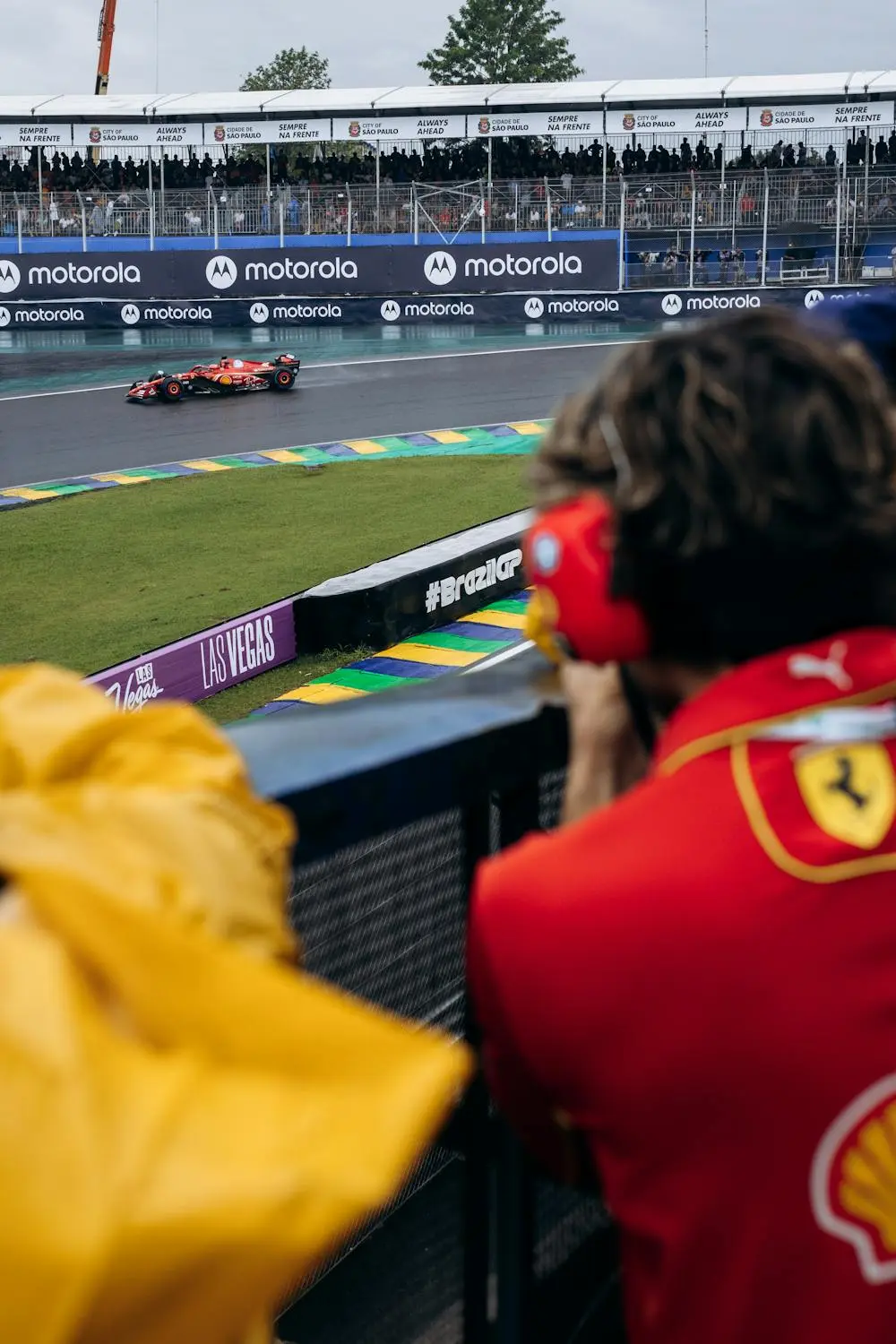
On This Day: April 26, 1998, David Coulthard secured a commanding victory at the San Marino Grand Prix, driving the Adrian Newey-designed McLaren MP4/13. The Scotsman delivered a flawless performance at the Autodromo Enzo e Dino Ferrari, holding off a charging Michael Schumacher to assert McLaren's dominance during the peak of the V10 era.
The Silver Arrows Arrive at the Temple of the Tifosi
As the Formula 1 circus descended upon the rolling hills of Emilia-Romagna in April 1998, the atmosphere was thick with a mixture of apprehension and defiant hope. For the Italian Tifosi, the 1998 San Marino Grand Prix represented the first real opportunity of the season to see if Scuderia Ferrari and Michael Schumacher could truly halt the silver juggernaut that was West McLaren Mercedes. The opening rounds of the 1998 season had been a wake-up call for the entire paddock. In Melbourne and Interlagos, the McLaren MP4/13, powered by the screaming Ilmor-built Mercedes-Benz FO 110G V10 engine, had appeared to be operating on a different plane of existence compared to its rivals.
The 1998 season was one of profound technical upheaval. The FIA had introduced the controversial "narrow track" regulations and grooved tyres, replacing the wide-track slicks that had defined the sport for decades. While many teams struggled to find mechanical grip and balance under these new constraints, Adrian Newey—who had recently made the high-profile jump from Williams to Woking—crafted a masterpiece. The MP4/13 was not just fast; it was aerodynamically efficient in a way that left rivals like Ferrari’s Rory Byrne and Ross Brawn scratching their heads. Entering Imola, David Coulthard and Mika Häkkinen were the clear favorites, but the tight, undulating confines of the Imola circuit offered the Ferrari F300 a glimmer of hope.
Qualifying: A Battle of Milliseconds
Saturday’s qualifying session at Imola was a masterclass in precision. Under the clear Italian sky, the V10 engines provided a high-pitched soundtrack that echoed through the trees of the Parco delle Acque Minerali. David Coulthard, often living in the shadow of his Finnish teammate Mika Häkkinen during this period, found an extra gear. The Scotsman hooked up a near-perfect lap around the 4.93km circuit, threading the McLaren MP4/13 through the Variante Alta and the treacherous Rivazza corners with surgical accuracy.
Coulthard claimed pole position with a time of 1:25.973, a mere 0.113 seconds ahead of Häkkinen. The front-row lockout for McLaren was a sobering sight for the local fans, yet there was a roar of approval when Michael Schumacher placed his Ferrari F300 in third. Schumacher was nearly half a second off the pace—a lifetime in Formula 1 terms—but the German’s ability to extract performance from a theoretically inferior car was well-known. Behind them, Jacques Villeneuve’s Williams FW20 and Eddie Irvine’s second Ferrari rounded out the top five, setting the stage for a tactical battle between the two most prestigious teams in the sport.
Race Narrative: Coulthard’s Masterful Defense
On Sunday, April 26, the red sea of Tifosi packed the grandstands, hoping for a miracle. At the start, David Coulthard utilized the immense torque of the Mercedes V10 to launch cleanly from the grid. He held the lead into the Traguardo, while Mika Häkkinen slotted in behind him. For the first dozen laps, it looked like another McLaren procession. The two silver cars began to pull away from Michael Schumacher, who was preoccupied with keeping the rest of the pack at bay. However, the mechanical fragility of these high-strung machines soon intervened.
On lap 17, the complexion of the race changed. Mika Häkkinen’s McLaren MP4/13 suddenly slowed, a victim of a rare gearbox failure and subsequent engine woes. As the Flying Finn pulled off the track, a collective cheer erupted from the grandstands—the McLaren invincible armor had shown a crack. David Coulthard was now the lone defender of the Woking interests, and Michael Schumacher sensed blood in the water. The gap between the leader and the Ferrari began to oscillate as the first round of pit stops approached. In this era, refueling was a critical strategic element, and the battle between Ron Dennis on the McLaren pit wall and Jean Todt for Ferrari was as intense as the fight on the asphalt.
Throughout the middle stint, Michael Schumacher pushed with the relentless intensity that defined his career. He frequently dipped wheels into the grass and attacked the curbs at the Variante Bassa, trying to unnerve the Scotsman. But David Coulthard remained unflappable. He managed his grooved Bridgestone tyres with extreme care, ensuring he had enough life in the rubber to respond to Schumacher’s fastest laps. The McLaren’s superior aerodynamic stability through the high-speed sections of the track allowed Coulthard to maintain a gap of roughly four to six seconds—just enough to stay out of the Ferrari’s slipstream.
As the race reached its final stages, the reliability of the Ferrari F300 also came into question, with Schumacher reporting minor brake fade. This allowed David Coulthard to ease his pace slightly, crossing the finish line after 62 grueling laps to take his fourth career victory. Michael Schumacher followed in second, 4.5 seconds behind, while Eddie Irvine completed the podium in the second Ferrari, sending the Tifosi into a frenzy despite the lack of a home win. It was a day of professional vindication for David Coulthard, proving he could lead the team and withstand the immense pressure of racing a legend in his own backyard.
The Technical Superiority of the MP4/13
To understand why the 1998 San Marino Grand Prix was such a significant victory, one must look at the hardware. The McLaren MP4/13 featured several innovations that were the envy of the paddock. Early in the season, the team had utilized a "second brake pedal" (often called the fiddle brake) that allowed the drivers to brake the rear wheels independently to reduce understeer. While this was banned following a protest after the first race, the inherent balance of the chassis remained superior. The car featured a carbon-fibre monocoque and a longitudinal semi-automatic sequential gearbox that was light and compact, allowing for a cleaner rear-end aerodynamic profile.
The Mercedes-Benz FO 110G engine was equally legendary. A 72-degree V10, it was capable of reaching nearly 18,000 RPM, producing upwards of 780 horsepower. At Imola, a circuit that demands both high-speed stability and good traction out of slow chicanes, this power delivery was crucial. David Coulthard’s ability to maximize this technology was the difference-maker on April 26. While Schumacher’s Ferrari F300 was a strong car, it lacked the integrated harmony of the Newey-designed McLaren, particularly in how it managed the transition between the grooved tyre's limited grip and the aerodynamic downforce generated at speed.
Legacy and Aftermath
The 1998 San Marino Grand Prix served as a vital turning point for the championship. It demonstrated that while McLaren was the faster car, they were not bulletproof, as evidenced by Häkkinen’s retirement. For David Coulthard, the win was a reminder of his top-tier talent, though he would eventually settle into a supporting role for Häkkinen later in the season. The 1998 season would go down as one of the greatest head-to-head battles in history, culminating in a dramatic finale at Suzuka.
Imola itself remained a place of pilgrimage. In the years following the 1994 tragedy, the circuit had been modified with new chicanes at Tamburello and Villeneuve, but it retained its soul. The 1998 race was a celebration of the purely mechanical era—no driver aids like traction control (which had been banned in 1994) and no electronic hybrid systems. It was a battle of V10 engines, raw human reflexes, and the tactical brilliance of the 1990s' greatest engineering minds.
Key Takeaways from the 1998 San Marino GP
- David Coulthard's Consistency: The Scotsman secured pole position and led almost every lap, demonstrating his prowess at high-speed technical circuits.
- McLaren's V10 Dominance: The MP4/13 proved to be the class of the field, even with the retirement of Mika Häkkinen.
- Technical Transition: This race was a showcase for the first year of grooved tyres and narrow-track regulations, which radically changed car handling.
- The Ferrari Threat: Michael Schumacher’s second-place finish signaled that Ferrari was closing the gap and would be a contender for the rest of the year.
- Tifosi Passion: Despite a McLaren win, the presence of two Ferraris on the podium (Schumacher and Irvine) created one of the most electric atmospheres of the decade.
Frequently Asked Questions
Who won the 1998 San Marino Grand Prix?
David Coulthard won the race for West McLaren Mercedes, driving the MP4/13 chassis.
What happened to Mika Häkkinen in the 1998 Imola race?
Häkkinen retired on lap 17 due to a combination of gearbox issues and engine failure while running in second place behind his teammate.
Why were grooved tyres used in 1998?
The FIA introduced grooved tyres in 1998 to reduce cornering speeds and mechanical grip, part of a safety initiative that also included reducing the car's overall width (narrow track regulations).
How many laps was the 1998 San Marino Grand Prix?
The race consisted of 62 laps around the 4.93km Autodromo Enzo e Dino Ferrari circuit.
The Final Word on a Classic Imola Sunday
The 1998 San Marino Grand Prix stands as a testament to an era of Formula 1 where the machine and the man were in perfect, albeit fragile, symmetry. David Coulthard’s victory on April 26 was more than just a trophy; it was a statement of intent from McLaren and a masterclass in defensive driving against the greatest driver of the generation. As the V10 engines fell silent at the end of the day, the 1998 season was truly alive, promising a fight for the ages. We remember this day not just for the points scored, but for the raw, visceral experience of the silver and red cars dancing on the limit of adhesion through the historic curves of Imola.
#F1 #F1History #BringBackV10s #TifosiIn this article
Written with AI assistance. How this site works