Hamilton Miami GP Upgrade: Brundle's Ferrari Turning Point Verdict
Martin Brundle believes the Miami GP upgrade could be a turning point for Lewis Hamilton's Ferrari future, as the seven-time champion seeks his first win with the Scuderia in 2026.
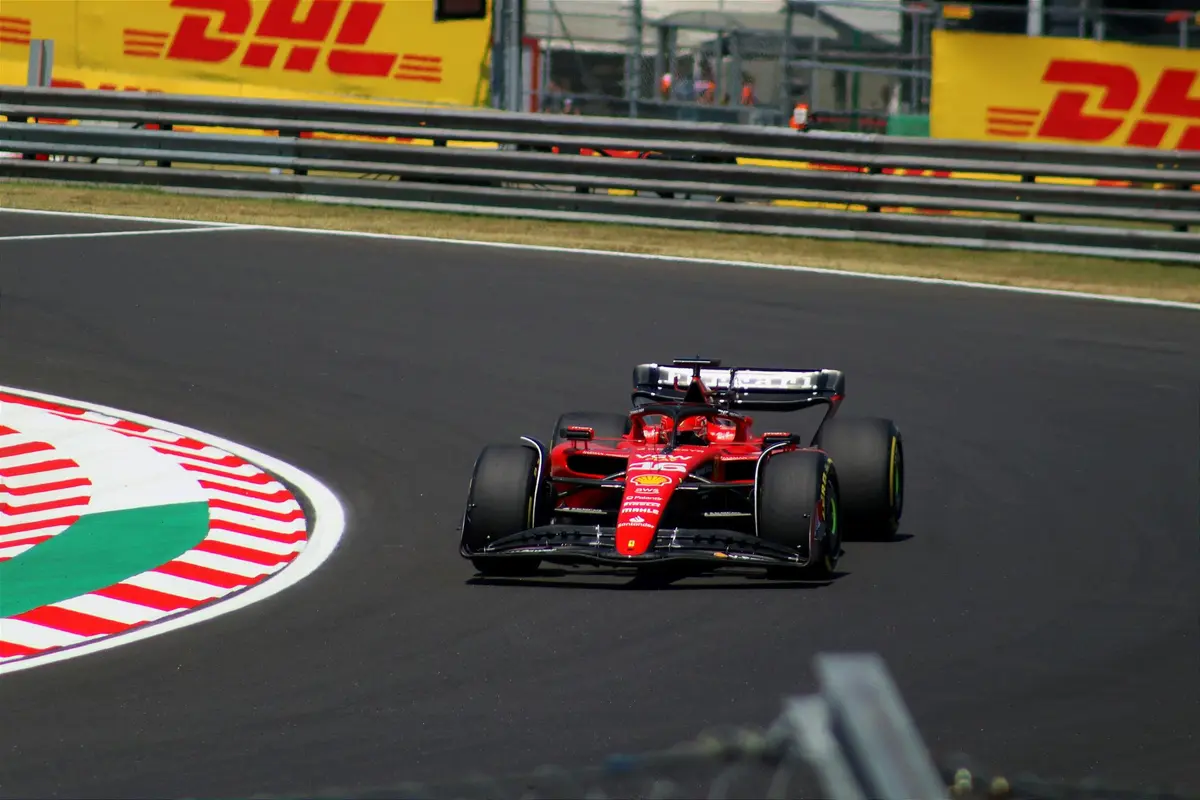
Lewis Hamilton's second season at Ferrari has been under intense scrutiny, and according to veteran F1 commentator and former driver Martin Brundle, the Miami Grand Prix could represent a pivotal moment in the seven-time World Champion's relationship with the Scuderia. Brundle, whose analytical eye has rarely missed a mark across decades of following Formula 1, believes Hamilton is still capable of winning races in 2026 — but the key may lie in whether Ferrari's anticipated Miami GP upgrade package delivers on its promise. For a driver of Hamilton's pedigree, patience has limits, and the paddock is watching closely.
Hamilton made the headline-grabbing switch from Mercedes to Ferrari ahead of the 2025 season, ending a legendary partnership with the Silver Arrows that had yielded six of his seven world titles. His debut year at Maranello, however, was far from the fairytale arrival many had anticipated. Struggling to adapt to the Ferrari's characteristics and working culture, Hamilton finished a disappointing sixth in the Drivers' Championship — a result that, while not catastrophic, fell well short of the ambitions that drove him to Maranello in the first place. Now in his second year with Ferrari in 2026, the pressure is mounting.
Brundle's Assessment: Why Miami Could Change Everything
Martin Brundle's verdict carries weight precisely because it is neither dismissive nor blindly optimistic. The Sky Sports analyst acknowledged that Hamilton's first season with Ferrari was difficult — a frank assessment that aligns with what the data and the standings confirmed. But Brundle stops short of writing Hamilton off, instead pointing to the Miami GP upgrade as a potential game-changer. The suggestion is clear: if Ferrari's engineers have accurately diagnosed the car's weaknesses and delivered meaningful aerodynamic or mechanical improvements in Miami, the psychological and performance landscape for Hamilton could shift dramatically.
In the 2026 regulatory era, where active aerodynamics and the new overtake boost systems have fundamentally reshaped how cars behave through high-speed and medium-speed corners, a well-timed upgrade can swing competitive order more sharply than in previous regulatory cycles. The Miami International Autodrome, with its mixture of slow, technical sections and longer straights, offers a representative test of a package's all-round competence. If Ferrari's updates improve both mechanical grip and drag reduction efficiency under the new aero regs, it would directly address the areas where Hamilton — a driver who prizes a predictable, planted front end — has reportedly found the 2025-spec Ferrari architecture challenging.
Adapting to a New Machine: Hamilton's Core Challenge
One of the most compelling subplots of Hamilton's Ferrari tenure has been the adaptation process itself. Moving from Mercedes, where Hamilton spent over a decade honing his instincts around a very particular style of car setup and team communication, to Ferrari's distinctly different engineering philosophy was never going to be seamless. Ferrari cars have historically demanded a different driving style — particularly in terms of how a driver manages tyre temperature on entry to corners and exploits rear-end rotation.
Hamilton's sixth-place finish in the 2025 Drivers' Championship indicated that while he was never truly lost, he was never quite at the peak of his considerable powers either. His teammates, rivals, and the broader technical community noted that the Briton spent much of 2025 still searching for the precise feedback and car balance he needed to extract maximum performance. Heading into 2026, with a full winter of simulator work, closer collaboration with Ferrari's technical staff, and a deeper understanding of the car's DNA, there were genuine grounds for optimism that a second season would be more competitive.
The 2026 Regulatory Context: A Levelling Opportunity
The 2026 season introduced sweeping technical regulation changes — including significantly revised aerodynamic rules centred on active aero systems that adjust bodywork positions during straights versus cornering phases, and a new overtake boost mechanism derived from the updated power unit regulations. These changes have reshuffled the competitive order to a degree not seen since the last major regulation reset. Crucially, this environment means that the advantage of accumulated car knowledge from 2025 is partly diminished — every team is on a steeper learning curve with their 2026 machinery.
For Hamilton, this is both a challenge and an opportunity. On one hand, adapting to yet another new set of car behaviours adds complexity to an already demanding learning process. On the other hand, the wider grid reset means Ferrari's 2026 package — if properly developed — could close gaps or even establish advantages that were structurally unavailable in the previous regulatory framework. Brundle's optimism about the Miami upgrades implicitly acknowledges this: in a season where no team has yet achieved true dominance, a single strong upgrade moment can catalyse a sustained run of form.
Ferrari's Development Trajectory and the Upgrade Culture
Ferrari's ability to bring meaningful, race-weekend upgrades has historically been a double-edged sword. The Scuderia commands enormous resources and one of the most passionate fanbases in sport, but their development rhythm has at times been inconsistent — producing moments of genuine brilliance punctuated by periods where upgrades failed to translate from wind tunnel to track. The Miami GP package, whatever its precise technical content, represents an important statement about Ferrari's 2026 development direction.
For Hamilton specifically, a successful upgrade in Miami would do more than improve his race results. It would signal that Ferrari's technical team has listened to his feedback, understood his requirements, and acted decisively — a crucial element in rebuilding the driver-team synergy that defines championship-winning partnerships. Some of the greatest periods of Hamilton's career at Mercedes were underpinned by exactly this dynamic: a deep, trust-based feedback loop between driver and engineering staff that allowed the team to fine-tune the car to his exact preferences across a season.
If Miami delivers, it becomes more than a race result. It becomes evidence that the Hamilton-Ferrari partnership is genuinely evolving and that 2026 could yet yield the race victories — and perhaps more — that both parties envisioned when the move was first announced.
Technical and Strategic Implications for the 2026 Season
Beyond the headline narrative of Hamilton's personal resurgence, the Miami upgrade story carries broader strategic implications for the 2026 championship. McLaren, with Lando Norris and Oscar Piastri, have established themselves as consistent front-runners under the new regulations. Red Bull's Max Verstappen, despite the upheaval of adapting to new power unit regulations and a new teammate in Isack Hadjar, remains a formidable championship threat. Mercedes, with George Russell and second-year driver Andrea Kimi Antonelli, are also pushing hard in the development race.
A resurgent Ferrari — energised by a successful Miami upgrade and a Hamilton finding his true form — would intensify the championship battle significantly. In the 2026 active aero environment, where drag reduction on straights and downforce through corners must be managed dynamically by the car's systems, a team that unlocks an upgrade advantage mid-season can sustain it for multiple race weekends. That makes the Miami GP not just a standalone race but a potential inflection point in the entire 2026 constructors' fight.
Key Takeaways
- Martin Brundle believes Lewis Hamilton can still win races in 2026 if Ferrari's Miami GP upgrade delivers as promised.
- Hamilton's first Ferrari season in 2025 was challenging, ending with a sixth-place finish in the Drivers' Championship.
- Now in his second year at Ferrari, Hamilton brings greater car knowledge and a deeper working relationship with the team's engineers.
- The 2026 regulatory reset — featuring active aerodynamics and the overtake boost system — provides an opportunity for Ferrari to re-establish competitiveness.
- A successful Miami upgrade would signal that Ferrari is responding effectively to Hamilton's technical feedback, a prerequisite for championship-level performance.
- The broader championship implications are significant: a resurgent Ferrari would intensify the 2026 title fight involving McLaren, Red Bull, and Mercedes.
Frequently Asked Questions
Why did Lewis Hamilton move to Ferrari?
Hamilton joined Ferrari ahead of the 2025 season, ending his long and highly successful partnership with Mercedes. The move was driven by Hamilton's desire for a new challenge and the ambition to win a record-extending eighth World Championship with one of Formula 1's most iconic teams. His first year at Maranello proved difficult, however, with Hamilton finishing sixth in the 2025 Drivers' Championship as he adapted to the Ferrari car's different characteristics.
What makes the Miami GP upgrade so important for Hamilton and Ferrari?
According to Martin Brundle, the Miami GP upgrade package could be a turning point because a successful performance step would validate Hamilton's technical feedback and demonstrate that Ferrari's development programme is aligned with his driving needs. In the 2026 active aero regulatory environment, a well-executed mid-season upgrade can shift competitive order significantly, making Miami a high-stakes opportunity for the Scuderia to prove its 2026 package is moving in the right direction.
How have the 2026 F1 regulations affected the competitive order?
The 2026 season introduced major technical changes, including active aerodynamic systems and a revised overtake boost mechanism tied to the new power unit regulations. These changes have reshuffled the grid and increased development uncertainty across all teams. While this adds complexity for Hamilton as he continues adapting to Ferrari's machinery, it also represents an opportunity — no team has yet achieved the kind of dominant advantage seen in previous regulatory eras, meaning a strong upgrade package can yield outsized competitive gains.
Can Hamilton realistically challenge for the 2026 World Championship?
Brundle's assessment suggests Hamilton retains the pace and capability to win races, which is the baseline requirement for any championship challenge. However, a title fight would require Ferrari to deliver consistent performance upgrades across the season and for Hamilton to build momentum from a strong mid-season result like Miami. The 2026 grid is highly competitive, with McLaren's Norris and Piastri, Red Bull's Verstappen, and Mercedes' Russell all presenting serious challenges — but the season is far from over.
Conclusion
The narrative surrounding Lewis Hamilton's Ferrari future has shifted from cautious optimism to genuine pressure as 2026 unfolds. Martin Brundle's verdict — that the Miami GP upgrade could be a turning point — captures the moment perfectly. This is not a story of a declining champion but of one of the sport's all-time greats navigating an unusually complex transition, compounded by a sweeping regulatory revolution that has challenged every driver and team on the grid.
If Ferrari's Miami upgrade delivers, it will not simply improve Hamilton's race results. It will restore confidence, sharpen the driver-team feedback loop, and potentially ignite the kind of second-half-of-season momentum that turns promising campaigns into championship contenders. And if it falls short? The questions will only grow louder. Either way, the Miami Grand Prix has taken on an outsized significance — not just for Hamilton's 2026 season, but for how the remarkable story of the greatest driver of his generation and the most storied team in Formula 1 history ultimately unfolds.
All eyes, then, are on Miami.
In this article
Written with AI assistance. How this site works