Miami Grand Prix 2026: Chief Trackside Engineer Technical Insights
Paul Williams, Chief Trackside Engineer, shares the key technical factors shaping the Miami Grand Prix 2026 weekend, from active aero to tyre management.
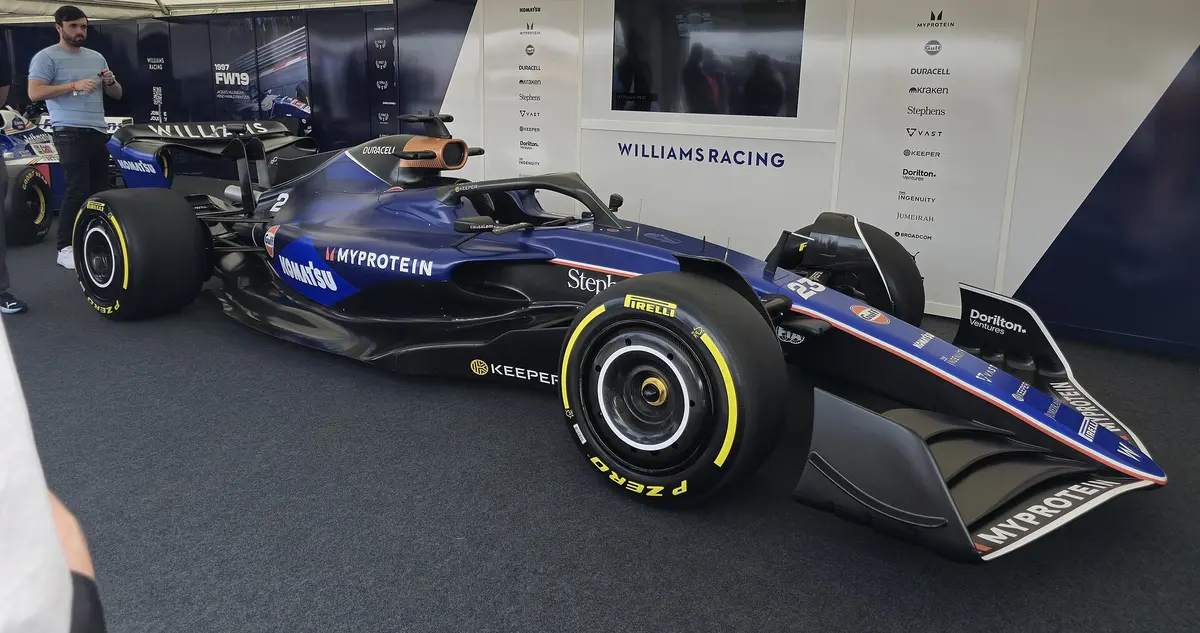
Photo: Calreyn88 / CC-BY-SA-4.0
As the Formula 1 circus rolls into Miami for one of the sport's most glamorous and technically demanding rounds of the 2026 season, Pitpass.com has secured an exclusive insight from Paul Williams, Chief Trackside Engineer, who has outlined the key technical factors set to shape the Miami Grand Prix weekend. With the 2026 regulations already proving to be a significant talking point across the paddock — from active aerodynamics to the revised overtake boost systems — the Miami International Autodrome presents a unique confluence of engineering challenges that will test every team's trackside preparation and strategic adaptability.
Williams' pre-event breakdown gives fans and analysts a rare window into the granular thinking that underpins a modern Formula 1 race weekend. Far from the glamour of the pitlane and the roar of the crowd, it is the meticulous technical planning conducted in the days before a wheel turns in anger that often determines competitive outcomes. In Miami, where the circuit's characteristics place specific demands on power unit management, tyre behaviour, and aerodynamic configuration, those preparations take on even greater significance.
Paul Williams on the Technical Challenges of the Miami Circuit
Paul Williams, as Chief Trackside Engineer, occupies one of the most demanding roles in modern Formula 1. His responsibilities extend across the full spectrum of race weekend engineering — from overseeing setup philosophy in practice sessions through to real-time strategic decision-making during the race itself. His pre-Miami assessment, shared via Pitpass.com, highlights just how multifaceted the engineering puzzle is at this particular venue.
The Miami International Autodrome, constructed in the car park surrounding Hard Rock Stadium, is a semi-permanent street-style circuit that blends elements of traditional permanent tracks with the unpredictability of urban racing environments. Its surface characteristics, including the evolution of grip levels across a race weekend, are a primary concern for any trackside engineering team. In the early practice sessions, the track tends to offer lower grip as rubber is laid down progressively — a factor that complicates tyre warm-up modelling and single-lap qualifying simulations.
Williams' insights underscore how the 2026 technical regulations have added further layers of complexity to this already challenging picture. The new active aerodynamic systems, which allow drivers to modulate downforce levels dynamically, interact with Miami's mix of high-speed sweepers and tight, low-speed chicanes in ways that demand precise calibration. Setting the aerodynamic platform for Miami is not a binary choice between high and low downforce — it requires a nuanced balance that the new regulations have made simultaneously more powerful as a tool and more difficult to optimise.
Power Unit Thermal Management in Miami's Climate
One of the perennial engineering concerns at the Miami Grand Prix is thermal management. Racing in South Florida in May means ambient temperatures regularly climb above 30 degrees Celsius, with track temperatures potentially reaching 50 degrees Celsius or beyond. For the 2026 power units — which represent an entirely new technical formula blending internal combustion efficiency with significantly enhanced electrical power recovery — managing heat across the entire powertrain becomes critically important.
Williams' role as Chief Trackside Engineer places him at the centre of decisions around cooling configurations, which directly influence aerodynamic performance. Additional cooling apertures generate drag, eating into straight-line speed on Miami's longest straights. Yet insufficient cooling risks reliability issues that could compromise a team's championship programme. In the context of the 2026 season, where the competitive order is still being established and points carry premium value, reliability-versus-performance trade-offs carry enormous strategic weight.
Tyre Behaviour and Track Evolution
Pirelli's compound selection for Miami and the way those tyres interact with the circuit's abrasive but progressively rubbering surface is another area where Williams' pre-event preparation will be crucial. The semi-permanent nature of the Miami circuit means the track surface can change substantially between Friday practice and Sunday's race, as rubber builds up on the racing line and track temperatures fluctuate with the time of day.
In 2026, with heavier cars resulting partly from the new energy recovery architecture and the updated chassis regulations, tyre degradation patterns have become an even more prominent factor in race strategy. Understanding how tyres degrade at Miami — and modelling that degradation across different fuel loads, deployment strategies, and driving styles — is precisely the kind of technical groundwork that a Chief Trackside Engineer like Paul Williams coordinates in the days leading up to a race weekend.
The Broader Technical Context: 2026 Regulations and Miami's Unique Demands
The Miami Grand Prix arrives at a point in the 2026 season where teams are still accumulating vital data on how the sweeping regulatory overhaul is translating into real-world performance at a diverse range of circuit types. The early 2026 calendar has already taken the field through contrasting environments — from the smooth, high-speed demands of Bahrain and Saudi Arabia to the technical intricacies of the Australian and Japanese Grands Prix — and Miami adds another distinct data point to that collection.
The 2026 regulations represent the most significant technical reset in Formula 1 in over a decade. The active aerodynamic framework — which allows elements of the car's bodywork to transition between high-downforce and low-drag configurations under defined operating conditions — fundamentally changes how engineers approach circuit-specific setup work. At Miami, where the circuit demands both genuine downforce in the stadium section and aerodynamic efficiency on the extended straight sections, the system's calibration is particularly nuanced.
The overtake boost mechanism, another distinctive feature of the 2026 technical framework, also factors prominently into Miami race strategy. By granting drivers access to additional electrical power deployment for overtaking manoeuvres, the system adds a strategic dimension that teams must plan for both offensively and defensively. Williams' trackside engineering brief will include detailed modelling of how overtake boost deployment affects energy recovery cycles across Miami's lap, ensuring drivers have access to the system at the moments that matter most on race day.
Against this technical backdrop, the 2026 grid features an intriguing mix of established engineering powerhouses and ambitious newcomers. Cadillac's debut season has brought an additional technical philosophy into the paddock, while Audi's rebrand from Sauber represents a significant long-term investment in F1's new technical era. For established operations, Miami represents an opportunity to validate setup philosophies developed over the opening rounds. For newer programmes, it is another crucial step on a steep learning curve.
Technical and Strategic Implications for Race Day
Paul Williams' pre-event technical briefing carries implications that extend well beyond pure engineering theory. The factors he has identified — circuit surface evolution, thermal management, aerodynamic configuration, and tyre behaviour — directly shape the strategic options available to teams on race day.
In Miami, where the Safety Car has historically been a frequent visitor and the pit window can be compressed by circuit position and track conditions, the ability to adapt strategy in real time is as important as the pre-event preparation. Williams' role as Chief Trackside Engineer means he sits at the intersection of pre-planned strategy and live race management, synthesising data streams from the car, the tyre models, and the broader competitive picture into actionable decisions under intense time pressure.
The DRS-free philosophy underpinning the 2026 active aero regulations also changes the overtaking calculus at Miami. Without a conventional drag reduction system, the interplay between manual driver deployment of low-drag modes and the overtake boost system creates new tactical possibilities — and new vulnerabilities — that Miami's layout will expose in distinctive ways. Engineering teams that have invested most heavily in understanding these interactions stand to gain the greatest advantage across the weekend.
Key Takeaways
- Paul Williams, Chief Trackside Engineer, has provided pre-event technical insights into the key factors shaping the Miami Grand Prix weekend, as reported by Pitpass.com.
- Miami's semi-permanent circuit surface, progressive track evolution, and high ambient temperatures create a complex engineering environment for all 2026 teams.
- The 2026 active aerodynamic regulations add significant complexity to setup work at Miami, requiring precise calibration across the circuit's mixed-character layout.
- Thermal management of the 2026 power units — balancing cooling performance against aerodynamic efficiency — is a central concern in Miami's warm climate.
- Tyre degradation modelling and strategic flexibility are critical competitive differentiators at a circuit where track evolution and potential Safety Car periods can reshape race outcomes rapidly.
- The 2026 overtake boost and active aero deployment strategies introduce new tactical layers into Miami race management that teams must prepare for both offensively and defensively.
Frequently Asked Questions
Who is Paul Williams and what does a Chief Trackside Engineer do in Formula 1?
Paul Williams serves as a Chief Trackside Engineer in Formula 1, a senior role responsible for overseeing all technical and engineering operations during a race weekend at the circuit itself. This encompasses setup philosophy, real-time strategy decisions during sessions, and coordinating the engineering team's response to evolving track and competitive conditions. The Chief Trackside Engineer acts as a critical link between the factory-based analysis team and the live operational environment at the circuit.
Why is the Miami Grand Prix particularly challenging from a technical engineering perspective?
The Miami International Autodrome presents several distinct engineering challenges, including high ambient and track temperatures that stress power unit thermal management, a semi-permanent surface that evolves significantly in grip level across the weekend, and a mixed-character layout demanding a carefully balanced aerodynamic configuration. In 2026, the added complexity of active aerodynamic systems and revised energy recovery regulations makes these pre-existing challenges even more intricate to navigate.
How do the 2026 Formula 1 regulations affect preparations for the Miami Grand Prix?
The 2026 regulations — which introduced active aerodynamics, a revised overtake boost system, and an entirely new power unit formula — fundamentally change the engineering preparation required for circuits like Miami. Teams must calibrate active aero systems for Miami's specific layout, model the impact of overtake boost deployment on energy recovery across a lap, and manage the thermal demands of the new power units in South Florida's heat. These regulatory changes mean that pre-event technical preparation, of the kind shared by Paul Williams, is more consequential than ever.
What role does tyre management play in Miami Grand Prix strategy in 2026?
Tyre management is a central strategic pillar at Miami, where the track's surface evolution, high temperatures, and the increased vehicle weights associated with the 2026 technical regulations all influence degradation rates. Teams must model tyre behaviour across different fuel loads, power deployment strategies, and driving styles to determine optimal pit stop windows. The unpredictability introduced by potential Safety Car periods — historically common at Miami — adds further complexity to tyre strategy planning.
Conclusion
The insights shared by Paul Williams ahead of the Miami Grand Prix serve as a timely reminder that Formula 1's competitive battles are won and lost not only on the track but in the meticulous technical preparation that precedes every session. As Chief Trackside Engineer, Williams occupies a pivotal position in translating engineering philosophy into real-world performance — and his pre-event assessment of Miami's key technical challenges illuminates the extraordinary depth of analysis that underpins the sport's elite operations.
In the context of the 2026 season, where a sweeping regulatory overhaul has reset the competitive landscape and introduced powerful new technical tools for teams and drivers to master, rounds like the Miami Grand Prix carry amplified significance. The circuit's unique characteristics — thermal demands, surface evolution, mixed aerodynamic requirements — provide a comprehensive test of every team's engineering depth and adaptability.
For fans seeking to understand what separates the contenders from the frontrunners in 2026, the kind of technical groundwork that Williams has outlined is essential reading. As the weekend unfolds at the Miami International Autodrome, the decisions made in engineering meetings and strategy briefings in the days prior will shape every lap of racing action. That is the invisible but decisive world of Formula 1's trackside engineering — and Paul Williams is one of its most authoritative voices.
In this article
Written with AI assistance. How this site works