Victor Martins: Williams Test Driver Eager for Formula E Switch
Victor Martins, Williams F1's test and development driver, has been linked with a Formula E switch via Nissan, signalling the electric series' growing pull on elite talent.
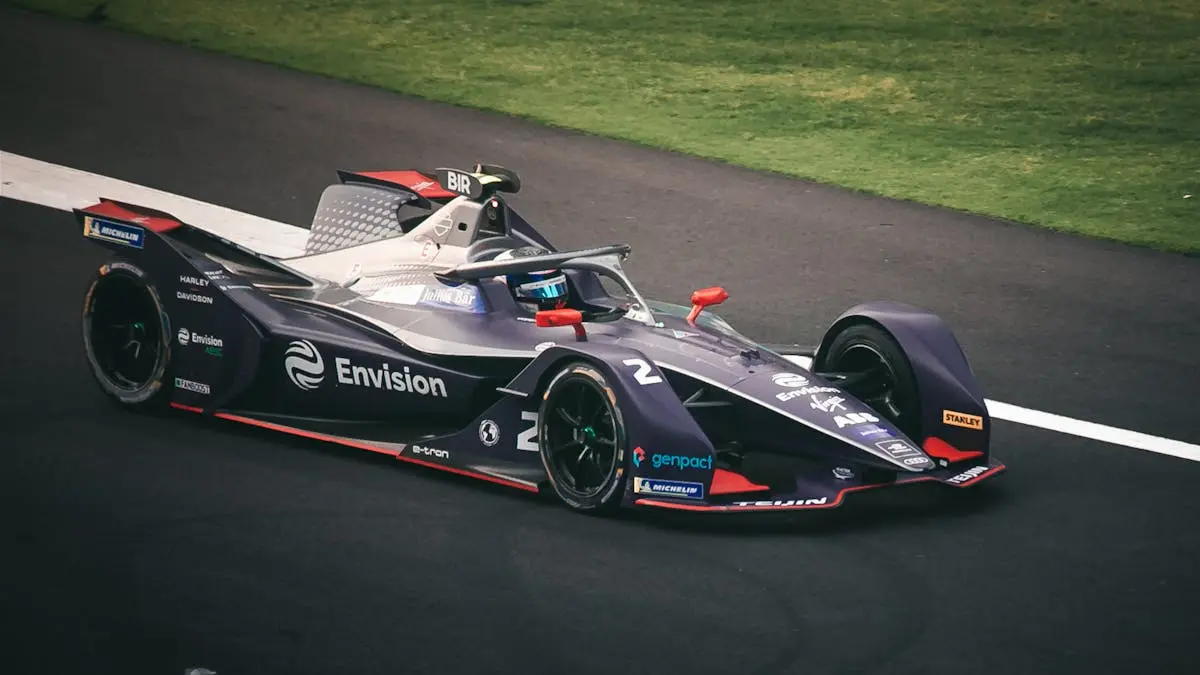
Victor Martins, Williams F1's test and development driver, has emerged as the man behind the headline — a Williams-connected driver expressing genuine eagerness to pursue a Formula E switch. According to reporting from racingnews365.com, Martins has been linked with a Nissan Formula E future, with the all-electric series representing an increasingly attractive proposition for a driver seeking competitive race mileage at the highest level of electric single-seater motorsport. In the context of Formula E's Gen3 Evo era and the anticipation building toward the transformative Gen4 regulations on the horizon, the timing of such interest carries real strategic weight.
Formula E in Season 12 has never been more competitive, more technically sophisticated, or more globally prominent. The series attracts factory involvement from Jaguar, Porsche, Nissan, DS Penske, Mahindra, Andretti, Envision Racing, Lola Yamaha ABT, Citroen Racing, and Cupra Kiro — a depth of manufacturer commitment that underscores the championship's maturity. Against this backdrop, the prospect of a Williams-affiliated driver entering the Formula E ecosystem adds another compelling storyline to an already captivating season.
Victor Martins and the Nissan Formula E Connection
The specific Formula E pathway for Martins appears to run through the Nissan Formula E Team — one of the series' established manufacturer entrants, currently fielding Oliver Rowland and Norman Nato in Season 12 competition. Reports from both The Race and racingnews365.com indicate that Martins' role as a Williams F1 test and development driver has not extinguished his ambitions for a race seat, and Formula E has materialised as a realistic and appealing route back to competitive racing.
Martins is not an unknown quantity in elite single-seater competition. His career trajectory through the junior formulae demonstrated consistent pace and racecraft, earning him the Williams development role. However, test and simulator work, while technically valuable, does not satisfy the competitive hunger that drives top-level racing drivers. Formula E, with its gruelling street circuit calendar, aggressive energy management demands, and genuine factory competitiveness across the field, represents a credible arena in which Martins could demonstrate his abilities in race conditions at the highest level of electric motorsport.
The Nissan link is particularly noteworthy. Nissan has invested significantly in Formula E infrastructure and driver development, and securing a Williams-affiliated talent with strong single-seater credentials would align with their stated ambitions to remain competitive as the series transitions toward its next regulatory chapter.
Why a Williams-Affiliated Driver Eyeing Formula E Matters
Formula E crossover moves from the Formula 1 ecosystem — whether from race drivers, reserve drivers, or test and development personnel — remain headline events precisely because they signal the series' growing credibility. When drivers connected to historic F1 constructors openly express eagerness for a Formula E switch, it reinforces the championship's standing as a genuine top-tier motorsport destination rather than a consolation prize.
Williams, now racing under the Atlassian Williams F1 Team banner in 2026, remains one of the sport's most recognisable constructors. A driver in their technical programme carries implicit validation from an F1 environment, and their desire to enter Formula E speaks volumes about how the all-electric series is perceived within professional motorsport circles. Formula E is no longer viewed as a retirement paddock or a stepping stone away from relevance — it is viewed as a technically rich, fiercely competitive, and strategically demanding championship that rewards exceptional talent.
The Appeal of Formula E's Unique Technical Challenge
What makes Formula E uniquely attractive to drivers with serious technical ambitions? The answer lies in the series' distinctive competitive DNA. Unlike Formula 1, where aerodynamic performance and power unit advantage frequently dominate championship outcomes, Formula E places a premium on energy strategy, driver efficiency, and the ability to extract maximum performance from circuit environments that are consistently tight, unforgiving, and demand constant adaptation lap by lap.
The Gen3 Evo car's active all-wheel drive system — available in qualifying, at race starts, and during Attack Mode activation — means drivers must master multiple powertrain states within a single competitive session. The transition between rear-wheel-drive racing mode and full AWD attack phases requires intuitive feel, precise technique, and rapid cognitive adaptation. These are precisely the attributes that elite single-seater drivers, trained in the exacting environment of Formula 1 development programmes, typically possess in abundance.
The standardised Hankook tyre supply, uniform across all ten teams, removes one variable from the performance equation and places the emphasis squarely on driver skill and team strategy. For a driver with high-level single-seater experience seeking a meritocratic arena, Formula E's technical architecture is genuinely compelling.
Context: Formula E's Growing Pull on F1-Ecosystem Talent
The Martins situation does not exist in isolation. It reflects a broader pattern of Formula 1-adjacent talent being drawn toward — or actively courted by — Formula E in recent seasons. Former Williams Academy driver Zak O'Sullivan was confirmed as Envision Racing's entry for a Formula E rookie practice session in Jeddah, Saudi Arabia, demonstrating that the Williams pipeline has multiple points of contact with the all-electric series. Meanwhile, former Red Bull Formula 1 driver Daniil Kvyat has been a regular presence at Formula E rookie tests, continuing to pursue a seat in the category despite years of effort.
These are not isolated curiosities. They represent a structural shift in how drivers at various stages of their careers perceive Formula E. The series has successfully positioned itself as a destination where elite talent can compete at the highest level of electric motorsport, in front of global manufacturers who are deeply invested in the technology's road relevance. For a driver like Martins, whose F1 race opportunities remain constrained by the intensely competitive nature of the grid, Formula E offers something invaluable: a race seat in a world championship.
The timing also intersects with one of the most significant regulatory transitions in Formula E history. The Gen3 Evo era — Season 12 — represents the evolutionary peak of the current technical regulations, with the next-generation Gen4 cars set to usher in a new performance and design philosophy in the seasons ahead. A driver entering Formula E now would be joining at a moment of genuine technical excitement, with the opportunity to grow with new regulations rather than playing catch-up to an established order.
Technical and Strategic Implications of the Formula E Switch
For any driver transitioning from the Formula 1 ecosystem to Formula E, the technical recalibration required is substantial but navigable for elite talent. The most significant adjustment involves energy management philosophy. In Formula E, a driver's ability to recuperate energy intelligently under braking, manage deployment across a stint without a traditional pit stop for fuel, and optimise Attack Mode timing relative to rivals constitutes a core competency that can be the difference between victory and a midfield finish.
The street circuit environment presents an additional layer of challenge. Formula E races exclusively on temporary street circuits — from Monaco to Jakarta, from São Paulo to Tokyo — where the margin for error is minimal and where track evolution across a race weekend is dramatic. Drivers who have honed their car control in Formula 1 machinery, where grip levels and circuit familiarity are established over multiple days of running, must rapidly recalibrate their reference points for circuits where the racing line may change significantly between free practice and race day.
For Nissan specifically, the integration of a development driver of Martins' calibre into their programme — whether in a reserve, rookie practice, or eventual race role — would represent a meaningful investment in talent depth as the team navigates the competitive demands of Season 12 and prepares for the regulatory transition ahead.
Key Takeaways
- Victor Martins, Williams F1 test and development driver, has been linked with a Formula E switch via the Nissan Formula E Team, according to reports from racingnews365.com and The Race.
- The Williams connection to Formula E is broader than one driver — former Williams Academy driver Zak O'Sullivan has already taken part in a Formula E rookie practice session with Envision Racing in Jeddah.
- Formula E's Gen3 Evo regulations in Season 12 feature active AWD in qualifying, race starts, and Attack Mode, creating one of the most technically demanding car-control environments in professional motorsport.
- The Hankook standardised tyre supply and energy management demands place a premium on driver skill and team strategy — a meritocratic environment attractive to proven single-seater talent.
- The broader pattern of F1-ecosystem drivers pursuing Formula E seats reflects the series' growing prestige and its positioning as a credible world championship destination.
- With Gen4 regulations on the horizon, drivers entering Formula E now have the opportunity to grow with a transformative new regulatory chapter.
Frequently Asked Questions
Which Williams driver is eager for a Formula E switch?
Victor Martins, who serves as a test and development driver for Williams F1, has been linked with a move to Formula E. Reports from racingnews365.com and The Race indicate Nissan Formula E has emerged as a potential destination for the French driver.
What is the connection between Williams and Formula E?
Williams has multiple points of contact with Formula E's talent ecosystem. Beyond Victor Martins' reported interest in a race switch, former Williams Academy driver Zak O'Sullivan participated in a Formula E rookie practice session with Envision Racing in Jeddah, Saudi Arabia. The overlap between Williams' development pipeline and Formula E's driver market reflects the series' growing appeal within the F1 community.
How does the Gen3 Evo Formula E car differ from an F1 car for a driver making the switch?
The Gen3 Evo car produces 350kW (approximately 470hp equivalent) and features active all-wheel drive in qualifying, at race starts, and during Attack Mode. Unlike Formula 1, Formula E races entirely on temporary street circuits without mid-race refuelling, placing enormous emphasis on energy recuperation, strategic deployment, and rapid adaptation to a constantly evolving track surface. These demands make the transition technically challenging but well-suited to drivers with elite single-seater backgrounds.
Why would a Williams-affiliated driver choose Formula E over other racing series?
Formula E offers something that many alternative series cannot match: a genuine FIA World Championship seat with full factory manufacturer backing. For a driver whose Formula 1 race opportunities are limited by grid competition, Formula E provides competitive race mileage at the highest level of electric motorsport, global visibility, and the technical challenge of mastering one of the sport's most demanding regulatory frameworks. The series' trajectory — with Gen4 regulations ahead — also offers long-term career development potential.
Conclusion
The reported eagerness of Victor Martins — Williams F1's test and development driver — to pursue a Formula E switch via the Nissan programme is a story that extends well beyond one driver's career ambitions. It is a reflection of Formula E's transformation into a genuinely prestigious world championship that attracts serious talent from across the motorsport landscape, including from within the Formula 1 ecosystem itself.
As Season 12 continues with the Gen3 Evo cars at their competitive peak, and with the Gen4 era waiting on the horizon to reshape the technical landscape once again, the series represents an opportunity for elite drivers to compete at the highest level of electric single-seater racing. For Martins, a Formula E switch would be far from a step backwards — it would be a step into one of motorsport's most technically demanding and strategically complex arenas. Whether the Nissan connection materialises into a formal role remains to be seen, but the intent is clear: Formula E's pull on F1-adjacent talent has never been stronger.
In this article
Written with AI assistance. How this site works