Formula E Gen4 Car: The 'Mind-Blowing' Feature Explained
Formula E's Gen4 car has been labelled a 'monster' with a 'mind-blowing' feature by insiders. Here's what the next-gen machine signals for electric motorsport.
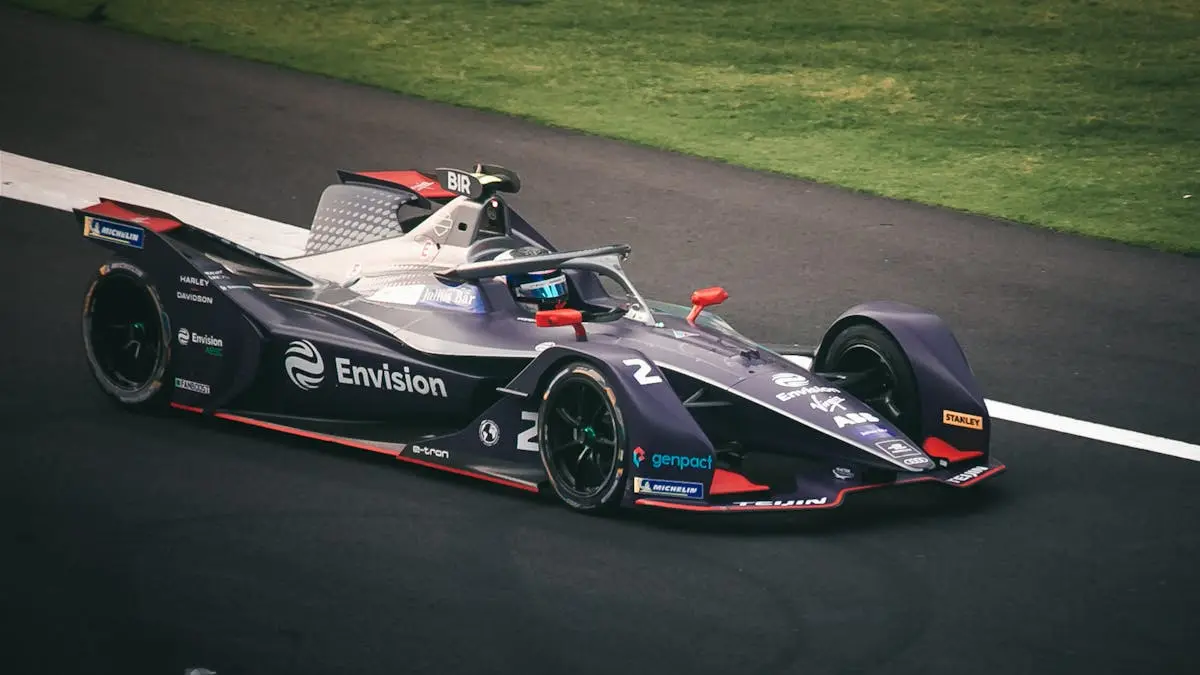
Formula E is no stranger to innovation, but the buzz surrounding the championship's next generation of machinery has reached an entirely new level. A headline-grabbing description — 'mind-blowing' — has been attached to one of the standout features of Formula E's forthcoming Gen4 car, the machine set to succeed the current Gen3 Evo platform that has defined the 2025/26 season. As the sport's technical community digests what promises to be a genuinely transformative leap forward, the anticipation around the Gen4 Formula E car is growing louder with every passing race weekend.
In a championship where technological boundaries are consistently pushed — from active all-wheel drive to regenerative braking systems capable of recovering energy under deceleration at a rate that would astonish road car engineers — the bar for what constitutes truly extraordinary engineering is already extraordinarily high. Yet sources close to Formula E's development programme are using language that suggests the Gen4 machine is something categorically different: a genuine 'monster' in terms of performance, efficiency, and technical ambition.
This article breaks down what we know about the Gen4 Formula E car, why the 'mind-blowing' framing matters, and what it signals for the future of electric motorsport.
Formula E's Gen4 Car: A New Era of Electric Performance
The current Formula E field competes with the Gen3 Evo specification — an evolution of the Gen3 platform that brought significant upgrades in power output, aerodynamic efficiency, and powertrain integration. Season 12 of the ABB FIA Formula E World Championship has showcased the Gen3 Evo at its most refined, with teams like Jaguar TCS Racing, Porsche, and DS Penske extracting every last percentage from their respective powertrain packages.
But the Gen4 car represents something far beyond an incremental evolution. Industry insiders and those with access to the development project have begun using superlatives that are rarely deployed in technical motorsport circles. The description of a feature as 'mind-blowing' — as reported by racingnews365.com — is notable precisely because Formula E's engineering community tends toward measured, data-driven language. When engineers and insiders reach for that kind of vocabulary, it signals a genuine step-change rather than a marketing exercise.
What Makes the Gen4 Car a 'Monster'?
While full technical specifications for the Gen4 car have not yet been officially released in comprehensive detail, the framing of the machine as Formula E's 'new monster' speaks to several areas where significant development is expected and where the Gen3 Evo has laid important groundwork:
- Power output: The Gen3 Evo operates at a maximum of 350kW (approximately 470hp equivalent) in race conditions. The Gen4 is widely anticipated to push beyond this threshold, potentially redefining the performance ceiling for electric single-seaters in a championship context.
- Active aerodynamics: Formula E has been exploring active aero concepts that go well beyond passive downforce generation. Any integration of intelligent, driver-adjustable or automatically-managed aerodynamic systems on the Gen4 car would represent a significant technical milestone.
- Regenerative efficiency: Each successive Formula E generation has improved the ratio of energy recovered during braking and deceleration. The Gen4 platform is expected to raise this ceiling further, making the car not just faster but smarter in how it manages its energy envelope across a full race distance.
- Powertrain integration: The relationship between the battery, motor, and inverter systems in Gen3 Evo cars is already deeply sophisticated. Gen4 is expected to tighten this integration further, reducing energy loss and improving thermal management — areas that have a direct impact on lap time and race strategy.
The 'Mind-Blowing' Feature: Context and Significance
The specific feature described as 'mind-blowing' by those who have seen or worked with the Gen4 car's development has captured significant attention in the Formula E technical community. The language itself is telling: in a sport where every team employs engineers who have worked at the highest levels of motorsport and the automotive industry, something has to be genuinely extraordinary to earn that descriptor.
Formula E has always positioned itself as a proving ground for technologies that eventually filter into road cars — a philosophy that drives both its regulatory framework and its appeal to manufacturer partners. If the Gen4 car's standout feature is 'mind-blowing' to insiders, the implication is that it has relevance not just to racing performance, but potentially to the broader electric vehicle industry. This is the kind of innovation loop that has kept major manufacturers like Porsche, Jaguar, Nissan, and DS invested in the championship despite the significant cost and resource commitments involved.
Context: The Gen3 Evo Foundation
To fully appreciate the significance of the Gen4 car's development trajectory, it's worth understanding the platform it builds upon. The Gen3 Evo, which powers the current Season 12 grid, was itself a substantial upgrade over the original Gen3 specification. Key improvements included enhanced rear powertrain performance, revised aerodynamic surfaces, and refined energy management software that gave teams and drivers more tools to manage race-pace energy consumption.
Season 12 has featured some of the most technically competitive racing in Formula E's history, with the likes of Antonio Felix da Costa and Mitch Evans at Jaguar TCS Racing, Pascal Wehrlein at Porsche, and Taylor Barnard at DS Penske all demonstrating how finely matched the Gen3 Evo specification has made the field. The tight performance window between teams — a direct consequence of the control chassis and tyre (Hankook) regulations — means that marginal gains in powertrain efficiency and energy deployment strategy often separate race winners from midfield finishers.
This competitive context makes the Gen4 development even more consequential. Teams will not only need to master a new and potentially vastly more powerful machine — they will need to do so while preserving the competitive balance that has made Formula E one of the most unpredictable championships in global motorsport.
The active all-wheel drive system available to Gen3 Evo drivers in qualifying, race starts, and Attack Mode has been one of the defining technical talking points of the current era. Whether the Gen4 car extends, refines, or fundamentally reimagines this system is one of the key questions that will shape the championship's next chapter.
Technical and Strategic Implications for Teams
The arrival of the Gen4 car will require every team on the Formula E grid to undertake a significant development reset. Unlike an evolution programme — where existing knowledge and infrastructure can be adapted — a new generation platform typically demands fresh thinking across aerodynamics, software architecture, and powertrain philosophy.
For manufacturer-backed teams like Porsche, Jaguar, and Nissan, the Gen4 transition will involve substantial investment in new powertrain development, with each manufacturer permitted to develop their own rear powertrain within the technical regulations. This is where the competitive differentiation happens in Formula E — and where a 'mind-blowing' technical feature, if it opens new avenues for powertrain or energy system innovation, could create meaningful performance gaps in the early races of the Gen4 era.
Driver adaptation will also be critical. A car described as a 'monster' in performance terms will demand a recalibration of braking references, throttle application, and energy recovery deployment from even the most experienced Formula E competitors. The drivers who adapt quickest — whether veterans like Jean-Eric Vergne, Sebastian Buemi, or Lucas di Grassi, or newer talents like Zane Maloney and Arvid Lindblad — will likely set the early championship narrative.
Key Takeaways
- Formula E's Gen4 car has been described as a 'monster' with a 'mind-blowing' standout feature, signalling a major technical leap beyond the current Gen3 Evo specification.
- The Gen3 Evo currently powers Season 12 competition at a maximum of 350kW, with active AWD available in qualifying, race starts, and Attack Mode.
- The Gen4 platform is expected to push beyond current power, efficiency, and integration benchmarks, with implications for both racing performance and road car technology transfer.
- Every manufacturer-backed team on the current grid will need to undertake significant development work to prepare for the Gen4 transition.
- The competitive balance achieved under Gen3 Evo regulations will be a key benchmark for how successfully Gen4's technical framework is managed.
- Driver adaptability to the new 'monster' machine will be a key differentiator in the early stages of the Gen4 era.
Frequently Asked Questions
What is the Formula E Gen4 car?
The Formula E Gen4 car is the next generation of single-seater machinery set to succeed the current Gen3 Evo platform in the ABB FIA Formula E World Championship. It is expected to deliver significant advances in power output, energy efficiency, and technical innovation compared to its predecessor. Full official specifications have not yet been comprehensively released.
What is the 'mind-blowing' feature of the Gen4 Formula E car?
The specific feature described as 'mind-blowing' has been referenced by sources close to the Gen4 development programme and reported by racingnews365.com. While the precise detail of this feature has not been fully disclosed in public documentation, the language used by insiders suggests it represents a genuinely novel technical advancement rather than an incremental improvement on existing systems.
When will the Gen4 Formula E car debut?
The Gen4 car is anticipated to debut in the season following the current Season 12 Gen3 Evo campaign. Formula E's regulatory cycle typically involves a multi-year platform commitment, meaning the transition to Gen4 represents a significant structural moment for the championship's competitive and technical landscape.
How does the Gen3 Evo differ from previous Formula E generations?
The Gen3 Evo is an upgraded version of the Gen3 specification, featuring enhanced powertrain performance, revised aerodynamics, and improved energy management systems. It operates at up to 350kW maximum power and introduced active all-wheel drive capability for qualifying, race starts, and Attack Mode — a significant technical advance over the Gen2 era. The Hankook tyre supply arrangement also continues under the Gen3 Evo regulations.
Conclusion
The emergence of 'mind-blowing' as a descriptor for a feature of Formula E's Gen4 car is more than just a compelling headline — it is a signal that the championship's next technical chapter may be its most ambitious yet. In a sport that has consistently used racing as a laboratory for electric vehicle innovation, the Gen4 platform carries the weight of both sporting competition and industrial relevance.
As Season 12 unfolds with the Gen3 Evo delivering some of the most tightly contested racing in the championship's history, the spotlight on what comes next is intensifying. The teams, engineers, and drivers who will shape the Gen4 era are already preparing for a machine that, by all accounts, will demand the highest levels of technical and competitive adaptation.
For fans, engineers, and manufacturers alike, the Formula E Gen4 car is shaping up to be not just an evolution of electric motorsport — but a statement of intent about where the technology is headed. Whatever the 'mind-blowing' feature turns out to be, the anticipation it has already generated speaks volumes about the ambition driving Formula E's next generation forward.
In this article
Written with AI assistance. How this site works