Turkish Grand Prix Returns to F1 in 2027 with Five-Year Deal
The Turkish Grand Prix returns to Formula 1 in 2027 under a five-year deal involving the Turkish government, bringing Istanbul Park back permanently.
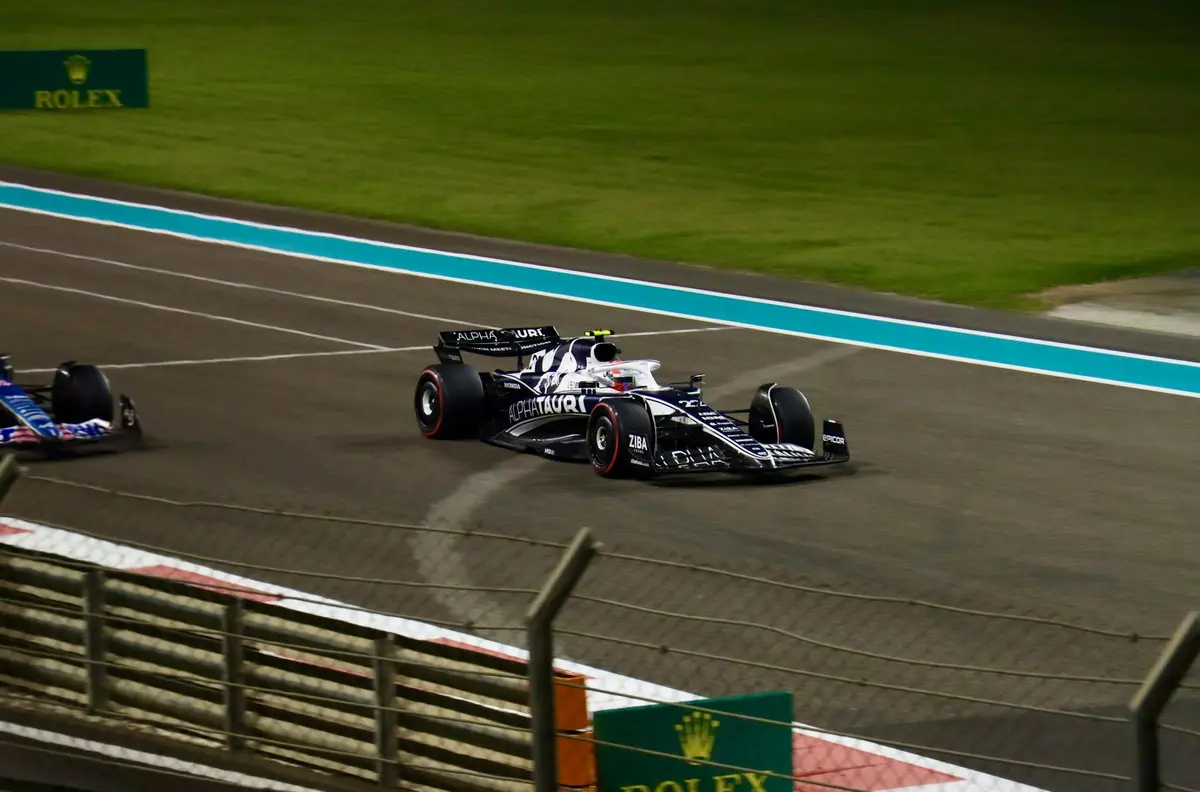
The Turkish Grand Prix is officially returning to the Formula 1 calendar in 2027, with a landmark five-year deal agreed between F1 series bosses, the Turkish government, and Turkish stakeholders. Istanbul Park, the sweeping circuit located on the European side of the country's largest city, will welcome back grand prix racing after a prolonged absence that followed its brief revival as a COVID-era replacement event in 2020 and 2021. For fans of F1's more technical and flowing layouts, this is significant and welcome news — and the implications for the 2027 season onward are far-reaching.
The agreement secures Istanbul Park's place on the calendar not as a temporary fixture but as a permanent slot, ending years of lobbying by Turkish authorities and circuit promoters who had pushed hard for a sustained presence on the world stage. The five-year term of the deal means the Turkish Grand Prix is locked in through at least the 2031 season, giving teams, sponsors, and fans the kind of long-term certainty that short-term hosting agreements rarely provide.
The Road Back to Istanbul: How the Turkish Grand Prix Secured Its Return
Istanbul Park's history with Formula 1 is one defined by a frustrating cycle of on-again, off-again appearances. The circuit debuted on the calendar in 2005 and ran through to 2011 — a seven-year stint that produced some genuinely memorable moments before commercial disagreements and financial factors pushed it off the schedule. The departure was not the result of any failing on the circuit's part as a racing venue; rather, a breakdown in negotiations between F1 supremo Bernie Ecclestone and race organisers made it impossible to continue. Location and transportation challenges at Istanbul Park also contributed to the difficulties, compounding the commercial impasse that ultimately ended the race's original run.
Its return in 2020 and 2021 came under exceptional circumstances — the global COVID-19 pandemic had decimated the original calendar, and promoters needed reliable alternative venues that could deliver a quality racing product at short notice. Istanbul Park delivered on both counts, drawing widespread praise for its challenging layout and the quality of racing it produced. That two-year stint reignited debate about whether Turkey deserved a permanent berth on the modern Formula 1 calendar.
Turkish authorities clearly believed so, and they have since been in sustained dialogue with Formula 1 Management to make that case. The new five-year agreement, involving support from the Turkish government itself, signals that this time the commitment is institutional rather than opportunistic. Government backing at this level typically means infrastructure investment, promotional support, and the kind of financial guarantee that makes long-term calendar planning possible for F1's commercial rights holder.
The timing of this announcement — made during the 2026 season — also reflects Formula 1's ongoing expansion strategy. The sport is currently navigating record-breaking levels of global interest, driven in part by the Netflix-era fanbase and the highly competitive 2026 regulations cycle. Adding a marquee venue with an established racing pedigree to the 2027 calendar fits squarely within that growth narrative.
Why Istanbul Park Is One of F1's Most Respected Venues
Among the paddock's technical community, Istanbul Park occupies a special place. Designed by Hermann Tilke, the circuit is widely regarded as one of his finest works — a rare example where the renowned track designer's tendency toward long straights and tight hairpins gave way to something altogether more adventurous.
The circuit's crown jewel is Turn 8, a long, multi-apex left-hander that subjects cars to sustained high-G lateral loading across a significant portion of the lap. At full speed, drivers experience forces comparable to the most demanding corners in the sport, and the corner rewards cars with genuine mechanical and aerodynamic balance over raw horsepower. In an era defined by the new 2026 active aerodynamic regulations — which have fundamentally altered the relationship between drag, downforce, and straight-line speed — Istanbul's high-speed, high-load corners will present a fascinating new test for the current generation of machinery.
The circuit also features significant elevation changes and a mix of medium-speed and high-speed sections that demand a well-rounded car setup. Teams cannot simply optimise for straight-line performance or peak downforce; Istanbul Park punishes compromise and rewards holistic engineering. That makes it a particularly intriguing destination for the 2027 generation of cars, which will have been racing for one full season under the 2026 rules before arriving at Istanbul for the first time.
Turn 8: The Corner That Defines Istanbul Park
Turn 8 deserves particular attention in the context of the 2026 and 2027 technical regulations. The 2026 rules introduced an active aerodynamic system — sometimes called the "manual override" or overtake-boost aero — that allows drivers to alter their car's aerodynamic configuration in real time. At a corner like Turn 8, which demands sustained downforce over a long arc rather than a brief peak load, the interaction between active aero settings and mechanical grip will create new strategic and setup variables that teams will be working to understand from the very first practice session.
Tyre management at Istanbul Park has historically been severe, with the lateral forces through Turn 8 generating unusual wear patterns on the left-rear tyre in particular. Pirelli's 2027 compound selection and the teams' tyre strategies will be closely watched, especially given that the 2026-spec cars — heavier on energy management than their predecessors — will be deploying that power through a corner that tests every element of the power unit's integration with the chassis.
Context: What the Turkish Grand Prix Return Means for the 2027 F1 Calendar
The 2027 Formula 1 season will already be a significant one by any measure. It arrives in the second year of the sweeping 2026 regulatory overhaul, meaning teams will have had one year to develop their understanding of the new active aerodynamic architecture and the revised power unit regulations. The addition of the Turkish Grand Prix to that calendar adds an immediately compelling race to a season that was already generating considerable anticipation.
From a calendar-balance perspective, Istanbul Park's return also provides a European venue with genuine technical pedigree at a time when the calendar has increasingly tilted toward newer street circuits and purpose-built facilities in growth markets. While those events are commercially important for Formula 1's global expansion, the sport's core enthusiast audience has repeatedly expressed appetite for circuits that test the limits of both driver skill and engineering ingenuity. Istanbul Park does both.
The five-year duration of the deal also has implications beyond 2027. By securing the Turkish Grand Prix through at least 2031, Formula 1 is effectively guaranteeing Istanbul Park's place in the sport across the entirety of whatever regulatory framework follows the 2026 cycle. That gives teams, sponsors, and the host nation the kind of planning horizon that transforms a race from an annual uncertainty into a cornerstone event.
For the 2026 grid, the news arrives as teams are already deep into developing their 2027 specifications. Engineers at McLaren, Ferrari, Red Bull, Mercedes, and every other outfit on the grid will now be factoring Istanbul Park's unique demands into their longer-term development roadmaps — another reminder that in Formula 1, today's calendar announcement shapes tomorrow's car design philosophy.
Technical and Strategic Implications for 2027
Istanbul Park's return will force teams to revisit setup philosophies that haven't been tested at this circuit in the 2026-regulation context. The circuit's blend of high-speed sweepers and technical infield sections creates a setup conflict that has historically caught underprepared teams off guard. With the 2026 active aero systems adding another variable, race engineers will face fresh trade-offs between qualifying pace and race-day degradation management.
Strategically, Istanbul Park has historically produced multi-stop races driven by tyre wear rather than safety car interventions, which tends to reward teams with strong race-pace consistency over those who sacrifice tyre life in pursuit of outright qualifying performance. For a sport in which the 2026 regulations have already shaken up the established performance hierarchy — with Cadillac entering as the grid's 11th team and Audi debuting as a rebranded constructor — the Turkish Grand Prix could prove to be an early differentiator in the 2027 championship picture.
Key Takeaways
- The Turkish Grand Prix will return to the Formula 1 calendar in 2027 under a new five-year deal, securing Istanbul Park through at least the 2031 season.
- The deal was agreed between Formula 1 series bosses, the Turkish government, and Turkish stakeholders, representing a significantly stronger institutional commitment than the circuit's COVID-era appearances in 2020 and 2021.
- Istanbul Park originally ran on the F1 calendar from 2005 to 2011 before being dropped following a commercial dispute, making 2027 its first permanent return since the original run ended.
- Turn 8 — the circuit's iconic multi-apex high-speed left-hander — will pose unique challenges for the 2026-spec cars operating under the new active aerodynamic regulations.
- The five-year term provides teams, sponsors, and the host nation with long-term planning certainty, elevating Istanbul Park from a comeback story to a calendar fixture.
- The announcement adds a technically demanding, enthusiast-favourite venue to a 2027 calendar that will already be defined by the second year of the 2026 regulatory overhaul.
Frequently Asked Questions
When will the Turkish Grand Prix return to Formula 1?
The Turkish Grand Prix is confirmed to return to the Formula 1 calendar in 2027. The five-year deal runs from that point, meaning Istanbul Park is scheduled to host a grand prix through at least the 2031 season.
Why was the Turkish Grand Prix removed from the F1 calendar originally?
The Turkish Grand Prix's original run from 2005 to 2011 ended primarily due to a commercial breakdown in negotiations between then-F1 supremo Bernie Ecclestone and the race organisers. Location and transportation challenges at Istanbul Park also contributed to the difficulties in sustaining the event commercially.
What makes Istanbul Park special as a Formula 1 circuit?
Istanbul Park is widely regarded as one of Hermann Tilke's finest circuit designs, distinguished by its iconic Turn 8 — a long, multi-apex high-speed left-hander that generates extreme lateral G-forces and demands exceptional aerodynamic and mechanical balance. The circuit's elevation changes and flowing layout produce a genuine driver and engineering challenge rarely matched by more modern venues.
How does the Turkish Grand Prix return affect the 2026 F1 season?
The Turkish Grand Prix does not affect the 2026 season directly — it is confirmed for 2027 onward. However, teams currently competing in 2026 will already be factoring Istanbul Park's unique technical demands into their 2027 car development programmes, meaning the announcement has immediate relevance for engineering departments across the grid.
Conclusion
The return of the Turkish Grand Prix to Formula 1 in 2027 is more than a calendar addition — it is a statement about the kind of racing the sport wants to offer its global audience. Istanbul Park earned its reputation through the quality of competition it produced, not through the gloss of a newly constructed facility or the novelty of a street circuit backdrop. Its return, backed by a five-year deal and Turkish government support, suggests that Formula 1 has recognised the value of technical, challenging venues that genuinely test the sport's competitors.
For the 2026 grid — which is already navigating one of the most significant regulatory upheavals in the sport's history — the prospect of Istanbul Park on the horizon adds another dimension to the championship picture. Turn 8 awaits, and the cars, drivers, and engineers of the current era will face it equipped with technology that was unimaginable during the circuit's original run. That collision of a classic venue with a cutting-edge regulatory era is precisely the kind of storyline that makes Formula 1 endlessly compelling.
Written with AI assistance. How this site works