F1 Returns to Turkey 2027: Istanbul Park Deal Secured Until 2031
Formula 1 will officially return to Turkey from 2027, with Istanbul Park secured on the FIA World Championship calendar through 2031 under a new government-backed deal.
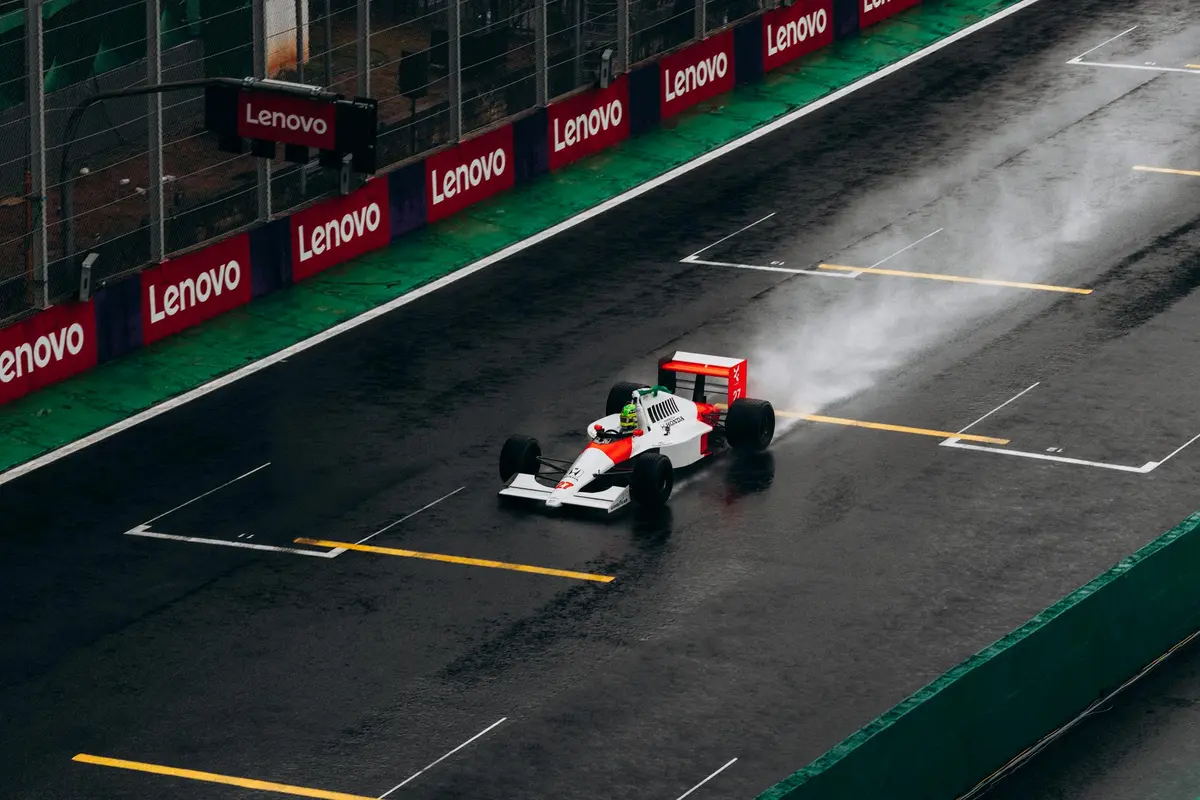
Formula 1 is set to make a landmark return to one of the sport's most beloved circuits, with the official confirmation that Istanbul Park will rejoin the FIA Formula One World Championship calendar from 2027 through to 2031. The long-term agreement, struck between Formula 1 and Turkey's Ministry of Youth and Sports, represents one of the most significant calendar announcements in recent memory — securing five consecutive years of racing at a venue that has long been celebrated by drivers, engineers, and fans alike for its extraordinary technical demands and spectacular racing.
The deal is not merely a nostalgic return. It is a strategic, commercially driven commitment that reflects both Formula 1's ambition to expand its global footprint and Turkey's growing appetite to position itself as a major host of premium international sports events. For the F1 2026 season and beyond, the calendar landscape continues to evolve rapidly, and the Istanbul Park agreement adds yet another dimension to a sport that is transforming itself at every level — from new power unit regulations to new teams on the grid.
The Istanbul Park Agreement: What We Know
According to the confirmed announcement reported by F1Technical.net, Formula 1 will officially return to Turkey from 2027 under a new long-term deal with the Turkish Ministry of Youth and Sports. The agreement locks Istanbul Park into the FIA Formula One World Championship calendar through the 2031 season — a tenure of five years that signals genuine institutional commitment from both sides.
The involvement of Turkey's Ministry of Youth and Sports — rather than a purely commercial promoter — is noteworthy. It suggests that the Turkish government views hosting Formula 1 as a matter of national prestige and strategic tourism investment, much like the frameworks seen in Saudi Arabia, Abu Dhabi, and Azerbaijan. Government-backed race deals of this nature tend to be more durable and better funded than privately promoted events, which historically have been more susceptible to financial instability.
The five-year horizon, running from 2027 to 2031, also gives Formula 1's commercial teams and broadcasting partners exceptional planning certainty. Long-term calendar stability is increasingly prioritised by Liberty Media as the sport grows its global audience, particularly in emerging markets where consistent race presence is required to build meaningful fan bases.
Why Istanbul Park Matters to Formula 1
Istanbul Park is not simply another street circuit or purpose-built facility designed primarily for commercial spectacle. It is a proper racing circuit — a high-speed, technically intricate track that has historically generated some of the most absorbing Grand Prix racing of the modern era. The circuit's layout, designed by Hermann Tilke and opened in 2005, features the now-legendary Turn 8: a long, left-hand, multi-apex corner that places extraordinary demands on tyre management, aerodynamic balance, and driver bravery.
Turn 8 alone makes Istanbul Park one of the most unique venues on the planet. Drivers carry immense lateral load through the corner across multiple apexes, making it a genuine test of a car's aerodynamic platform and a driver's ability to manage tyre degradation across an extended arc. In the context of F1's 2026 regulations — which introduced active aerodynamics, an overtake boost system derived from the new power unit architecture, and a fundamentally revised chassis philosophy — a return to Istanbul Park from 2027 raises fascinating technical questions about how next-generation cars will interact with such a demanding, old-school circuit.
Beyond Turn 8, the circuit's undulating topography and mix of high-speed and technical sections produce genuine racing variety. The track has historically been kind to multiple overtaking opportunities, rewarding strategic tyre gambles and providing meaningful jeopardy at the front of the field — qualities that are increasingly valued in an era where circuit design sometimes prioritises spectacle over pure racing challenge.
Context: Istanbul Park's History on the F1 Calendar
Istanbul Park hosted the Turkish Grand Prix as a permanent fixture from 2005 until 2011, before financial and logistical disputes led to its removal from the calendar. The circuit returned briefly as part of Formula 1's COVID-19-era calendar restructuring in 2020, and hosted a further edition in 2021 before once again falling away from the schedule.
Those brief returns reminded the paddock of exactly what had been missing. The 2020 and 2021 Turkish Grands Prix produced memorable, multi-layered races that rewarded strategic creativity and showcased genuine tyre management battles — precisely the kind of sporting narrative that differentiates the best circuits from the merely adequate. Driver feedback from those events was overwhelmingly positive, with many citing Istanbul Park among their favourite circuits on the calendar.
The gap between 2021 and the confirmed 2027 return represents a six-year absence — long enough that the circuit will be welcomed back almost as a new venue by a generation of fans who have grown up watching Formula 1 without a Turkish Grand Prix. It also means the 2027 Turkish Grand Prix will be the first time current grid members such as Isack Hadjar, Arvid Lindblad, and Andrea Kimi Antonelli — all of whom are in the early stages of their Formula 1 careers — compete at Istanbul Park in a championship context, adding a further layer of narrative intrigue.
Technical and Strategic Implications for 2027 and Beyond
From a technical standpoint, the confirmed return of Istanbul Park from 2027 gives teams and power unit suppliers a defined, multi-year window to develop circuit-specific understanding. With Formula 1's 2026 regulations having introduced a dramatically different aerodynamic and power unit philosophy — including active aero surfaces and an overtake boost mechanism — teams will have at least one full season of 2026-spec racing before Istanbul Park returns to the schedule.
The circuit's characteristics will place particular emphasis on aerodynamic efficiency and tyre thermal management, two areas where the 2026 regulations have already introduced significant complexity. Active aerodynamic systems, designed to reduce drag on straights while maximising downforce in corners, will face a genuine examination at a track where cornering load is sustained over long, sweeping arcs rather than short, sharp direction changes. Teams that master the balance between active aero deployment and mechanical grip through Turn 8 and the circuit's other high-load sections will have a meaningful competitive advantage.
Strategically, the long-term nature of the Istanbul Park deal — five years through 2031 — means that teams can begin incorporating Turkish Grand Prix characteristics into their longer-range development programmes. Tyre compounds, floor designs, and suspension geometries can all be optimised with Istanbul Park in mind as a recurring, known quantity on the calendar.
Key Takeaways
- Formula 1 will officially return to Istanbul Park from 2027, secured under a long-term agreement with Turkey's Ministry of Youth and Sports running through the 2031 season.
- The five-year deal represents one of the most significant calendar commitments in recent history, providing commercial and operational planning certainty for teams, broadcasters, and sponsors.
- Government backing from the Turkish Ministry of Youth and Sports suggests a well-funded, institutionally stable race promotion model — a positive signal for the event's long-term durability.
- Istanbul Park's unique technical character, anchored by the multi-apex Turn 8, makes it one of the most demanding and celebrated circuits in the sport's history.
- The 2027 return will be the first time several current F1 drivers — including Hadjar, Lindblad, and Antonelli — race at Istanbul Park in a championship context.
- The circuit's characteristics will provide a compelling test for Formula 1's 2026-era active aerodynamic systems and revised power unit architecture from their first return visit onwards.
Frequently Asked Questions
When will Formula 1 return to Istanbul Park?
Formula 1 will officially return to Istanbul Park from the 2027 season. The new agreement with Turkey's Ministry of Youth and Sports secures the circuit on the FIA Formula One World Championship calendar through to the end of the 2031 season, representing a five-year commitment.
Who agreed the new Formula 1 Turkey deal?
The long-term agreement was struck between Formula 1 and Turkey's Ministry of Youth and Sports. The direct involvement of a government ministry, rather than a private commercial promoter, reflects the Turkish state's strategic investment in hosting premium international sporting events at Istanbul Park.
Why was Turkey removed from the F1 calendar previously?
The source text does not detail the specific reasons for Turkey's prior calendar absences. Istanbul Park hosted the Turkish Grand Prix from 2005 to 2011 and returned briefly in 2020 and 2021, before again dropping off the schedule ahead of the confirmed 2027 comeback.
What makes Istanbul Park technically significant for F1 teams?
Istanbul Park is widely regarded as one of the most technically demanding circuits in motorsport, most notably for its iconic Turn 8 — a long, multi-apex left-hand corner that generates sustained high lateral load and places extreme demands on tyre management and aerodynamic balance. These characteristics will make it a particularly interesting test for Formula 1's current active aerodynamic regulations.
Conclusion
The confirmation that Formula 1 will return to Turkey from 2027, with Istanbul Park locked into the FIA World Championship calendar through 2031, is a genuinely significant development for the sport. It is not simply the revival of a fan-favourite circuit — though that alone would be cause for considerable enthusiasm. It is a strategically structured, government-backed, long-term commitment that adds real depth and geographic diversity to a calendar that is constantly being shaped and reshaped by commercial pressures and sporting ambition.
For the teams currently navigating the complexities of Formula 1's 2026 regulation era — adapting to active aerodynamics, new power unit architectures, and a more varied competitive landscape featuring new entrants like Cadillac and a rebranded Audi — the Istanbul Park announcement provides a future landmark to plan towards. A circuit this technically distinctive demands respect and preparation, and the five-year tenure of the deal means it will become a genuine fixture rather than a temporary guest on the schedule.
As the 2026 season unfolds and the sport's new technical era takes shape, the prospect of Formula 1's finest machinery eventually tackling Turn 8 once more is one of the most compelling calendar storylines to emerge in years. Istanbul Park's return is, emphatically, a story worth following.
Written with AI assistance. How this site works