Max Verstappen Red Bull Exit: Who Fills the Gap in 2027?
Speculation grows over a Max Verstappen Red Bull exit ahead of 2027 — but who could possibly step up to replace the four-time world champion?
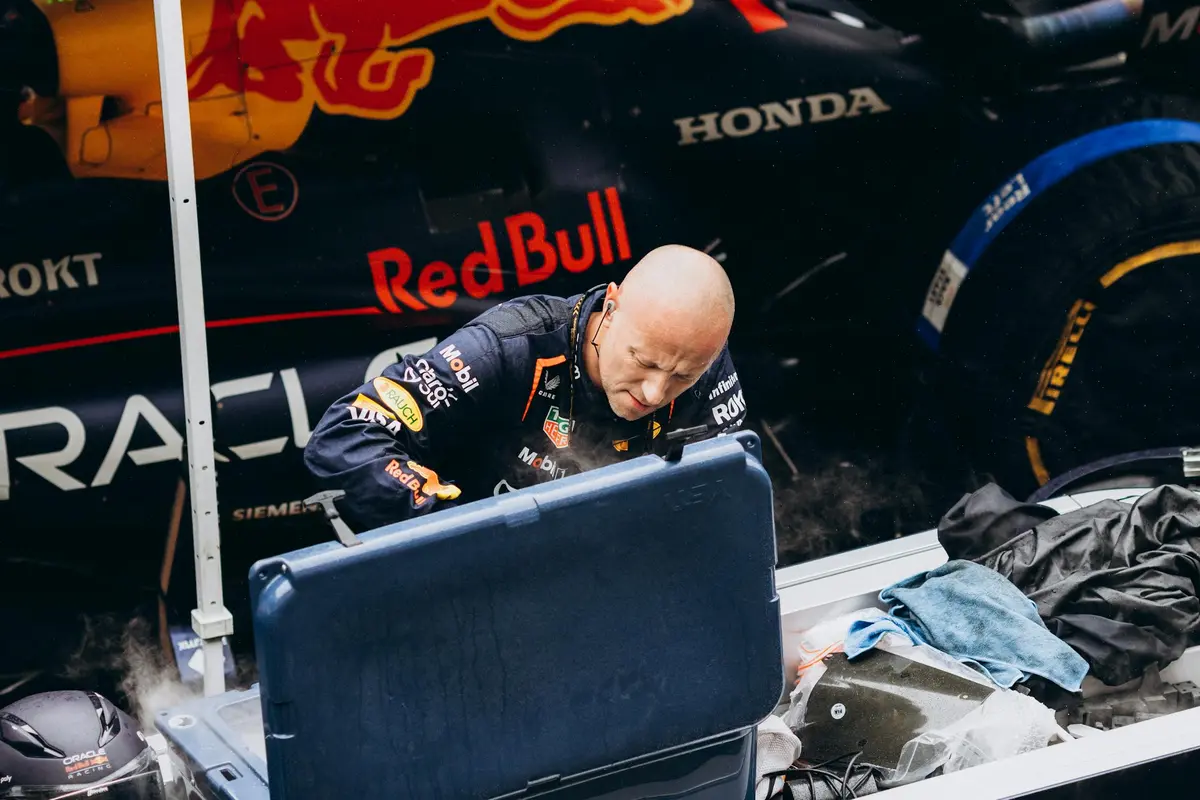
Max Verstappen's Potential Red Bull Departure: The Biggest Question in F1
The paddock is buzzing with speculation surrounding Max Verstappen's Red Bull exit ahead of the 2027 season. The four-time Formula 1 World Champion has been the undisputed cornerstone of Red Bull Racing's dominant era, and the prospect of him leaving Milton Keynes creates what would arguably be the most seismic driver market shift in over a decade. The central and deeply uncomfortable question for Red Bull is simple: who on earth steps up to fill that void?
Why a Verstappen Departure Would Be So Damaging for Red Bull
To understand the scale of the challenge, you first need to appreciate what Verstappen brings to Red Bull beyond raw pace. The Dutchman is not merely a racing driver — he is the organizational anchor around which the entire team's technical and sporting strategy has been built. He provides elite-level feedback, commands absolute authority within the team hierarchy, and delivers results in conditions where most drivers would falter.
A Max Verstappen Red Bull exit would not just be a driver change. It would represent a fundamental restructuring of Red Bull's competitive identity. His replacement would inherit a car that has been engineered around his precise driving style and his specific demands — a tall order for even the most talented incoming driver.
In 2026, Red Bull are navigating a dramatically changed regulatory landscape. The new active aerodynamics regulations and the revised power unit formula have reshuffled the competitive order across the entire grid. Verstappen's ability to extract maximum performance during a turbulent development cycle is, arguably, more valuable now than at any point in his career. Losing him heading into 2027 — when teams will have had a full season to optimize their 2026-spec machinery — adds another layer of strategic complexity for Red Bull's leadership.
Who Could Realistically Replace Verstappen at Red Bull?
This is where the conversation becomes genuinely fascinating and, for Red Bull, genuinely difficult. The current 2026 grid offers a limited pool of drivers with the experience and calibre to anchor a top-tier constructor.
The In-House Options
Red Bull's sister team, Racing Bulls, has historically served as a feeder programme for the senior outfit. In 2026, Racing Bulls fields Liam Lawson and rookie Arvid Lindblad. Lawson has already demonstrated significant promise and has experience stepping in under pressure. However, replacing a four-time world champion with a driver still establishing himself at the top level would be an enormous ask and a significant gamble on Red Bull's part.
The External Market
The external driver market in the 2027 window will be fiercely contested. Consider the landscape: Lando Norris is locked into McLaren and flourishing; Charles Leclerc and Lewis Hamilton anchor Ferrari; George Russell leads Mercedes. The genuinely available elite-tier talent is scarce, and any move for a Norris or Russell-calibre driver would trigger a bidding war of historic proportions.
Fernando Alonso at Aston Martin remains one of the most decorated active drivers on the grid, though by 2027 the Spaniard will be deep into his mid-forties. Esteban Ocon, Pierre Gasly, and Franco Colapinto at Alpine and TGR Haas's Esteban Ocon represent capable mid-field talents, but none would be considered a like-for-like Verstappen replacement in terms of championship-winning pedigree.
The Isack Hadjar Wildcard
One intriguing possibility sits right within Red Bull's own garage. Isack Hadjar, promoted to the senior Red Bull seat for 2026, is already being thrown in at the deep end alongside Verstappen. If the Frenchman can demonstrate rapid development and consistent performance across the 2026 campaign, he could emerge as the internal succession candidate Red Bull desperately needs. However, asking Hadjar to carry the team as the undisputed number one after a single season would be extraordinarily demanding.
The Broader 2026 Context
It is worth noting that amid all the exit speculation, Verstappen is very much the present reality for Red Bull in 2026. The team is focused on extracting maximum performance from their new-era challenger under the revised technical regulations, and Verstappen remains central to that effort. The 2027 question is a forward-looking one — but in the hyper-strategic world of Formula 1, planning begins years in advance, and Red Bull's rivals will already be watching closely.
The situation also shines a light on the structural challenge facing any constructor: building a team identity that is resilient to the departure of a generational talent. Red Bull's rise to dominance was extraordinary precisely because it combined exceptional engineering with Verstappen's singular ability. Replicating that combination will not be straightforward.
Key Takeaways
- Speculation over a Max Verstappen Red Bull exit ahead of 2027 raises major questions about the team's long-term leadership.
- Verstappen's value extends far beyond lap times — his technical feedback and team-building role are irreplaceable assets.
- The 2026 regulatory reset makes his continued involvement even more strategically important during this development cycle.
- In-house options like Isack Hadjar and Liam Lawson exist but represent significant steps up in responsibility.
- External replacement candidates of comparable stature are largely contracted elsewhere, making any switch immensely complex and expensive.
- Red Bull's ability to retain competitiveness post-Verstappen will define the team's legacy in the sport's new era.
Frequently Asked Questions
Is Max Verstappen leaving Red Bull before the 2027 season?
As of current reporting, exit speculation is circulating within the paddock ahead of the 2027 season. No confirmed departure has been announced. Verstappen is actively competing for Red Bull throughout the 2026 campaign under the sport's new technical regulations.
Who would be the most likely replacement for Verstappen at Red Bull?
Red Bull have internal options in Isack Hadjar (current 2026 Red Bull driver) and Liam Lawson (Racing Bulls, 2026). Any external signing would represent one of the most competitive and expensive driver market operations in F1 history, given the scarcity of elite-level talent currently available on the open market.
How does the 2026 regulatory change affect Red Bull's planning around Verstappen?
The sweeping 2026 regulation overhaul — introducing active aerodynamics and a revised hybrid power unit formula — has made experienced, technically-capable drivers more valuable than ever. Verstappen's ability to guide the team through a complex development period heightens the cost of any potential mid-cycle leadership disruption heading into 2027.
Conclusion
The Max Verstappen Red Bull exit narrative may still be speculative, but it forces a critical and timely conversation about succession, team-building, and what truly makes a championship-winning Formula 1 outfit. Red Bull built an empire around one of the sport's most generational talents. Finding someone to fill that void — whether internally through Hadjar or via a blockbuster external signing — will be one of the defining challenges of the sport's new era. For now, all eyes remain on how 2026 unfolds, and whether Verstappen's performances this season reshape the exit conversation entirely.
In this article
Written with AI assistance. How this site works