Racing Bulls F1 2026: Lawson, Lindblad and Life After Hadjar
Hadjar is gone, Lawson is the lead driver and Lindblad is the rookie sensation. Inside the Racing Bulls F1 2026 campaign: car handling issues, Active Aero struggles, the points-vs-pace debate and what it all means for Alan Permane’s squad.
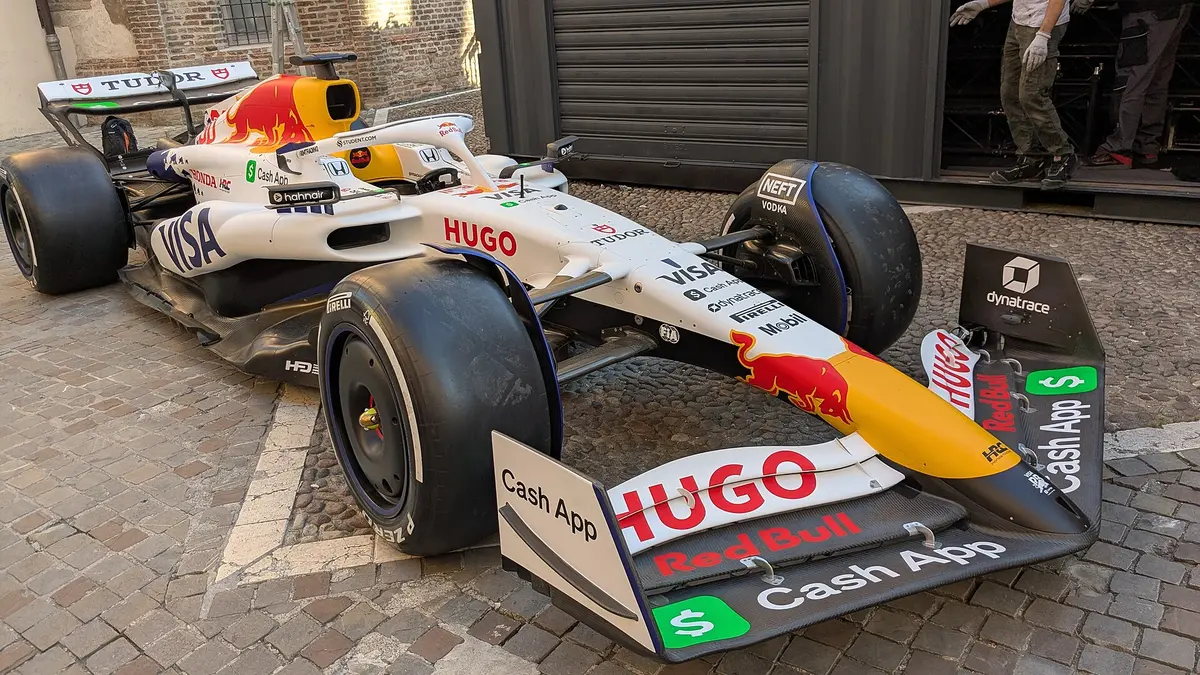
The Racing Bulls F1 2026 campaign has arrived with more questions than any other on the grid. The Faenza-based junior outfit has lost its 2025 breakout star Isack Hadjar to Red Bull Racing, promoted Liam Lawson from understudy to undisputed lead driver, and thrown rookie Arvid Lindblad into the deepest end of a radical new technical era. Add in an all-new power-unit philosophy, a 50/50 electric split and a VCARB-02 chassis that its own lead driver has publicly labelled ‘not enjoyable,’ and the stage is set for one of the most compelling mid-field stories of the season.
This pillar brings together everything we know so far about Racing Bulls F1 2026 — the team structure, the driver line-up, the technical quirks of the VCARB-02, and the strategic position Alan Permane’s squad now occupies in the 2026 pecking order. From Lawson’s Bathurst wake-up call to Lindblad’s scintillating debut, and from Active Aero instabilities to points-without-pace anxieties, the picture is one of a team caught between genuine promise and genuine concern.
The post-Hadjar Racing Bulls setup
The single biggest change to Racing Bulls F1 2026 is a name that no longer appears on the garage wall in Faenza. Isack Hadjar, whose 2025 season impressed Red Bull’s senior management enough to fast-track him into the flagship seat alongside Max Verstappen, has been promoted. That promotion has reshaped Racing Bulls from top to bottom, forcing a full recalibration of how the team develops its car, manages its drivers, and presents itself inside the Red Bull ecosystem.
Under Team Principal Alan Permane, Racing Bulls is now positioned less as a feeder for the senior team and more as a high-performance incubator in its own right. The 2026 regulations have widened the design latitude teams enjoy, and Permane has publicly stated that the squad intends to forge its own technical identity rather than continue as a straight copy of Red Bull Racing’s philosophy. That ambition is visible in the VCARB-02’s unique cooling layout, which is tailored to the enhanced thermal load of the new Energy Recovery System, and in the team’s willingness to run a different aerodynamic concept to the senior squad.
The driver pairing is equally deliberate. By pairing Lawson with Lindblad, Racing Bulls has created a dynamic where the New Zealander provides stability, reference data and developmental feedback, while the young Briton brings a nothing-to-lose aggression that has already caught the paddock’s eye. In an era where every kilometre of seat time is precious, that balance of experience and raw talent is arguably the most logical solution Red Bull’s advisors could have landed on.
Alan Permane’s mandate
Permane inherited the team at a delicate moment. With Hadjar gone and the 2026 regulations simultaneously resetting the field, his brief is to deliver a car that is both a genuine top-five contender and a proving ground for Red Bull’s future talent pipeline. He has spoken about a ‘technical immersion’ programme for Lindblad, focused on the complex energy deployment maps of the 2026 power unit, and about ensuring Lawson has a car he can actually trust on Saturday afternoons. Both of those tasks have proved easier said than done through pre-season.
Liam Lawson as lead driver
For Liam Lawson, 2026 is a defining year. After years spent as the long-serving reserve, a brief and well-documented 2025 stint at Red Bull Racing, and a return to Racing Bulls mid-season, he is finally the undisputed lead driver at a full-time Formula 1 team. That status comes with privileges — first call on upgrades, setup direction, strategic priority — but also with the full weight of expectation. The Racing Bulls F1 2026 campaign will, in large part, be judged on how Lawson performs.
The early signs are mixed. Lawson has been quick in the RB cockpit, with long-run pace in Bahrain testing that was consistently inside the top half of the field, and race-day execution across the opening rounds that has delivered points finishes in all three of the season’s opening races. But he has also been unusually candid about the limitations of the VCARB-02. His now-infamous ‘not enjoyable’ verdict after Bahrain pre-season testing raised eyebrows up and down the pit lane, and set the tone for a season in which Lawson appears determined to push his team rather than accept mid-table respectability.
The Bathurst incident
Lawson’s 2026 preparation also included an unplanned lesson in the unpredictability of motorsport. Participating in the Bathurst 12 Hour to sharpen his endurance reflexes before the Bahrain opener, his GT3 car struck a kangaroo at high speed on Mount Panorama, shattering the front-end packaging and piercing the cooling system. Lawson escaped unhurt, but the incident underscored why Racing Bulls, like most top teams, are increasingly cautious about their lead drivers taking on extracurricular commitments so close to the start of a 24-race world championship.
The Bathurst strike also served as a neat technical parable. A localised front-end impact of that nature, in the context of a 2026 F1 car, would instantly compromise cooling ducts and radiators in a machine already running at the edge of its thermal envelope. For a team like Racing Bulls, that reliance on pristine airflow is one of the very real reasons pre-season risk management has become a topic of conversation in Faenza.
From reserve to reference
What has impressed observers most is how quickly Lawson has grown into the role of team reference. His feedback on Active Aero transitions, energy deployment strategies and tyre management windows has driven the bulk of the setup direction at the opening rounds. Where in previous seasons he was the driver trying to match his team-mate’s baseline, now he is the baseline — and the pressure that comes with that shift is entirely new.
Lindblad’s F1 arrival
If Lawson is the reference, Arvid Lindblad is the revelation. Promoted from the Red Bull Junior Team after a Formula 2 campaign that saw him fight for the title despite relentless speculation about his F1 future, Lindblad has stepped into the Racing Bulls seat with a level of composure that belies his age. Mentor and Formula E World Champion Oliver Rowland has described his start as ‘scintillating,’ while also urging him to stay humble — advice that appears to have been taken to heart.
The transition from Formula 2 to 2026-spec F1 machinery is arguably the steepest learning curve a rookie has faced in decades. The new cars utilise Active Aero, a system of movable front and rear wings that switch between high-downforce ‘Z-mode’ for corners and low-drag ‘X-mode’ for straights. They also demand sophisticated management of the Manual Override, a driver-triggered electrical boost designed to aid overtaking, and of the 50/50 power split that fundamentally redefines how a lap is driven.
The Red Bull academy pipeline
Lindblad’s elevation is a reminder that the Red Bull Junior Team remains the gold standard for talent progression. His background in high-level karting and the junior single-seater ladder has prepared him for the rapid-fire decision-making required in the 2026 cockpit, and his simulator-heavy development programme means the digital feel of the VCARB-02 — a quality Lawson has been less enthusiastic about — is actually well-aligned with how he reads a car.
The numbers back up the hype. During the final day of Bahrain pre-season testing, Lindblad’s long-run pace was within two-tenths of Lawson’s, an extraordinary result for a rookie still learning the brake feel and the ERS maps of an F1 car. His race-craft, particularly his willingness to use the Manual Override strategically rather than defensively, has drawn praise from analysts who had pencilled in a steeper adaptation curve.
Mentorship and humility
The Rowland factor is not trivial. Formula E’s focus on energy management is more relevant than ever in 2026, and Rowland’s guidance on how to conserve, deploy and occasionally gamble with electrical energy has given Lindblad a head start on some of his rookie peers. Just as importantly, Rowland has been blunt about the psychological demands of Formula 1, warning Lindblad that a scintillating start cuts both ways: it attracts sponsorship and fan attention, but it also raises the scrutiny from media and rival teams overnight.
Car-handling issues in Racing Bulls F1 2026
No discussion of Racing Bulls F1 2026 is complete without a hard look at the VCARB-02 itself. The car is, by Lawson’s own admission, not yet delivering on its promise. Its defining issue appears to be the integration of Active Aero. Lawson has described the transition between Z-mode and X-mode as ‘clunky’ and ‘unpredictable,’ particularly in the high-speed gusts of Bahrain’s Turn 12, where the sudden loss of drag can cause a momentary instability that demands constant micro-corrections.
The 50/50 power split is the second major culprit. With the battery providing roughly half of the car’s peak output, drivers have found themselves managing a ‘clipping’ effect — the point where the electrical motor stops providing power at high speed — earlier in the lap than they would like. For a driver like Lawson, whose style has always been built on aggression and commitment, the need to baby-sit energy bars on the steering wheel rather than focus on the apex has been a cultural as much as a technical adjustment.
The VCARB-02’s narrow operating window
Data emerging from the opening rounds suggests the VCARB-02 has genuinely high peak downforce in Z-mode, but a narrow operating window that makes the car ‘peaky’ and difficult to drive over a full race distance. Setup compromises that work in clean air fall apart in dirty air, and the aero-transition phase is consistently identified as the single biggest area where lap time is being lost. Racing Bulls is expected to bring updated front-wing endplates and revised Active Aero actuators to the next round in an attempt to smooth the transition.
The Red Bull-Ford powertrain
Powering the VCARB-02 is the new Red Bull-Ford powertrain, still undergoing refinement in its energy recovery mapping. The work Faenza and Milton Keynes are doing in parallel to optimise clipping and deployment is one of the largest software efforts in the team’s history. Early indications are that the hardware is strong, but the software maps will be the difference between points finishes and genuine podium threats by mid-season.
Points without pace
Perhaps the most interesting element of Lawson’s early-season commentary is his concern that Racing Bulls’ points haul is flattering the underlying car. Three points finishes in three races sounds like a dream start for a mid-field team, but Lawson has openly questioned whether the results are being delivered by car pace or by strategic execution and tyre management. That gap between qualifying and race-day performance is a classic mid-field phenomenon, and if Racing Bulls is benefiting from it now, they will need to address the root cause before rivals close the development gap.
What 2026 means for Racing Bulls’ place in the grid
The 2026 grid is one of the most volatile in recent memory. Stability at the front — McLaren with Norris and Piastri — is matched by upheaval almost everywhere else. Lewis Hamilton is embedded at Ferrari, Adrian Newey’s first true Aston Martin chassis is hitting the track, Cadillac has arrived as an all-new entry with experienced hands at the wheel, and Audi’s takeover of Sauber has been completed in both name and philosophy. In that context, Racing Bulls is fighting not just for points, but for identity.
On raw pace, the team looks set to battle Alpine, Haas, Audi and Cadillac for positions between P5 and P9 in the Constructors’ Championship. The opening rounds suggest Racing Bulls has a slightly better race-day package than qualifying package, which should translate to more points than a pure pace ranking would predict. But the midfield is relentless in 2026, and points finishes alone will not define a successful campaign.
Strategic position within the Red Bull family
The Red Bull hierarchy itself has shifted. With the senior team running Verstappen and Hadjar — a pairing built around Verstappen’s proven ability to lead and Hadjar’s upside as a high-ceiling development prospect — Racing Bulls’ role has become less about supplying ready-made talent and more about running a genuinely competitive mid-field campaign on its own merits. The VCARB-02 is distinct from the senior car in cooling, aerodynamics and setup philosophy, and that divergence is likely to widen as the season progresses.
Development race
The next six months will be decisive. Racing Bulls needs to demonstrate that it can turn Lawson’s candid feedback into engineering progress, integrate Lindblad’s data points without pulling setup direction in two conflicting directions, and bring upgrades that address the VCARB-02’s narrow operating window. If the team can achieve even two of those three, Racing Bulls F1 2026 will be remembered as a successful season. If it achieves all three, it could be a genuine platform for 2027 and beyond.
Key Takeaways
- Post-Hadjar reset: Isack Hadjar’s promotion to Red Bull Racing has made Liam Lawson the undisputed lead driver at Racing Bulls F1 2026.
- Academy pipeline in action: Arvid Lindblad’s arrival from the Red Bull Junior Team has been described by mentor Oliver Rowland as ‘scintillating,’ though humility is being urged.
- VCARB-02 concerns: Lawson has labelled the car ‘not enjoyable,’ citing clunky Active Aero transitions and disruptive energy clipping.
- Points vs pace: Three points finishes in three races may be flattering the car’s underlying performance, according to Lawson himself.
- Team identity: Under Alan Permane, Racing Bulls is forging a distinct technical path from senior team Red Bull Racing for the 2026 era.
Frequently Asked Questions
Who are the Racing Bulls F1 2026 drivers?
Racing Bulls lines up in 2026 with Liam Lawson as lead driver and Arvid Lindblad as his rookie team-mate, following Isack Hadjar’s promotion to Red Bull Racing alongside Max Verstappen.
Who is the Racing Bulls Team Principal for 2026?
Alan Permane leads Racing Bulls F1 2026 as Team Principal, overseeing the team’s transition through the sweeping new regulations and the integration of rookie Arvid Lindblad.
Why has Liam Lawson criticised the 2026 Racing Bulls car?
Lawson has described the VCARB-02 as ‘not enjoyable’ because of clunky Active Aero transitions between Z-mode and X-mode, unpredictable mid-corner behaviour, and significant energy ‘clipping’ on long straights that disrupts the flow of a qualifying lap.
How is Arvid Lindblad adapting to Formula 1 in 2026?
Lindblad’s start has been described as scintillating. His simulator-heavy junior career has prepared him well for the digital feel of the 2026 cars, and his long-run pace during Bahrain pre-season testing was within two-tenths of Lawson’s.
Conclusion
Racing Bulls F1 2026 is a team in transition. It has lost its breakout star, gained a genuine lead driver in Lawson, and bet on the future with a bold rookie promotion in Lindblad. The VCARB-02 is flawed but fast enough to score points, the Red Bull-Ford powertrain is promising but still maturing, and the mid-field is more competitive than at any point in recent memory. Alan Permane’s challenge is to convert Lawson’s honesty and Lindblad’s raw talent into a package that genuinely threatens the top five. If Faenza can close the gap between points and pace in the coming months, Racing Bulls will have delivered one of the defining mid-field stories of the 2026 Formula 1 season.
In this article
Written with AI assistance. How this site works