Bottas Australian GP Helmet Auction: Cadillac Return Memento
Valtteri Bottas' race-worn Australian GP helmet from Cadillac's historic 2026 F1 debut is heading to auction — a rare piece of motorsport history.
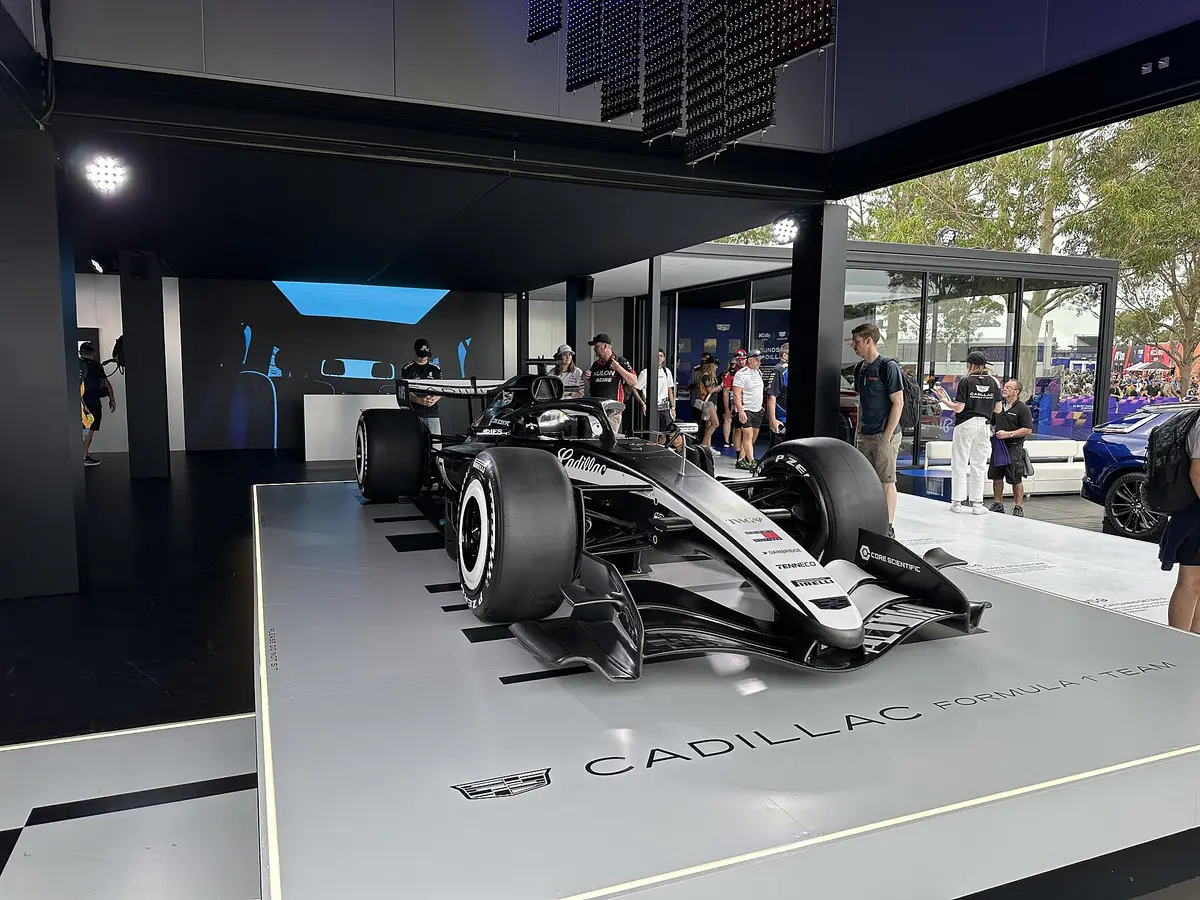
Photo: Yu Chu Chin / CC-BY-SA-4.0
Valtteri Bottas has always carried with him a certain kind of quiet resilience — the sort that keeps a driver in Formula 1 long after many would have walked away. Now, that resilience has manifested in a tangible, collector-worthy form: the race-worn helmet Bottas donned during the Australian Grand Prix, marking one of the most storied returns in recent F1 memory, is heading to auction. The piece represents far more than a piece of painted carbon fibre and polycarbonate — it is a symbol of Bottas' arrival at Cadillac, the sport's exciting new 11th constructor in its 2026 debut season, and a man who refused to let his top-flight career end quietly.
For helmet collectors, F1 memorabilia enthusiasts, and fans of Bottas himself, this auction presents a rare opportunity to own a genuine artefact from a genuinely historic moment. But beyond the collector market, this story invites a deeper examination of what Bottas' Cadillac chapter means for the sport, why race-worn F1 helmets command such extraordinary interest, and what the broader memorabilia market tells us about Formula 1's ever-growing cultural footprint in 2026.
The Helmet That Tells a Story: Bottas at Cadillac's F1 Debut
A Return That Captured the Paddock's Attention
Valtteri Bottas' reappearance on the Formula 1 grid in 2026 alongside Cadillac — the American manufacturer making its much-anticipated debut as the sport's 11th team — was one of the most discussed driver-team pairings of the off-season. Paired with Sergio Perez, Bottas brought experience, technical feedback capability, and a recognisable name to a team that needed exactly those qualities as it found its feet among the established constructors.
The Australian Grand Prix, as the traditional season-opener held in Melbourne, carries particular symbolic weight in Formula 1. It is where the grid lines up for the first time under race conditions, where new cars face their true baptism of fire, and where new teams announce themselves to the world. For Cadillac, and for Bottas, the Australian GP was that defining moment — a chance to show that the programme was real, competitive, and here to stay. The helmet worn during that race, therefore, does not merely represent one afternoon of competition. It represents the culmination of months of engineering effort, driver preparation, and the sheer determination of an organisation that fought hard for its place on the F1 grid.
Why Race-Worn Helmets Are Among F1's Most Prized Collectibles
Within the broader universe of motorsport memorabilia, race-worn helmets occupy a unique and coveted tier. Unlike replica helmets or signed merchandise, a race-worn lid carries with it the direct physical evidence of competition — scuff marks, visor scratches, tearoff residue, and the subtle signs of a machine pushed to its limits. Collectors and auction houses consistently identify driver helmets as among the highest-value items in the motorsport memorabilia market, with pieces from iconic races commanding prices that reflect both rarity and historical significance.
The Bottas Australian GP helmet ticks several of those boxes simultaneously. It is race-worn, not merely race-used in practice or qualifying. It originates from a season-opening grand prix — historically among the most collectible race origins in the calendar. And crucially, it belongs to a moment of genuine historical weight: Cadillac's Formula 1 debut and Bottas' own return to the grid after a period of uncertainty about his future in the sport. For serious collectors, the provenance here is exceptional.
Auction dynamics for such pieces are often driven by two overlapping buyer profiles: the serious motorsport collector seeking historically significant items, and the emotionally invested fan for whom Bottas carries personal meaning — a driver who spent years at the sharp end of the grid at Mercedes, came achingly close to championship glory, and continued fighting through the Sauber/Audi transition years before landing at Cadillac. That emotional resonance translates directly into competitive bidding.
Context and Background: Bottas, Cadillac, and the 2026 F1 Landscape
Bottas' Path to Cadillac
Valtteri Bottas' Formula 1 career has been one of the sport's most compelling long-form narratives. After his years at Mercedes — where he served as a reliable, often formidable teammate to Lewis Hamilton — Bottas moved through the Alfa Romeo/Sauber chapter of his career before the team underwent its rebrand to Audi for the 2026 season. With Audi opting for Nico Hulkenberg and rookie Gabriel Bortoleto as their 2026 lineup, Bottas found a new home at Cadillac, the American team granted entry as Formula 1's 11th constructor.
The Cadillac programme, backed by the broader General Motors motorsport ambition and built with serious intent to compete, represented exactly the kind of fresh challenge that could reignite a driver of Bottas' calibre. His experience with new car development, his meticulous technical approach, and his ability to extract meaningful data from a developing package made him an ideal choice alongside the experienced Perez.
The 2026 Regulations: A Great Equaliser
It is worth noting the context in which all of this is unfolding. The 2026 Formula 1 season introduced sweeping new technical regulations — including a significant overhaul of the power unit formula and the introduction of active aerodynamics — that have reshuffled the competitive order and given new teams a genuine window of opportunity. In a year when even the most established constructors are working to master entirely new technical territory, Cadillac's entry is timed with unusual strategic intelligence. The competitive gap between a seasoned team and a new entrant is at its narrowest when everyone is simultaneously learning new rules.
This context amplifies the significance of the Australian GP helmet even further. Bottas wore it not just at the start of a new season, but at the start of a new era — one defined by the 2026 regulations that will shape the sport for years to come. Items connected to the opening race of a major regulatory cycle have historically proven to be among the most enduringly valuable in private collections.
Technical and Strategic Implications of the Auction
From a market perspective, the decision to auction the helmet rather than retain it for private sale or team display suggests a deliberate strategy around visibility. High-profile auction houses bring media attention, and that attention serves multiple stakeholders simultaneously: it keeps Bottas' name prominent in the F1 conversation, it reinforces Cadillac's narrative as a team with genuine heritage-building ambitions, and it demonstrates that race-worn memorabilia from the 2026 season — even from a debut team — already commands serious collector interest.
The description of the helmet as 'exclusive' in the original listing is noteworthy. In the memorabilia world, exclusivity is a carefully deployed term. Race-worn items, by definition, exist in quantities of one per race per driver, but the use of the word signals that this particular piece has been positioned at the premium end of the market. Expect bidding to reflect that positioning.
For Cadillac as an organisation, the downstream marketing value of a successful high-profile auction should not be underestimated. It signals that the team's first season is already generating collectible heritage — a subtle but meaningful marker of legitimacy in a sport where brand perception matters enormously.
Key Takeaways
- Valtteri Bottas' race-worn Australian GP helmet — from Cadillac's F1 debut season in 2026 — is set to go under the hammer at auction.
- The helmet represents a dual historical moment: Cadillac's entry as Formula 1's 11th constructor and Bottas' return to the grid after his departure from the Sauber/Audi programme.
- Race-worn helmets from season-opening grands prix consistently rank among the most sought-after items in the motorsport memorabilia market.
- The 2026 season's sweeping new technical regulations — covering power units and active aerodynamics — add historical significance to any artefact from this opening race.
- The auction's visibility serves both collector demand and the broader branding ambitions of the Cadillac F1 programme in its debut year.
- Bidding is expected to be competitive given Bottas' long career narrative, Cadillac's historic debut, and the premium 'exclusive' positioning of the lot.
Frequently Asked Questions
What makes Valtteri Bottas' Australian GP helmet significant for collectors?
The helmet is race-worn from Cadillac's debut Australian Grand Prix in the 2026 Formula 1 season, making it a double historical artefact — representing both the team's first race in F1 and Bottas' return to the grid. Race-worn helmets from landmark occasions consistently command premium valuations in the motorsport memorabilia market. The combination of provenance, rarity, and historical context makes this a particularly compelling auction lot.
Who is Valtteri Bottas racing for in the 2026 F1 season?
Bottas is racing for Cadillac in the 2026 Formula 1 season, the American manufacturer's debut year as Formula 1's 11th constructor. He is partnered at the team by Sergio Perez. Cadillac secured its grid entry after a process that generated significant attention across the paddock and the wider motorsport world.
Why did Cadillac choose Bottas for their 2026 F1 lineup?
Bottas brings extensive Formula 1 experience, strong technical feedback capabilities, and a track record of working effectively with developing car programmes — qualities that are particularly valuable for a new constructor finding its competitive footing. His experience across multiple technical regulation cycles gives Cadillac's engineering team a knowledgeable reference point as they develop their 2026 package. Pairing him with the equally experienced Perez gives Cadillac a driver lineup heavy on accumulated grand prix knowledge.
How does the 2026 F1 regulation change affect the value of memorabilia from this season?
The 2026 season marked the introduction of significant new technical regulations in Formula 1, including a revised power unit format and active aerodynamics, effectively beginning a new technical era for the sport. Memorabilia connected to the opening races of major regulatory cycles — particularly from season-opening grand prix events — has historically appreciated in value as the significance of those moments becomes clearer over time. The Bottas Australian GP helmet sits at exactly this kind of historically meaningful intersection.
Conclusion
A race-worn helmet is never just a helmet. It is a three-dimensional record of a moment in time, carrying within its structure the physical evidence of speed, competition, and human effort at the highest level. The Valtteri Bottas Australian GP helmet — worn during Cadillac's debut race in the 2026 Formula 1 World Championship — encapsulates a story that the sport will be telling for years: of a veteran driver who refused to yield, of an American manufacturer that earned its place at the table, and of a new regulatory era that reset the competitive chessboard for everyone.
For collectors, this auction represents a genuine opportunity to acquire a piece of that story before the broader market fully prices in just how significant 2026 will prove to be in Formula 1's long history. For the casual fan, it serves as a reminder of why the sport continues to generate this level of passion — not just in the heat of race weekends, but in the quieter moments when a single object can carry the weight of everything that brought it into existence.
Whether you are a seasoned memorabilia investor or simply someone who appreciates the intersection of sport and material culture, the Bottas helmet auction is a story worth following closely as bidding unfolds.
In this article
Written with AI assistance. How this site works
 Miami Grand Prix