Aston Martin Honda Vibration Trust: Krack Backs Alonso and Stroll
Aston Martin's Mike Krack says 'respect and trust' will guide how Alonso and Stroll push the AMR26 through its Honda power unit vibration challenge in 2026.
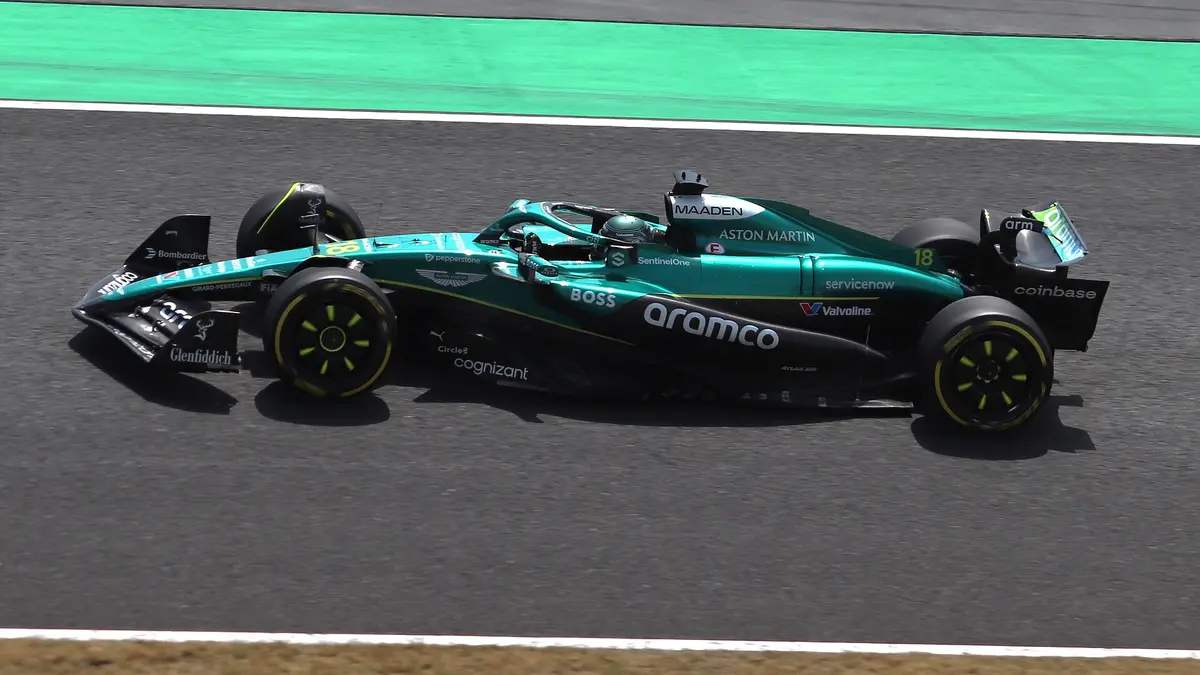
Photo: Liauzh / CC-BY-SA-4.0
Aston Martin Chief Trackside Officer Mike Krack has made clear that the Silverstone-based outfit will lean heavily on the experience and instincts of Fernando Alonso and Lance Stroll when it comes to managing one of the AMR26's most pressing technical challenges: the vibrations generated by its Honda power unit. Speaking to media, Krack used the phrase "respect and trust" to describe the approach the team intends to take regarding driver judgement on how hard the AMR26 can be pushed against those vibrational forces. In an era where the 2026 Formula 1 regulations have fundamentally reshaped every aspect of car design, power delivery, and driver feel, this statement carries considerable technical and strategic weight. It signals not only a collaborative culture within Aston Martin, but also the complexity of managing a ground-up power unit programme in partnership with Honda as both navigate the new regulatory landscape together.
What Mike Krack Said — and Why It Matters
Krack's choice of words — "respect and trust" — is deliberately measured language from a senior technical figure. In the high-pressure environment of Formula 1, Chief Trackside Officers rarely cede interpretive authority to drivers when it comes to mechanical limits. Engineers typically define the operating window; drivers work within it. The fact that Krack is explicitly framing driver judgement as a key input into how aggressively the AMR26 is operated speaks volumes about the nuanced nature of the Honda vibration challenge.
Vibrations in a Formula 1 power unit are not a new phenomenon, but under the 2026 technical regulations — which introduced a dramatically revised hybrid architecture, increased the electrical deployment share significantly, and redesigned the combustion unit parameters — managing power unit behaviour at the extremes of performance is more complex than in previous hybrid eras. The interaction between the internal combustion engine, the Motor Generator Units, and the chassis creates vibrational signatures that can be felt acutely by drivers, and which can have consequences for both mechanical reliability and laptime if not managed correctly.
By placing trust in Alonso and Stroll to report on and govern their own relationship with the vibration threshold, Krack is acknowledging something important: no amount of telemetry can fully replicate what a driver feels through the steering wheel, the seat, and the pedals at racing speed. This is particularly relevant with a power unit as new and as heavily developed as the Honda unit that underpins the AMR26.
The Honda Power Unit and the 2026 Regulatory Context
Honda's partnership with Aston Martin in the 2026 season represents a significant commitment from the Japanese manufacturer, which returned to the sport as a full works power unit supplier under the new regulations. The 2026 rules mandated a substantially different power unit formula compared to the hybrid era that preceded it, demanding manufacturers develop new architectures from a near-blank sheet of paper. For Honda, this represented both a fresh opportunity and a fresh set of engineering challenges — and vibration characteristics of a new power unit are almost always among the earliest real-world issues that surface once a car is running at competitive pace.
Vibrations can manifest in several ways in a modern Formula 1 car. They may originate from the combustion cycle itself, from harmonic resonances within the power unit's rotating assembly, from the interaction between engine mounts and the chassis, or from the behaviour of the hybrid systems under aggressive deployment. Any one of these — or a combination — can produce the kind of vibrational stress that Krack is alluding to when he speaks of how far the drivers can push the AMR26.
The fact that Aston Martin is openly discussing this challenge rather than concealing it suggests a mature, transparent team culture under their current leadership. It also reflects the reality that in 2026, virtually every team on the grid is grappling with unexpected characteristics from brand-new power units and radically revised chassis regulations. Aston Martin's willingness to address it head-on, while framing the response around driver empowerment, is noteworthy.
Alonso and Stroll: Experience as a Technical Asset
The decision to lean on driver feedback is especially logical given the calibre and contrasting profiles of Aston Martin's 2026 driver pairing. Fernando Alonso is one of the most technically articulate and experienced drivers in Formula 1 history. His ability to diagnose car behaviour, communicate it with precision, and adapt his driving style to protect machinery while extracting maximum performance is widely regarded as among the best the sport has ever seen. For a team trying to understand the outer edges of a vibration envelope on a new power unit, having Alonso in the car is an invaluable engineering resource.
Lance Stroll, meanwhile, brings a different but complementary perspective. As the son of team owner Lawrence Stroll and a driver who has grown up within the Aston Martin programme through its various iterations, Stroll has deep institutional knowledge of the team's engineering culture and philosophy. His feedback, taken alongside Alonso's, gives the team a broader dataset from which to draw conclusions about how the AMR26 behaves across different driving styles and physical inputs.
Krack's framing of "respect and trust" is therefore not merely diplomatic language — it is a technically sound strategy. Two drivers with different approaches, both trusted to operate at the margins of the power unit's vibrational comfort zone, will collectively provide Aston Martin and Honda with richer, more actionable data than any single prescribed operating mode could.
Technical and Strategic Implications for Aston Martin in 2026
From a pure performance standpoint, the management of Honda power unit vibrations will have direct consequences for where Aston Martin sits in the 2026 constructors' standings. If the team is forced to run conservatively to protect the power unit from vibrational stress, they risk sacrificing lap time in a season where the competitive order is still being established under entirely new regulations. Conversely, if drivers are encouraged to push beyond a safe threshold in pursuit of performance, the reliability cost could be severe.
The strategy Krack has outlined — trusting driver judgement as the primary modulating factor — suggests that the team does not yet have a fully defined, data-confirmed operating limit for this specific vibration characteristic. That is not an admission of failure; it is an honest reflection of where development stands this early in a regulation cycle. What it means in practice is that both Alonso and Stroll carry an additional layer of responsibility in 2026: not just to extract performance, but to actively participate in defining the performance boundaries of the car itself.
This approach also has implications for race strategy. If one driver reports more manageable vibration characteristics at a particular engine mode or under specific thermal conditions, that intelligence can be used to shape deployment strategies, fuel loads, and power unit management protocols for both cars. In that sense, the drivers become active development partners — a role that both Alonso in particular, and increasingly Stroll, are well-equipped to fulfil.
Key Takeaways
- Aston Martin Chief Trackside Officer Mike Krack has confirmed that "respect and trust" will be placed in Fernando Alonso and Lance Stroll to judge how far the AMR26 can be pushed through Honda power unit vibrations.
- The Honda vibration challenge reflects the broader difficulty of developing a brand-new power unit under the sweeping 2026 Formula 1 technical regulations.
- Driver feedback is being positioned as a critical engineering input at Aston Martin, not merely a secondary data source alongside telemetry.
- Alonso's technical articulacy and Stroll's institutional knowledge of the team make them a complementary pairing for navigating this specific challenge.
- The approach signals that Aston Martin does not yet have a fully locked-down vibration operating limit, meaning the 2026 season will be partly a live development exercise in this area.
- Balancing vibration management against outright performance will be a key strategic tension for Aston Martin throughout the 2026 campaign.
Frequently Asked Questions
What is the Honda vibration issue affecting the Aston Martin AMR26?
The AMR26 is powered by a Honda power unit developed under the new 2026 Formula 1 technical regulations, which introduced a fundamentally revised power unit architecture. Vibrations from the Honda unit have been identified as a challenge that affects how aggressively the car can be driven. Aston Martin is relying in part on driver feedback from Fernando Alonso and Lance Stroll to understand and manage the limits of this vibrational behaviour.
Why is Mike Krack trusting drivers rather than engineers to set the vibration limits?
Krack's approach reflects the reality that driver feel is an irreplaceable data source, particularly for a brand-new power unit early in a regulation cycle. Telemetry can measure vibrations, but the subjective experience of how those forces interact with a driver's ability to control the car at the limit is something only the driver can accurately report. By placing "respect and trust" in Alonso and Stroll, Krack is using the full scope of available information to make informed decisions.
How does Fernando Alonso's experience help Aston Martin with this challenge?
Fernando Alonso is widely recognised as one of the most technically precise and communicative drivers in Formula 1 history. His ability to feel subtle changes in car behaviour and articulate them clearly to engineers makes him an exceptionally valuable asset when a team needs to map the characteristics of a new power unit. His feedback on the Honda vibration envelope will likely be among the most detailed and actionable data Aston Martin receives across the 2026 season.
Could the Honda vibration issue affect Aston Martin's 2026 championship prospects?
Managing the vibration challenge effectively will be important for both performance and reliability. If the team is overly cautious to protect the power unit, lap time will be left on the table; if they push too aggressively, reliability could suffer. The outcome of how well Aston Martin and Honda resolve this issue — guided significantly by driver intelligence — will have a tangible bearing on where the team finishes in the 2026 constructors' standings.
Conclusion
Mike Krack's statement about placing "respect and trust" in Fernando Alonso and Lance Stroll to manage the Honda power unit vibration question is more than a diplomatic soundbite. It is a window into Aston Martin's technical philosophy in 2026 and an honest acknowledgement of the challenges inherent in running a new power unit under radically new regulations. In a season defined by uncertainty, adaptation, and rapid development across the entire grid, the teams that harness every available source of intelligence — including the nuanced, embodied knowledge of their drivers — will be best placed to turn early-season limitations into mid-season competitiveness.
For Aston Martin, the combination of Alonso's unmatched technical feedback capacity and Stroll's deep familiarity with the team's processes gives them a meaningful advantage in navigating this specific challenge. Whether that advantage translates into points on the board will depend on how quickly the Honda vibration picture becomes clear and how decisively the team acts on what its drivers tell them. In the meantime, Krack's approach reflects exactly the kind of measured, collaborative leadership that complex engineering problems in Formula 1 demand.
In this article
Written with AI assistance. How this site works