Adrian Newey at Aston Martin: The AMR26 Season
The complete story of Adrian Newey's first season at Aston Martin: Stroll's public backing, Marko's concerns, the AMR26's Bahrain crisis, Honda partnership strains, Crawford's Suzuka FP1 debut, and the path to recovery.
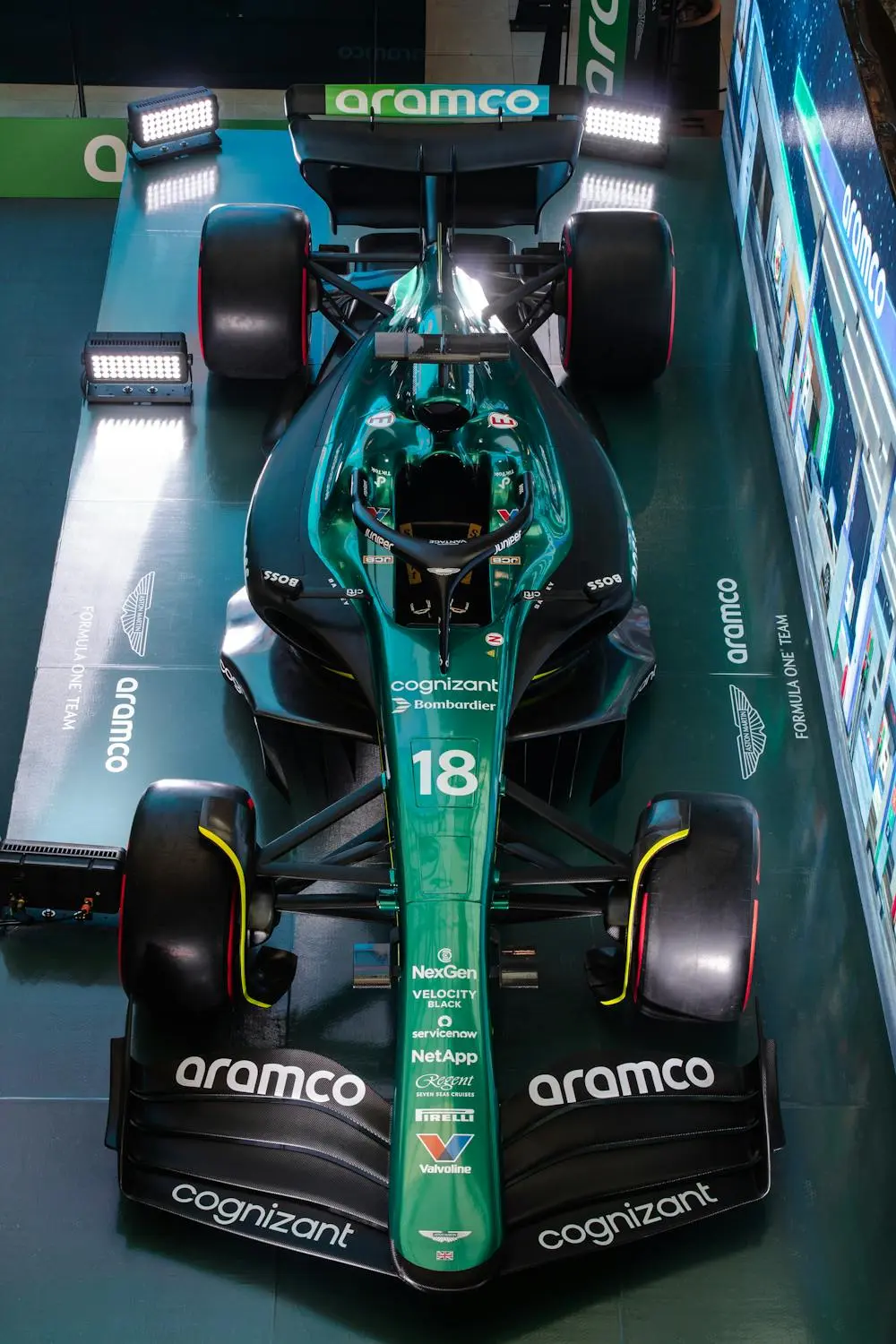
The story of Adrian Newey Aston Martin in 2026 was supposed to be a coronation. A legendary designer, a state-of-the-art Silverstone campus, the most radical technical regulations in a generation, and a works partnership with Honda. Instead, the opening weeks of the 2026 Formula 1 season have produced one of the most extraordinary narratives on the grid: a team that moved heaven and earth to sign the greatest aerodynamicist of his era, only to find itself mired in a crisis that has pulled in Lawrence Stroll, Helmut Marko, Fernando Alonso's retirement speculation, and even Jak Crawford's FP1 debut at Suzuka. This is the complete pillar review of how the Adrian Newey Aston Martin project has unfolded so far, from the Bahrain pre-season test to the Japanese Grand Prix, and what recovery realistically looks like from here.
Across every angle of this story, the headline is the same. The AMR26 arrived with enormous expectations. It has not delivered them. And the man hired to be the architect of Aston Martin's first world title is now the central figure in the paddock's most-watched saga.
Newey's Arrival and Leadership: Stroll and Marko on the Record
To understand the 2026 crisis, you have to understand what Newey's arrival was meant to represent. Lawrence Stroll spent years assembling the pieces: the new AMR Technology Campus, a dedicated wind tunnel, an exclusive works deal with Honda, and finally the signing of Adrian Newey himself. Newey is not simply a Chief Technical Officer. He is, as Aston Martin internally describe him, a Managing Technical Partner, operating inside what Stroll has publicly called a "unique leadership structure" that pairs Newey's aerodynamic vision with Technical Director Dan Fallows and the wider engineering department.
On 22 March 2026, Stroll issued a decisive public statement to kill the swirling paddock rumours about Newey's position. The statement was unusually forceful. Stroll underlined the "indispensable nature" of Newey's role, framed the structure at Silverstone as the cornerstone of Aston Martin's championship aspirations, and made clear that the Adrian Newey Aston Martin partnership is the long-term project he is protecting, not just another hire. For a team owner who rarely intervenes publicly on technical matters, the move was telling. Stroll was signalling to sponsors, engineers, and rival teams alike that the leadership structure remains unified.
The reason he needed to is Helmut Marko. The Red Bull advisor, who worked alongside Newey for almost two decades, dropped two separate comments in quick succession suggesting that his old colleague was "not doing well". Speaking to GPfans.com, Marko said he had maintained private contact with the Aston Martin technical lead and had also held conversations with the team principal that left him with the impression of "misery" inside the Silverstone camp. Marko's insights carry unusual weight precisely because of that long relationship. He is not a rival trying to destabilise the garage; he is a friend describing what he is hearing.
Put those two interventions together and you can see the contours of the early-season storm. Stroll is publicly rock-solid on Newey. Marko is privately worried about him. And the source of both positions is the same: the AMR26 is not performing, and the man hired to fix it is under more pressure than he has faced in years.
AMR26 Design Story and Development Shocks
The AMR26 was designed into the teeth of the most significant regulatory overhaul in modern F1. The 2026 rules mandate a 50/50 power split between the internal combustion engine and the Energy Recovery System, eliminate the MGU-H entirely, and introduce Active Aero, where front and rear wing elements physically switch between a high-downforce "Z-mode" for corners and a low-drag "X-mode" for straights. On top of that sits the Manual Override system, a driver-controlled electrical boost of up to 350kW that replaces DRS as the primary overtaking aid.
Newey's signature is tight packaging, aggressive sidepod undercuts, and a ruthlessly optimised floor. Those instincts, built over decades of ground-effect and hybrid-era success, are exactly what the 2026 rules reward on paper. But the AMR26 has exposed how brutal the margins are when a chassis philosophy meets an unfamiliar power unit in a year of total regulatory reset.
The single most damaging revelation came from Newey himself, on the Friday of the Melbourne weekend. Speaking to reporters in the paddock, Newey admitted that the Honda power unit project was in a "completely different state" as late as November 2025 than Aston Martin's design team had assumed. In Formula 1 terms, November is effectively too late. That is the month chassis designs are typically frozen for final production and crash testing. A late shift in the PU's dimensions, cooling requirements, or thermal footprint forces a cascade of redesigns: rear suspension geometry, sidepod internals, radiator layout, and the entire aerodynamic map that sits on top of them.
Insiders suggest the late pivot forced Newey to compromise the very packaging that normally defines his cars. The AMR26's rear end, far from being the tight, shrink-wrapped sculpture Newey is famous for, is reportedly running with extra cooling tolerance to keep the 2026 Honda unit within thermal limits. That compromise is visible in the data. On the primary straights in Bahrain, the AMR26 was losing nearly 15km/h once the electrical deployment tapered off, compared to the Ferraris and Mercedes. The car's "Z-mode" energy recovery under braking is inefficient, which means the battery is under-charged heading into the next straight, which means the drivers "clip" - run out of electrical energy - well before the end of the long straights. It is the opposite of what Newey cars usually do.
Early-Season Crisis: Bahrain, Chandhok, and the Melbourne Limits
If the Melbourne admission explained the why, Bahrain provided the what. The final pre-season test was where the AMR26's problems stopped being whispers and started being numbers. Reports from Day 3 in Bahrain placed the team as much as eight-tenths of a second off the front-running Ferraris of Charles Leclerc and Lewis Hamilton. In the high-stakes world of the 2026 technical era, where every millisecond of electrical deployment counts, eight-tenths is a chasm.
The issues centred on two interlocking failures. First, the Active Aero transitions. The AMR26 showed signs of what paddock insiders have started calling "porpoising 2.0" - not the aero bouncing of the early ground-effect cars, but a new phenomenon where the movable wing elements fail to sync with the car's ride height at high speed. The result is unpredictable handling as the car snaps between Z-mode and X-mode, costing Alonso and Stroll the confidence they need to attack corners at the limit. Second, the energy deployment. The Honda PU's harvest-to-deploy cycle is not aligned with the chassis's drag profile, so the "Manual Override" overtaking tool runs dry just when it is meant to deliver.
The fallout in Bahrain was severe enough that Aston Martin reportedly imposed internal limits on how hard the AMR26 could be pushed in subsequent running, to preserve components and protect data gathering for Melbourne. Karun Chandhok, speaking publicly about what he had seen, went as far as to call the performance "embarrassing" for a team with Aston Martin's resources and ambition. It is a word that rarely attaches to projects backed by this much money.
By the time the paddock arrived in Melbourne, the narrative had hardened. Newey himself was being pushed in front of the media to explain the deficit - an unusual move for a designer who traditionally lets his cars speak for him. The AMR26 was not just slow; it was slow at the hands of Fernando Alonso, which made it impossible to blame driver error. Reports of "clipping" at the end of Albert Park's high-speed sweeps confirmed that the energy management problems seen in Bahrain had not been solved by the time the racing started.
Honda Partnership Strains Ahead of the Home Race
The most politically sensitive subplot of the Adrian Newey Aston Martin story is the Honda partnership. The 2026 season marks the start of Aston Martin's exclusive works deal with Honda, the end of the cultural marriage of Silverstone design with Sakura engineering. It was supposed to be the synergy that propelled the team into the title fight. Instead, Japanese media outlets began reporting, in the week before the Japanese Grand Prix, that the integration had become a "nightmare".
The reporting pointed the finger squarely at Newey. Japanese engineers were said to be frustrated that the Honda PU's potential was being throttled by Newey's aggressive packaging philosophy. The accusation is precise: the AMR26's tight bodywork allegedly compromises the thermal management required by the 2026 hybrid architecture, forcing the team to run conservative engine maps that leave performance on the table. If the chassis design restricts the hybrid system's ability to harvest or deploy energy without overheating, the entire performance envelope collapses.
The timing could not be worse. Suzuka is Honda's home race. It is the weekend where the Japanese manufacturer's entire F1 programme is put on display for its board, its Japanese fans, and the domestic media. To arrive there with reports of cultural friction, thermal issues, and a "nightmare" integration narrative is precisely the political scenario Stroll's partnership was meant to avoid.
Newey's Melbourne admission about the November 2025 PU state now reads, in hindsight, as a partial defence. If the Honda unit shifted specification late in the design cycle, the packaging compromises become easier to explain. But from Honda's perspective, the question is whether the chassis philosophy was over-optimistic to begin with. Either way, the Japanese Grand Prix became the single most scrutinised race weekend of the early Adrian Newey Aston Martin era. The Active Aero issues that made Bahrain difficult become existential at Suzuka, where the S-Curves and 130R demand perfectly synchronised movable aerodynamics.
Jak Crawford FP1 Japan: A Strategic Move, Not a Token Outing
Into this storm walked Jak Crawford. On 25 March 2026, Aston Martin officially confirmed that their Third Driver would make his FP1 debut at the Japanese Grand Prix, stepping into Fernando Alonso's AMR26 for the opening session. The announcement followed earlier reporting from GPfans.com suggesting Crawford would be a "frequent fixture" on F1 track time in 2026 and, most strikingly, that the team was prepared to use him in "competitive sessions" - qualifying or the Grand Prix itself - if the current performance struggles persisted.
On the surface, this was a routine rookie outing. The FIA mandates that teams run rookie drivers in at least two practice sessions per season, and Crawford, as the official Third Driver, is the natural choice. But the strategic reading is far more interesting. By putting Crawford in the car at Suzuka - one of the most technically demanding circuits on the calendar, during the weekend Aston Martin's entire season narrative hinges on - the team was deliberately using the session to do something more than tick a box.
Crawford has spent hundreds of hours in the Silverstone simulator with the 2026-specification AMR26. He is, in a way that Alonso and Stroll are not, a simulator-native driver. The 2026 regulations reward exactly that profile: drivers who grew up with complex energy deployment interfaces and digital control systems often adapt faster to the nuances of the Manual Override and Active Aero transitions. By handing Crawford an hour in the car, Aston Martin was gathering a second, independent set of feedback on the AMR26's software maps - feedback that could validate or challenge what Alonso and Stroll were reporting.
The more explosive angle is the "competitive sessions" line. The fact that the team has publicly acknowledged Crawford as an option for qualifying or race duty, if struggles continue, applies pressure to the incumbent drivers in a way that is hard to miss. It also gives Aston Martin a visible fallback if the Alonso retirement situation escalates. For a team staring down the barrel of a difficult weekend at Honda's home race, the Crawford announcement doubled as a message to the paddock: the lineup is not frozen, and the team is planning for multiple futures at once.
Alonso Retirement Rumours and Stroll's Alternative Racing Openness
The driver line-up question is now as central to the Adrian Newey Aston Martin story as the car itself. By 29 March 2026, paddock conversations about Fernando Alonso's future had reached what sources described as a "fever pitch". The two-time world champion, now 44 and the elder statesman of the grid, joined Aston Martin on the understanding that the 2026 regulatory reset was his best and last real chance at a third title. A "nightmare" start to the season is not what he signed up for.
Lance Stroll, publicly, has shed unusual light on Alonso's state of mind. In comments after the opening races, Stroll acknowledged that the team's poor start is taking a visible toll on his teammate. Internal discussions, Stroll suggested, have reportedly begun about the conditions under which Alonso might exit the sport. The Spaniard's commitment to the project was predicated on Aston Martin exploiting the new rules. If the AMR26 cannot be salvaged into a winning machine, those retirement clauses - widely believed to exist inside his contract - become live.
Stroll himself has added an unusual twist. In a separate story, the Canadian driver confirmed he is still keen to race in alternative series, even after his team collected 12 penalties during a recent outing outside F1. That he would speak positively about returning to external motorsport commitments after such a difficult experience says something about his appetite for racing beyond the Formula 1 paddock. It also raises questions about driver scheduling and risk management at a team already under intense operational pressure. Most front-running teams have become cautious about external racing programmes; Stroll's public openness is a reminder that his motivations are not identical to a typical title-chasing F1 driver's.
Taken together, the two stories paint a picture of a driver pairing under strain. Alonso is being linked with retirement. Stroll is openly eyeing commitments outside F1. And in the background, Crawford's name keeps surfacing as a contingency option. If Aston Martin's season does not turn around quickly, the driver market implications could be enormous. A vacated Alonso seat would instantly become the most coveted vacancy on the grid, and any move to accelerate Crawford into the line-up would reshape the team's 2027 planning.
What Recovery Looks Like and the Melbourne Scrutiny
So what does recovery actually look like? The honest answer is that it will not come from a single silver bullet. The AMR26's problems are layered: a late-arriving Honda PU specification, compromised packaging, Active Aero transitions that need new software mapping, and an energy harvest-to-deploy cycle that needs fundamental rebalancing. Newey has reportedly already identified a path forward involving revised floor geometry and a more aggressive sidepod undercut to stabilise the wake behind the front wheels, but those kinds of changes take several race weekends to homologate and bring to the track.
The short-term plan is software. Reports suggest a revised rear wing assembly and updated ERS mapping software were fast-tracked for Melbourne to mitigate the "clipping" issues first seen in Bahrain. That alone will not close an eight-tenths gap, but it can buy the team time. The medium-term plan is a significant upgrade package ahead of the first European leg of the season, where Aston Martin's state-of-the-art wind tunnel and CFD facilities are meant to show their value.
The scrutiny on Melbourne was fierce precisely because the city acts as a referendum on the off-season narrative. Australian Grand Prix weekend was where the paddock got its first look at the AMR26 in full race trim, and where Newey's media appearance put a human face on the crisis. That he spoke openly about the November 2025 PU shock was itself a form of damage control - framing the problem as a late-stage integration issue rather than a fundamental design error.
Longer-term, the Adrian Newey Aston Martin project still has the ingredients that made it so attractive in the first place. The Silverstone campus is fully operational. The Honda partnership, for all its current friction, brings bespoke packaging opportunities that customer teams lack. Newey's history of rescuing difficult cars - from the early hybrid era to the 2022 ground-effect reset - gives the team a plausible path to recovery, even from an eight-tenths deficit. What it does not give them is unlimited time. The 2026 development curve is vertical, and rivals like Ferrari and McLaren are already extracting clean performance from the new rules. Every race the AMR26 spends in the midfield is a race the leaders use to consolidate.
Key Takeaways
- Stroll is all-in on Newey. Lawrence Stroll's 22 March public statement reaffirmed Adrian Newey's central role and described the Silverstone leadership structure as the team's long-term foundation.
- Marko sees a different picture. Helmut Marko's comments that Newey is "not doing well" suggest the personal toll of the project is significant, even if Stroll's public line holds.
- The November 2025 PU shock matters. Newey's Melbourne admission that the Honda unit was in a "completely different state" late in 2025 helps explain the packaging compromises visible in the AMR26.
- Bahrain was an alarm. An eight-tenths deficit, Active Aero porpoising, and "clipping" on the straights forced internal limits on Melbourne running and triggered Karun Chandhok's "embarrassing" verdict.
- Honda's home race is high-stakes. Japanese media reports of a "nightmare" integration put political pressure on the partnership heading into Suzuka.
- Crawford's FP1 outing is strategic. The Suzuka debut doubles as simulator correlation and a visible contingency for the driver lineup.
- Alonso and Stroll are both in flux. Retirement rumours around Alonso and Stroll's openness to alternative racing series mean the driver pairing is not as settled as it looks.
- Recovery is possible but not instant. Software fixes first, a major upgrade package for the European leg, and a longer floor/sidepod rework define the realistic path back.
Frequently Asked Questions
Is Adrian Newey's position at Aston Martin secure?
Yes. On 22 March 2026, Lawrence Stroll issued a public statement reaffirming Adrian Newey's central role as Managing Technical Partner and describing the Silverstone leadership structure as unified. While Helmut Marko has publicly suggested Newey is "not doing well" under the pressure of the AMR26's struggles, there has been no indication from Aston Martin that his role is under formal review.
What is actually wrong with the AMR26?
The AMR26 is facing three interlocking problems. First, the Active Aero transitions between Z-mode and X-mode are not perfectly synchronised with the car's ride height, causing instability at high speed. Second, the Honda power unit's energy harvest-to-deploy cycle is inefficient, leading to drivers "clipping" - running out of electrical energy - on long straights. Third, Newey's admission that the Honda PU was in a "completely different state" in November 2025 forced late-stage packaging compromises that have affected thermal management and aerodynamic efficiency.
Why did Jak Crawford drive for Aston Martin in FP1 at Suzuka?
The official reason is the FIA's mandatory rookie driver requirement, which obliges teams to run a rookie in at least two practice sessions per season. The strategic reason is that Crawford has spent extensive time in the Silverstone simulator on 2026-specification machinery, and Aston Martin wanted an independent set of feedback on Active Aero software maps and Manual Override deployment at one of the most technically demanding circuits on the calendar. Reporting has also suggested the team could use Crawford in competitive sessions if the current performance struggles persist.
Will Fernando Alonso retire from F1 in 2026?
No final decision has been reported. However, Lance Stroll has publicly acknowledged that Aston Martin's "nightmare" start to 2026 is taking a visible toll on Alonso, and sources suggest internal discussions have begun about the conditions under which he might exit the sport. Alonso's contract is widely believed to contain performance-related clauses that allow him to reassess his future if the team cannot provide a car capable of fighting for podiums. The next few race weekends will be critical in determining his direction.
Conclusion: The Road Back for the Adrian Newey Aston Martin Project
The Adrian Newey Aston Martin story in 2026 is not, yet, a failure. It is a project under extraordinary pressure, delivering a car that has fallen short of its billing in a season where every rival is operating with unusual clarity. Stroll's public backing, Newey's honest Melbourne admission, Crawford's strategic FP1 debut, and the frank conversations about Alonso's future are all signs of a team navigating crisis with its eyes open.
Bahrain told us the car was slow. Melbourne told us why. Suzuka told us how deep the Honda political pressure runs. The coming European leg will tell us whether Newey's recovery plan can close a gap that currently looks like the steepest climb of his career. Whether that plan pays out in 2026 or 2027 is the question the paddock will be watching all year.
In this article
Written with AI assistance. How this site works