Villeneuve vs Schumacher: The Off-Track Rivalry Explained
Jacques Villeneuve and Michael Schumacher had a difficult off-track relationship long before their battles on the circuit — a feud rooted in personality as much as competition.
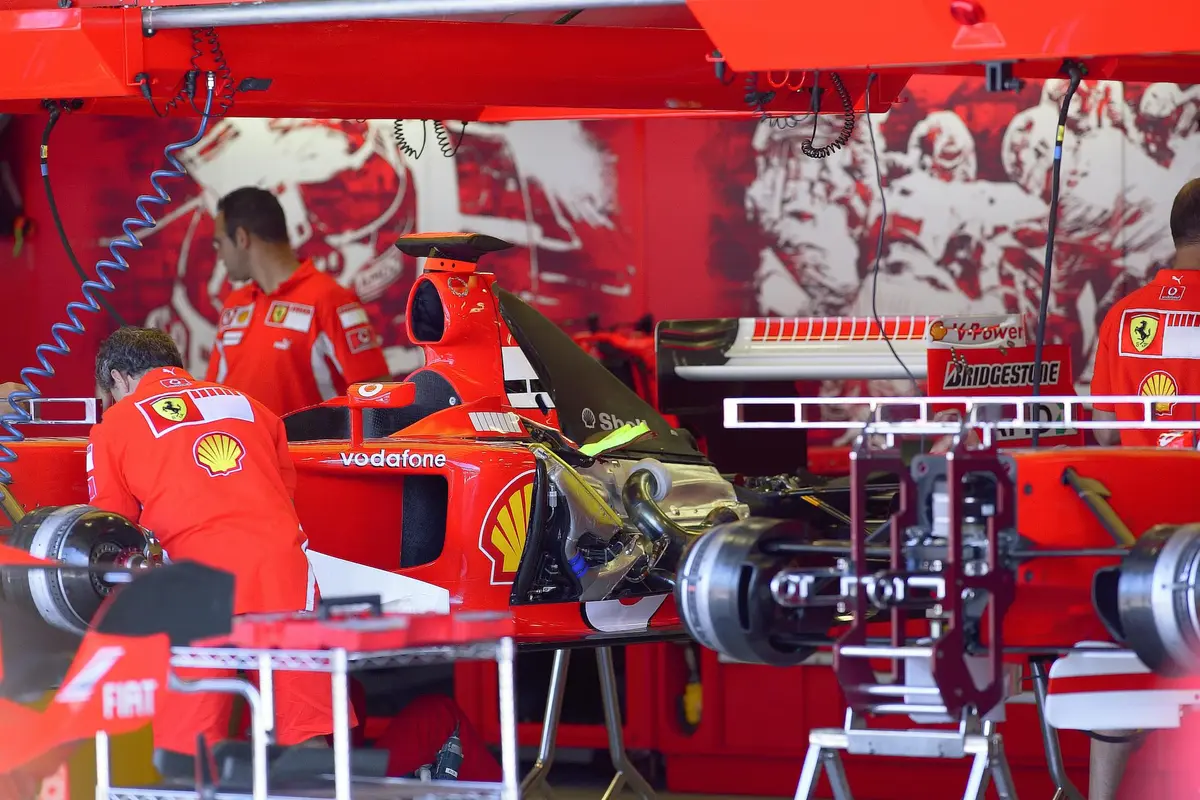
Few rivalries in Formula 1 history have captured the imagination of fans and analysts quite like the one between Jacques Villeneuve and Michael Schumacher. Long before their infamous on-track collision at the 1997 European Grand Prix in Jerez became one of the sport's most debated moments, the relationship between these two world champions was already fractured, tense, and deeply complicated. As reported by Crash.net, Villeneuve and Schumacher had a difficult off-track relationship even before the battles began on the circuit — a revelation that adds an entirely new dimension to one of motorsport's greatest feuds.
In a 2026 Formula 1 landscape defined by sweeping new technical regulations, active aerodynamics, and a fresh generation of drivers, revisiting the sport's most storied human dramas serves as a powerful reminder of what makes F1 so much more than a technical spectacle. The Villeneuve-Schumacher dynamic stands as a masterclass in how personality, pride, and competitive instinct can collide just as violently off the track as on it.
The Origins of a Difficult Relationship
To understand why the off-track friction between Jacques Villeneuve and Michael Schumacher matters so deeply, one must first appreciate who these two men were at their core. Villeneuve, the son of legendary Ferrari driver Gilles Villeneuve, arrived in Formula 1 carrying enormous expectation and an equally enormous personality. He was outspoken, irreverent, and entirely unwilling to defer to the established order — qualities that immediately set him apart in the paddock.
Schumacher, by contrast, had already established himself as the dominant force in Formula 1 by the time Villeneuve arrived as a serious championship contender. With multiple world championships already secured, Schumacher operated within an intensely professional, tightly controlled environment at Ferrari. His team, his management, and his entire competitive apparatus were built around a singular mission: winning, at virtually any cost.
The Crash.net report confirms that the difficult off-track relationship between the two champions predated their on-circuit battles — meaning the tension was not simply a product of racing incidents or championship pressure. Instead, it appears to have been rooted in a fundamental incompatibility of character, competitive philosophy, and personality. Two world champions, both supremely confident in their own abilities and methods, were always unlikely to share a paddock peacefully.
Personality Clashes in the Paddock
The Formula 1 paddock of the mid-to-late 1990s was an environment of extreme pressure, vast resources, and enormous egos — not unlike the 2026 paddock, where the arrival of new manufacturers such as Audi (in their debut season, rebranded from Sauber) and Cadillac (the sport's new 11th team) has introduced fresh dynamics and competitive personalities. But the human element at the heart of F1 has never fundamentally changed.
In Villeneuve's era, speaking your mind was considered almost radical. Schumacher operated within a carefully constructed media persona, while Villeneuve made a point of saying precisely what he thought about his rivals — including, on multiple occasions, Schumacher himself. This directness from the Canadian driver was not something Schumacher's environment was accustomed to accommodating, and it almost certainly contributed to the difficult relationship that Crash.net's reporting confirms existed away from the cameras and timing screens.
Villeneuve's willingness to publicly criticise Schumacher's driving tactics, his team orders controversies, and his general conduct as a competitor was deeply unusual for the era. Schumacher, used to being either unchallenged or diplomatically handled by rivals, found in Villeneuve an opponent who refused to play by those unwritten rules. The off-track tension, therefore, was arguably inevitable.
Why This History Resonates in 2026
The resonance of the Villeneuve-Schumacher off-track relationship in today's Formula 1 context is impossible to ignore. The 2026 season has introduced some of the sport's most significant regulatory changes in a generation — new power unit regulations, active aerodynamic systems, and an overtake boost mechanism have fundamentally altered the competitive landscape. With Lewis Hamilton now in his second year at Ferrari, Max Verstappen continuing his pursuit of further championships at Red Bull alongside rookie Isack Hadjar, and young talents like Andrea Kimi Antonelli and Arvid Lindblad making their marks, the current grid is as rich in personality and competitive tension as any in the sport's history.
Yet it is the human stories — the rivalries, the grudges, the off-track complexities — that elevate Formula 1 from sport to drama. The Villeneuve-Schumacher narrative reminds current fans that the paddock has always been a place where world-class competition breeds world-class conflict, not merely on the track but in the corridors, the motorhomes, and the press conferences that surround every race weekend.
Understanding that two of the sport's greatest champions struggled to coexist even before they raced each other provides essential context for how rivalries are born, how they escalate, and how they ultimately define careers. Every feud currently simmering on the 2026 grid has its precursors, and few precursors are as instructive as Villeneuve versus Schumacher.
The Broader Legacy of the Feud
The Villeneuve-Schumacher rivalry ultimately produced one of Formula 1's most consequential moments — a moment so significant that it shaped how the sport governed driver conduct for years afterward. But as Crash.net's reporting underscores, the roots of that drama were not purely competitive. They were personal, human, and present long before the championship fight reached its climax.
This is, in many ways, the most important takeaway from the confirmed off-track tension between these two champions. Rivalries in Formula 1 are not created on race day. They are built across weeks, months, and sometimes years of paddock interactions, press conferences, political maneuverings, and personality clashes. The on-track battles are merely the visible expression of something that has been developing in plain sight — if you know where to look.
For historians, journalists, and fans seeking to understand the full complexity of Formula 1's greatest rivalries, the acknowledgment that Villeneuve and Schumacher had a difficult off-track relationship before the battles on the circuit is not merely an interesting footnote. It is, in fact, the key to understanding everything that followed.
Technical and Strategic Implications of Human Dynamics in F1
It would be a mistake to view the Villeneuve-Schumacher off-track tensions purely through the lens of personal drama. In the highly strategic world of Formula 1, relationships between drivers carry real technical and competitive implications. How rivals interact in the stewards' room, how their respective teams interpret on-track incidents, how media narratives shape team morale and sponsor confidence — all of these factors are influenced by the underlying quality of inter-driver relationships.
When two champions actively distrust and dislike one another off the track, that tension inevitably bleeds into the competitive environment. Driving decisions at the limit of legality become harder to adjudicate neutrally. Team principals are drawn into taking sides. The atmosphere of an entire race weekend can be shaped by the quality — or lack thereof — of the relationship between the sport's most prominent personalities.
In 2026, as teams navigate the complexities of entirely new aerodynamic philosophies and power unit architectures, the human dynamics within and between teams remain as strategically significant as they have ever been. The Villeneuve-Schumacher precedent is a timeless reminder that in Formula 1, winning the off-track battle is often just as important as winning the one played out on tarmac.
Key Takeaways
- Jacques Villeneuve and Michael Schumacher had a confirmed difficult off-track relationship that predated their on-circuit battles, according to Crash.net.
- The tension between the two world champions was rooted in fundamental differences in personality, competitive philosophy, and paddock conduct.
- Villeneuve's outspoken willingness to publicly criticise Schumacher was highly unusual for the era and almost certainly deepened the off-track divide.
- The off-track dynamic between rivals in Formula 1 carries genuine strategic and competitive significance beyond mere personal drama.
- The Villeneuve-Schumacher story remains one of the most instructive case studies in how F1 rivalries are built and escalate over time.
- In the 2026 season — featuring new regulations, new manufacturers, and a new generation of talent — understanding historical precedents like this remains deeply relevant to appreciating the sport's human dimension.
Frequently Asked Questions
Did Jacques Villeneuve and Michael Schumacher have problems before their on-track battles?
Yes. As reported by Crash.net, the two Formula 1 world champions had a difficult off-track relationship even before their battles began on the circuit. The tension between them appears to have been rooted in deep personality differences and incompatible competitive philosophies rather than any single racing incident.
What made the Villeneuve-Schumacher rivalry so significant in Formula 1 history?
The rivalry between these two world champions is considered one of the most consequential in the sport's history, combining intense on-track competition with a complex and difficult off-track dynamic. Their clashes had lasting implications for how the sport managed driver conduct and competitive ethics, making their relationship one of F1's most studied feuds.
How does the Villeneuve-Schumacher rivalry relate to modern Formula 1 in 2026?
While the 2026 season features an entirely new generation of drivers and sweeping regulatory changes — including active aerodynamics and new power unit rules — the human dynamics at the heart of Formula 1 remain unchanged. The Villeneuve-Schumacher precedent illustrates how personality-driven off-track tensions can shape the entire competitive environment of the sport, a lesson that remains relevant for any era of F1.
Why is understanding off-track relationships important in Formula 1?
In Formula 1, relationships between drivers and their rivals influence far more than personal comfort. They affect stewards' deliberations, team strategies, media narratives, and sponsor confidence. When two high-profile drivers share a difficult off-track relationship, as Villeneuve and Schumacher did, those tensions inevitably influence decisions and outcomes across an entire season.
Conclusion
The confirmation that Jacques Villeneuve and Michael Schumacher shared a difficult off-track relationship even before their on-circuit battles began is one of those details that, while perhaps unsurprising to those who followed their careers closely, carries enormous significance for how we understand Formula 1 rivalries at their deepest level. It strips away any remaining notion that their famous confrontations were purely products of racing circumstance and reveals instead a rivalry that was personal, premeditated in its tension, and ultimately inevitable in its dramatic expression.
As Formula 1 moves through its transformative 2026 season — with new technical regulations reshaping the competitive order, new teams and manufacturers entering the sport, and a new generation of champions beginning to assert themselves — the sport's ability to generate stories of this depth and complexity remains its greatest and most enduring asset. The Villeneuve-Schumacher off-track rivalry is not merely history. It is a lens through which the eternal human drama of Formula 1 can be understood, appreciated, and applied to the battles unfolding in the present day.
In this article
Written with AI assistance. How this site works