Fernando Alonso Hints at F1 Future Beyond 2026 Season
Fernando Alonso has hinted strongly at racing beyond 2026, telling Sky Sports the current season is 'hopefully not the last' in a revealing statement about his F1 future.
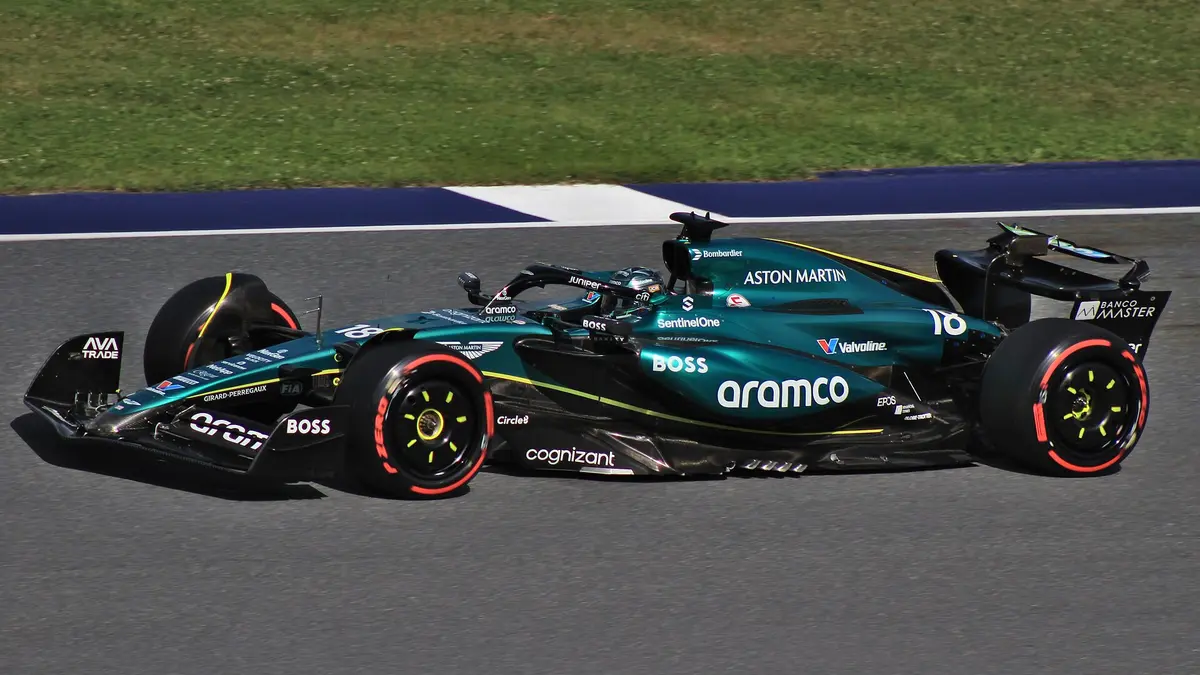
Photo: Lukas Raich / CC-BY-SA-4.0
Fernando Alonso has delivered his most telling signal yet about his intentions in Formula 1, telling Sky Sports that the 2026 campaign is "hopefully not the last season" — a statement that carries enormous weight given the two-time world champion's age, standing, and the seismic technical changes currently reshaping the sport. At 44 years old and entering his 44th season of F1 competition, Alonso continues to defy every conventional expectation of a driver at this stage of his career, and his latest comments suggest the end of the road is far from imminent.
Racing for Aston Martin alongside teammate Lance Stroll in 2026, Alonso has been one of the most fascinating figures in the paddock since his return to the grid with Alpine in 2021. His move to Aston Martin — where he has now been racing for several seasons — marked yet another chapter in one of the longest and most decorated careers in motorsport history. But what does "hopefully not the last" really mean, and why does it matter so much for the F1 2026 landscape?
Alonso's Quote in Context: What "Hopefully Not the Last Season" Really Signals
The phrasing Alonso chose is deliberate and revealing. He didn't say he wanted to race beyond 2026, or that he planned to. He said hopefully — a qualifier that acknowledges the reality that staying in Formula 1 beyond 2026 is not entirely within his own hands. Several factors govern whether a driver of Alonso's vintage can secure a seat: team performance, commercial considerations, sponsor alignment, and the simple arithmetic of whether a team believes he is delivering more value than a younger, cheaper alternative.
Yet the very fact that Alonso is speaking openly about a future beyond this season is significant. In recent years, the Spaniard had occasionally referenced retirement in ambiguous terms, allowing speculation to swirl. This latest statement to Sky Sports represents a deliberate pivot — a public declaration of intent that his competitive appetite remains fully intact.
Aston Martin's 2026 Trajectory and Its Impact on Alonso's Plans
Alonso's future is inextricably tied to Aston Martin's fortunes under the radical 2026 technical regulations. The new rules — which have introduced active aerodynamics, an overtake boost system powered by enhanced hybrid energy recovery, and dramatically altered car proportions — have effectively reset the competitive order. For Aston Martin, a team that has invested heavily in infrastructure, including a state-of-the-art campus in Silverstone, 2026 represents a genuine opportunity to challenge at the front of the grid.
If Aston Martin's 2026 challenger proves competitive, keeping Alonso becomes a straightforward commercial and sporting decision. He brings not only raw pace but decades of accumulated setup knowledge, political nous, and an ability to extract performance from a car mid-development cycle that few drivers in history can match. His experience navigating new regulations — he competed across multiple major rule changes throughout his career — is a tangible asset, not a nostalgic indulgence.
The Age Question: Why Alonso's Longevity Is No Longer the Talking Point It Once Was
When Alonso returned to F1 in 2021, the narrative was almost universally framed around how long he could last before his reflexes or fitness began to fade. Five years later, that narrative has largely been retired. Alonso has repeatedly demonstrated that his pace, racecraft, and tyre management remain at a level that very few drivers on the current grid can consistently match. In the context of the 2026 season — where new regulations demand drivers adapt quickly to unfamiliar car behaviour — his adaptability and experience may actually be more valuable than in a stable regulatory era.
The physical demands of the 2026 cars, with their revised aerodynamic philosophy producing different load characteristics than the ground-effect machinery of the preceding regulatory era, are substantial. Alonso's meticulous approach to physical conditioning means this remains a non-factor in any objective assessment of his continued participation.
The Broader F1 2026 Landscape: A Grid in Transition
Alonso's desire to continue racing beyond 2026 lands in the middle of a Formula 1 season that is itself in a state of unprecedented transition. The 2026 regulations have not only changed the cars — they have reshuffled the entire grid in terms of personnel. Audi debuted as a constructor this season after rebranding from Sauber, bringing with them Nico Hulkenberg and rookie Gabriel Bortoleto. Cadillac made its much-anticipated entry as the 11th team on the grid, fielding Sergio Perez and Valtteri Bottas. Lewis Hamilton, now in his second year at Ferrari, has continued to attract enormous attention, while Max Verstappen at Red Bull remains the benchmark against which all challengers are measured.
Into this context, Alonso's longevity is not merely a personal story — it is part of a wider narrative about the generational shift occurring across the grid. Racing Bulls' Arvid Lindblad represents one end of the spectrum as one of the youngest drivers in F1; Alonso, at the other end, represents the sport's institutional memory and an almost unparalleled competitive résumé. The tension between experience and youth is one of F1's perennial storylines, and Alonso's presence ensures it remains live and compelling.
What a Contract Extension Would Mean for the 2027 Grid
If Alonso does secure a deal to race in 2027 and beyond, it will have knock-on consequences for the driver market. Aston Martin's seat alongside Lance Stroll is one that multiple teams would consider a premium placement given the team's resources and ambitions. Young drivers in the feeder series and those currently in junior roles at F1 teams will be watching the Alonso situation closely, as his continuation effectively keeps one seat occupied that might otherwise come available.
For Aston Martin specifically, the long-term question is whether the team builds its future around a driver who can grow with the car through multiple seasons of a regulatory cycle, or whether it opts for a next-generation talent who might carry the project for a decade. Alonso's statement suggests he is actively lobbying — publicly and diplomatically — for the former option.
Technical and Strategic Implications for Aston Martin
From a purely technical standpoint, retaining Alonso into 2027 would provide Aston Martin with continuity that is genuinely difficult to price. A driver who has spent multiple seasons with a team accumulates an understanding of its development culture, its weaknesses in car setup, and the internal shorthand that makes communication between driver and engineers more efficient. Replacing that with an incoming driver — regardless of raw talent — means months of recalibration.
Under the 2026 regulations, where the active aero systems and overtake boost require drivers to make real-time strategic decisions that interact with the car's energy deployment, Alonso's intelligence and systems-level understanding of racing gives him a structural advantage. Teams building their 2027 car concepts will also benefit from a driver who can articulate the nuanced differences between how the car responds in qualifying trim versus race conditions — feedback that informs aerodynamic development at a fundamental level.
Key Takeaways
- Fernando Alonso has given his clearest public signal yet that he intends to race in Formula 1 beyond the 2026 season, describing this year as "hopefully not the last."
- The statement represents a deliberate shift in tone from the ambiguity Alonso has sometimes projected regarding his long-term future.
- Alonso's continued presence at Aston Martin would provide the team with invaluable regulatory continuity as the 2026 technical era matures.
- His adaptability and intelligence are considered particular assets under the complex active aerodynamic and hybrid systems introduced in 2026.
- A contract extension would have wider grid implications, influencing the driver market for the 2027 season and beyond.
- At 44, Alonso continues to challenge the conventional wisdom about age and performance limits in elite motorsport.
Frequently Asked Questions
What did Fernando Alonso say about his F1 future in 2026?
Speaking to Sky Sports, Alonso said that the 2026 season is "hopefully not the last season," his strongest public indication to date that he wishes to continue racing in Formula 1 beyond this campaign. The comment was notable for its directness, departing from the more ambiguous language he has sometimes used when discussing his long-term future in the sport.
Which team is Fernando Alonso racing for in 2026?
Alonso is competing for Aston Martin in 2026, partnered with Lance Stroll. Aston Martin is one of the teams with significant investment behind them entering the new 2026 regulatory era, including a major facility at Silverstone, and Alonso has been a central figure in the team's competitive ambitions during his tenure.
How old is Fernando Alonso in the 2026 F1 season?
Fernando Alonso is 44 years old during the 2026 Formula 1 season, making him by far the oldest driver on the current grid. Despite his age, he has continued to demonstrate competitive pace and technical acumen that have kept the retirement conversation largely at bay in recent seasons.
Why does Fernando Alonso's future matter for the F1 2026 driver market?
If Alonso secures a deal to race in 2027, Aston Martin's seat alongside Lance Stroll remains occupied, which has direct consequences for the driver market across the grid. Younger drivers in feeder categories and those waiting in the wings at F1 teams will be tracking his situation carefully, as his continuation affects the availability of premium seats for the next generation of talent.
Conclusion
Fernando Alonso's declaration that 2026 is "hopefully not the last season" is more than a passing comment — it is a considered, public statement of intent from one of the most strategically minded athletes in the history of motorsport. In a 2026 season already defined by sweeping regulatory change, new constructor debuts, and a genuinely reshuffled competitive order, Alonso's desire to extend his extraordinary career adds yet another compelling thread to an already rich narrative.
Whether Aston Martin ultimately aligns with his ambitions will depend on factors that play out over the coming months — car performance, the team's long-term planning, and the wider driver market. But the fact that Alonso is speaking openly about a future beyond this season, at the age of 44, in only the second year of a brand-new technical era, tells you everything you need to know about the man's enduring competitive hunger. In Formula 1, very few things are certain — but Fernando Alonso's refusal to quietly exit the stage is about as reliable as any constant the sport has produced.
In this article
Written with AI assistance. How this site works