Verstappen Faces Strict Pit Stop Rules at Nurburgring 24h
Max Verstappen faces strict pit stop rules at the upcoming Nürburgring 24 Hours in May, adding significant complexity to the four-time F1 champion's endurance racing challenge.
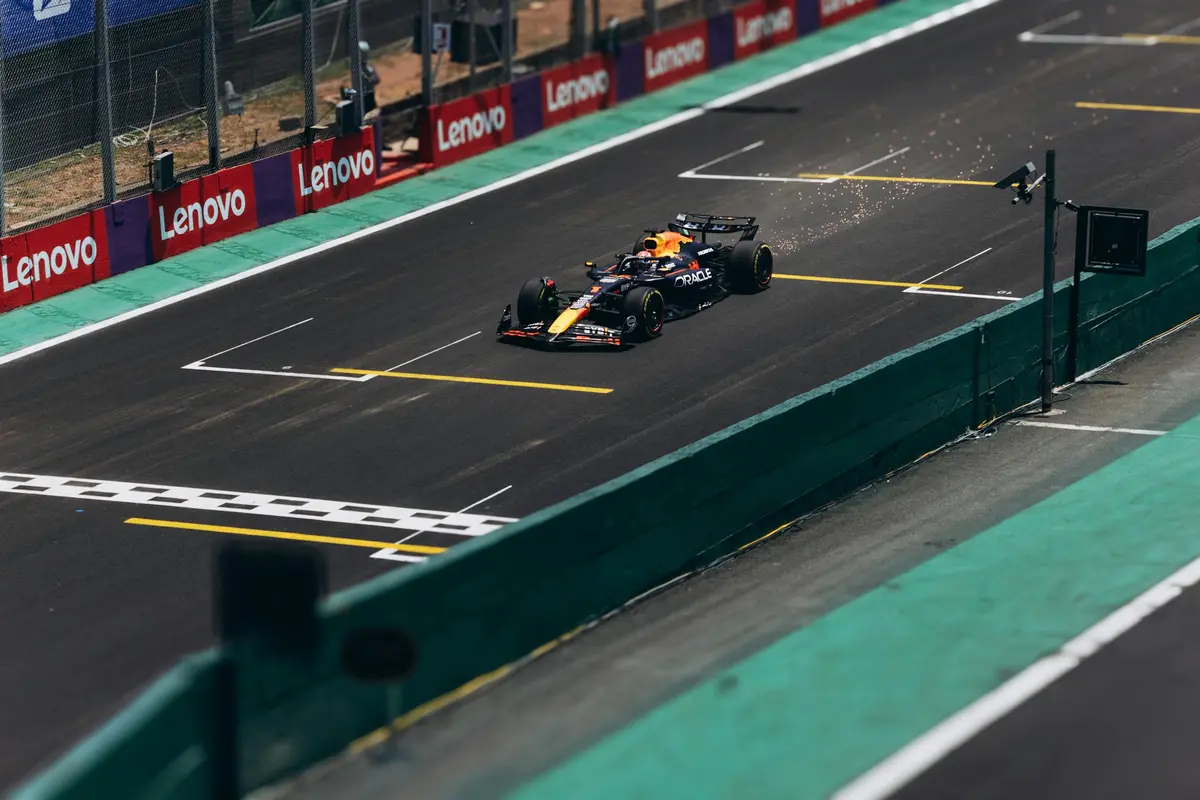
Max Verstappen, the four-time Formula 1 World Champion and reigning title holder, is set to take on one of motorsport's most gruelling endurance challenges this May — the legendary Nürburgring 24 Hours. However, the Dutch superstar will not simply be able to apply the instincts and strategic freedom he enjoys on the F1 circuit. According to reports, Verstappen faces a set of very strict pit stop rules at the upcoming Nürburgring 24h, adding a significant layer of complexity to what is already one of the most demanding races in global motorsport. For a driver of his calibre — accustomed to reacting dynamically to race situations and working with Red Bull's elite strategists — operating under rigidly defined pit stop regulations will represent a genuinely unique and testing challenge.
The Nürburgring 24 Hours is not Formula 1. It operates under entirely different sporting regulations, team structures, and race management frameworks. Understanding exactly what those constraints mean for Verstappen, and why they matter both for the race itself and for his broader motorsport profile, requires a deeper look at endurance racing's operational world — a world far removed from the ultra-precise, millisecond-optimised pit stops of the F1 paddock.
What Are the Strict Pit Stop Rules Verstappen Must Follow?
The source reporting confirms that Verstappen will be bound by strict pit stop rules at the Nürburgring 24h in May — rules described as making his task even more complex than it might otherwise be. While the specific technical details of every individual regulation have not been fully enumerated in the available reporting, the broader context of the Nürburgring 24 Hours sporting framework helps illustrate what this entails.
Endurance races of this nature — particularly those held on the Nordschleife circuit — are governed by strict sporting codes that typically include mandatory pit stop windows, prescribed minimum pit durations, driver change requirements, and carefully regulated refuelling and tyre change procedures. Unlike F1, where Red Bull's pit crew can execute a tyre change in under two seconds, endurance racing often mandates minimum stationary times in the pit box to enforce safety standards and level the playing field between factory-backed and privateer squads. These rules are deliberately designed to prevent teams from gaining unfair mechanical advantages through pit lane speed alone.
For Verstappen, a driver who has spent his entire elite career in a sport where every fraction of a second in the pit lane is ruthlessly optimised, adapting to rules that deliberately slow down or constrain pit stop activity is a fundamental shift in mindset. In F1 2026, with the new active aerodynamics regulations and overtake boost systems redefining on-track performance windows, Verstappen and Red Bull have honed their strategic thinking to an extraordinary degree. Translating that acuity into a completely different regulatory environment — one where he has far less control over the timing and execution of stops — is a genuinely intriguing challenge.
Driver Rotation and Shared Responsibility
One of the defining features of endurance racing that sets it apart from F1 is the requirement for multiple drivers to share the same car. The Nürburgring 24 Hours typically mandates minimum and maximum driving times per driver across the 24-hour period, meaning Verstappen will not simply be able to dominate the wheel as he might wish. He must cede the car to co-drivers at prescribed intervals, and those transitions are tightly regulated within the broader pit stop framework.
This creates a fundamentally different kind of strategic problem. In F1, Verstappen works with Red Bull's strategists to decide when he pits and what tyres he takes. In endurance racing, the question becomes far more multi-dimensional: when must a driver change occur? Is the co-driver ready? Have all mandatory pit window conditions been satisfied? Is the minimum stationary time being observed? A mis-step in any of these areas results in time penalties that, over a 24-hour race, can be race-defining.
Why Is the Nürburgring 24 Hours Such a Unique Challenge?
The Nürburgring Nordschleife is, by almost universal consensus among professional racing drivers, one of the most extraordinary and unforgiving circuits in the world. Stretching over 25 kilometres per lap, featuring more than 150 corners, dramatic elevation changes, and a history that has claimed the careers — and tragically the lives — of great champions, the Nordschleife demands a category of respect that few circuits can match.
The 24-hour format compounds this difficulty enormously. Teams and drivers must manage machinery, manage their own physical and mental condition, navigate rapidly changing weather (the Eifel region of Germany is notorious for sudden fog, rain, and even hail), and maintain strategic discipline across an entire day-and-night cycle. Mistakes made at hour three can cost a team the race at hour twenty-two. The strict pit stop regulations that Verstappen faces are a key part of this challenge — they are not bureaucratic inconveniences but fundamental pillars of how the event's fairness and safety are maintained.
For Verstappen, participation in the Nürburgring 24 Hours is also part of a broader pattern of elite F1 drivers testing themselves beyond the boundaries of their primary discipline. It speaks to a competitive appetite that goes beyond championship points and constructor standings. In the context of the 2026 F1 season — where Verstappen and Red Bull are navigating a new technical era with substantially revised power unit regulations and the introduction of active aero systems — taking on an endurance challenge of this magnitude in May demonstrates both the depth of his motorsport passion and the confidence of his fitness and preparation team.
Context: Verstappen in 2026 and the Broader Motorsport Landscape
The 2026 Formula 1 season is one of the most technically transformative in the sport's recent history. The introduction of new hybrid power unit regulations, a revised aerodynamic philosophy centred on active aero surfaces, and the addition of an overtake boost system have fundamentally altered the performance landscape. Red Bull, with Verstappen alongside new team member Isack Hadjar — promoted from Racing Bulls for this season — are among the leading forces adapting to these sweeping changes.
Verstappen's decision to compete at the Nürburgring 24 Hours in May, during the middle of an already demanding F1 calendar, underlines something that has been apparent throughout his career: he is not a driver who limits himself to comfort zones. Whether it is his early career development through the junior ranks, his fearless overtaking in wet conditions, or his willingness to engage in events outside the F1 bubble, Verstappen consistently demonstrates a hunger that transcends championship mathematics.
The strict pit stop rules he faces at the Nürburgring 24h are, in a sense, a microcosm of this challenge. They represent a set of constraints he cannot negotiate away, cannot react around in real time, and cannot delegate to a strategist to solve. They are the rules of a different world — one where his four F1 world championships count for very little in the pit lane, and where compliance, patience, and team coordination matter as much as outright speed.
Technical and Strategic Implications
From a technical standpoint, the strict pit stop rules at the Nürburgring 24h have cascading implications for Verstappen's team's race strategy. Mandatory pit windows and minimum stationary times mean that strategy cannot be reactive in the same way it is in F1 2026. Teams must plan their stop sequences in advance, build contingency time into their models, and accept that the pit lane will cost them a defined, non-negotiable block of time on every visit.
This places a premium on reliability and pace consistency rather than the explosive one-lap performance that defines F1. For Verstappen's co-drivers and engineering team, ensuring that each stint maximises lap time within the prescribed framework — without pushing the machinery to a point that forces unplanned pit visits — becomes the dominant strategic consideration. Any unscheduled stop, caused by a mechanical issue or driver error, immediately disrupts the carefully planned stop sequence and can trigger cascading time penalties if mandatory pit rules are violated as a result.
Furthermore, tyre management in a 24-hour endurance context is radically different from F1's sprint-format tyre strategies. Verstappen, renowned for his ability to manage degradation in F1, will need to recalibrate his feel for a car and tyres that are engineered for longevity rather than peak lap time performance.
Key Takeaways
- Max Verstappen, four-time F1 World Champion, will compete in the Nürburgring 24 Hours in May and must comply with strict pit stop rules that significantly increase the complexity of his race.
- Unlike F1 2026's dynamically managed pit strategy, the Nürburgring 24h imposes mandatory pit windows, minimum stationary times, and driver change requirements that constrain strategic freedom.
- The Nordschleife's 25+ kilometre layout, unpredictable Eifel weather, and 24-hour duration make this one of the most demanding endurance events in global motorsport.
- Verstappen's participation reflects a broader competitive instinct that extends beyond Formula 1 championship racing.
- The strict regulatory framework places a premium on team coordination, reliability, and consistent pace rather than F1-style reactive strategy.
- Success at the Nürburgring 24h will require Verstappen to adapt his driving style, tyre management philosophy, and pit lane expectations to a completely different motorsport discipline.
Frequently Asked Questions
What are the strict pit stop rules Verstappen faces at the Nürburgring 24 Hours?
The Nürburgring 24 Hours imposes a regulatory framework that typically includes mandatory pit stop windows, minimum stationary times in the pit box, and required driver change procedures. These rules are designed to ensure safety and competitive fairness, and they prevent teams from taking the kind of ultra-fast, freely timed pit stops that define Formula 1 strategy. For Verstappen, operating under these constraints represents a significant departure from his F1 experience with Red Bull.
Why is Verstappen competing in the Nürburgring 24 Hours during the 2026 F1 season?
Verstappen's decision to compete in the Nürburgring 24h during the active 2026 F1 season reflects his well-documented desire to challenge himself across different motorsport disciplines. The race takes place in May, fitting within the F1 calendar schedule. His participation is consistent with a career-long pattern of seeking competition beyond the boundaries of Formula 1.
How does the Nürburgring 24h differ strategically from a Formula 1 race?
Formula 1 races are sprint events of approximately 50-70 laps where strategy is highly reactive, pit stops take under three seconds, and a single driver manages the entire race distance. The Nürburgring 24 Hours is a 24-hour endurance event requiring multiple drivers, strictly regulated pit stop durations, mandatory stop windows, and tyre and mechanical management over a vastly longer timeframe. The strategic complexity is fundamentally different, demanding long-term planning over short-term reaction.
Will the strict pit stop rules at the Nürburgring 24h disadvantage Verstappen compared to experienced endurance drivers?
The strict pit stop rules apply equally to all competitors, so they do not specifically disadvantage Verstappen relative to rivals. However, they do mean that his renowned F1 instincts for dynamic pit strategy cannot be freely applied. Experienced endurance racers who are more familiar with these specific regulations and the Nordschleife's unique demands may have an initial edge in terms of regulatory fluency, though Verstappen's raw speed and adaptability remain formidable assets.
Conclusion
Max Verstappen's upcoming appearance at the Nürburgring 24 Hours in May is one of the most compelling crossover stories in motorsport this year. The strict pit stop rules he must navigate add a layer of genuine complexity that goes well beyond simply driving fast on one of the world's most iconic circuits. They demand compliance, patience, and team-level coordination in ways that F1 — for all its strategic sophistication — does not replicate.
In the context of the 2026 Formula 1 season, where Verstappen and Red Bull are already operating in a transformed technical landscape with new power unit regulations, active aerodynamics, and a reshaped competitive order, the Nürburgring 24h represents an entirely separate frontier. It is a reminder that the greatest drivers in the world are defined not only by their performance within the comfort of their primary discipline, but by their willingness to step into unfamiliar territory and compete on terms they did not write.
Whether Verstappen can master the strict pit stop framework, adapt to endurance racing's unique demands, and perform at the front of one of motorsport's great classic events remains to be seen. What is certain is that his presence at the Nürburgring 24h raises the event's profile enormously — and the strict regulations he faces make the challenge all the more fascinating to follow.
In this article
Written with AI assistance. How this site works