Max Verstappen at the Nürburgring: The Complete 2026 Endurance Campaign
Verstappen Nürburgring 2026: Max's full two-car endurance campaign — Ferrari 296 GT3 with Emil Frey Racing, then Mercedes-AMG GT3 at the 24h Qualifiers.
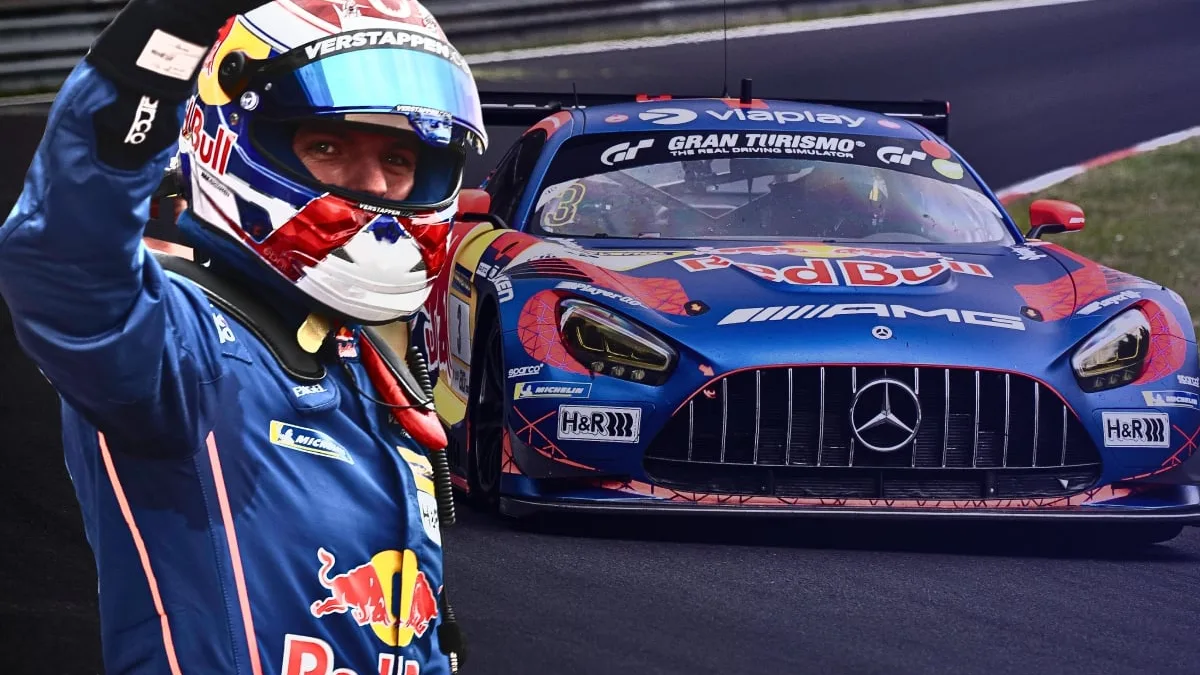
The story of Verstappen Nürburgring 2026 is not a single weekend. It is a two-car, multi-round endurance campaign that unfolded alongside the four-time Formula 1 World Champion's 2026 title defence with Red Bull Racing — first in a Ferrari 296 GT3 with Emil Frey Racing for the opening rounds of the Nürburgring Langstrecken-Serie, then in a Mercedes-AMG GT3 under his own Mercedes-AMG Team Verstappen Racing banner for the ADAC 24h Nürburgring Qualifiers. Between March and April, Max Verstappen contested NLS1, won NLS2 at the Nordschleife, survived an NLS4 qualifying crash and grid penalty, tackled NLS5 and Top Qualifying, and absorbed a GT3 tyre-allocation disqualification — all under the shadow of a tragic incident at the circuit that rightly overshadowed competition entirely.
This pillar pulls the whole Verstappen Nürburgring 2026 story together in chronological order — the Ferrari 296 GT3 era with Emil Frey Racing, the strategic switch to a Mercedes-AMG GT3 for the 24h Qualifiers, the on-track drama of the qualifier weekend itself, the stewards' intervention, and the solemn moment that recontextualised everything — and explains exactly why the Dutchman keeps coming back to the Green Hell while chasing a fifth F1 world title with Red Bull.
Why Verstappen races at the Nordschleife
To understand why a reigning Formula 1 superstar, in the middle of the most technically disruptive season in a generation, voluntarily drives the most dangerous permanent racetrack in the world on his off-weekends, you have to understand the Green Hell itself. The Nürburgring Nordschleife — the 20.83-kilometre northern loop snaking through the Eifel forest, more than 150 corners long, with over 300 metres of elevation change and a microclimate so volatile that one end of a lap can be in sunshine while the other is drenched in rain — is not on the Formula 1 calendar. It has not hosted a Grand Prix since 2013. That is precisely the point.
Sir Jackie Stewart christened it the "Green Hell" after winning the 1968 German Grand Prix in a rainstorm and dense fog, and six decades on the nickname still fits. The Nordschleife rewards everything a modern F1 circuit increasingly suppresses — mechanical sympathy, genuine bravery on blind crests, traffic management across multi-class grids, and the kind of car control that only a real racetrack with no run-off and concrete-lined barriers can teach. For a driver of Verstappen's pedigree, raised on a strict karting and single-seater ladder, voluntarily committing to a GT3 car on a 20.83-km loop in the middle of an F1 title fight is a deliberate, value-generating choice, not a marketing stunt.
There is strategic logic behind the Verstappen Nürburgring 2026 programme as well. In an F1 era where private testing is essentially banned and simulator time is tightly regulated, real-world seat time in a competitive environment is genuinely precious. Long Nordschleife stints hone braking feel, tyre-phase awareness, traffic discipline and mechanical-grip instincts — all of which transfer directly back to the RB22 when Verstappen climbs out of a GT3 car and back into his Red Bull Racing cockpit. Team Principal Laurent Mekies has been publicly supportive of these outings on that exact basis: a sharper, race-hardened Verstappen is a more dangerous F1 driver, not a distracted one.
The 2026 campaign is also the clearest signal yet that Verstappen's endurance racing is no longer an occasional hobby. Between a works-supported Ferrari 296 GT3 drive with Emil Frey Racing and a dedicated Mercedes-AMG programme carrying his own name on the garage wall, he is now operating two serious manufacturer-level endurance projects in parallel with his F1 title defence. That scale of commitment — on the toughest circuit in motorsport — is exactly why the Nordschleife matters so much to him.
The Ferrari 296 GT3 era with Emil Frey Racing: NLS1 and the NLS2 Nordschleife victory
The Verstappen Nürburgring 2026 season opened on Saturday 21 March 2026 with an entry nobody in the Formula 1 paddock saw coming: Max Verstappen behind the wheel of an Emil Frey Racing Ferrari 296 GT3 for the opening round of the Nürburgring Langstrecken-Serie. For the four-time F1 world champion — Red Bull Racing's spearhead into the new 2026 technical era — to step out of the RB22 on an F1 off-weekend and into an Italian GT car run by a Swiss customer team was a significant statement of intent. This was not a celebrity cameo in a flag-bedecked one-off; it was the first round of a properly planned NLS programme.
Emil Frey Racing is one of the most respected customer outfits in European GT racing, with a long record of success across GT3 machinery. The team's decision to run Verstappen in its Ferrari 296 GT3 — a twin-turbo V6 GT3 car that replaced the long-serving 488 GT3 Evo in Ferrari's customer programme — gave him access to a modern, race-proven platform on a circuit where chassis balance, brake feel and traffic awareness matter more than raw straight-line power. NLS1 was effectively Verstappen's pre-season shakedown on the Nordschleife in current-spec GT3 machinery, a chance to recalibrate his eye and his hands for the Green Hell before the serious points-scoring rounds began.
The contrast with his day job could hardly have been sharper. The 2026 Formula 1 regulations introduced a 50/50 power split between the internal combustion engine and a 350 kW electrical system, Active Aero (movable front and rear wing elements that automatically reduce drag on straights and increase downforce in corners) and the Manual Override (a driver-triggered electrical boost designed to aid overtaking when the car ahead has depleted its energy reserves). The Ferrari 296 GT3, by comparison, relies on traditional fixed aerodynamics, mechanical grip and driver feel. Shedding one skin and climbing into the other requires genuine cognitive flexibility — and NLS1 was where that recalibration started in earnest.
NLS2: Verstappen wins at the Nordschleife in the Emil Frey Ferrari
Twenty-four hours later, on Sunday 22 March 2026, the Verstappen Nürburgring 2026 programme delivered its headline result. In only his second NLS outing of the season, Verstappen and the Emil Frey Racing Ferrari 296 GT3 took a dominant victory in NLS2 at the Nordschleife. It was not a lucky weekend, a strategy-assisted win or a rain-induced lottery result. The telemetry showed exactly what the paddock already suspected: Verstappen was flat-out fast, technically precise through the Hatzenbach and Adenauer Forst sequences, and ruthlessly efficient in traffic on the long Döttinger Höhe straight.
The NLS2 win mattered on two levels. Competitively, it demonstrated that the F1-honed instincts Verstappen has been polishing under the 2026 active-aero and energy-management regulations translate immediately to GT3 machinery — tyre management, traffic awareness and the discipline of carrying minimum corner speeds through technical middle sectors. Symbolically, it reinforced his status as the most versatile top-tier driver on the planet: four-time F1 champion on a Saturday night, NLS winner at the Nordschleife on Sunday afternoon, back in RB22 meetings by the following Tuesday.
For Emil Frey Racing and Ferrari, winning NLS2 at the Nordschleife with Verstappen in the 296 GT3 represented an enormous boost for the customer programme. For Red Bull Racing, it was a validation of Mekies' flexible, driver-first management philosophy — the notion that letting Verstappen scratch his endurance itch keeps him mentally fresh for the brutal 2026 F1 campaign, rather than diluting his focus. For the Nordschleife, it meant one of the biggest names in world motorsport standing on the top step of the podium at Germany's most demanding permanent circuit.
Why Verstappen switched to a Mercedes-AMG GT3 for the 24h Qualifiers
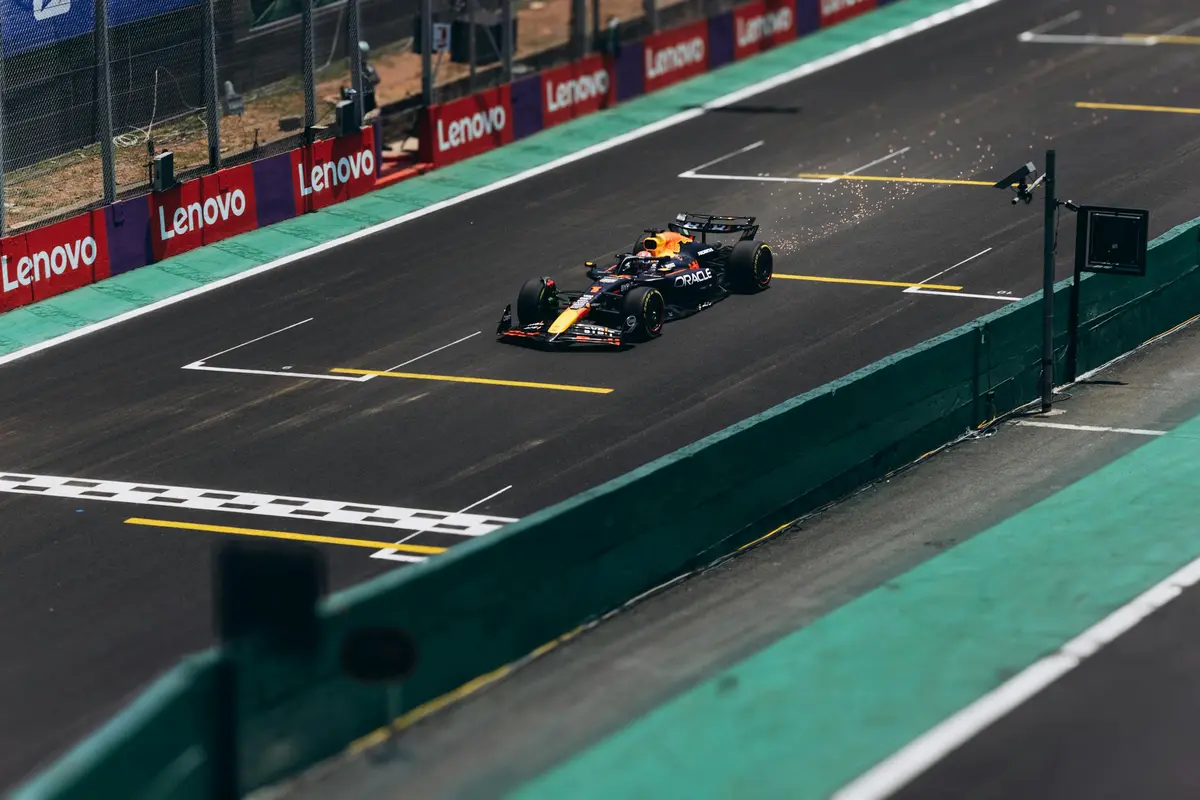
If the Ferrari 296 GT3 defined the opening chapter of the Verstappen Nürburgring 2026 story, the Mercedes-AMG GT3 defined the second. For the ADAC 24h Nürburgring Qualifiers weekend on 18–19 April 2026, Verstappen switched machinery and teams entirely — moving from the Emil Frey Racing Ferrari to a Mercedes-AMG GT3 campaigned under the Mercedes-AMG Team Verstappen Racing banner, a formal collaboration between Verstappen's personal motorsport outfit and the factory Mercedes-AMG GT customer operation.
At first glance, seeing a Red Bull Racing driver in a Mercedes-branded entry is jarring. The optics are unusual. But GT endurance racing and Formula 1 operate as entirely separate competitive and commercial ecosystems, and manufacturer-level Nordschleife entries are routinely built around long-standing personal and engineering relationships rather than F1 team politics. Verstappen has quietly built a working relationship with Mercedes-AMG GT motorsport across several seasons of selected Nordschleife appearances, and his own team — Verstappen.com Racing — has progressively grown into a manufacturer-backed collaboration with AMG for the most important weekend on the Nürburgring endurance calendar.
The ADAC 24h Nürburgring itself is the reason for the switch. It is the centrepiece of Nordschleife endurance racing — a twice-round-the-clock multi-class race on the combined Grand Prix and Nordschleife layout — and its qualifiers are the primary event where grid positions are set and manufacturer-backed entries validate their packages in full race conditions. For the 24 Hours, Verstappen needed a works-level AMG GT3 operation behind him: factory engineering, dedicated race engineers, a driver line-up built around podium ambitions rather than a single-lap publicity run, and the full Mercedes-AMG customer-racing machine. Running under the Mercedes-AMG Team Verstappen Racing name — rather than a one-off guest entry — is the clearest signal yet that the 24h is a long-term project, not a cameo.
There is no contradiction with the earlier Ferrari 296 GT3 NLS programme. GT3 drivers at this level routinely run different machinery in different series within the same calendar year, and using one platform to prepare and another to attack the main 24-hour target is a common model. The Emil Frey Ferrari gave Verstappen his early-season Nordschleife mileage and his NLS2 win; the Mercedes-AMG gave him the manufacturer-level structure required to take on the ADAC 24h Nürburgring Qualifiers weekend at full intensity.
The ADAC 24h Nürburgring Qualifiers weekend
The weekend of 18–19 April 2026 was the most important standalone event on Verstappen's 2026 endurance calendar. The ADAC 24h Nürburgring Qualifiers serve a dual role: they are two competitive races in their own right — NLS4 on Saturday and NLS5 on Sunday — and simultaneously the primary qualifying event for the full ADAC 24h Nürburgring race itself, with grid positions for the 24-hour showpiece set during the weekend.
Teams use the weekend to bank representative qualifying times on the Nordschleife, validate setup choices, acclimatise drivers to current-year tyres, and shake down every major system that will need to survive a twice-round-the-clock race. For Mercedes-AMG Team Verstappen Racing, the ambition was unambiguous: turn the AMG GT3 into a genuine podium-level entry for the full 24 Hours while using the qualifier weekend as a full-attack competitive run-out.
It is worth being specific about what Verstappen was taking on. The Nordschleife combined layout used for the ADAC 24h stretches beyond 25 kilometres with more than 70 corners, dramatic elevation change exceeding 300 metres, weather patterns that can flip from sunshine to fog to rain within a single lap, and constant multi-class traffic from GT4, Cup and production-based cars sharing the same tarmac as GT3 machinery. Qualifying competitively on that circuit, in that traffic density, in current-spec GT3 hardware, is a serious performance test even for the most decorated driver on the planet.
NLS4 qualifying: the Buchardt red flag, the crash and the grid penalty
Saturday 18 April did not unfold the way Mercedes-AMG Team Verstappen Racing had planned. Qualifying for NLS4 and the ADAC 24h Qualifiers was red-flagged almost immediately after it began, following a heavy crash involving Anders Buchardt on the Nordschleife. The session was stopped swiftly — standard protocol at the Nürburgring, where the length of the circuit and the proximity of barriers in key sections mean any serious incident requires an immediate full stoppage to allow marshals and medical personnel to reach the scene safely.
For every team on the entry list, the early red flag was a genuine disruption. Qualifying sessions on the Nordschleife are complex affairs where teams routinely plan their run sequences around fuel load, tyre temperature and track evolution, and losing early running compresses the remaining window for everyone. For Mercedes-AMG Team Verstappen Racing, the timing could hardly have been worse: the crew had only banked a fraction of its planned programme before the session was halted.
Matters got worse before they got better. Verstappen's own team then suffered a qualifying crash of its own at a separate point in the weekend's running, an incident that resulted in a grid penalty for the NLS4 race itself. The specific regulatory mechanism behind the penalty was not elaborated in initial reporting, but the consequence was unambiguous: the Mercedes-AMG Team Verstappen Racing entry would start NLS4 from a compromised grid position on one of the most difficult circuits in the world to overtake cleanly on. In a separate development, the team was placed under stewards' investigation for an early-session incident — another thread of drama in what was already the busiest Saturday of Verstappen's endurance season.
A grid penalty at a modern Grand Prix venue is irritating. A grid penalty on the Nordschleife is a genuinely serious sporting problem. The circuit's narrow ribbon of asphalt, blind crests, walls and constant flow of slower GT4 and production traffic mean that every additional overtake costs time, raises mechanical risk, and ratchets up the probability of contact — with another competitor, with a barrier, or with the scenery the Green Hell hides around most of its corners. Repeated hard overtaking also shortens the usable life of brakes and tyres, bringing forward pit stops and pulling strategy off its ideal window.
NLS5, Top Qualifying and the GT3 disqualification saga
Sunday 19 April 2026 was meant to be where the Verstappen Nürburgring 2026 qualifier weekend turned. Verstappen strapped back into the Mercedes-AMG GT3 for NLS5 — the fifth round of the Nürburgring Langstrecken-Serie and the second competitive day of the ADAC 24h Qualifiers weekend — and headlined the weekend's Top Qualifying session, the single-car blast on the Nordschleife that determines starting grid positions for the full 24 Hours.
Where NLS4 had been defined by the Buchardt red flag, a qualifying crash and a grid penalty, NLS5 and Top Qualifying were meant to be the sessions where Team Verstappen Racing converted its Nordschleife pace into clean, representative race results that could feed directly into preparations for the main 24-hour event. Teams across the paddock invested enormous resources specifically in the Top Qualifying run, understanding that a strong starting position is often decisive in a 24-hour endurance race where strategy, reliability and driver line-up quality are otherwise closely matched.
The tyre-allocation disqualification
The competitive drama did not end with the chequered flag. After the racing, stewards determined that the Mercedes-AMG Team Verstappen Racing entry had exceeded the maximum number of tyre sets permitted under the event's sporting regulations, and handed down a disqualification. In NLS and ADAC 24h Qualifiers competition, tyre allocations are strictly capped across qualifying and the race to control costs and preserve sporting parity — a deliberate egalitarian streak designed to stop well-funded manufacturer entries from simply outspending smaller teams on fresh rubber.
Exceeding that allocation — even by a single set — is treated as a major technical infringement rather than a minor administrative error, because the advantage of an extra fresh set of tyres on the Nordschleife is significant. The circuit's length, surface and abrasiveness punish rubber harder than almost any track in the world, so a team with one more set than its rivals has a genuine performance lever. Disqualification is the standard, proportionate regulatory response.
Critically, the GT3 disqualification was not a reflection of Verstappen's driving. His pace through the Green Hell in the Mercedes-AMG GT3 was reportedly excellent, exactly as expected from a driver who had already won NLS2 at the same circuit in a Ferrari 296 GT3 only weeks earlier. The infringement sat in the support structure — a logistical slip in managing tyre inventory across sessions — rather than anything Verstappen did at the wheel. For a manufacturer operation as experienced as Mercedes-AMG customer racing, and a driver who prides himself on precision, it was a rare, uncomfortable administrative miss.
Verstappen's public response was notably measured. Speaking after the stewards' decision, he adopted a calm, smiling tone, framing the weekend as a valuable data-gathering exercise rather than a lost trophy. His emphasis was on the feel of the Mercedes-AMG GT3, the quality of his stints, the Nordschleife mileage banked, and the lessons carried forward into the remainder of the Team Verstappen Racing programme. For a driver often associated with fiery reactions to setbacks, that equanimity said a great deal about how clearly he separates his F1 title fight from his endurance passion project.
The Nürburgring tragedy overshadowing his 2026 bid
Against all of this — the Ferrari 296 GT3 NLS2 victory, the switch to the Mercedes-AMG GT3, the NLS4 red flag and grid penalty, the NLS5 race, the Top Qualifying session and the tyre-allocation disqualification — the most important story of the ADAC 24h Qualifiers weekend was not competitive at all. On Saturday 18 April 2026, a tragic incident at the Nürburgring came to dominate the day's coverage and rightly overshadowed every on-track narrative. Out of respect for those affected, the motorsport community as a whole recontextualised an otherwise headline-heavy Saturday into a moment of reflection.
This site follows the same framing. Results, red flags, grid penalties and disqualifications are, in the end, sporting details. The human reality of a tragedy at a racetrack — felt by families, marshals, officials, fellow competitors and fans — sits on a completely different plane. The Nürburgring's long history contains both some of the greatest moments in motorsport and some of its most painful chapters, and the events of the weekend added another solemn entry to that layered legacy. Specific details are not the subject of this pillar; the respectful acknowledgement of the weekend's gravity is.
For Verstappen personally, the tragedy cast an unavoidable shadow over what was otherwise a hard-working, fully committed Nordschleife campaign. Whatever happened on-track over the weekend — the red flag, the qualifying crash, the grid penalty, the NLS5 race, the Top Qualifying session, the tyre-allocation disqualification — all of it sat behind the simple fact that the Nürburgring community was in mourning. The respectful, measured tone of his post-weekend public comments reflected that context directly, and the absence of triumphalism around any competitive moments from the weekend was deliberate and appropriate.
It is important to acknowledge this story separately rather than fold it into a competitive recap. Motorsport at the Nordschleife has always operated with an implicit understanding that the circuit is uniquely demanding and uniquely unforgiving, and that safety — for drivers, for marshals, for fans — must sit above everything else. The 2026 qualifiers weekend was a reminder of that understanding in the most sobering possible terms.
Red Bull's position and what it means for Verstappen's F1 focus
So where does the full Verstappen Nürburgring 2026 programme — the Ferrari 296 GT3 with Emil Frey Racing, the NLS2 Nordschleife win, the switch to the Mercedes-AMG GT3, the 24h Qualifiers weekend and the tyre-allocation disqualification — leave Max's Formula 1 campaign? In short: exactly where it was before. Every Nordschleife session took place on an F1 off-weekend. No Red Bull Racing commitments were compromised, no RB22 mileage was sacrificed, and no championship points were gained or lost.
Red Bull's position has been publicly consistent throughout. Under Team Principal Laurent Mekies, the team has adopted a markedly driver-first management philosophy, framing Verstappen's 24h participation and broader endurance programme as part of a deliberate strategy to keep its lead driver engaged, sharp and mentally fresh through the toughest technical transition in modern F1 history. The 2026 regulations — Active Aero, the Manual Override boost, a 50/50 power split and a brand-new Red Bull Powertrains–Ford works power unit — make driver feedback more valuable than ever, and a relaxed, race-hardened Verstappen produces better feedback than a frustrated one.
The competitive context makes that stance even more defensible. The 2026 F1 grid is as deep as it has been in years. Ferrari pairs Charles Leclerc with Lewis Hamilton in his second season at Maranello. McLaren's Lando Norris and Oscar Piastri remain relentless at the front. Mercedes runs George Russell alongside Andrea Kimi Antonelli. Fernando Alonso leads Aston Martin with Adrian Newey now influencing the project. Cadillac has arrived as a new manufacturer entrant, and Audi continues to build. Against that backdrop, Red Bull needs Verstappen at his absolute peak across every weekend of the calendar.
The case for — rather than against — the Nürburgring outings actually strengthens under that microscope. Real-world Nordschleife mileage develops mechanical-grip feel, traffic management and tyre-phase instincts in a way no simulator can replicate. Stepping back into a 2026 F1 car after a GT3 weekend resets a driver's baseline for mechanical balance before Active Aero and Manual Override tools are layered on top. NLS2's victory in the Ferrari and the Nordschleife miles banked in the Mercedes-AMG both add to that baseline, not away from it.
There is also a psychological dimension. The measured, smiling tone of Verstappen's public response to the GT3 disqualification — finding the positives in the performance even as the trophy disappeared — is exactly the mindset that tends to produce dominant F1 campaigns. Teammate Isack Hadjar, promoted from Racing Bulls for 2026, benefits from a team leader whose relationship with motorsport is clearly a vocation rather than a contract. And for Red Bull, having their four-time champion winning NLS2 in a Ferrari on a Sunday in March and leading a manufacturer-backed Mercedes-AMG entry at the 24h Qualifiers in April is, on net, a commercial and sporting asset rather than a distraction.
Key Takeaways
- Two different cars, one endurance campaign. Verstappen's 2026 Nürburgring programme covered both a Ferrari 296 GT3 with Emil Frey Racing for NLS1 and NLS2, and a Mercedes-AMG GT3 with Mercedes-AMG Team Verstappen Racing for the ADAC 24h Qualifiers weekend.
- NLS2 Nordschleife victory in the Ferrari. On Sunday 22 March 2026, Verstappen won NLS2 at the Nordschleife driving the Emil Frey Racing Ferrari 296 GT3 — a dominant, telemetry-validated performance that opened the season.
- Strategic machinery switch for the 24h. For the ADAC 24h Nürburgring Qualifiers on 18–19 April, Verstappen moved to a Mercedes-AMG GT3 under his own Mercedes-AMG Team Verstappen Racing banner — a manufacturer-backed entry aimed at the main 24-hour event.
- NLS4 qualifying disrupted. Saturday qualifying was red-flagged after a heavy Anders Buchardt crash on the Nordschleife; a separate qualifying crash and grid penalty then compromised the Team Verstappen Racing entry's NLS4 starting position.
- NLS5 and Top Qualifying. On Sunday 19 April, Verstappen contested NLS5 in the Mercedes-AMG GT3 and headlined the ADAC 24h Qualifiers Top Qualifying session on the Nordschleife.
- GT3 tyre-allocation disqualification. Stewards disqualified the Mercedes-AMG Team Verstappen Racing entry for exceeding the maximum tyre set allocation — an operational infringement, not a driving error, and Verstappen's public reaction was notably calm and constructive.
- Tragedy at the circuit. A tragic incident at the Nürburgring on 18 April 2026 rightly overshadowed all on-track competition, and this pillar treats that story as the weekend's most important news out of respect for those affected.
- F1 campaign untouched. Every Nordschleife session took place on an F1 off-weekend; Verstappen's 2026 Red Bull Racing title campaign alongside Isack Hadjar, under Laurent Mekies, continues uninterrupted and arguably strengthened by the real-world racing mileage.
Frequently Asked Questions
Which cars did Verstappen race at the Nürburgring in 2026?
Verstappen raced two different GT3 cars in 2026. For NLS1 and the NLS2 Nordschleife victory in March, he drove a Ferrari 296 GT3 with Emil Frey Racing. For the ADAC 24h Nürburgring Qualifiers weekend on 18–19 April — covering NLS4, NLS5 and Top Qualifying — he switched to a Mercedes-AMG GT3 campaigned under his own Mercedes-AMG Team Verstappen Racing banner, a formal collaboration with the factory Mercedes-AMG GT customer operation aimed at the main 24-hour event.
What happened at the ADAC 24h Qualifiers weekend on 18–19 April?
Saturday qualifying was red-flagged almost immediately after a heavy Anders Buchardt crash on the Nordschleife. Verstappen's own Mercedes-AMG Team Verstappen Racing entry then suffered a qualifying crash that resulted in a grid penalty for NLS4, and was placed under stewards' investigation. On Sunday he contested NLS5 and the Top Qualifying session, before the team was disqualified for exceeding the event's maximum tyre set allocation. A tragic incident at the circuit on Saturday rightly overshadowed all competitive storylines.
Why was Team Verstappen Racing disqualified from the Nürburgring GT3 result?
Stewards determined that the Mercedes-AMG Team Verstappen Racing entry had exceeded the maximum number of tyre sets permitted under the NLS and ADAC 24h Qualifiers sporting regulations. In endurance racing, tyre allocations are strictly capped across qualifying and the race to control costs and preserve parity, and exceeding them is treated as a major technical infringement because an extra fresh set of tyres on the Nordschleife is a meaningful performance advantage. The disqualification was an operational failure by the support crew, not a consequence of Verstappen's driving.
Does the Nürburgring programme distract from Verstappen's 2026 F1 title bid?
No. Every Nordschleife session — the Emil Frey Racing Ferrari 296 GT3 outings in NLS1 and NLS2 in March, and the Mercedes-AMG Team Verstappen Racing programme at the ADAC 24h Qualifiers in April — took place on an F1 off-weekend, with no clash with Red Bull Racing commitments. Team Principal Laurent Mekies has publicly framed the endurance outings as part of keeping Verstappen sharp through the 2026 active-aero, Manual Override and new power unit regulations, and no championship points or RB22 mileage have been affected.
Conclusion
The Verstappen Nürburgring 2026 story is, in the end, a two-car, multi-month endurance campaign that only fully makes sense when you tell both halves. The Ferrari 296 GT3 era with Emil Frey Racing gave Verstappen his early-season Nordschleife rhythm and a dominant NLS2 victory on the Green Hell in March. The Mercedes-AMG GT3 era, under his own Mercedes-AMG Team Verstappen Racing banner, gave him the manufacturer-level structure required to attack the ADAC 24h Nürburgring Qualifiers weekend in April — through a red-flagged qualifying session, an NLS4 grid penalty, an NLS5 race, a Top Qualifying run, a GT3 tyre-allocation disqualification and, above everything else, the sobering weight of a tragic incident at the circuit that the motorsport community absorbed together.
None of it changes Verstappen's position in the 2026 Formula 1 World Championship, where he continues to lead Red Bull Racing alongside rookie Isack Hadjar under Laurent Mekies' stewardship, fighting Ferrari, McLaren, Mercedes and a freshly arrived Cadillac entry under the sport's new active-aero and Manual Override regulations. If anything, the weekend reinforced why he keeps going back to the Green Hell: for the real racing, for the genuine test of car control across two entirely different GT3 platforms, and for a relationship with motorsport that is clearly a vocation rather than a contract. As the 2026 season moves on, expect Verstappen to carry the lessons of the Ferrari, the Mercedes-AMG and the Nordschleife itself — and the solemn weight of the qualifier weekend — back into the cockpit of the RB22.
In this article
Written with AI assistance. How this site works