Lance Stroll Leaves Aston Martin F1 Seeking Race Win
Lance Stroll exits Aston Martin F1 this weekend, citing the team's inability to offer him a race win — a pivotal moment for the Silverstone-based outfit.
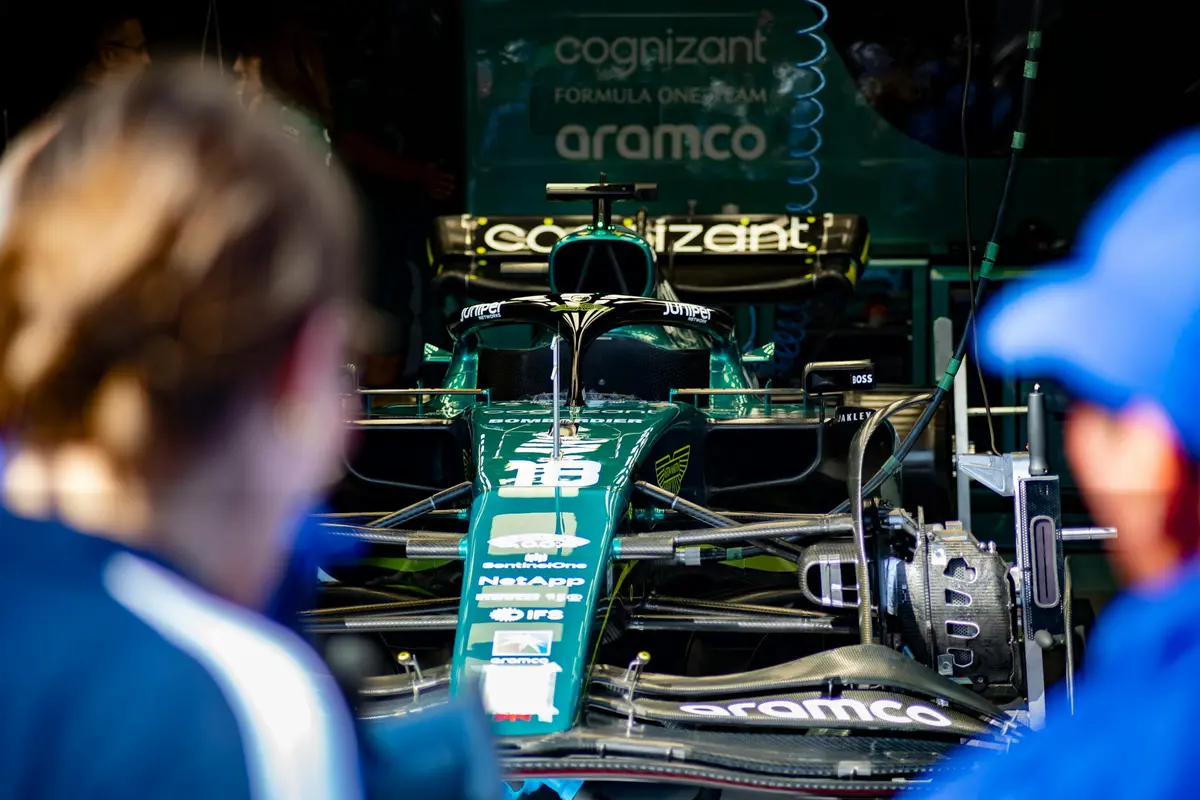
Lance Stroll Parts Ways with Aston Martin F1 in Search of a Race Win
In one of the most significant driver storylines of the 2026 Formula 1 season, Lance Stroll is bidding farewell to Aston Martin F1 this weekend — and the reason is as compelling as it is sobering. According to reports, Stroll is departing the Silverstone-based outfit in pursuit of something the team simply cannot currently offer him: a race victory. After years as an integral part of Aston Martin's ambitious project, the Canadian driver's exit signals both a personal crossroads and a broader reflection of where Aston Martin F1 stands as a competitive force in the modern era of Formula 1.
Detailed Analysis: Why a Race Win Matters So Much to Stroll
Lance Stroll has spent the better part of his Formula 1 career under the Aston Martin F1 umbrella, operating through its various team iterations. Throughout that time, he has demonstrated flashes of genuine pace — most notably in wet conditions and street circuits — yet a race win has remained agonizingly out of reach. In the hyper-competitive landscape of the 2026 season, where the new technical regulations have reshuffled the competitive order, the gap between the front-running teams and the midfield has become even more pronounced.
The 2026 regulations introduced sweeping aerodynamic and power unit changes, including the adoption of fully active aerodynamic systems — a concept where electronically controlled bodywork elements adjust in real time to optimize downforce and drag depending on circuit sector — and a new hybrid power unit formula that mandates a 50/50 split between internal combustion and electrical power output. These changes were expected to be a great equalizer, but for Aston Martin F1, closing the gap to McLaren, Ferrari, and Red Bull has proven far more challenging than anticipated.
Stroll's departure, framed explicitly around the inability to win races with Aston Martin F1, sends a clear message about the team's standing. While Fernando Alonso — his teammate entering the 2026 season — brings extraordinary experience in extracting performance from an underperforming car, the fundamental machinery limitations appear to have become a dealbreaker for Stroll personally. A race win is not merely a statistic for a driver; it is a validation of career worth, and at this stage of his career, Stroll is clearly unwilling to wait indefinitely for Aston Martin F1 to reach the competitive summit.
From a strategic standpoint, Aston Martin F1 now faces a significant driver market challenge mid-season. Replacing Stroll means sourcing a driver capable of developing the car while remaining commercially viable for the team's ownership structure — a complex matrix of requirements. The team must balance performance aspirations with the realities of budget, development trajectory, and their longer-term competitive roadmap anchored heavily in their Northamptonshire factory expansion.
Context: Where Aston Martin F1 Sits in the 2026 Narrative
The 2026 Formula 1 season has been defined by transformation. McLaren's Lando Norris and Oscar Piastri have emerged as formidable title contenders, while Ferrari's Charles Leclerc and Lewis Hamilton have provided fierce opposition. Red Bull, with Max Verstappen, remain a constant threat. Into this context, Aston Martin F1 has been fighting to establish themselves as genuine front-runners — a goal articulated loudly in previous seasons but one that has yet to fully materialize on race day.
Lance Stroll's exit crystallizes the human cost of mid-pack existence in Formula 1. The Aston Martin F1 project is genuinely ambitious — the infrastructure investment, the wind tunnel development, the recruitment of elite personnel — but ambition does not translate automatically into race wins. Stroll's decision to walk away rather than continue in a team that cannot guarantee victories reflects the brutal meritocracy at the heart of the sport. For Aston Martin F1, rebuilding credibility after this departure will be as important as any technical upgrade they can bring to the circuit.
Key Takeaways
- Lance Stroll is leaving Aston Martin F1 this weekend, citing the team's inability to deliver a race win as the primary motivation for his departure.
- Aston Martin F1 faces a mid-season driver search, adding operational pressure to an already challenging 2026 campaign under new technical regulations.
- The 2026 regulation overhaul — featuring active aerodynamics and a 50/50 hybrid power unit split — has not yet delivered the competitive gains Aston Martin F1 needed to compete for victories.
- Fernando Alonso remains as the senior Aston Martin F1 driver, but the team's ability to attract a high-calibre replacement for Stroll will be a defining test of their standing in the paddock.
Frequently Asked Questions
Why is Lance Stroll leaving Aston Martin F1 in 2026?
Lance Stroll is departing Aston Martin F1 because the team is currently unable to provide him with a competitive enough car to challenge for race victories. Reports indicate that the pursuit of a race win — something Aston Martin F1 cannot guarantee in their current developmental phase — is the central reason behind his exit this weekend.
Can Aston Martin F1 realistically challenge for race wins in the 2026 season?
Under the 2026 regulations, Aston Martin F1 have the infrastructure and ambition to eventually close the gap to the leading teams, but their current form suggests a race win is not an immediate prospect. The team's factory upgrades and continued development give hope for the medium term, but the likes of McLaren, Ferrari, and Red Bull are operating at a significantly higher level at present.
Who could replace Lance Stroll at Aston Martin F1 for the remainder of 2026?
Aston Martin F1 will need to identify a driver who combines raw pace with commercial value — a complex ask mid-season. The team's options may include drivers currently on the fringes of the grid, experienced hands in reserve roles at other teams, or promising junior talent. The paddock will be watching this decision closely as a signal of Aston Martin F1's true ambitions for 2026 and beyond.
Conclusion: A Pivotal Moment for Aston Martin F1
Lance Stroll's farewell to Aston Martin F1 is more than a driver change — it is a defining moment for the team's identity and credibility in 2026. The pressure is now squarely on Aston Martin F1's leadership to respond decisively: find a strong replacement, accelerate their car development, and demonstrate that the team's long-term vision remains on track. Fernando Alonso's continued presence provides a bedrock of experience, but the broader F1 world will be watching to see whether Aston Martin F1 can turn this disruption into a catalyst for genuine progress in the races to come.
In this article
Written with AI assistance. How this site works