Norris and Piastri: F1 Would Suffer Without Verstappen
Lando Norris and Oscar Piastri both believe Formula 1 would be a poorer sport if Max Verstappen followed through on his threat to walk away in 2026.
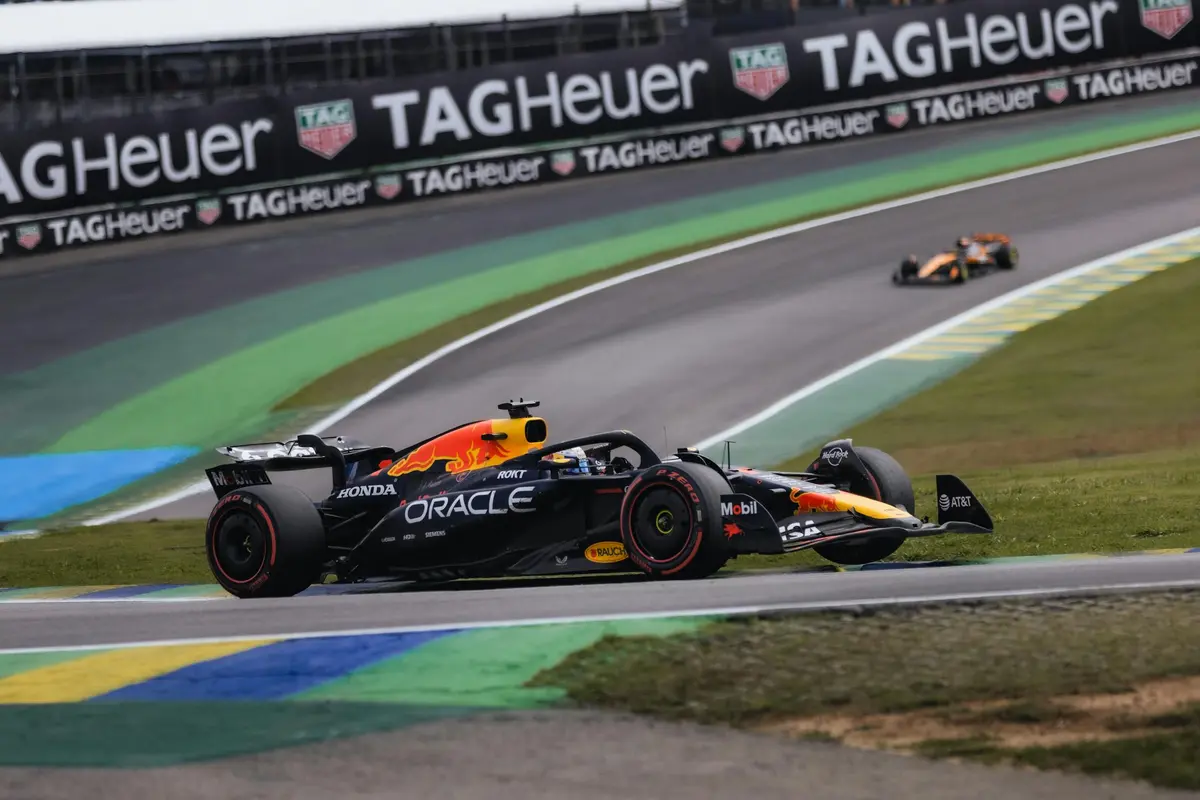
In a sport defined by fierce rivalries and relentless competition, few voices carry more weight than those of the drivers who must race wheel-to-wheel against the very best. When Lando Norris and Oscar Piastri — two of the most formidable talents in the 2026 Formula 1 grid — both publicly acknowledge that the sport would be a lesser spectacle without Max Verstappen, it demands serious attention. The McLaren duo's candid admission cuts through the competitive noise and speaks to a deeper truth about what makes Formula 1 compelling: elite-level rivalries are the lifeblood of the championship, and the prospect of the four-time world champion walking away casts a long shadow over the sport's immediate future. This story matters not just as paddock gossip, but as a genuine sporting and commercial question that the entire F1 ecosystem must grapple with in 2026.
Norris and Piastri Respond to Verstappen's Retirement Threat
Both Lando Norris and Oscar Piastri have made clear their belief that Formula 1 would be poorer if Max Verstappen were to follow through on what has been characterised as a 'threat' to walk away from the sport. For two drivers who have spent the better part of their recent careers measuring themselves against Verstappen — and, in Norris's case, fighting him on track for race wins and championship points — the sentiment carries a weight that goes beyond mere diplomacy.
Norris, now firmly established as one of the sport's marquee names after years of development at McLaren, understands better than most what it means to race against the very best. His battles with Verstappen in recent seasons have produced some of the most electrifying wheel-to-wheel combat in modern Formula 1. For Norris to openly acknowledge that the sport would suffer without the Dutchman is a statement of genuine respect from a competitor who has every sporting incentive to welcome the departure of such a formidable rival.
Piastri, in only his fourth season in Formula 1 but already regarded as a future world champion in waiting, echoes that sentiment. The young Australian's perspective is particularly interesting: he belongs to the generation of drivers who have grown up watching Verstappen redefine what dominance looks like in the sport's modern hybrid era. For Piastri, a Formula 1 without Verstappen would be missing one of its defining reference points — a benchmark against which every driver on the grid measures their own progress.
What Does 'Walking Away' Actually Mean for F1?
The framing of Verstappen's comments as a 'threat' is telling. It suggests that this is not idle speculation but rather a genuine expression of discontent or uncertainty about his long-term future in the sport. In the context of the 2026 season — which has brought sweeping new technical regulations, the introduction of active aerodynamics, an overtake boost system, and a dramatically altered power unit formula — the pressures and challenges facing every driver have shifted considerably.
Verstappen has always been a driver who demands the best possible machinery and a team environment that aligns with his relentless pursuit of winning. If those conditions are not being met — whether due to competitive, personal, or structural reasons — his willingness to walk away cannot be dismissed as mere posturing. He is, after all, a four-time world champion who has nothing left to prove to the sport.
The commercial implications are significant. Verstappen remains one of the most marketable athletes in global sport, and his presence drives television viewership, merchandise sales, and sponsor interest at a scale that few athletes in any discipline can match. Formula 1's continued commercial growth would face a genuine headwind in a post-Verstappen landscape — at least in the short term.
The Broader Landscape: 2026 F1 and the Competitive Reset
The 2026 Formula 1 season represents arguably the most significant regulatory reset the sport has seen in years. The introduction of new technical regulations — including the active aerodynamics package and the revised power unit framework — has reshuffled the competitive order across the grid. This kind of reset historically creates opportunity for teams and drivers who might have been locked out of championship contention under the previous technical era.
For Verstappen and Red Bull, this regulatory environment presents both opportunity and uncertainty. Red Bull's extraordinary dominance during the previous regulatory era was built on extraordinary technical synergy between car and driver. Whether that same harmony exists under the 2026 regulations remains an open and actively debated question across the paddock. It is precisely in moments of uncertainty like this that a driver of Verstappen's calibre and stature might reassess his priorities and his future in the sport.
Meanwhile, the 2026 grid itself is one of the most talent-dense in recent memory. Alongside Norris and Piastri at McLaren and Verstappen himself at Red Bull — where he is partnered by Isack Hadjar, promoted from Racing Bulls for 2026 — the championship features Lewis Hamilton in his second year at Ferrari alongside Charles Leclerc, George Russell and Andrea Kimi Antonelli at Mercedes, and a host of other compelling storylines including Audi's debut season as a works constructor and Cadillac's arrival as the sport's eleventh team.
This is a grid stacked with talent, ambition, and narrative intrigue. Yet even in this context, Verstappen's presence is irreplaceable in a specific way. He represents the gold standard of consistency, racecraft, and raw speed that has defined the sport across multiple seasons. His absence would remove the clearest measuring stick against which the rest of the field is judged.
Rivalries Define Championships — and Audiences
The history of Formula 1 is, in many respects, the history of its great rivalries. The most memorable periods in the sport's history have been shaped by the presence of at least two elite-level protagonists pushing each other to impossible heights. In recent years, the Verstappen era has been most compelling precisely when other drivers — including Norris, Hamilton, and others — have come closest to matching him.
Norris's acknowledgment of this dynamic is astute. He and Piastri together form the most potent driver pairing in the current McLaren era, and their own internal competition adds a fascinating subplot to the 2026 season. But both drivers clearly understand that the broader narrative of the championship — the story that draws in casual fans and sustains global television audiences — requires adversaries of the highest quality. Verstappen is, undeniably, one of the most compelling sporting adversaries the sport has ever produced.
Technical and Strategic Implications of the Verstappen Question
Beyond the human drama, the question of Verstappen's future has tangible strategic implications for teams up and down the pit lane. For Red Bull, the possibility of losing their lead driver would trigger a fundamental reassessment of their competitive strategy, driver market positioning, and long-term planning. Isack Hadjar, while widely regarded as one of the most promising young talents to emerge from the Red Bull junior programme in years, would be thrust into a very different role if Verstappen were to depart.
For rival teams, a Verstappen exit might initially seem like a competitive opportunity — one fewer elite-level threat to manage over the course of a season. Yet Norris and Piastri's comments suggest that the most perceptive competitors understand the value of racing against the very best. Elite competition raises every driver's game. The knowledge that Verstappen can find a tenth of a second that no one else can find pushes rival engineers and strategists to dig deeper, innovate faster, and leave no stone unturned in their pursuit of performance.
In the context of the 2026 technical regulations — which are designed to bring the field closer together through the active aerodynamics and overtake boost systems — the presence of a driver of Verstappen's quality would be the ultimate test of whether those regulations have genuinely achieved their equalising ambitions or whether one driver can still find a way to transcend the field.
Key Takeaways
- Both Lando Norris and Oscar Piastri have publicly stated that Formula 1 would be a poorer sport if Max Verstappen were to walk away — a remarkable admission from two of his closest on-track rivals.
- Verstappen's reported 'threat' to leave the sport is being treated as a genuine possibility rather than idle rhetoric, reflecting real uncertainty in the paddock.
- The 2026 regulatory reset — including active aerodynamics and the new power unit formula — has created a more volatile competitive landscape that may be influencing Verstappen's thinking.
- Formula 1's commercial health is partly dependent on marquee names like Verstappen, whose global profile drives viewership, sponsorship, and audience growth.
- The 2026 grid is one of the most talent-rich in recent memory, yet even in this context, the sport's leading voices acknowledge that Verstappen's presence is uniquely irreplaceable.
- Elite rivalries are fundamental to Formula 1's identity and audience appeal — Norris and Piastri's comments reflect an understanding that the sport's greatest narratives require adversaries of the highest calibre.
Frequently Asked Questions
Why have Norris and Piastri said F1 would suffer without Verstappen?
Both McLaren drivers have acknowledged that Verstappen's quality and competitiveness make Formula 1 a richer, more compelling sport. Despite him being their primary rival on track, Norris and Piastri understand that racing against the very best elevates the entire championship. Their comments reflect genuine respect for a competitor who consistently sets the standard for the rest of the grid.
Is Max Verstappen actually considering leaving Formula 1 in 2026?
Based on the available information, Verstappen has made comments characterised as a 'threat' to walk away from the sport, which have been taken seriously by his peers. The precise context and timeline of any potential departure have not been confirmed. However, the reaction from other top drivers suggests this is not being dismissed as empty posturing within the paddock.
How would Verstappen's departure affect the 2026 F1 season?
A Verstappen exit would have significant sporting, commercial, and strategic consequences for the 2026 Formula 1 season. It would remove one of the sport's primary competitive benchmarks and a driver whose global appeal contributes substantially to Formula 1's audience growth. For Red Bull specifically, it would require a fundamental reassessment of their competitive positioning in the new regulatory era.
Who are the key title contenders in the 2026 Formula 1 season?
The 2026 season features an exceptionally strong driver lineup, with Lando Norris and Oscar Piastri at McLaren, Max Verstappen at Red Bull alongside Isack Hadjar, Lewis Hamilton in his second season at Ferrari alongside Charles Leclerc, and George Russell at Mercedes. The new technical regulations have reshuffled the competitive order, making 2026 one of the most open and unpredictable championships in recent memory.
Conclusion
The fact that Lando Norris and Oscar Piastri — two drivers with every competitive reason to welcome the departure of their most fearsome rival — have both gone on record to say that Formula 1 would be poorer without Max Verstappen speaks volumes about the unique status the four-time world champion holds in the sport. It is a rare moment of cross-team solidarity, driven not by sentiment but by a clear-eyed understanding of what makes Formula 1 great.
Formula 1 in 2026 is in a period of genuine reinvention. New technical regulations, new teams, new rivalries, and a new generation of drivers are reshaping the championship's competitive landscape. Against that backdrop, the prospect of losing one of the sport's defining figures is a sobering one. The sport has survived and thrived through many transitions, and its depth of talent in 2026 is undeniable. But Norris and Piastri are right: some presences are genuinely irreplaceable, and Max Verstappen's is one of them.
Whether Verstappen ultimately stays or goes will be one of the defining storylines of the 2026 season. For now, the fact that his closest rivals are the ones making the most compelling case for his continued presence is perhaps the most fitting tribute to a driver who has spent his career making everyone around him better — even when they didn't want him to be.
In this article
Written with AI assistance. How this site works