Norris' Accidental Overtake on Hamilton: F1 2026 Boost-Gate
Lando Norris admitted his overtake on Lewis Hamilton at the 2026 Japanese GP was accidental, triggering 'Boost-gate' and a major debate about driver agency.
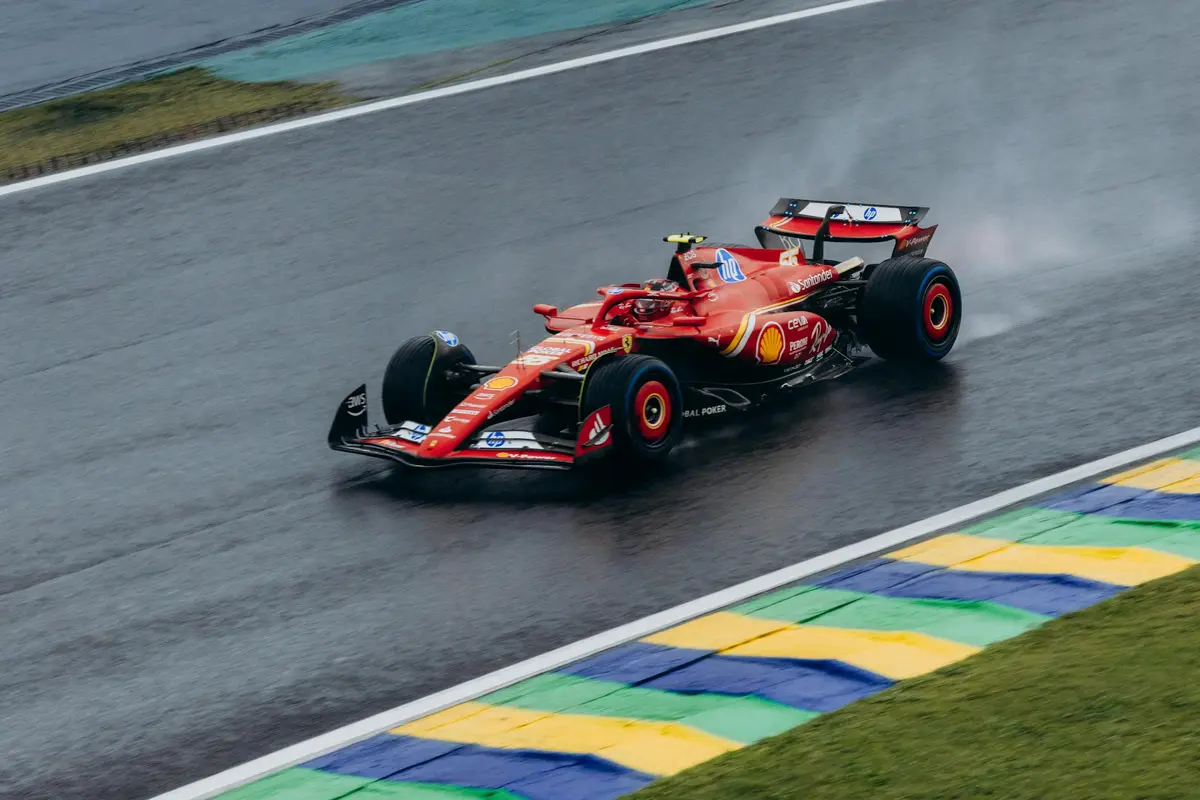
Lando Norris Accidentally Overtook Lewis Hamilton at the 2026 Japanese Grand Prix
One of the most compelling storylines to emerge from the 2026 Japanese Grand Prix has nothing to do with a perfectly executed race strategy or a hero brake into a hairpin. Instead, it centres on Lando Norris' candid admission that he overtook Lewis Hamilton almost entirely by accident — the unintended consequence of inadvertently triggering a different engine mode mid-race. Dubbed 'Boost-gate' in post-race discussion, the incident has ignited a wide-ranging debate about driver agency, the complexity of 2026-spec power units, and what it truly means to push a Formula 1 car to its absolute limit.
What Happened: Norris, Hamilton, and the Unintended Engine Mode
According to Norris' own post-race revelation, the overtake on Hamilton was not the product of calculated racecraft. Rather, the McLaren driver inadvertently activated a different engine mode — one that delivered a surge of power he had not consciously called for at that precise moment. The result was an unplanned pass on Hamilton's Ferrari, a move that, on the surface, looked entirely deliberate to spectators and television viewers.
The admission is striking on multiple levels. In an era where Formula 1 onboards, telemetry breakdowns, and driver radio communications are consumed voraciously by fans, the idea that one of the race's key overtaking moments was essentially an accident cuts against the narrative of the hyper-prepared, hyper-precise modern grand prix driver. Norris, one of the sport's most technically articulate performers, was open enough to admit the sequence of events — and that transparency has fuelled rather than dampened the discourse.
The Technical Dimension: 2026 Power Unit Complexity and 'Boost-Gate'
The incident shines a spotlight on the substantial complexity of the 2026 Formula 1 power unit regulations. The 2026 technical framework introduced a dramatically altered power unit architecture, with a significantly elevated electrical energy contribution relative to the internal combustion element. This means that the interplay between different deployment modes, energy recovery states, and driver-selectable settings is more intricate — and, crucially, more consequential — than in previous regulatory eras.
As Autosport noted in their analysis, Boost-gate highlights how much less linear the driver experience has become under the 2026 rules. Rather than a relatively predictable power curve shaped primarily by the combustion engine, drivers are now managing a layered system where electrical deployment can create sudden, sharp differentials in available performance. An accidental mode activation — however brief — can produce a material change in vehicle behaviour at precisely the moment a gap opens or closes between two cars on track.
This technical reality raises significant questions for the sport's governing body, teams, and fans alike. If a driver can unintentionally trigger a performance delta large enough to complete an overtake on a world-class competitor in a frontrunning car, what does that say about the balance between driver skill and systems management in the 2026 regulations? It is a question that goes to the philosophical heart of motor racing.
The Broader Debate: Driver Skill Versus Systems Management
The Norris-Hamilton incident has reignited a perennial Formula 1 tension — the extent to which a driver's raw talent and racecraft remains the decisive factor versus the degree to which the car's systems architecture shapes outcomes. In the 2026 context, with active aerodynamics, an overtake boost function, and a more complex power unit than any previous generation of Formula 1 machinery, this tension is sharper than ever.
Hamilton, now in his second season with Ferrari, was the man on the receiving end of the unintentional pass. The seven-time world champion's Ferrari is powered by a 2026-spec unit that is itself a product of the same regulatory framework — meaning Hamilton's own race management involves navigating a similarly layered system. The symmetry is not lost on observers: both drivers are, in different ways, subject to the unpredictabilities that the new technical regulations have introduced.
For McLaren, the incident also poses internal questions. If Norris' gain was accidental, it was still a gain — and the team will be analysing exactly what sequence of inputs led to the mode activation to understand whether it can be replicated deliberately, or whether safeguards need to be introduced to prevent unintended power surges at inopportune moments.
Key Takeaways
- Norris confirmed the overtake on Hamilton at the 2026 Japanese Grand Prix was caused by inadvertently triggering a different engine mode, not deliberate racecraft.
- 'Boost-gate' has become the defining post-race talking point, raising questions about driver agency in 2026-spec machinery.
- The 2026 power unit regulations have created a less linear performance environment, where accidental mode changes can produce race-altering consequences.
- Active aerodynamics and the overtake boost function add further layers of complexity that drivers must manage simultaneously at racing speeds.
- The incident reignites debate about the balance between driver skill and systems management in modern Formula 1.
- Hamilton and Ferrari, as the other party in the incident, are also subject to the same regulatory complexity, underscoring how universal these challenges are across the 2026 grid.
Frequently Asked Questions
What is 'Boost-gate' in the context of the 2026 Japanese Grand Prix?
'Boost-gate' refers to Lando Norris' admission that his overtake on Lewis Hamilton during the 2026 Japanese Grand Prix was unintentional — the result of accidentally triggering a different engine mode that provided an unexpected surge of power, allowing him to complete the pass without consciously initiating the manoeuvre.
How do the 2026 Formula 1 power unit regulations make accidental mode changes more likely?
The 2026 regulations introduced a significantly higher electrical energy contribution to the power unit, creating a more complex, layered performance environment. Drivers manage multiple deployment modes and energy recovery states simultaneously, meaning an inadvertent input can trigger a material change in available power — as demonstrated by Norris' unplanned overtake on Hamilton.
Does the Norris 'accidental overtake' incident have any regulatory implications for Formula 1?
While no regulatory action has been reported in connection with the incident, the episode has prompted broader debate about whether the complexity of 2026-spec systems tilts the competitive balance away from pure driver skill. Governing bodies, teams, and commentators are likely to scrutinise the role of automated or easily mis-triggered modes as the season progresses.
Conclusion
Lando Norris' accidental overtake on Lewis Hamilton at the 2026 Japanese Grand Prix is more than an amusing anecdote from a race weekend debrief. It is a genuine window into the new realities of Formula 1 under the 2026 regulations — a technical landscape where the line between intentional and unintentional performance is thinner than it has ever been. Boost-gate will not define the season, but it may well define the conversation about where driver artistry ends and systems complexity begins in the most technically ambitious era Formula 1 has yet produced.
In this article
Written with AI assistance. How this site works