Montoya Urges Red Bull to Stop Verstappen GT3 Racing
Juan Pablo Montoya has urged Red Bull to intervene and stop Max Verstappen from competing in GT3 events, citing the intense demands of the 2026 F1 season.
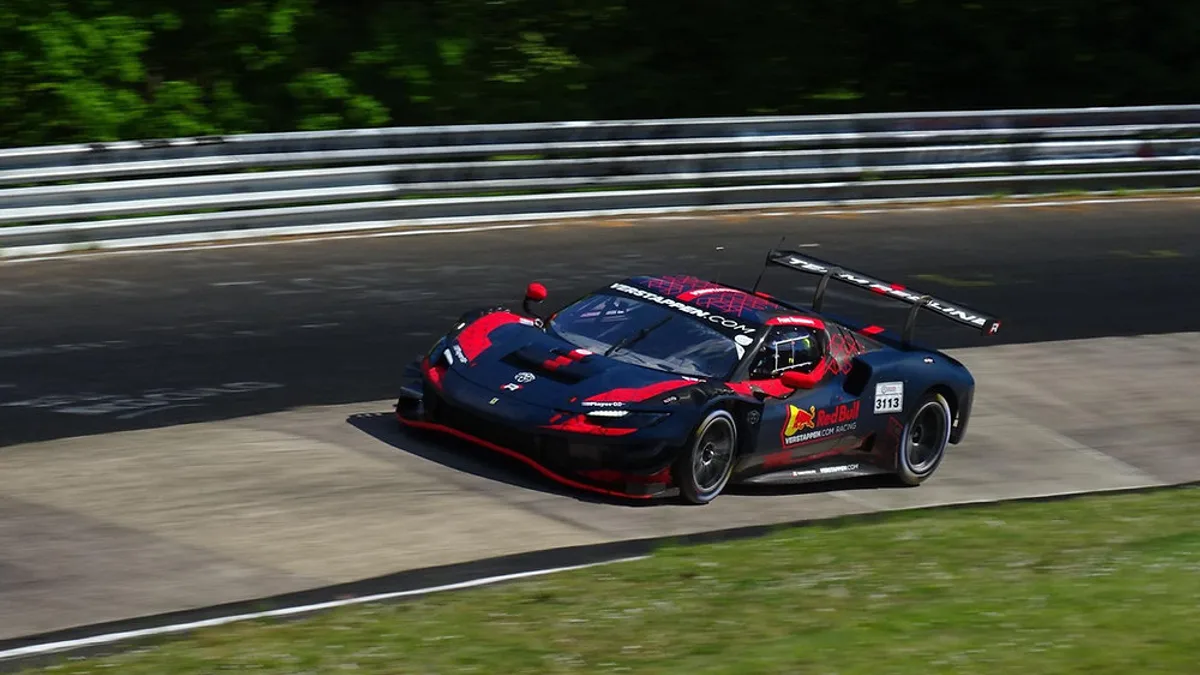
Juan Pablo Montoya, the former Formula 1 race winner and endurance racing icon, has issued a pointed public call for Red Bull to step in and curtail Max Verstappen's growing appetite for GT3 competition. The Colombian's intervention adds a significant and experienced voice to a debate that has been quietly simmering in paddock circles throughout the early weeks of the 2026 Formula 1 season: just how much freedom should the sport's most decorated active driver have to pursue motorsport passions outside of his primary F1 commitments?
Verstappen's love of sim racing, endurance events, and GT machinery is well-documented, and his participation in GT3 outings has become something of a recurring subplot in his F1 career narrative. But with the 2026 season now underway — a campaign featuring radically overhauled technical regulations, active aerodynamics, and a fiercely competitive grid — Montoya's argument carries fresh urgency. Red Bull, he insists, should be drawing a firm line.
Montoya's Call: Why He Wants Red Bull to Intervene
Juan Pablo Montoya is no stranger to the dual demands of GT and single-seater racing. Having competed at the highest levels of Formula 1, IndyCar, and endurance racing — including multiple appearances at Le Mans and Daytona — he speaks from a position of genuine authority when assessing the physical and mental toll that multi-discipline campaigns can take on a driver. His message to Red Bull is straightforward: the stakes in Formula 1 in 2026 are simply too high to allow unnecessary distractions, however enjoyable or low-risk they may appear on the surface.
The crux of Montoya's concern is not necessarily that GT3 racing poses a dramatic injury risk on par with, say, rallying or motorcycle racing. Rather, it is about focus, energy management, and the psychological bandwidth required to compete at the absolute apex of motorsport. Formula 1 in 2026 demands more of its drivers than almost any previous era. The new active aerodynamic systems require nuanced feedback loops between driver and engineers, and the overtake boost mechanisms introduce fresh strategic variables that demand intense mental preparation and debriefing commitment.
For a team like Red Bull, which is operating under the full glare of intense competition from McLaren, Ferrari, and Mercedes, having their lead driver — and four-time world champion — mentally invested elsewhere, even occasionally, is a calculus they may not be willing to accept. Montoya's public urging suggests he believes Red Bull have, thus far, been too permissive.
Verstappen and GT3: A Passion That Won't Sit Still
Max Verstappen's enthusiasm for racing machinery beyond Formula 1 has never been a secret. The Dutchman has spoken candidly and repeatedly about his desire to compete in endurance racing at some point in his career, with the Le Mans 24 Hours frequently cited as a bucket-list ambition. His participation in sim racing at the highest level — including competing with Team Redline in various online endurance formats — has always been framed as a natural extension of his love for all things motorsport.
GT3 machinery, despite being several rungs below an F1 car in outright performance, offers Verstappen something that grands prix cannot: a relatively pressure-free competitive environment where he can enjoy racing without the weight of championship obligations. That psychological release valve is something many elite athletes value enormously. However, critics — and now Montoya explicitly — argue that even recreational high-performance driving carries inherent risks and demands enough physical and mental resources to warrant concern from an employer investing hundreds of millions of dollars in a world championship campaign.
Red Bull's position has historically been one of managed tolerance, allowing Verstappen a degree of personal freedom while maintaining contractual guardrails around the most sensitive periods of the F1 calendar. Whether those guardrails are sufficiently robust in the context of the intensely fought 2026 season is precisely what Montoya appears to be questioning.
Context and Background: The 2026 Landscape Makes This Debate More Acute
To fully appreciate why Montoya's intervention resonates in 2026, it is essential to understand just how demanding this particular season is for every team and driver on the grid. The 2026 technical regulations represent the most sweeping overhaul of Formula 1 machinery in years. The introduction of active aerodynamics — where bodywork elements adjust dynamically to optimise downforce and drag in real time — has fundamentally changed the dialogue between driver and car. Simultaneously, the overtake boost system, which allows drivers to deploy additional power during attack or defence phases, has introduced a new layer of in-race strategy that requires deep pre-race preparation and rapid adaptability.
Red Bull entered the 2026 season with a refreshed driver pairing. Alongside Verstappen, the team promoted Isack Hadjar from their Racing Bulls feeder programme — a talented young Frenchman who brings considerable energy and ambition to the garage. This internal dynamic itself creates a subtle pressure: Verstappen must perform at his peak not only to fend off external rivals but to maintain the clear intra-team hierarchy that his status as a four-time world champion demands.
The wider grid has also become more competitive than at almost any point in the modern era. McLaren's pairing of Lando Norris and Oscar Piastri represents arguably the deepest driver lineup on the grid. Ferrari, with Charles Leclerc now joined in his second year by Lewis Hamilton — who made the high-profile switch from Mercedes ahead of the 2025 season — have a formidable pairing capable of challenging across all circuit types. Mercedes, meanwhile, are rebuilding with George Russell and second-year driver Andrea Kimi Antonelli. Every single point matters in such a compressed competitive landscape.
It is against this backdrop that Montoya's call takes on its full weight. This is not a season where any championship contender can afford complacency, distraction, or physical setback — however small. The margins between winning and losing a world championship in 2026 may well come down to single points across an entire campaign.
Technical and Strategic Implications for Red Bull
From a purely strategic perspective, Red Bull face a nuanced dilemma. Verstappen's autonomy and personal happiness are not trivial considerations. Motorsport history is littered with examples of elite athletes who performed below their potential when they felt constrained or creatively stifled by their employers. Verstappen, who has always been fiercely independent in his approach to racing, is unlikely to respond positively to heavy-handed restrictions that he perceives as unnecessary.
However, Red Bull's sporting directors and technical leadership must also weigh the risk-versus-reward calculus carefully. A GT3 outing, even one conducted with full professionalism and appropriate safety protocols, introduces variables — mechanical failure, racing incidents involving other competitors, unpredictable circuit conditions — that are entirely beyond Red Bull's control. Any physical setback to Verstappen during an external motorsport event would represent a catastrophic outcome for the team's championship ambitions.
Montoya's advocacy for intervention, therefore, is not simply the opinion of a former rival looking in from the outside. It reflects a logic that any serious sporting organisation must grapple with when managing a generational talent in the middle of a fiercely contested campaign. The question is whether Red Bull, known for their occasionally unconventional management culture, will choose to act on that logic — or trust that Verstappen's own judgment will keep him safe and focused.
Key Takeaways
- Juan Pablo Montoya has publicly urged Red Bull to intervene and prevent Max Verstappen from competing in GT3 events during the 2026 Formula 1 season.
- Montoya's concern centres on focus and energy management rather than purely injury risk, arguing that F1's 2026 demands are too great for divided attention.
- The 2026 season features sweeping new regulations — including active aerodynamics and overtake boost — that increase the cognitive and physical demands on all drivers.
- Red Bull face a delicate balance between respecting Verstappen's personal autonomy and protecting their championship investment in one of motorsport's all-time greats.
- The grid in 2026 is more competitive than in recent years, with McLaren, Ferrari, and Mercedes all fielding strong driver lineups capable of exploiting any Red Bull weakness.
- Verstappen's known ambitions to eventually compete in endurance racing make this an ongoing tension rather than a one-off controversy.
Frequently Asked Questions
Why is Juan Pablo Montoya calling for Red Bull to stop Verstappen from GT3 racing?
Montoya, a former grand prix winner with extensive experience across multiple racing disciplines, believes that the demands of the 2026 Formula 1 season are too significant for Verstappen to be dividing his focus and energy on GT3 outings. His concern is primarily about maintaining peak performance and concentration during a highly competitive championship campaign. As someone who has raced across multiple categories himself, Montoya speaks with credible authority on how multi-discipline commitments can affect a driver's primary focus.
Has Red Bull previously restricted Verstappen from outside racing activities?
Based on the available source information, Red Bull has historically managed Verstappen's external activities with a degree of tolerance rather than outright prohibition. The specifics of any contractual restrictions Red Bull may impose are not publicly confirmed in the source material. What is clear is that Montoya's public call suggests he believes current arrangements are insufficient given the heightened stakes of the 2026 season.
What makes the 2026 Formula 1 season particularly demanding for drivers?
The 2026 season introduced landmark technical regulations, including active aerodynamic systems that require constant dialogue between driver and engineering teams, as well as an overtake boost mechanism that adds new in-race strategic complexity. These changes place heightened cognitive and physical demands on drivers throughout every race weekend. The combination of new regulations and a deeply competitive grid makes 2026 one of the most challenging seasons in recent Formula 1 history.
Could Verstappen's GT3 activities realistically affect Red Bull's championship campaign?
While GT3 racing is significantly less dangerous than many other motorsport disciplines, it is not without risk — any racing activity involving wheel-to-wheel competition carries the possibility of accidents or physical setbacks. Beyond injury risk, the mental bandwidth required for additional racing campaigns could, in theory, dilute the intense focus that a world championship challenge demands. Montoya's intervention suggests that, for those at the highest level of the sport, even marginal distractions deserve serious scrutiny during a title fight.
Conclusion
Juan Pablo Montoya's call for Red Bull to exercise firmer control over Max Verstappen's GT3 exploits has thrown a spotlight onto one of the most quietly persistent tensions in modern Formula 1: the balance between a superstar driver's personal freedom and the commercial and sporting obligations of one of the sport's most ambitious teams.
In the context of the 2026 season — with its revolutionary technical regulations, a fiercely competitive grid, and the ever-present pressure of championship mathematics — Montoya's argument carries genuine weight. This is not the moment for Red Bull to be generous with Verstappen's diary. Every race weekend in 2026 is a high-stakes encounter where performance margins are razor-thin and the psychological and physical readiness of the driver matters enormously.
Whether Red Bull choose to heed Montoya's advice publicly or address the matter privately through their established contractual frameworks remains to be seen. What is certain is that this debate — between the freedom of a driver who loves racing in all its forms and the demands of the most complex championship in motorsport — will not be resolved quickly. For now, Montoya has ensured the world is watching Red Bull's next move very closely indeed.
In this article
Written with AI assistance. How this site works