Johnny Herbert Urges Lewis Hamilton F1 Retirement Honesty
Johnny Herbert has urged Lewis Hamilton to 'be honest' about F1 retirement — a pointed message as Hamilton enters his second year at Ferrari in 2026.
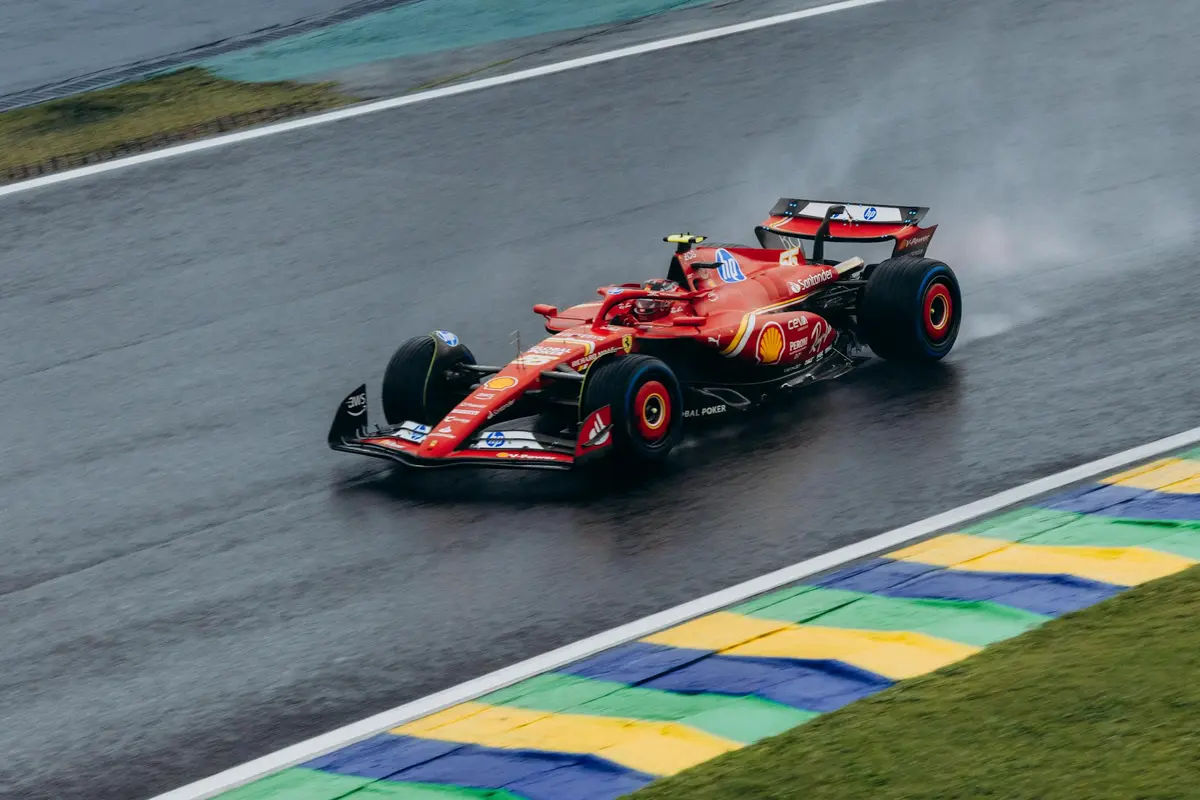
Few topics in Formula 1 generate as much debate, emotion, and column inches as the question of when a legend should call time on their career. In 2026, that question has found its sharpest focus on one man: Lewis Hamilton. Former F1 driver and pundit Johnny Herbert has waded into the conversation, publicly urging the seven-time World Champion to "be honest" with himself about when the right moment for retirement might arrive. It is a candid plea — respectful but pointed — and it speaks to a broader tension that has surrounded Hamilton ever since he made the seismic move from Mercedes to Ferrari ahead of the 2025 season.
Now in his second year at Ferrari, Hamilton is navigating one of the most scrutinised chapters of his storied career. The Italian team was meant to represent the ultimate romantic challenge — a chance to win the one title that had eluded him in his Mercedes years. But as the 2026 Formula 1 season unfolds under an entirely new technical regulatory framework, the performance gap between ambition and reality has never felt more closely watched. Herbert's call for introspection arrives at a time when the F1 paddock, and the wider world, is genuinely uncertain about what the next Hamilton chapter looks like.
Johnny Herbert's Retirement Message to Lewis Hamilton
The core of Herbert's message, as reported by MotorSportWeek, is deceptively simple: Hamilton must "be honest" with himself. In the world of elite sport, self-honesty is perhaps the rarest and most difficult virtue to practise. Careers almost universally end a race, a season, or even several years later than they should, because the competitive drive that made champions great in the first place also blinds them to the signals that say it is time to step away.
Herbert speaks from a position of credibility here. As a former Grand Prix driver himself, he understands the psychological grip that Formula 1 maintains on those who have competed at its highest level. The sport does not simply let you go — it pulls at every fibre of competitive instinct you possess. For Hamilton, a driver who has redefined what is achievable in the sport across two decades of competition, the idea of "being honest" carries enormous weight.
What Herbert appears to be suggesting is not necessarily that Hamilton should retire now, but rather that the great Briton should be conducting an ongoing, unflinching assessment of his own performance, motivation, and the value he continues to bring — both to himself and to Ferrari. It is a nuanced ask, but a profoundly important one as Hamilton operates in the high-pressure environment of Maranello.
Why the 2026 Season Makes This Conversation Unavoidable
The timing of Herbert's comments is significant. The 2026 Formula 1 season has ushered in perhaps the most radical set of technical regulations the sport has seen in a generation. New power unit regulations have fundamentally reshaped the competitive order, with the introduction of a 50/50 split between internal combustion and electrical energy deployment, new active aerodynamics systems, and a dramatically revised chassis philosophy designed to produce closer, more overtake-rich racing.
In a season of such profound technical upheaval, experience counts — but so does adaptability. Every driver on the grid, from veterans like Hamilton, Fernando Alonso, and Valtteri Bottas, through to rookies such as Isack Hadjar at Red Bull and Arvid Lindblad at Racing Bulls, is working through an entirely new performance landscape. The 2026 regulations have effectively reshuffled the deck, and teams that dominated under previous rules cannot automatically assume supremacy.
For Hamilton specifically, the challenge is multi-layered. He is still assimilating into Ferrari's culture and working methodologies — a process that began in 2025 and continues now. Ferrari, historically one of the most demanding environments in motorsport, requires a specific kind of driver-team alignment. Any questions about long-term commitment, motivation, or decline in raw pace inevitably complicate that relationship, making Herbert's "be honest" message land with particular resonance.
The Ferrari Project: Unfinished Business or Fading Dream?
When Hamilton's move to Ferrari was confirmed ahead of the 2025 season, it was framed as the sporting partnership the world had always wondered about. Could the greatest driver of his generation finally deliver Ferrari — the most historically iconic team in Formula 1 — a long-awaited Constructors' and Drivers' Championship? That question remains very much alive in 2026, but it is being asked against a backdrop of growing scrutiny about Hamilton's ability to sustain the form required.
Ferrari themselves have made no public indication that they are anything other than fully committed to Hamilton. But in the politicised ecosystem of Formula 1, public positions and private realities do not always align. Herbert's intervention, however well-intentioned, adds a layer of external pressure that Hamilton will be keenly aware of as he works through the 2026 campaign.
Context and Background: A Career Defined by Longevity
To understand why the Lewis Hamilton F1 retirement debate carries such weight, it is essential to appreciate the sheer scale of what he has achieved. Hamilton is a seven-time Formula 1 World Champion — equalling Michael Schumacher's record — and holds the all-time records for race wins and pole positions in the sport's history. He is, by almost any metric, the most accomplished racing driver Formula 1 has ever produced.
His longevity itself has been extraordinary. Hamilton burst onto the F1 scene in 2007 and has raced at the pinnacle of the sport continuously ever since — a span of nearly two decades at the top. During that time, he has witnessed wholesale generational change around him: multiple sets of rivals, three different major regulatory eras, and a complete transformation of the sport's commercial and cultural landscape.
Hamilton has consistently defied those who said he was past his peak. His 2020 title defence, delivered in clinical fashion during the pandemic-shortened season, was arguably among the best individual performances of his career. Even as questions circulated in 2021 and beyond, he kept producing performances of startling quality. That history makes blanket declarations about his decline both premature and disrespectful of the evidence.
Nevertheless, Herbert's point remains salient precisely because of how few athletes in any sport accurately identify their own tipping point. The greatest — those who care most deeply — are often the last to see it clearly. The surrounding noise from fans, media, and sponsors creates a distorting echo chamber that makes objective self-assessment all but impossible without deliberate, disciplined effort.
Technical and Strategic Implications for Ferrari in 2026
From a purely strategic standpoint, the Hamilton retirement question in F1 2026 has material consequences for Ferrari beyond the purely sporting. Driver planning in Formula 1 operates on multi-year cycles. Ferrari will need to understand Hamilton's intentions not just for the remainder of this season but for 2027 and beyond, particularly as the competitive landscape under the new 2026 regulations continues to evolve.
If Hamilton were to signal, privately or publicly, that his time in the sport is drawing to a close, Ferrari would need to act with considerable lead time to identify and secure a replacement of appropriate calibre. The top-tier driver market is perpetually competitive, and the best talents are signed well in advance. A delayed or unclear succession plan could leave Ferrari exposed.
Conversely, if Hamilton commits strongly to a multi-year project at Ferrari, the team can structure their driver development programme, simulator workload, and technical development roadmap around his specific strengths and working style — something Ferrari will already have been doing since his 2025 arrival. Clarity, in other words, benefits everyone. Herbert's call for honesty is not just about Hamilton the individual; it is about giving those around him the information they need to plan effectively.
The 2026 technical regulations, with their emphasis on active aerodynamics and the new "overtake boost" system derived from the enhanced electrical deployment architecture, also reward a particular kind of driver adaptability. Younger drivers, who have never had to unlearn previous car philosophies, may find the adaptation curve smoother. This is the competitive reality that makes the self-assessment Herbert is calling for so timely.
Key Takeaways
- Johnny Herbert has publicly urged Lewis Hamilton to "be honest" with himself about the appropriate time to consider F1 retirement.
- Hamilton is currently in his second year at Ferrari in 2026, having joined the Italian team for the 2025 season.
- The 2026 F1 season features sweeping new technical regulations, creating a uniquely challenging environment for all drivers regardless of experience.
- Herbert's comments reflect a wider paddock conversation about whether Hamilton's ambitions at Ferrari remain achievable within the window of his remaining career.
- Ferrari's long-term strategic planning could be directly affected by clarity — or lack thereof — surrounding Hamilton's retirement timeline.
- Hamilton's track record of defying retirement speculation is substantial, but the question of self-honesty in elite sport is universally relevant at any age.
Frequently Asked Questions
What did Johnny Herbert say about Lewis Hamilton's retirement?
Johnny Herbert, the former Formula 1 driver and pundit, urged Lewis Hamilton to "be honest" with himself about the right time to consider retiring from Formula 1. Herbert's comments were reported by MotorSportWeek and reflect a broader conversation in the paddock about Hamilton's long-term future in the sport.
Is Lewis Hamilton currently racing in Formula 1 in 2026?
Yes, Lewis Hamilton is an active Formula 1 driver in 2026. He is competing for Ferrari, where he has been since the 2025 season — making 2026 his second year with the Scuderia. He remains one of the most prominent figures in the sport.
Why does the Lewis Hamilton retirement debate matter for Ferrari?
Ferrari's driver planning and technical development strategy are directly linked to Hamilton's future at the team. If Hamilton were to retire, Ferrari would need to identify a world-class replacement well in advance, given how competitive the top-tier driver market is. Clarity around Hamilton's intentions helps Ferrari plan their programme effectively across multiple seasons.
How do the 2026 F1 regulations affect the retirement conversation?
The 2026 Formula 1 regulations represent one of the most significant technical overhauls in the sport's history, including new power unit rules and active aerodynamics. This era of change places a premium on driver adaptability, which adds an additional dimension to the discussion about experienced veterans like Hamilton and how effectively they can master an entirely new car concept deep into their careers.
Conclusion
Johnny Herbert's message to Lewis Hamilton is, at its core, an act of respect wrapped in hard-nosed realism. Only a driver who has lived through the pressures and sacrifices of Formula 1 can truly understand what it costs to compete at the highest level — and what it costs to stay too long. Herbert is not attacking Hamilton; he is extending the kind of frank counsel that, in a sport full of carefully managed narratives and commercial interests, is genuinely rare.
For Hamilton himself, the challenge is familiar but no less difficult for that. Throughout his career, he has repeatedly silenced doubters with performances of breathtaking quality. The Lewis Hamilton F1 retirement debate is not new — versions of it have surfaced at various points over the past several years. What is new is the context: a landmark technical regulation change, a second year at a new team, and a paddock that is watching his every lap time with forensic interest.
Whether Hamilton takes Herbert's advice to heart, whether the 2026 season answers the performance questions definitively, or whether this debate continues to evolve in the months ahead, one thing is certain: in Formula 1 in 2026, the story of Lewis Hamilton at Ferrari remains one of the most compelling sporting narratives on the planet. Herbert has simply ensured the question of its ending stays firmly on the agenda.
In this article
Written with AI assistance. How this site works