FIA's Tombazis Defends New F1 2026 Rules Mid-Season
FIA single-seater director Nikolas Tombazis defends F1's new 2026 regulations, saying the opening races have 'gone quite well' amid ongoing mid-season refinements.
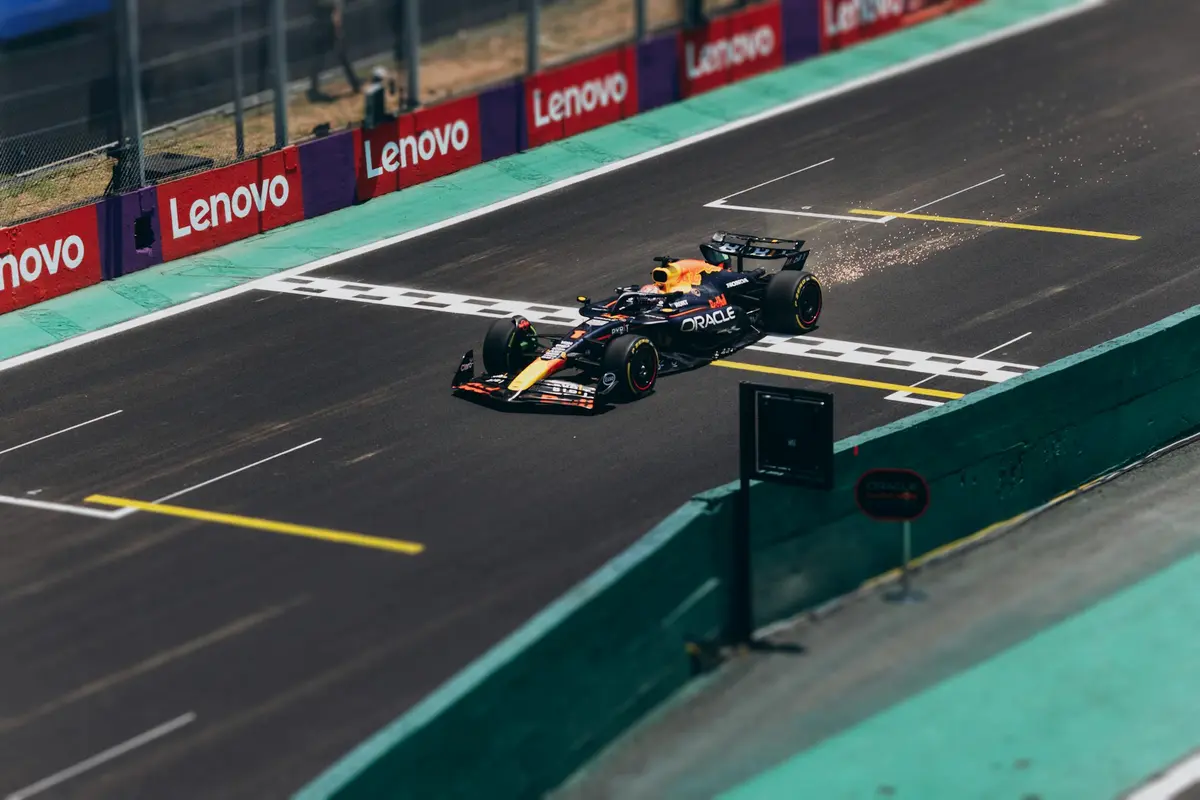
The 2026 Formula 1 season arrived carrying the weight of the sport's most sweeping regulatory overhaul in a generation. New power unit regulations, revised aerodynamic philosophies including active aero and an overtake boost system, and a dramatically altered competitive landscape — featuring Audi's rebrand debut and Cadillac's entry as the grid's 11th team — have made this one of the most anticipated and scrutinised seasons in modern F1 history. Now, with the opening races in the books, FIA single seater director Nikolas Tombazis has stepped forward to defend the controversial ruleset, stating that proceedings have "gone quite well in many ways," even as the governing body continues what it describes as ongoing "refinements" to the regulations.
It is a carefully chosen combination of words — confident enough to push back against critics, yet measured enough to acknowledge the process is not yet complete. For fans, teams, and observers trying to make sense of 2026's turbulent early weeks, Tombazis's intervention is a significant moment of institutional transparency, and one that deserves thorough examination.
Tombazis's Defence: What Does "Gone Quite Well" Actually Mean?
When the FIA's most senior single-seater official goes on record to say the new F1 rules have "gone quite well in many ways," the phrase demands unpacking. After years of regulatory development, simulation work, and intense lobbying from teams across the paddock, the 2026 framework was never going to emerge fully formed. Every major regulatory cycle in Formula 1 history — from the 2009 KERS introduction to the 2014 hybrid power unit revolution and the 2022 ground-effect reset — has required post-launch adjustment. The fact that Tombazis is openly acknowledging "refinements" signals that the FIA is watching the outcomes of these rules closely and remains willing to act.
The positive framing, however, is not purely defensive spin. There are genuine structural successes baked into the 2026 regulations that Tombazis can point to. The new active aerodynamic system, designed to reduce the aerodynamic wake deficit that has historically plagued close racing, was a centrepiece of the ruleset's ambitions. If the opening rounds have demonstrated any improvement in wheel-to-wheel competition — even incrementally — that represents a meaningful data point in favour of the framework's core philosophy.
Similarly, the overtake boost mechanism, which allows drivers to deploy additional electrical power during an overtaking attempt, was designed to inject strategic dynamism into races without relying solely on the now-retired Drag Reduction System model. Whether this system is delivering the spectacle the FIA envisaged is central to the early-season verdict, and Tombazis's cautious optimism suggests the initial signs are not alarming.
The "Refinements" Admission: A Sign of Strength or Weakness?
The acknowledgement of mid-season refinements is the more politically sensitive half of Tombazis's statement. In an ideal regulatory world, the rules would be locked, teams would adapt, and the racing would speak for itself. In practice, particularly when technical innovation moves as fast as it does in Formula 1, the FIA has consistently reserved the right to intervene when regulations produce unintended consequences.
The 2026 season presents a uniquely complex environment for such interventions. With Audi competing in their debut season under the rebranded identity from the former Sauber organisation, and Cadillac entering as a brand-new constructor, the competitive spread on the grid is wider than it has been for many years. Rookies are present in meaningful numbers — Racing Bulls' Arvid Lindblad is navigating his first full campaign, while Andrea Kimi Antonelli at Mercedes is in his second season but still building his F1 foundations. Red Bull's Isack Hadjar, promoted from Racing Bulls for 2026, is another young driver adapting to the demands of a championship-contending machine under radical new technical regulations.
This breadth of experience levels means the regulations are being tested across a uniquely varied range of interpretations, development resources, and driving styles. Refinements in this context are not an admission of failure — they are a recognition that feedback from a full, diverse, competitive grid is the most honest testing environment any regulatory framework can face.
Historical Precedent: Refinements Are the Norm, Not the Exception
It is worth reminding critics that mid-season regulatory adjustments — particularly in the first year of a major new ruleset — have a long and well-established history in Formula 1. The 2022 ground-effect regulations, for instance, required the FIA to issue technical directives addressing porpoising and bouncing that were causing genuine physical discomfort and potential safety concerns for drivers. The 2009 aerodynamic rules saw various clarifications around diffuser interpretations following the "diffuser controversy" that emerged at the opening round in Australia. The pattern is consistent: new rules, real-world application, iterative correction.
Tombazis and the FIA single-seater technical department are operating from an institutional playbook that treats the opening phase of a new regulatory era as a calibration period. The question for 2026 is not whether refinements will happen, but whether they are substantive enough to address the most pressing concerns emerging from the early races.
Competitive Context: A Grid Transformed by 2026
Any assessment of the 2026 rules must account for the transformed competitive landscape they were introduced into. Lewis Hamilton, now in his second year at Ferrari having completed his headline move from Mercedes ahead of the 2025 season, is competing under regulations that are in some ways tailor-made for a reset — though Ferrari's ability to capitalise on that reset remains one of the season's defining storylines. At McLaren, Lando Norris and Oscar Piastri enter 2026 as genuine championship threats following their strong trajectory in recent seasons, and the new power unit formula will test whether Woking's hybrid programme can match or exceed their aerodynamic strengths.
Max Verstappen at Red Bull remains the benchmark against which all others are measured, though the 2026 regulations were explicitly designed — at least in part — to reduce the kind of performance dominance that characterised several recent seasons. Whether the new rules have genuinely compressed the field or simply reshuffled the hierarchy at the top is a question the refinement process may directly influence.
Fernando Alonso and Aston Martin, Pierre Gasly and Franco Colapinto at Alpine, Esteban Ocon and Oliver Bearman at TGR Haas, and the Cadillac pairing of Sergio Perez and Valtteri Bottas — all are operating within a regulatory framework that is still being shaped in real time. For the smaller teams in particular, mid-season refinements carry enormous implications for development direction and resource allocation.
Technical and Strategic Implications of Ongoing Rule Refinements
From a technical standpoint, mid-season rule refinements create a complex strategic environment for team engineers and designers. Any clarification or adjustment to the 2026 regulations during the season requires teams to rapidly assess whether their existing car concepts remain optimal, whether development tokens or wind tunnel time need to be redirected, and whether the refinements open or close competitive windows relative to their rivals.
The active aero systems that define the 2026 car's visual identity — and which represent one of the most technically ambitious elements of the new formula — are particularly sensitive to regulatory interpretation. Small adjustments to the parameters governing deployment, range of movement, or interaction with the overtake boost system could have outsized effects on car balance, tyre management strategies, and qualifying performance. Teams that have built their design philosophy around specific interpretations of these systems will be watching the FIA's refinement process with intense interest.
Furthermore, the 2026 power unit regulations — which introduced a more equal split between internal combustion and electrical power — create a dependency between chassis and power unit performance that makes rule stability especially valuable. With manufacturers including Ferrari, Mercedes, Renault-sourced Alpine units, and the new Audi power unit all competing in their first season under the revised formula, any regulatory movement on the power unit side carries industry-wide ramifications.
Key Takeaways
- FIA single-seater director Nikolas Tombazis has publicly defended the 2026 F1 regulations, calling the opening races a positive experience "in many ways."
- The admission of ongoing "refinements" reflects standard FIA practice during the first year of a major regulatory overhaul, not an acknowledgement of systemic failure.
- The 2026 grid — featuring Audi's debut, Cadillac's entry, and a wave of young drivers — provides one of the most varied real-world testing environments for any new F1 ruleset in recent history.
- Active aerodynamics and the overtake boost system are the technical cornerstones of the 2026 philosophy and are central to any assessment of whether the rules are achieving their racing quality objectives.
- Mid-season refinements carry significant strategic implications for all teams, affecting development direction, car concept validity, and resource planning.
- Historical precedent across every major F1 regulatory change since 2009 confirms that iterative post-launch adjustments are the norm, not the exception.
Frequently Asked Questions
Who is Nikolas Tombazis and what is his role in F1?
Nikolas Tombazis is the FIA's single-seater director, making him one of the governing body's most senior technical officials in Formula 1. He oversees the technical regulations that define how F1 cars are designed and built, and he plays a central role in the development, interpretation, and refinement of those rules. His public statements on the 2026 regulations carry significant institutional weight.
What are the main controversies surrounding the 2026 F1 rules?
The 2026 regulations introduced sweeping changes including a new active aerodynamic system, an overtake boost mechanism, and revised power unit regulations emphasising a greater role for electrical energy. These changes were controversial among teams due to the scale of technical investment required and uncertainty about whether the new systems would deliver the intended improvements in racing quality. The ongoing refinement process suggests some aspects remain under review.
What does "mid-season refinements" mean for F1 teams in 2026?
Mid-season refinements refer to adjustments the FIA makes to the technical or sporting regulations during an active season, typically issued via technical directives or clarifications. For teams, these adjustments can require rapid reassessment of car design choices, development programmes, and race strategies. In a year as technically complex as 2026, even minor regulatory clarifications can shift the competitive balance between manufacturers.
Have F1 rules ever been changed mid-season before?
Yes — mid-season regulatory intervention has occurred throughout Formula 1's modern era. Notable examples include the 2022 porpoising technical directives and various aerodynamic clarifications following the introduction of ground-effect regulations. The FIA consistently treats the opening phase of a new regulatory cycle as a calibration period, using real-world competitive data to refine rules that no simulation environment can fully anticipate.
Conclusion
Nikolas Tombazis's defence of the 2026 F1 regulations is a measured, authoritative statement from an official who understands both the ambition behind the new rules and the complexity of delivering them in one of sport's most technically demanding arenas. The acknowledgement that refinements are underway should not be read as a retreat — it is, in fact, the opposite. It reflects a governing body that is engaged, responsive, and committed to ensuring the 2026 framework delivers on its promise of closer racing, greater technical innovation, and a more competitive grid.
For fans and teams alike, the 2026 season remains very much a work in progress. With a grid that includes debutant manufacturers, promoted young talents, and established champions all operating under the same ambitious but evolving ruleset, the true verdict on these regulations will take time to emerge. What Tombazis's statement confirms is that the FIA is actively steering that process — and that the opening chapter, at least, has not been the disaster some feared. As the season develops and the refinements take shape, the real measure of the 2026 rules will be written on the track, one race at a time.
In this article
Written with AI assistance. How this site works