F1 2026 Rules Revised at Miami: What Changed and Why
F1's return to Miami after a five-week break comes with revised 2026 technical and sporting rules, agreed by the FIA, FOM, team principals, and power unit manufacturers.
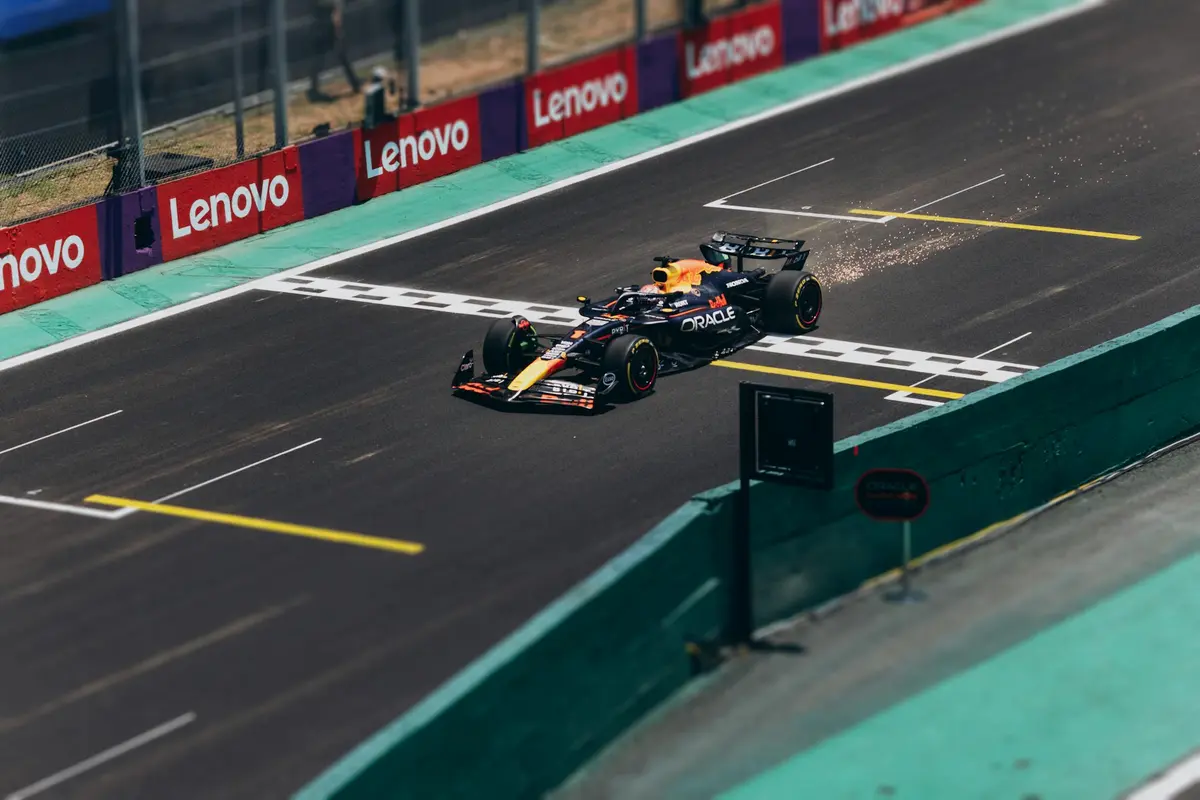
Formula One's return from its five-week mid-season hiatus in Miami marks more than just a resumption of racing. It signals a significant moment in the evolution of the sport's most ambitious regulatory overhaul in decades. The 2026 season — already defined by its radical new technical framework, active aerodynamics, and next-generation power units — has seen a coordinated refinement effort from the very top levels of the sport. The FIA, Formula One Management, team principals, and power unit manufacturers have all collaborated to sharpen and revise the 2026 technical and sporting rules, a development that carries meaningful implications for every constructor on the grid.
This kind of mid-cycle regulatory refinement is relatively rare in Formula One. The fact that all major stakeholders — from the governing body and commercial rights holder down to the teams and engine suppliers — were aligned enough to agree on coordinated changes speaks volumes about both the complexity of the 2026 framework and the collective will to make it work. Here is a comprehensive breakdown of why this matters, what it means for the teams, and how it fits into the broader story of the 2026 season.
The Significance of a Mid-Season Rule Revision
Regulatory changes in Formula One are never made lightly. The sport's technical regulations run to hundreds of pages, and altering any component of that framework mid-season requires consensus, legal scrutiny, and technical validation. When the FIA and Formula One Management move in concert with all team principals and power unit manufacturers to revise the rules, it is a clear signal that the original framework — however carefully constructed — required real-world calibration.
The 2026 regulations represent the most sweeping reset in modern F1 history. New power unit architecture, a fundamental shift in the aerodynamic philosophy, and the debut of genuinely new constructor identities on the grid all converged at the start of this year. Given that complexity, it should come as no surprise that refinements have been necessary. What is notable is the speed, the scope, and the collaborative nature of the process.
Why Miami Was the Focal Point
The five-week break before the Miami race weekend created a natural window for intensive technical and sporting dialogue. With the early-season data now in hand — real performance figures, operational challenges, and observed behaviour of the new technical framework on-track — all parties had concrete evidence on which to base their discussions. Miami therefore became the venue at which those conversations crystallised into formal regulatory revisions, making it a landmark moment in the 2026 season's narrative.
The involvement of power unit manufacturers is particularly telling. The 2026 power unit regulations represent a fundamental shift, with a near-equal split between internal combustion and electrical energy output. Any anomalies or unintended consequences in the PU framework would have far-reaching effects on competitiveness, reliability, and racing spectacle. That the manufacturers were brought into this revision process underlines just how central the power unit architecture is to the character of the 2026 regulations.
Stakeholder Alignment: A Collaborative Approach to Rule-Making
What distinguishes this revision from routine clarifications or technical directives is the breadth of stakeholder involvement. The FIA, as the sport's governing body, holds ultimate regulatory authority. Formula One Management controls the commercial framework. Team principals represent the competitive interests of each constructor. And the power unit manufacturers — encompassing the engine suppliers that underpin performance across the entire grid — bring a layer of technical authority that no other group can match.
When all four of these constituencies reach a coordinated agreement on rule changes, it reflects a degree of sporting governance maturity that has not always characterised Formula One's history. The sport has, in past eras, been defined by adversarial relationships between the FIA and teams, between manufacturers and the commercial rights holder, or between large and small constructors. The 2026 collaborative revision suggests a different operating culture — one in which shared interests in a successful, competitive, and technically credible product are driving decision-making.
What This Means for Teams Already Invested in 2026 Designs
For teams that have committed significant resources to their 2026 car concepts, any regulatory revision carries both risk and opportunity. A change that invalidates a core design philosophy can be enormously costly. Equally, a revision that addresses a genuine competitive imbalance — whether in aerodynamic performance, energy deployment, or sporting procedure — can level the field in ways that benefit the sport as a whole.
The 2026 grid features an extraordinary diversity of constructor ambition. McLaren and Ferrari have arrived at this season as the leading powers from 2025, while Red Bull continues to evolve its technical programme under Max Verstappen's continued leadership. Mercedes, rebuilding under George Russell and Andrea Kimi Antonelli in his second season, is targeting a return to consistent front-running. Meanwhile, Audi — in their debut year as a rebranded constructor — and Cadillac, making their first appearance as Formula One's eleventh team, are navigating the 2026 regulations from a standing start. Any regulatory refinement at this stage of the season will be felt differently across this spectrum of ambition and resource.
Context: The Scale and Ambition of the 2026 Regulations
To fully appreciate the significance of this mid-season revision, it is worth recalling just how transformative the 2026 framework was always intended to be. The active aerodynamic system — designed to move between high-downforce and low-drag configurations — represented a philosophical departure from the passive aero concepts that have defined the sport for decades. The intent was to improve overtaking and reduce the aerodynamic sensitivity that made close racing so difficult in previous generations of car.
The new power unit architecture, meanwhile, was designed to attract new manufacturers and align Formula One's technology story with a broader electrification narrative. The near-equal split between combustion and electrical power output was a deliberate signal that the sport was engaging seriously with the energy transition, while retaining the visceral performance characteristics that define it.
Against this backdrop, the coordinated revision of the technical and sporting rules at Miami should be read not as a sign of failure, but as evidence of a mature, iterative approach to managing a genuinely complex regulatory transition. The sport set itself an ambitious target with the 2026 rules, and the willingness to refine those rules in response to real-world evidence is a sign of institutional seriousness.
Technical and Strategic Implications for the Remainder of 2026
The precise content of the revisions — the specific clauses amended, the technical parameters adjusted, the sporting procedures refined — will determine the degree of competitive disruption that follows. However, even without knowing every detail of the changes, several strategic implications are clear.
Teams with larger development budgets and more sophisticated simulation infrastructure will generally be better placed to adapt quickly to regulatory changes mid-season. Their ability to model the impact of revised parameters and translate those models into physical car updates is a competitive advantage in any era, but it is especially pronounced during a period of regulatory flux.
Power unit manufacturers, having been directly involved in the revision process, will have a head start in understanding how any changes affect the deployment and management of their hybrid systems. This insider knowledge — however procedurally legitimate — may have subtle competitive implications for the customer teams that rely on their hardware and software.
For the newer entrants — Audi and Cadillac — navigating a mid-season rule revision in their debut year adds an additional layer of challenge to what was already a formidable task. Their ability to absorb and respond to the changes will be an important test of their organisational maturity and technical depth.
Key Takeaways
- Formula One has implemented a revised regulatory framework for the 2026 season, announced ahead of the Miami race weekend following a five-week break.
- The revisions were produced through a coordinated effort involving the FIA, Formula One Management, all team principals, and power unit manufacturers — a notably broad stakeholder coalition.
- The 2026 season already features unprecedented grid diversity, including Audi's debut as a rebranded constructor and Cadillac's arrival as the eleventh team.
- The mid-season revision reflects the complexity of the 2026 technical framework, which introduced active aerodynamics and a new power unit architecture simultaneously.
- Teams with greater development resources and simulation capability are best positioned to adapt quickly to regulatory changes mid-season.
- The collaborative nature of this revision represents a significant moment in F1's sporting governance, suggesting a more consensus-driven model than has historically been the norm.
Frequently Asked Questions
Why have the F1 2026 rules been revised mid-season?
The 2026 regulations represented an exceptionally ambitious overhaul of both the technical and sporting framework, introducing active aerodynamics and a new power unit architecture simultaneously. Real-world data gathered during the early part of the season provided the FIA, Formula One Management, team principals, and power unit manufacturers with concrete evidence on which to base targeted refinements. This kind of iterative calibration is a normal part of managing a major regulatory transition.
Who was involved in agreeing the 2026 regulatory revisions?
According to the source report, the revisions were the product of a coordinated effort involving the FIA, Formula One Management, team principals, and power unit manufacturers. This unusually broad coalition of stakeholders signals that the changes had genuine cross-sector support rather than being imposed unilaterally by the governing body.
How might the 2026 rule changes affect the competitive order?
The precise competitive impact will depend on the specific nature of the revisions. In general, teams with larger development resources and more sophisticated simulation tools are better placed to adapt quickly to regulatory changes. Newer constructors such as Audi and Cadillac, navigating their debut season under the 2026 framework, face an additional challenge in absorbing mid-season rule changes.
What makes the 2026 regulations historically significant?
The 2026 regulations introduced active aerodynamics and a fundamentally new power unit architecture — with a near-equal split between combustion and electrical output — making them the most transformative regulatory package in modern Formula One history. The arrival of Audi as a rebranded constructor and Cadillac as a brand-new eleventh team in the same season added further historic weight to what is already a landmark regulatory era.
Conclusion
The announcement of revised 2026 technical and sporting regulations ahead of the Miami Grand Prix is a story about far more than bureaucratic process. It reflects the enormous ambition of what Formula One set out to achieve with its 2026 overhaul, the honest acknowledgement that even the best-designed frameworks require real-world calibration, and a level of cross-stakeholder governance that augurs well for the sport's long-term credibility.
As the season resumes in Miami, every team on the grid will be studying the detail of these revisions with intense focus. For the established frontrunners, it is a chance to consolidate or extend their advantage. For the midfield, it may represent an opportunity to close the gap. For Audi and Cadillac, navigating these changes in their respective debut seasons, it is another test of resilience in what was always going to be an extraordinarily demanding year.
What is clear is that the 2026 season has already established itself as one of the most consequential in the sport's history — not just on the track, but in the boardrooms and technical facilities where the future of Formula One is being actively shaped. The Miami revision is a chapter in that larger story, and the sport's willingness to engage in honest, collaborative rule-making may prove to be one of its most important competitive assets.
In this article
Written with AI assistance. How this site works