F1 2026 Rule Revisions: Miami Brings Regulatory Reset
Formula One returns from its five-week break at Miami with revised 2026 technical and sporting regulations, shaped by a coordinated FIA, FOM, team principal, and manufacturer review process.
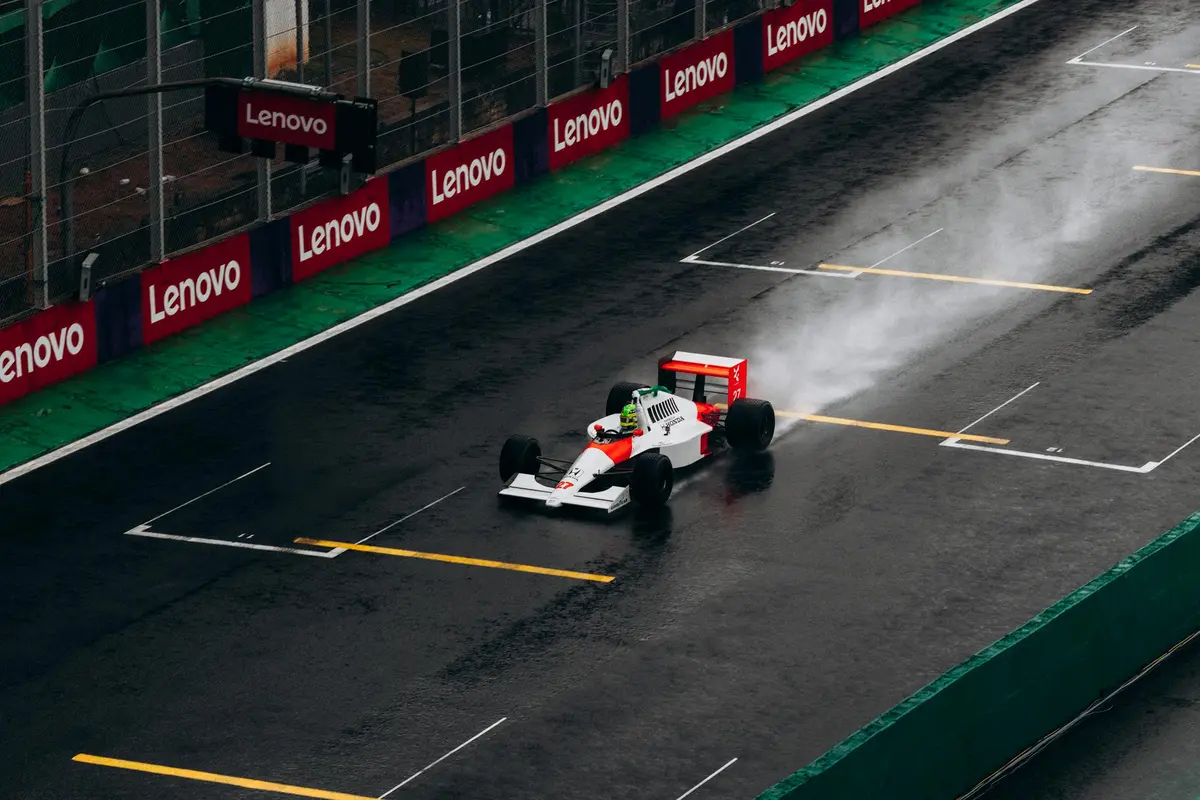
Formula One's 2026 season reaches a pivotal inflection point as the championship returns from its five-week mid-season hiatus at the Miami Grand Prix, bringing with it a revised regulatory framework that has been carefully shaped through coordinated dialogue between the FIA, Formula One Management, team principals, and power unit manufacturers. The collaborative effort signals something rarely seen at the top level of motorsport: a willingness to adjust in-season rules by consensus rather than confrontation, underscoring how seriously all stakeholders are taking the challenge of bedding in Formula One's most ambitious technical overhaul in a generation.
The 2026 F1 rule revisions represent far more than administrative housekeeping. They arrive at a moment when teams are still unlocking the competitive potential of a genuinely new technical era — one defined by radical aerodynamic philosophies, a revolutionary power unit specification, and a grid of eleven teams navigating uncharted territory together. Understanding what these revisions mean, why they were necessary, and what they imply for the rest of the season is essential reading for anyone following the 2026 F1 championship closely.
The Context Behind the 2026 F1 Rule Revisions
The 2026 technical regulations were always going to be the most complex set of rules Formula One had introduced in decades. The simultaneous arrival of new aerodynamic concepts — including active aero systems and the so-called "overtake boost" mechanism — alongside a completely redesigned power unit formula featuring a dramatically increased electrical energy deployment relative to internal combustion output, created an environment where even the most experienced engineers acknowledged significant uncertainty heading into the season opener.
Five weeks is a meaningful window in a Formula One season. Teams return to their factories, digest mountains of data, and identify the gaps between what the regulations intended and what has emerged in practice on track. It is precisely this gap — between regulatory intent and competitive reality — that appears to have driven the collaborative review process. The involvement of all four major power unit manufacturers alongside the FIA and Formula One Management points to a process that extended well beyond superficial sporting rule tweaks, reaching into the technical heart of what makes 2026 machinery function as it does.
What makes this revision process particularly significant is the word "coordinated." In Formula One's history, mid-season regulatory interventions have often been contentious, driven by protests, safety concerns, or the complaints of a single dominant faction. A coordinated refinement — where team principals, power unit suppliers, the governing body, and the commercial rights holder all participate — suggests an unusually mature and pragmatic approach to governance in what is still a very young regulatory era.
What the Revised Framework Addresses
Technical Regulation Refinements
While the specific technical details of the revised framework were the product of the broader stakeholder process, the nature of the 2026 regulations makes it straightforward to understand the areas most likely to require refinement. The active aerodynamic systems introduced this season — designed to reduce drag on straights and increase downforce through corners — presented teams with a fundamentally different design challenge compared to the passive aerodynamic era. Early indications across the field suggested that translating the theoretical benefits of active aero into consistent, predictable on-track performance was proving complex, with variations between circuits highlighting areas where the regulations may have needed greater precision.
Similarly, the 2026 power unit regulations — which mandate a closer balance between electrical and combustion power outputs — have placed unprecedented demands on energy management strategies. The overtake boost system, which allows drivers to deploy additional electrical power in overtaking scenarios, has required both sporting and technical clarification as teams developed differing interpretations of its operational parameters.
Sporting Framework Adjustments
Beyond the purely technical, sporting regulations governing how sessions are run, how penalties are applied, and how the new power unit tokens and development frameworks operate in-season are all areas where practical experience from the opening rounds of the championship would logically prompt refinement. The inclusion of team principals in the review process — rather than purely technical directors and engineers — points to adjustments that have a direct bearing on strategic and sporting competition, not merely machinery specifications.
The five-week break provided an ideal window for this process to conclude and for revised regulations to be formally adopted, ensuring that the Miami Grand Prix marks a clean regulatory starting point for the second phase of the 2026 championship battle.
Why Miami as the Reset Point Matters
Miami has rapidly established itself as one of Formula One's most prominent events in North America, and its position in the calendar — following a substantive break — makes it a natural moment for a regulatory reset. The championship returning here with revised rules is a signal not just to the competing teams but to a global audience: the 2026 era is being actively managed, with all parties committed to ensuring the regulations produce the quality of racing they were designed to deliver.
For the eleven teams — including Audi in their debut season after rebranding from Sauber, and Cadillac competing as Formula One's new eleventh constructor — the regulatory revision arrives at a time when competitive hierarchies are still being established. New entrants and veteran teams alike will be scrutinising every detail of the revised framework, searching for the development directions it opens or closes.
The broader grid context is equally compelling. McLaren's Lando Norris and Oscar Piastri have been among the frontrunners in the new era, while Red Bull's Max Verstappen — four-time world champion — continues to test the limits of what Isack Hadjar's debut season has revealed about the RB21's characteristics. At Ferrari, Lewis Hamilton, now in his second year with the Scuderia, and Charles Leclerc are working in tandem to optimise a package that the 2026 technical regulations have reshaped significantly relative to 2025.
Technical and Strategic Implications for the Field
For the engineering departments across all eleven teams, the revised 2026 regulatory framework arriving at Miami creates both opportunity and urgency. Teams that have been operating close to the boundaries of their interpretation of the original regulations will need to assess whether those boundaries have shifted. Those who felt constrained by earlier ambiguities may find the revised framework opens new development avenues.
Power unit manufacturers — whose involvement in the revision process is explicitly noted — will be particularly alert to how the refined regulations affect the balance between electrical and combustion performance deployment. Any clarification of the overtake boost parameters, for example, has direct implications for driver coaching, race strategy, and the role of the energy store in determining race pace over a full Grand Prix distance.
From a strategic perspective, teams entering Miami with a clearer, more refined set of rules will be able to align their upgrade packages and development roadmaps with greater confidence. In a regulatory era as new as 2026, that clarity is arguably as valuable as any single aerodynamic or mechanical upgrade. The coordinated nature of the revision also reduces the risk of one team or manufacturer gaining a disproportionate interpretive advantage — a persistent concern whenever regulations are amended mid-season.
Key Takeaways
- Formula One returns from its five-week break at the Miami Grand Prix with a revised 2026 technical and sporting regulatory framework.
- The revisions were developed through a coordinated process involving the FIA, Formula One Management, team principals, and all power unit manufacturers.
- The collaborative nature of the revision is unusual in F1 history and signals a mature approach to governing the sport's most complex regulatory era.
- The 2026 regulations introduced active aerodynamics, an overtake boost system, and a new power unit specification — all areas likely to benefit from mid-season clarification.
- All eleven teams, including debut constructors Audi and Cadillac, will be scrutinising the revised framework for competitive implications as the second phase of the season begins.
- Miami marks a significant reset point for the 2026 championship, with the regulatory revision providing greater certainty for team development strategies going forward.
Frequently Asked Questions
What are the 2026 F1 rule revisions announced ahead of Miami?
The 2026 F1 rule revisions are refinements to both the technical and sporting regulatory framework that governs this season's competition. They were developed collaboratively by the FIA, Formula One Management, team principals, and power unit manufacturers during Formula One's five-week mid-season break, ahead of the Miami Grand Prix.
Why were mid-season regulatory changes made to the 2026 F1 framework?
The 2026 season introduced the most significant technical overhaul in Formula One in many years, including new active aerodynamic systems, an overtake boost mechanism, and a redesigned power unit specification. As teams gained real-world competitive experience in the opening rounds, areas requiring clarification and refinement naturally emerged, prompting the coordinated review process that concluded ahead of Miami.
How does the coordinated revision process differ from typical F1 regulatory changes?
Typically, mid-season regulatory interventions in Formula One are triggered by protests, safety incidents, or unilateral decisions from the governing body. This revision process was explicitly described as coordinated across all key stakeholder groups — the FIA, Formula One Management, team principals, and power unit manufacturers — making it a notably collaborative and consensus-driven approach that is unusual in the sport's governance history.
How will the 2026 F1 rule revisions affect the championship battle?
The revised framework arriving at Miami provides all eleven teams with greater regulatory clarity as the second half of the season begins, allowing engineering departments to align their development programmes with increased confidence. Teams and power unit manufacturers that had differing interpretations of specific technical provisions will now be working from a cleaner, more defined rulebook — which could shift competitive dynamics depending on how each constructor's current approach aligns with the refined regulations.
Conclusion
The arrival of revised 2026 F1 regulations at the Miami Grand Prix is a defining moment for what is already one of the most transformative seasons in Formula One's technical history. The fact that the revision emerged from a genuinely coordinated process — bringing together the FIA, Formula One Management, team principals, and all power unit manufacturers — speaks to the collective commitment across the sport to making the 2026 era work as intended.
For fans, analysts, and competitors alike, the Miami round now carries additional significance beyond the race result itself. It represents the beginning of Formula One's next chapter within the 2026 season — one where the technical and sporting rules are better aligned with the extraordinary complexity of what these cars have been designed to do. As the championship resumes with eleven teams, a full grid of talent spanning rookies and world champions, and machinery that continues to push every known boundary of engineering capability, the regulatory reset could prove as consequential as any upgrade brought to the Miami circuit.
The 2026 F1 rule revisions are not an admission of failure — they are evidence of a sport learning at pace, determined to ensure that ambition and accountability go hand in hand.
In this article
Written with AI assistance. How this site works