F1 2026 Bahrain Pre-Season Testing: The Complete Report
The complete report on Bahrain pre-season testing 2026: power unit wars, team-by-team verdicts, sandbagging games and the warning signs shaping Melbourne.
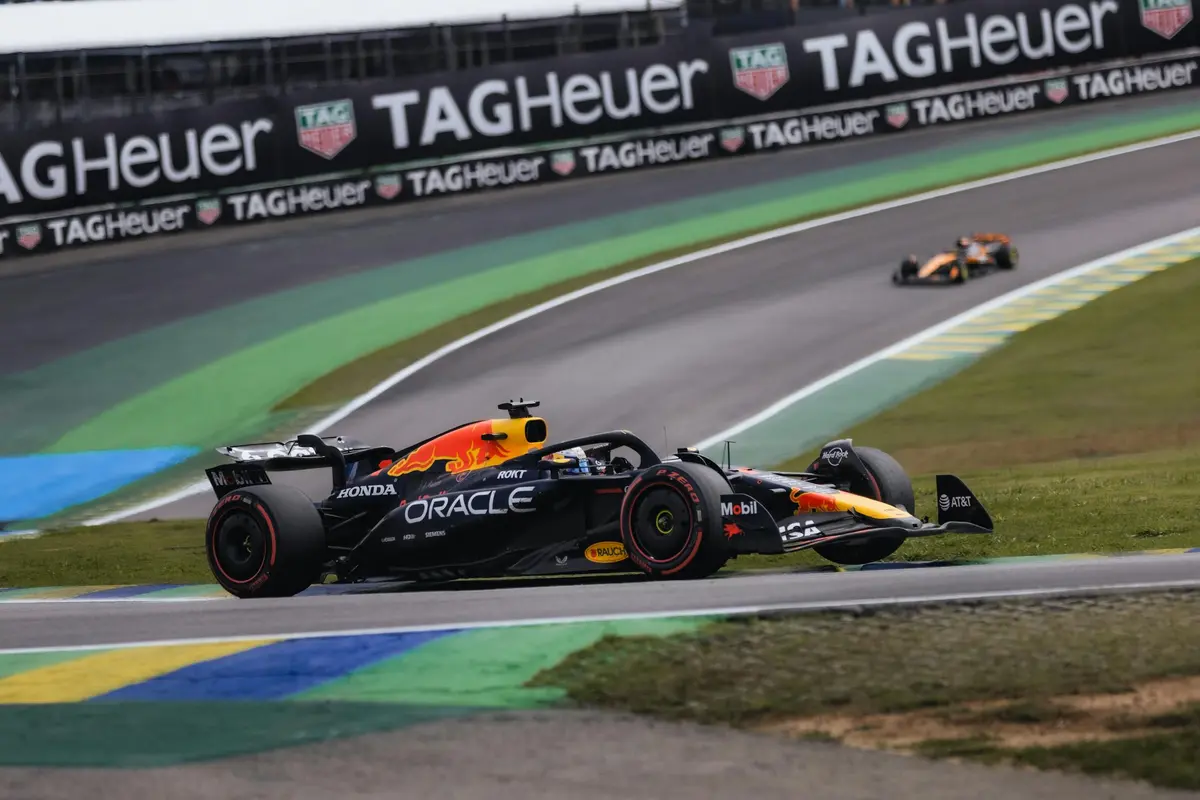
Bahrain pre-season testing 2026 has drawn to a close under the Sakhir floodlights, and the story emerging from the desert is unlike any the Formula 1 paddock has written in more than a decade. Across two intensive three-day windows at the Bahrain International Circuit, eleven teams and twenty-two drivers hammered their way through the steepest technical reset the sport has seen since 2014, stress-testing a ruleset that blends a 50/50 power unit split, active aerodynamics, 100% sustainable fuels and a brand-new cast of manufacturers and rookies. What we expected was chaos. What we got was something far more interesting: a grid that is competitive, confrontational and almost uncomfortably close heading into the Australian Grand Prix.
This is the complete report: regulation context, day-by-day narrative, power unit hierarchy, team-by-team pecking order, sandbagging games and the warning signs that will shape the opening rounds of the championship in Melbourne.
Why Bahrain Pre-Season Testing 2026 Matters More Than Any Test In A Decade
Every pre-season test is treated as gospel by those inside the paddock, but Bahrain pre-season testing 2026 genuinely deserves the attention. For the first time since the 2014 hybrid revolution, every single pillar of the technical formula has been rewritten at once. The 1.6-litre V6 internal combustion engine survives, but the MGU-H that defined the last decade of power unit development has been deleted from the rulebook. In its place sits a dramatically enlarged Energy Recovery System. The MGU-K now produces 350kW — nearly three times the electrical output of the 2025 cars — and the regulations demand that roughly half of a car's total power comes from the battery rather than the combustion engine.
The chassis has been reimagined to match. Cars are shorter, narrower and around 30 kilograms lighter than their ground-effect predecessors. Front and rear wings are no longer static: drivers toggle between a high-downforce ‘Z-mode’ for corners and a low-drag ‘X-mode’ for straights, with a separate ‘Manual Override’ that unlocks additional electrical energy for overtaking. Fuel is now 100% sustainable. The grid has expanded to eleven teams with the arrival of Cadillac and a full works Audi programme, and four of those eleven are running either a brand-new power unit or brand-new technical leadership. It is, in every meaningful sense, a new sport.
That is why the Sakhir desert served as both laboratory and confessional. Six days of running gave engineers their first honest look at whether two years of simulator and dyno work had translated into a raceable car. For fans, it was the first chance to see Lewis Hamilton in Ferrari red on a real circuit, Max Verstappen leading a Red Bull team without Adrian Newey, Newey himself bending his genius toward Aston Martin green, and a Cadillac actually turning laps in anger.
Day-By-Day: How Bahrain Pre-Season Testing 2026 Unfolded
The testing programme was split into two three-day blocks, separated by a short turnaround that let teams ship updates between sessions. What began as tentative installation laps evolved into a genuine shoot-out by the final afternoon.
Day 1: Installation, Intrigue And The First Legality Row
The opening day was supposed to be quiet. It wasn't. Mercedes arrived with a W17 that looked immediately comfortable on the Sakhir tarmac, George Russell completing his bedding-in runs without the twitchy rear end that has haunted Brackley for the last three seasons. By mid-afternoon the timing screens had Russell at the top and rival engineers peering into the Mercedes garage. Within hours, paddock whispers had hardened into formal technical questions about the W17's energy deployment strategy and the synchronisation of its active aero surfaces — the suggestion being that Mercedes may have found a way to sustain ERS output further down the straight than the FIA intended.
Toto Wolff's response was vintage Wolff. The Mercedes team principal dismissed the accusations in language that cannot be printed in a family publication, insisting his team had worked strictly within the letter of the law and would not have their new era derailed by technical directives built on hearsay. Elsewhere on Day 1, Ferrari got Hamilton alongside Charles Leclerc for meaningful mileage, Red Bull rolled the RB22 out for Verstappen and rookie Isack Hadjar to share, and Cadillac quietly logged more laps than most of the established teams combined.
Day 2: McLaren Pounces, Ferrari Innovates, Aston Martin Worries
If Day 1 belonged to Mercedes, Day 2 belonged to McLaren. Lando Norris set a 1m33.453 on the C3 compound in the second morning session, edging the W17's provisional benchmark and putting the MCL40 at the top of the combined times. The detail that stung rivals was not the lap itself but what trackside observers reported: the McLaren was transitioning between Z-mode and X-mode more cleanly than any other car, with no visible disturbance to the platform as the wings reconfigured. Verstappen's Red Bull was 0.131s behind and, crucially, looked the most stable under heavy braking, but the Woking car had arrived at the new era with its software mapping already mature.
Ferrari stole the other half of the day's headlines, for two very different reasons. First, the SF-26 appeared in the pit lane with a distinctively undulating rear wing mainplane, a profile clearly designed to interact with the 2026-spec diffuser and maximise suction when the active flaps were closed. The innovation drew crowds of rival engineers. Then the innovation bit back: a cooling-circuit issue linked to the MGU-K brought out a red flag and cut the session short, cutting into Hamilton's planned long-run programme. It was the paradox of the SF-26 in one afternoon: demonstrably fast, demonstrably fragile.
The more serious concern surfaced quietly in the Aston Martin garage. Adrian Newey's AMR26 had been running a tight aerodynamic package built around the new floor regulations, but trackside observers noted an unusual harmonic at high speed, and both Fernando Alonso and Lance Stroll reported numbness in their hands and forearms after their runs. Engineers identified the cause as a high-frequency mechanical resonance between the active wing actuators and the ultra-stiff 2026 suspension geometry — not the low-frequency porpoising of 2022, but something new and potentially more dangerous.
Day 3: Race Simulations, Red Flags And An Aston Martin Warning
By the final day the sandbags were supposed to be dropping. Some did. Mercedes put together a clean set of long runs with Russell and Andrea Kimi Antonelli, including a 15-lap stint in which Russell's times held inside a three-tenth window — the kind of tyre-kind degradation curve that typically signals a championship-ready car. Ferrari, having rectified the cooling issue, finally turned Hamilton and Leclerc loose on race-simulation laps, and the SF-26 was planted and consistent, with no sign of the porpoising or ride-height sensitivity that plagued the early ground-effect cars.
McLaren maintained its one-lap edge, Cadillac completed a third full race simulation without a single MGU-K or battery failure, and Audi matched lap counts with the front-runners while refusing to chase glory runs. Alpine and Racing Bulls, by contrast, both suffered MGU-K failures. Then came the Aston Martin bombshell: after reviewing the Day 2 and Day 3 data, Newey confirmed the team would deliberately limit its mileage in Melbourne while a structural dampening solution was designed at the factory. Medical advisors had flagged the risk of Hand-Arm Vibration Syndrome — potentially permanent nerve damage from prolonged high-frequency exposure — and the team was not prepared to gamble with its drivers' health.
The 2026 Power Unit Hierarchy: Who Is Actually Winning The PU War?
Strip away the lap times and the real story of Bahrain is the power unit pecking order, because under the 2026 rules the engine is the car. The 50/50 split makes energy management, not peak horsepower, the decisive variable. The defining question on every long straight is whether a given power unit can hold its electrical deployment all the way to the braking zone, or whether it ‘clips’ — the moment the battery runs dry and the car falls off the pace of rivals who have budgeted their energy more intelligently.
On the evidence of six days in Sakhir, the Mercedes High Performance Powertrains unit out of Brixworth appears to sit at the top of the tree. Russell and Norris both topped sessions on Mercedes-built hardware, and trackside speed-trap data showed Mercedes-powered cars sustaining their deployment significantly further down the 1.1km start-finish straight than most rivals. The comparison with 2014 — when Mercedes arrived at the last hybrid dawn with a class-leading power unit — is being drawn openly in the paddock.
Red Bull Ford Powertrains, in their first works outing without Honda, are the fascinating wild card. The RB22 looked the most stable car in the field under braking and produced some of the highest straight-line speeds of the week. Laurent Mekies, now leading Red Bull after the reshuffle that followed Adrian Newey's departure, went out of his way to deny that Red Bull were the benchmark of the new era — a deflection that rival engineers read as strategic rather than sincere. Track data suggested the Red Bull was holding its top-end velocity roughly 15% longer than Ferrari or Mercedes on the longest straight, hinting at a superior thermal management strategy in the Ford-developed battery pack. The caveat: the RB22 spent noticeable time in the garage for “precautionary checks,” a quiet acknowledgement that the 2026 cooling requirements are pushing even the best teams to their limits.
Ferrari's power unit appeared to have the most aggressive MGU-K recovery map on the grid, visible in the way the SF-26 squatted under braking into Turn 1. When the mapping worked, it was devastating; when it didn't, Hamilton was heard on team radio complaining about clipping. Audi's first works power unit ran reliably but gave away top-end speed to the Big Three, and the Cadillac bespoke GM unit surprised everyone by being one of the most thermally stable engines in the field. Alpine was the clearest laggard on PU integration, showing early thermal derating under sustained loads.
One regulation-level concern looms over the entire grid: race starts. With the MGU-H deleted, teams can no longer spool the turbocharger electrically, and a competitive launch now requires holding the combustion engine at very high revs on a stationary car for 30 to 45 seconds. With no airflow through the radiators, heat soak becomes a genuine failure risk, and regulatory tweaks to the start procedure are now on the F1 Commission agenda before Melbourne.
Team By Team: The 2026 Pecking Order Takes Shape
Ferrari: The SF-26 Has Class And Question Marks
The Hamilton-Leclerc pairing completed more than 150 laps between them and the SF-26 looked planted on race runs, with a launch package that was quietly the most impressive of the test. Ferrari appears to use the MGU-K as a form of software-legal traction control in the first 2.5 seconds off the line, and the clutch bite-point consistency had both drivers visibly comfortable in their standing-start simulations. The trick rear wing demonstrates the Scuderia's appetite to push boundaries. The caveat is reliability: the Day 2 cooling failure and hints of hydraulic issues cost critical long-run data, and Hamilton's own radio comments on clipping suggest the SF-26's energy mapping is still work-in-progress.
Mercedes: The W17 Is A Statement Of Intent
Russell's 1m33.459 on a C3 compound was the first major benchmark of the test, with untapped performance left on softer rubber. Mercedes completed 142 laps in a single day without mechanical intervention and produced the most stable long-run degradation curve in the field. The active aero transitions looked effortless, and the cooling package was tighter than anyone expected. Antonelli's ability to match Russell's telemetry as a rookie is arguably the most underrated subplot of the test — it means Mercedes can focus on car development rather than driver acclimatisation.
Red Bull: Benchmark Denied, Evidence Mounting
Verstappen looked every inch the reigning champion, Hadjar settled into the team with steady long-run work, and the RB22's straight-line speed quietly embarrassed several rivals. Mekies' public posture as the underdog is the classic championship-winning playbook: manage expectations, deflect scrutiny from a new power unit's reliability, and let the stopwatch do the talking. The question is whether the Ford-backed cooling package can hold up over a race distance once the Sakhir ambient heat is replaced by Melbourne's altogether different thermal envelope.
McLaren: Quiet, Ruthless, Ready
Andrea Stella's McLaren arrived in Bahrain with a MCL40 that already looked like a second-year car. Norris' headline lap was set on mid-range rubber, and both Norris and Oscar Piastri triggered active aero transitions with none of the visible oscillation that plagued rivals. Of all the cars at the test, the MCL40 gave the impression of having the highest floor — both literal and metaphorical — because nothing about it looks raw.
Aston Martin: Newey's First Real Crisis
The AMR26 is the most talked-about car in the pit lane for the wrong reasons. Before the vibration issue surfaced, there was genuine buzz that Newey had exploited a floor-sealing grey area. Now the team must soften the suspension or redesign the floor stays — both of which would sacrifice exactly the aero performance that made the car exciting. Alonso's body language remained confident, but Aston Martin is starting Melbourne on the back foot.
Cadillac: The Newcomer Nobody Saw Coming
Graeme Lowdon's Cadillac operation produced arguably the most impressive debut of the entire test. Three complete race simulations without an MGU-K or battery failure is a number no other team can claim. Sergio Pérez focused on tyre management under the new high-torque loads, Valtteri Bottas delivered clinical feedback on the active aero, and the bespoke General Motors power unit ran cooler than anyone expected. Dark horse is no longer the right phrase; Cadillac is a legitimate points threat from round one.
Audi, Haas, Alpine And The Rest
Audi under Jonathan Wheatley impressed with operational discipline even if raw pace sat in the mid-1m34s, with Hülkenberg and rookie Gabriel Bortoleto sharing duties cleanly. TGR Haas, strengthened by a new Toyota technical partnership, showed surprising pace with Esteban Ocon and Oliver Bearman. Alpine had a rougher week with MGU-K issues and active aero struggles, and Racing Bulls mirrored that reliability pattern. The midfield is tighter than it has been in years — the gap between the top five teams in race trim looked to be less than four-tenths of a second.
The Sandbagging Game And The Reliability Story
No conversation about Bahrain pre-season testing 2026 is complete without acknowledging that almost every team spent the week actively hiding how fast its car really is. Sandbagging is a technical necessity in 2026 for three reasons. First, running an aggressive ERS deployment map invites rivals to reverse-engineer your energy strategy from GPS traces, so engineers deliberately clip electrical output early on straights. Second, the new active aero states allow a team to run the entire test in Z-mode even on straights, masking the true efficiency of its X-mode configuration; Newey's Aston Martin is widely believed to have done exactly this. Third, the classic trick of running with 100 kilograms of fuel still costs a car roughly three seconds a lap, and Audi in particular was visibly locking in high-fuel stints that hid the true one-lap pace of a stable platform.
The reliability picture was more mixed than the headline lap times suggested. Aston Martin's vibration issue is the most serious red flag. Alpine and Racing Bulls both lost running to MGU-K failures, Ferrari lost a session to a cooling circuit issue, and Haas briefly failed to return an active wing element to Z-mode — a reminder that the mechanical reliability of moving aero parts is a genuine risk factor. That said, the consensus pre-test prediction of a 2014-style “smoke-show” era has not come to pass: simulation tools have clearly caught up with the hardware, and the six days ended without a single catastrophic power unit failure on track.
What We Learned Heading To Melbourne
The picture painted by Bahrain pre-season testing 2026 is of a grid that is closer, more politically charged and more technically unresolved than at any point in the hybrid era. Mercedes and McLaren look like the best-integrated packages. Ferrari has the launch edge and the innovation ceiling, but needs to fix its software before Hamilton burns through his patience. Red Bull is quietly dangerous and publicly modest. Aston Martin is racing against Newey's own engineering to avoid losing the opening rounds to a safety compromise. Cadillac has announced itself as a real team, not a branding exercise. Audi has earned respect without yet showing performance. Alpine and Racing Bulls face a genuine reliability problem that could define their early season.
Underneath all of that, the 2026 championship will be decided by three things: who deploys energy most efficiently across a full race, who masters the active aero transitions without upsetting the platform, and whose power unit cooling survives the move out of Sakhir into the thermal variability of real-world circuits.
Key Takeaways From Bahrain Pre-Season Testing 2026
- Reliability held up: The 2026 power units avoided the catastrophic failures many predicted, with only isolated MGU-K issues at Alpine, Racing Bulls and mid-session cooling problems at Ferrari.
- Mercedes and McLaren set the benchmarks: Russell's 1m33.459 and Norris' 1m33.453 established the Mercedes-powered cars as the reference, with the cleanest active aero transitions in the field.
- The Red Bull deflection is strategic: Mekies' refusal to be labelled the benchmark sits uneasily against speed-trap data showing the RB22 sustaining top-end velocity longer than any rival.
- Aston Martin's vibration crisis is the most serious threat: Newey's AMR26 has triggered a safety-driven mileage limit in Melbourne because of high-frequency resonance and genuine nerve-damage risk.
- Cadillac is the story of the new entrants: Three full race simulations without a power unit failure, with Pérez and Bottas delivering the most consistent data set of any new team debut in a decade.
- Race starts are the hidden problem: Removing the MGU-H has made launch procedures thermally precarious, and regulatory changes to the start sequence are now on the F1 Commission agenda.
- Energy management is the new battleground: In 2026, the fastest car is not the one with the most horsepower but the one that can deploy its 350kW MGU-K furthest down the straight without clipping.
Frequently Asked Questions
What are the biggest rule changes at Bahrain pre-season testing 2026?
The 2026 regulations introduce a near 50/50 power split between the internal combustion engine and the electrical system, a 350kW MGU-K, the removal of the MGU-H, active aerodynamics with Z-mode and X-mode wing positions, a Manual Override boost for overtaking, 100% sustainable fuels, and lighter, smaller cars. It is the most comprehensive technical reset in a generation.
Who was fastest at Bahrain pre-season testing 2026?
Lando Norris set the outright fastest time of 1m33.453 for McLaren on the C3 compound, narrowly ahead of George Russell's 1m33.459 for Mercedes. However, the two teams shared the benchmark role throughout the test, and raw times are heavily masked by sandbagging tactics, fuel loads and engine maps.
Is the 2026 Red Bull really the car to beat?
Laurent Mekies denied Red Bull's benchmark status at Bahrain, but trackside data suggested the RB22 held its top-end speed longer than any rival, hinting at a superior battery thermal management package. The car also spent noticeable time in the garage for precautionary checks, so reliability over a race distance remains an open question going into Melbourne.
Why is Aston Martin limiting mileage in Melbourne?
The AMR26 is suffering from a high-frequency mechanical resonance caused by interaction between the active aero actuators and the car's ultra-stiff 2026 suspension, transmitting vibrations to the drivers' hands and forearms. With medical advisors warning of possible Hand-Arm Vibration Syndrome, Adrian Newey has confirmed Fernando Alonso and Lance Stroll will run limited laps in Australia while a structural fix is developed at the factory.
Conclusion: A New Sport Begins In Sakhir
Bahrain pre-season testing 2026 delivered the reset the FIA promised when it drew up this regulation cycle three years ago, and then it delivered something more valuable on top: genuine uncertainty. No single team emerged as obviously dominant. Mercedes and McLaren look superbly prepared, Ferrari has the launch advantage and the most aggressive innovation on the grid, Red Bull is quietly confident behind a veil of deflection, and Cadillac has announced itself as a real racing team rather than a marketing case study. Aston Martin's vibration crisis is a stark reminder that the line between genius and danger in this sport remains razor-thin, even with Adrian Newey at the drawing board.
The sandbags will come off properly in Melbourne, and with them the truth about who has really mastered energy management, active aerodynamics and the new launch procedures. If the Sakhir floodlights have told us anything, it is that 2026 will not be decided by a single dominant team pulling clear of the field, but by whichever operation can find half a second a week through software, thermal efficiency and driver confidence. The era has begun exactly as its architects hoped: with a grid that is closer, more open and more unpredictable than at any point in the last ten years.
In this article
Written with AI assistance. How this site works