Antonelli's Championship Lead Hurt by F1 2026 Break
Antonelli led the 2026 F1 standings after back-to-back wins in China and Japan — but the unplanned April break cost him dearly in championship momentum.
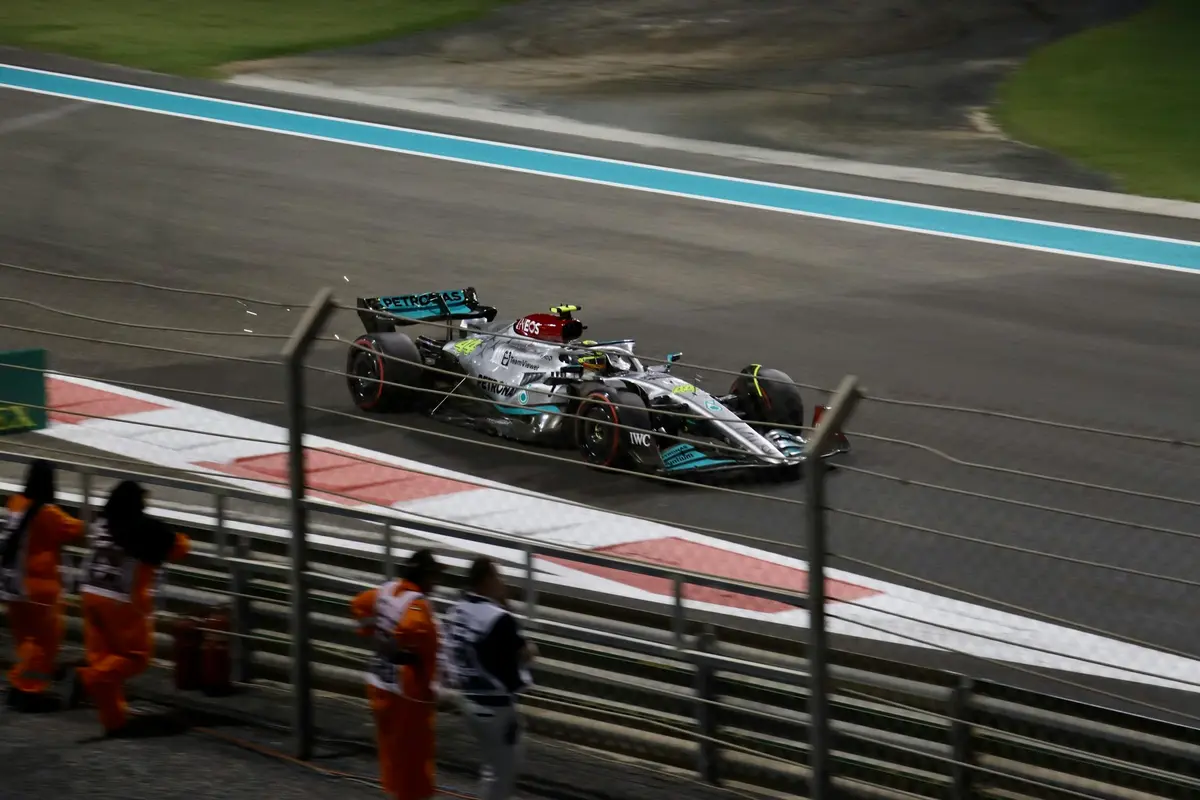
Andrea Kimi Antonelli entered the unplanned April break as Formula 1's most in-form driver — a back-to-back race winner, a championship leader for the first time in his young career, and the beneficiary of what appeared to be the most dominant package on the 2026 grid. Yet according to Autosport, the Mercedes rookie-turned-contender was identified as the biggest loser of the unplanned April break across the entire field. The reasoning is as compelling as it is straightforward: momentum in Formula 1 is everything, and Antonelli had an extraordinary amount of it heading into Bahrain and Saudi Arabia — grands prix that never came at the anticipated time.
In a season already defined by the sweeping new 2026 technical regulations, active aerodynamics, and the overtake-boost systems reshaping every race weekend, the timing of an unexpected championship pause could not have been crueller for the young Italian. This article examines exactly why the break hit Antonelli harder than anyone else on the grid, what it means for the championship picture, and how the Mercedes driver will need to respond when racing resumes.
Back-to-Back Wins in China and Japan: The Momentum That Was Halted
To understand the scale of what Antonelli lost, it is necessary to appreciate the context of what he had just achieved. Victories in China and Japan are not routine accomplishments — they represent two of the most technically demanding and strategically complex races on the Formula 1 calendar. For Antonelli to secure both in succession, and to do so in a manner described as dominant in terms of the Mercedes package, signalled that the 2026 season was shaping up as his to lose.
The Japanese Grand Prix win was particularly significant. It handed Antonelli the drivers' standings lead for the first time in his career — a milestone moment for a driver who only entered Formula 1 as a rookie in 2025 and is now in his second season. To arrive at that championship summit off the back of consecutive victories, with the machinery beneath him appearing to have found a decisive edge under the all-new 2026 regulations, was the kind of convergence of factors that teams and drivers dream about.
Under normal circumstances, that momentum would have carried directly into the Bahrain and Saudi Arabian rounds — two circuits where aerodynamic efficiency and power unit performance are at a premium, characteristics that a dominant Mercedes package would logically exploit. Instead, the unplanned break intervened, stripping Antonelli of the opportunity to convert his hot streak into a more substantial points cushion.
Why the Break Hurts Antonelli More Than His Rivals
One might reasonably ask: if all drivers face the same break, why does Antonelli suffer disproportionately? The answer lies in the relative positions of each competitor heading into the pause.
A driver trailing in the standings benefits from a break in a different way — they gain time to regroup, to recalibrate strategy, and to allow rivals' momentum to cool. For Antonelli, who was riding the crest of a wave, every additional race week without competition was a week in which he could not extend his championship advantage. His rivals, by contrast, gained precious time to analyse the Mercedes data, to develop countermeasures, and to arrive at the next round with a sharper set-up approach.
The 2026 season is uniquely competitive in this regard. The introduction of active aerodynamics and the new overtake boost regulations has compressed performance across the grid in certain conditions, meaning the gaps between the front-runners are narrower than they might appear on any given weekend. A driver who establishes momentum under these regulations does so within a tightly contested environment — and that makes disruption to that momentum all the more costly.
Furthermore, the psychological dimension cannot be dismissed. Young drivers building their first championship challenge often speak of the importance of rhythm — of feeling in tune with the car, the strategy team, and the race weekend format. Antonelli, still in only his second Formula 1 season, was experiencing exactly that rhythm when it was abruptly interrupted.
The 2026 Regulation Landscape and Mercedes' Advantage
Context matters enormously when assessing Antonelli's position. The 2026 season represents the most significant regulatory overhaul Formula 1 has seen in years. New power unit regulations, active aerodynamic systems replacing the DRS of previous eras, and an overtake boost mechanism have fundamentally altered the performance hierarchy. Teams that have adapted most effectively to these changes have found themselves at the front of the grid in ways that did not always reflect the pre-season testing order.
Mercedes, according to the source, had what could be described as a dominant package at Antonelli's disposal heading into the break. This is a significant detail. In the context of 2026's compressed field and the technical complexity introduced by active aero, being described as dominant is a meaningful differentiator. It suggests that Mercedes' interpretation of the regulations — their floor concept, their power unit integration, their active aero mapping — had found an advantage that, at least across China and Japan, translated into race-winning pace.
The break gave every competing team's engineering department additional weeks to study that advantage, to scrutinise the on-board footage, the telemetry shared in the FIA technical bulletins, and the observable performance data from those two victories. In Formula 1, a dominant advantage rarely remains unchallenged once rivals have had sufficient time to respond.
Antonelli's Championship Position in the Broader 2026 Battle
Antonelli's championship lead places him at the centre of what is shaping up as a multi-team, multi-driver title fight. The 2026 grid is arguably the most competitive in recent memory — McLaren's Lando Norris and Oscar Piastri have shown consistent front-running pace, Max Verstappen continues to extract the maximum from the Red Bull despite a changed competitive landscape following Isack Hadjar's promotion alongside him, and Charles Leclerc alongside Lewis Hamilton, now in his second season with Ferrari, represent a formidable Maranello operation.
For Antonelli to have risen above all of these established names — some of them multi-race winners and championship challengers in their own right — to lead the standings after two consecutive victories speaks volumes about both his personal development and Mercedes' engineering achievement in 2026. The question now is whether that advantage can be preserved across the remainder of the season, and whether the break represents a temporary interruption or a more significant turning point.
History tells us that championship leads built on momentum are not automatically surrendered during a pause — but they require careful management of expectations, continued technical development, and a fast return to form at the first opportunity.
Technical and Strategic Implications Going Forward
From a technical standpoint, the extended time afforded by the break will have been used by Mercedes to validate the performance trends seen in China and Japan, and to pre-empt any rival developments that might emerge in Bahrain and Saudi Arabia. The track characteristics of those two circuits — high-speed straights, demanding braking zones, and circuits where tyre management under the new 2026 compound specifications plays a decisive role — will have informed Mercedes' simulation work during the break.
For Antonelli specifically, the strategic priority will be immediate re-establishment of competitive dominance. A points-scoring podium or victory at the first race back would significantly offset the psychological cost of the interrupted momentum and signal to the rest of the championship field that the pre-break form was no anomaly. A difficult weekend, however, would invite the narrative that rivals have found answers to the Mercedes package — a narrative that championship psychologies are built and broken upon.
George Russell, Antonelli's team-mate at Mercedes, also provides an interesting subplot. In a team with a dominant car, internal competition inevitably intensifies, and Russell's own championship ambitions will ensure that Antonelli cannot rely solely on the machinery advantage — he must continue to outperform within the same equipment.
Key Takeaways
- Andrea Kimi Antonelli was identified as the biggest loser of the unplanned April break, having arrived at it as championship leader off consecutive wins in China and Japan.
- The Japan victory gave Antonelli his first-ever Formula 1 drivers' standings lead, making the timing of the interruption particularly significant.
- Mercedes had a dominant package at Antonelli's disposal heading into the break, giving rivals additional time to analyse and potentially close the performance gap.
- The 2026 regulations — featuring active aerodynamics and overtake boost — have created a compressed competitive field in which momentum advantages are especially valuable and hard to re-establish.
- A swift return to form when racing resumes will be critical for Antonelli to prevent the break from becoming a genuine championship turning point.
- Rival teams including McLaren, Red Bull, and Ferrari will have used the extended pause to intensify their development responses to Mercedes' observed advantages.
Frequently Asked Questions
Why is Antonelli considered the biggest loser of the unplanned F1 2026 April break?
Antonelli arrived at the break as the championship leader, having won back-to-back races in China and Japan. Because he had the most momentum of any driver on the grid — and a dominant Mercedes package to exploit — the pause denied him the opportunity to build on his advantage in Bahrain and Saudi Arabia. Every other driver on the grid benefited more from additional time to regroup.
When did Antonelli first take the F1 drivers' championship lead?
According to the source, Antonelli took the drivers' standings lead for the first time in his career following his victory at the Japanese Grand Prix in 2026. This was his second successive win, following his China victory, and represented a landmark moment in the young Italian's Formula 1 career.
How do the 2026 F1 regulations affect championship momentum?
The 2026 regulations, which introduced active aerodynamics and an overtake boost system, have reshaped the competitive order significantly. The new rules have compressed performance across the field, meaning a driver who finds an edge — as Antonelli did — does so in a tightly contested environment. Any break that allows rivals additional development time is therefore proportionally more damaging to the race leader than in past seasons.
Which grands prix did Antonelli miss out on building a lead at due to the break?
The source indicates that the Bahrain and Saudi Arabian grands prix were the races Antonelli was unable to contest at the optimal moment due to the unplanned April break. Both circuits' characteristics would have provided further opportunities for Antonelli to extend his championship advantage with Mercedes' strong 2026 package.
Conclusion
Andrea Kimi Antonelli's situation entering the remainder of the 2026 Formula 1 season is one of the most intriguing narratives in a year already full of them. He holds the championship lead. He has demonstrated back-to-back race-winning pace. He has a team behind him that, at least across the China and Japan rounds, appeared to have found a decisive technical advantage under the sweeping new 2026 regulations.
And yet, the unplanned April break has introduced a variable that no driver in his position would have welcomed — the cooling of momentum, the granting of development time to rivals, and the requirement to prove all over again, at the first race back, that the pre-break performances were genuine and repeatable. For a driver of Antonelli's talent and ambition, that challenge will likely serve as motivation rather than burden. But the wider Formula 1 community will be watching carefully to see whether the youngest championship leader of the 2026 season can pick up exactly where he left off.
The story of Antonelli and the 2026 title race is far from written — but the unplanned break has ensured that it will be defined not just by his dominant victories, but by how he responds in their wake.
In this article
Written with AI assistance. How this site works