2026 Japanese Grand Prix: The Complete Suzuka Report
Antonelli's maiden win, Leclerc's defensive podium, Verstappen's P11 crisis and an FIA harvesting cut: the complete 2026 Japanese Grand Prix report.
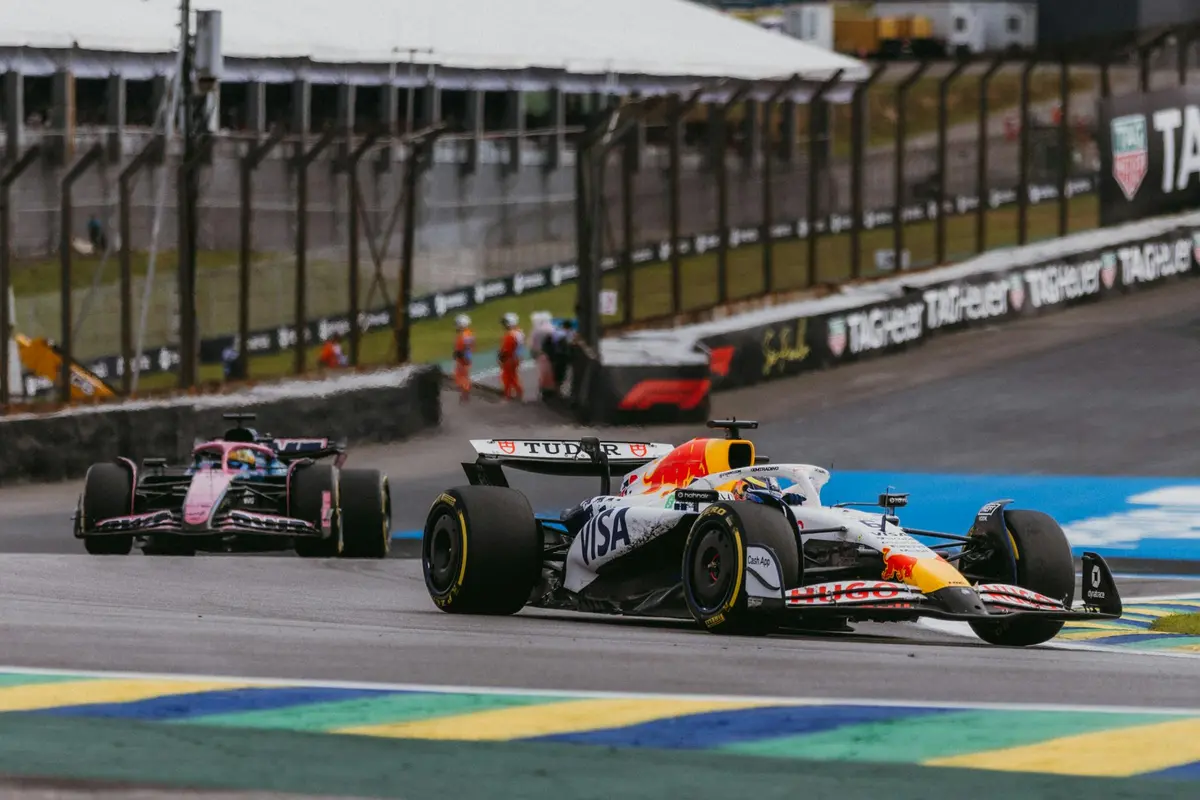
The 2026 Japanese Grand Prix will be remembered as the race a future legend truly arrived on the world stage. Under the Sunday sun at the Suzuka International Racing Course on March 29, 2026, Andrea Kimi Antonelli delivered a tactical and psychological masterclass to become the youngest driver in the history of the Formula 1 World Championship to lead the Drivers' Standings. Behind him, Charles Leclerc held off George Russell in a defensive drive that will be remembered among his finest, while Max Verstappen's Red Bull crisis dominated every paddock conversation. This complete report on the 2026 Japanese Grand Prix distils the full weekend into one place: pre-weekend storylines, every practice session, qualifying, the race, the technical stories, a mid-weekend FIA rule intervention, and the off-track news that framed Round 3 of this revolutionary new era.
Pre-Weekend Storylines: Standings and Rule Tweaks Entering Suzuka
Formula 1 arrived in Mie Prefecture with Suzuka classified as the third round of a radically overhauled 2026 season. The new era's defining features were already reshaping the championship conversation: a near 50/50 power split between the 1.6-litre V6 internal combustion engine and a 350kW MGU-K, the removal of the MGU-H, a move to 100% sustainable fuels, and the introduction of Active Aero, which toggles front and rear wings between a high-downforce 'Z-mode' for corners and a low-drag 'X-mode' for straights. Replacing the old DRS, a Manual Override system grants a trailing driver access to additional electrical deployment for overtaking.
Charles Leclerc entered Japan carrying the momentum of two consecutive podium finishes, making him the primary challenger to a Mercedes squad that had already set the early benchmark. The internal mood at Maranello was cautiously determined: the SF-26 had proven competitive in high-speed traction, but telemetry from the opening rounds suggested Ferrari was losing marginal gains to Mercedes in energy deployment efficiency. George Russell and rookie Andrea Kimi Antonelli, meanwhile, had shown a superior ability to manage Manual Override deployment, allowing them to hold track position more effectively than their red-flagged rivals.
Behind the scenes, the FIA was already moving. On Thursday, March 26, 2026, the governing body approved a strategic change to the F1 2026 energy recharge conditions for qualifying, intended to prevent 'clipping' on Suzuka's long power-demanding sweeps. Because the circuit is defined by high-lateral-load sections rather than heavy braking zones, the MGU-K struggles to harvest enough energy to sustain 350kW deployment across a full lap. The revised recharge window was designed to keep the Manual Override available deep into Sector 3, preserving the flat-out qualifying spectacle fans expect from the Japanese venue.
Other pre-weekend narratives shaped expectations too. Racing Bulls unveiled a one-off 'Spring Edition' livery for the VCARB-02 at a Tokyo Drift event on Saturday, March 21, inspired by a new Red Bull energy drink launch and using ultra-thin film technology to protect the car's minimum weight limit. Max Verstappen announced the rebrand of Team Redline into Verstappen Sim Racing, consolidating his digital empire ahead of a track that rewards simulator preparation. And the continued fallout from Lewis Hamilton's move to Ferrari remained the blockbuster storyline, with his adaptation to the SF-26 at Suzuka - a circuit where he has historically excelled - a primary talking point.
Free Practice (FP1-FP3): Mercedes Strike, McLaren Respond, Silver Arrows Respond Again
The Mercedes W17 set the tone from the moment the lights went green on Friday, March 27, 2026. In FP1, George Russell clocked a blistering pace that left the field searching for answers, with rookie teammate Andrea Kimi Antonelli slotting into second to complete a dominant Mercedes 1-2. McLaren's Lando Norris managed to break into the leading group, but the gap to the Silver Arrows suggested Brackley had found a superior aerodynamic balance for Suzuka's rhythm-critical first sector. The visual stability of the W17 through the high-speed Esses was undeniable, and Mercedes' execution of Active Aero - particularly the seamless transition between modes on the run from Spoon Curve to 130R - was already drawing attention from rival engineers.
Friday afternoon brought the first genuine plot twist of the 2026 Japanese Grand Prix weekend. Oscar Piastri topped FP2 for McLaren, ending Mercedes' grip on the timesheets and sending a clear message that the Woking squad had unlocked something in their 2026 aerodynamic package. Piastri's pace was built on immense commitment through the iconic 'S' Curves and a sophisticated deployment of Manual Override exiting Spoon Curve to maximize the run to 130R. Critically, his long-run data on the C3 compound showed significantly lower thermal degradation than Ferrari or Red Bull. The McLaren MCL41 looked remarkably planted through high-speed changes of direction, with the team's software mapping for the Active Aero system running ahead of rivals.
But the timesheets told only half the FP2 story. While McLaren headlined the chart, the telemetry revealed something closer to a chilling message for the rest of the grid: a brutal Mercedes race pace. During the final fifteen minutes of the session, Russell and Antonelli maintained lap times within a tenth of a second over a twelve-lap stint on high fuel, while the McLaren duo saw their pace drop off by nearly four-tenths as the tyres reached their thermal threshold. Mercedes' harvesting efficiency under braking into the Casio Triangle allowed them to deploy the Boost Button more frequently than McLaren, and Antonelli matched Russell to within 0.050s across the simulated race runs - a startling data point for a teenage rookie.
On the other side of the garage, Ferrari's Friday produced a fascinating telemetry battle between Leclerc and Hamilton, with both drivers probing the limits of the SF-26's refreshed aero package. Audi's day in the 2026 Japanese Grand Prix was one of stark contrasts. Nico Hulkenberg's sector times suggested the Audi chassis possessed genuine aerodynamic efficiency in the 'S' Curves, but rookie Gabriel Bortoleto's car was afflicted by an intermittent Energy Store cooling issue that forced him to abandon multiple long runs. Cadillac's Friday was even worse: a shock FP1 clash between Sergio Perez and Alex Albon left both drivers openly surprised and Cadillac's mechanics working feverishly on front-right suspension and floor damage, costing Perez critical baseline track time.
Saturday's FP3 on March 28, 2026 belonged to Antonelli. The Italian teenager topped the timing sheets to lead a second dominant Mercedes 1-2 of the weekend, edging Russell by a decisive tenth in the final chicane thanks to the W17's superior braking stability. The transition between Z-mode and X-mode through the 'S' Curves was visibly smoother than anything the Ferrari or Red Bull could muster, and the Mercedes HPP power unit looked untroubled by the thermal load of managing 350kW deployment on a high-energy circuit. With a revised floor edge and updated Active Aero software on the W17 aimed specifically at high-speed balance, the Silver Arrows headed into qualifying looking like the team to beat over both a single lap and a full race distance.
Qualifying and the Grid: Verstappen's Crisis, Ferrari's Q3 Setback
Saturday's qualifying was dramatic, but not in the way the 2026 Japanese Grand Prix organisers had hoped. The standout headline was a Red Bull crisis. Max Verstappen qualified 11th, failing to make Q3 in a car he labelled simply as "undriveable." For the reigning world champion, the session was described as a definitive breaking point. He hinted openly that his F1 future could lie away from the sport if Red Bull could not provide a competitive and "driveable" car. The fundamental issue, according to Verstappen's feedback, was an aerodynamic platform that was becoming unpredictable during high-speed transitions, compounded by Manual Override mapping that was upsetting braking stability. With Adrian Newey having departed to Aston Martin, the technical vacuum at Milton Keynes appeared increasingly systemic - rookie teammate Isack Hadjar was also struggling in the lower half of the grid.
Ferrari's qualifying also ended in frustration. The SF-26 looked like the class of the field in Q1 and Q2, with Leclerc frequently matching Verstappen's sector times early in the session. Then the wheels came off in the final Q3 shootout. Reports from the paddock suggested Ferrari struggled with Manual Override deployment, and Lewis Hamilton was heard on the radio complaining about a lack of top-end deployment on the run toward 130R - a sign the energy recovery system may have been derating prematurely. Both Leclerc and Hamilton failed to improve on their final flying laps, leaving them further down the grid than early-session pace had suggested. Team Principal Frederic Vasseur conceded the raw speed was present, but the operational refinement required to beat a perfected package was still a work in progress.
The qualifying session itself became a flashpoint for broader debate about the 2026 Japanese Grand Prix regulations. Described by observers as lacklustre and devoid of traditional edge-of-the-seat thrill, the pole shootout generated little fanfare. Drivers reported clipping before the finish line, and fighting the balance of their cars as Active Aero shifted mid-corner. The spectacle of a driver wrestling the car to the limit, critics argued, was being lost in the complexity of energy management and aero transitions. With even senior drivers like Verstappen and Hamilton voicing concerns, the FIA faced mounting pressure to act - and they would do so before the weekend was out.
The Race: Antonelli's Maiden Win, Leclerc Defeats Russell
Sunday, March 29, 2026 delivered a race that lived up to Suzuka's heritage. Andrea Kimi Antonelli took his maiden Formula 1 victory in a manner that belied his teenage years, crossing the line first to become the youngest driver ever to lead the Drivers' Championship. It was not a fairytale start. As the lights went out, Antonelli suffered significant wheelspin - a common challenge with the torque delivery of the 2026 power units - and was swallowed by the pack, dropping several positions before the field reached Turn 1. But in the high-stakes environment of modern F1, a race is never won at the start, and the Mercedes pit wall under Toto Wolff remained composed.
The defining moment arrived mid-race when a Safety Car neutralised the field. Mercedes executed a flawless double-stack pit stop, allowing Antonelli to shed worn tyres and use the restart to carve through the field. His mastery of Active Aero through the high-speed Esses was exemplary, and he dispatched his rivals with surgical precision down to 130R using Manual Override deployment. The 50/50 power split between ICE and MGU-K was the silent architect of the drive: by managing his harvesting deployment across the 53-lap race, Antonelli had maximum electrical deployment exactly when the Safety Car returned to the pits.
Behind him, Charles Leclerc secured a hard-fought Ferrari podium in a race-long duel that tested both his technical precision and his mental fortitude. The closing stages were defined by what Leclerc later described as "cheeky" mind games from George Russell. The Mercedes driver repeatedly closed the gap in the DRS zones - now supplemented by Manual Override - only to back off and try to overheat Leclerc's rear tyres by forcing him into defensive lines. Russell's attacks included late lunges into the hairpin and dummy moves into 130R, designed to trigger Leclerc's defensive instincts prematurely. Leclerc, however, remained composed. By timing his Active Aero deployments to neutralise Russell's Manual Override runs, he maintained just enough margin to prevent a clean overtake. The Ferrari pit wall, led by Vasseur, provided real-time data on Russell's energy deployment, allowing Leclerc to save his own battery reserves for the critical run out of Spoon Curve.
The standings aftermath of the 2026 Japanese Grand Prix tells the wider story. With Round 3 officially in the books, the 2026 championship narrative is beginning to take definitive shape. Antonelli now leads the Drivers' Championship at just 19 years old, Russell has stepped into the role of senior leader at Mercedes, and Leclerc's defensive masterclass cements his status as the Scuderia's spearhead. Max Verstappen and Red Bull face a systemic crisis, while Audi - led by Jonathan Wheatley with Hulkenberg and Bortoleto - has shown remarkable reliability across the first three rounds. Cadillac's entry with Perez and Valtteri Bottas has proved they are not merely making up the numbers, and the midfield featuring TGR Haas, Alpine and Racing Bulls is separated by less than three-tenths of a second per lap. The FIA confirmed the results after post-race scrutineering of the Active Aero software maps and the 350kW MGU-K energy flow.
Technical Stories: SF-26 Refinements, RB22 Upgrades, and Suzuka's 2026 Demands
Ferrari arrived in Japan with a "modest but purposeful" upgrade package for the SF-26, described by Vasseur's team as a sharpening rather than a wholesale redesign. The focus was on aerodynamic efficiency: refined floor edge geometry, revised wing endplates, and a more stable vortex structure that remained consistent under varying ride heights. The package was designed to widen the operating window of the SF-26 and help synchronise Active Aero's physical wing transitions with the energy recovery phases of the power unit. For Hamilton, still adapting to the Scuderia's handling characteristics, a more consistent rear end was particularly valuable.
Red Bull's response was a tightly focused RB22 upgrade package aimed at stabilising the aerodynamic platform and improving cooling. Revised floor fences and modified edge wing geometry targeted the car's sensitivity during high-speed transitions through the 'S' Curves, while redesigned sidepod inlets and internal ducting maximised radiator airflow without penalising the drag coefficient. Cooling was critical because the 350kW Manual Override boost places enormous thermal demand on the ERS; without efficient cooling, the system suffers derating and the boost becomes unavailable during wheel-to-wheel combat. For Verstappen's weekend, none of it was enough.
Suzuka itself is the ultimate laboratory for the 2026 technical package. Its high-lateral-load 'S' Curves and the daunting 130R traditionally highlight any aero platform weakness, while its lack of heavy braking zones makes the 5.8km lap a "harvesting poor" environment for the MGU-K. The circuit punishes any lag in Active Aero mapping - a mis-timed transition at 250km/h can produce a catastrophic loss of grip - and demands a power unit philosophy that can recover enough energy through corners to keep the Boost Button active deep into the final sector. Pirelli's hardest compounds were required to cope with the abrasive surface and high lateral loads on narrower 2026 tyres.
Away from the outright hardware story, Racing Bulls' one-off Japanese livery added a visual centrepiece to the 2026 Japanese Grand Prix. The "Spring Edition" aesthetic, inspired by a new Red Bull energy drink, introduced vibrant floral motifs and neon accents celebrating the cherry blossom season. Under Team Principal Alan Permane, Racing Bulls used ultra-thin film technology to apply the design without breaching the VCARB-02's minimum weight limit, and the artwork was mapped carefully around sidepod inlets and louvres to preserve thermal management. Liam Lawson and rookie Arvid Lindblad took the specially decorated cars into battle in a tight midfield scrap.
Mid-Weekend Rule Changes: FIA Slashes Energy Harvesting Limits
The 2026 Japanese Grand Prix will go down as the weekend that exposed the pressure points of the new technical era. After the opening rounds had already highlighted inconsistent energy deployment - and with Suzuka classified as 'harvesting poor' by engineers - the FIA made two separate interventions across the Japanese GP weekend. First, on Thursday, the governing body increased recharge allowances to ensure Manual Override remained available through a full qualifying lap. Then, following the first practice data, it moved in the opposite direction on harvesting, reducing the maximum qualifying harvest from nine megajoules to eight megajoules to address a phenomenon engineers dubbed 'super clipping.'
Super clipping occurs when a car attempts to deploy the full 350kW boost across a long straight - for example the run from Spoon Curve through 130R to the Casio Triangle - and the battery is depleted before the braking zone, producing a sudden and dramatic drop in horsepower. By capping the harvest at 8MJ, the FIA forced teams to spread energy more thinly but more consistently across the lap, preventing the dangerous speed differentials that occur when one car clips while the car behind is still on full boost. Technical directors including Andrea Stella at McLaren and the Aston Martin team influenced by Adrian Newey were forced into a complete overnight rewrite of their qualifying software.
The controversy that followed was predictable. Drivers and fans alike argued that the pole shootout had lost its flat-out character; team principals questioned whether the regulations were rewarding software engineers over drivers; and the 'little fanfare' that greeted the grid formation became a paddock-wide talking point. Senior drivers, including those at Red Bull and Ferrari, voiced concerns about the 'show.' With the European leg of the season approaching, Liberty Media and the FIA were already facing mounting pressure to tweak the regulations again - evidence that the 2026 Japanese Grand Prix had exposed a genuine crossroads for the new era.
Other Storylines: Verstappen's Digital Pivot, Cadillac's Clash, Audi's Growing Pains
Max Verstappen's announcement that Team Redline would be rebranded as Verstappen Sim Racing provided the off-track storyline of the weekend. The timing was no coincidence. Suzuka is a driver's track where precision and technical mastery are rewarded, and by aligning his sim-racing entity with his personal brand ahead of the Japanese GP, Verstappen reinforced his image as a 24/7 racing operation. The rebrand also served a technical purpose: the complex 2026 Active Aero and Manual Override systems create an immense cognitive load for drivers, and high-fidelity simulation has become a genuine laboratory for mastering energy deployment strategies before they are applied on track. Crucially, the rebrand signalled long-term commitment to the racing ecosystem just as Verstappen's own F1 future was being openly questioned.
Cadillac's FP1 clash between Sergio Perez and Alex Albon was the weekend's least anticipated drama. Both drivers expressed mutual surprise at the contact, which occurred at a high-speed section while Perez was on a cooling-off lap and Albon was approaching on a flying effort. The collision caused visible damage to Cadillac's front-right suspension and floor edge - a critical component for 2026 ground-effect tunnels - and cost Perez the long-run data crucial for Suzuka's abrasive surface. Team Principal Graeme Lowdon's Cadillac squad spent Friday playing catch-up rather than optimising Manual Override deployment on the run down to 130R, a setback that set the tone for a difficult weekend in the midfield fight.
Audi's debut season continued to show the classic pattern of a new manufacturer entry: flashes of speed paired with reliability gremlins. Hulkenberg's sector times in the 'S' Curves demonstrated the Audi chassis had genuine aerodynamic efficiency, but Bortoleto's Energy Store cooling issue limited his long-run mileage and left the team short of tyre degradation data. In the humid Japanese climate, thermal management of the high-frequency charging cycles proved a significant hurdle. Nonetheless, Audi's performance across the opening three rounds has been solid enough to suggest their Sauber-to-Audi transition under Jonathan Wheatley is ahead of schedule, and the team remains firmly in the midfield conversation against Cadillac, Aston Martin, TGR Haas, Alpine and Racing Bulls.
Finally, Aston Martin remained a looming threat all weekend. Adrian Newey's technical fingerprints on the car, paired with the experience of Fernando Alonso and a chassis that appeared kind to its tyres on Suzuka's abrasive sectors, positioned the Silverstone squad as a dark horse for upcoming rounds. With the development race set to accelerate into the European leg, the 2026 Japanese Grand Prix confirmed that the field's separation by mere tenths of a second makes every FIA technical directive a high-stakes event for the Constructors' Championship.
Key Takeaways from the 2026 Japanese Grand Prix
- Antonelli's Historic Win: Andrea Kimi Antonelli recovered from a poor start to claim his maiden F1 victory and become the youngest driver ever to lead the Drivers' Championship.
- Mercedes Mastery: The W17 was the class of the field across FP1, FP3 and race trim, with superior Active Aero transitions and a brutal long-run tyre management advantage.
- Leclerc's Defensive Masterclass: Charles Leclerc held off George Russell's psychological pressure to secure Ferrari's Japanese GP podium in one of his finest drives.
- Verstappen's Crisis: Max Verstappen qualified 11th, labelled the RB22 "undriveable," and openly hinted at a potential F1 exit if Red Bull cannot provide a competitive car.
- FIA Intervention: Two separate mid-weekend technical directives - first raising recharge limits, then cutting qualifying harvest to 8MJ - exposed the first major crisis of the 2026 regulatory era.
- Championship Reshuffle: Antonelli leads the standings, Mercedes has reclaimed title-favourite status, and Audi and Cadillac are proving competitive midfield entrants in their debut seasons.
- Technical Maturity: Ferrari's SF-26 aero refinements and Red Bull's RB22 floor and cooling upgrades show the development race is accelerating as F1 heads to the European leg.
Frequently Asked Questions
Who won the 2026 Japanese Grand Prix?
Andrea Kimi Antonelli won the 2026 Japanese Grand Prix for Mercedes on March 29, 2026. Despite a poor start that dropped him several positions before Turn 1, the teenage rookie benefited from a Safety Car double-stack pit stop and used Manual Override and Active Aero to carve back to the front, becoming the youngest driver ever to lead the F1 Drivers' Championship.
Why did Max Verstappen qualify 11th at Suzuka?
Max Verstappen qualified 11th because the Red Bull RB22 was, in his words, "undriveable." The car's aerodynamic platform had become unpredictable during high-speed transitions, and Manual Override mapping was destabilising the car's braking behaviour. Verstappen openly hinted that his F1 future could be in doubt if Red Bull cannot resolve the issues.
What did the FIA change about the 2026 energy rules at Suzuka?
The FIA made two interventions during the 2026 Japanese Grand Prix weekend. First, on March 26, it raised recharge limits to keep Manual Override available across qualifying laps. Then, after early practice data, it cut the maximum qualifying energy harvest from 9MJ to 8MJ to prevent 'super clipping' - a dramatic loss of power at the end of long straights caused by early battery depletion.
How did Charles Leclerc secure his podium over George Russell?
Charles Leclerc held off George Russell through precise defensive driving and tactical energy management. Leclerc timed his Active Aero transitions to neutralise Russell's Manual Override runs, while the Ferrari pit wall under Frederic Vasseur provided real-time data on the Mercedes' energy deployment, allowing Leclerc to preserve battery reserves for the critical run out of Spoon Curve.
Conclusion
The 2026 Japanese Grand Prix was a defining moment in the new era of Formula 1. Antonelli's maiden victory rewrote the record books and reshaped the championship, Leclerc's defensive podium cemented his leadership status at Ferrari, and Verstappen's P11 qualifying crisis opened the first serious questions about Red Bull's long-term direction. The weekend also exposed the fragility of the 2026 regulations themselves, with mid-session FIA interventions on energy harvesting and recharge limits sparking the first real technical crisis of the era. As the paddock leaves Suzuka, Mercedes has reclaimed its title-favourite status, Ferrari is rebuilding momentum through targeted SF-26 upgrades, and the midfield battle between Audi, Cadillac, Aston Martin, Alpine, TGR Haas and Racing Bulls promises to compress further as development accelerates. The 2026 championship has truly begun, and Suzuka has written the first major chapter.
In this article
Written with AI assistance. How this site works