2026 Chinese Grand Prix: The Complete Shanghai Report
The 2026 Chinese Grand Prix saw Antonelli's historic pole and win, Hamilton's first Ferrari podium, Ferrari's Macarena wing and Halo winglet debut in Shanghai.
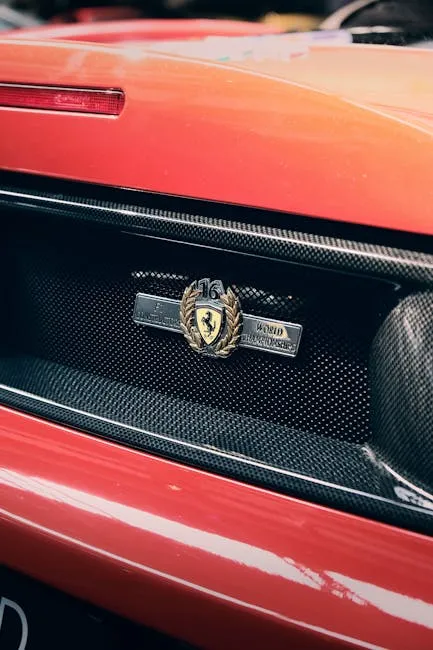
The 2026 Chinese Grand Prix was the moment the new regulatory era of Formula 1 stopped feeling like a theory and started feeling like a championship. Across three days at the Shanghai International Circuit, a teenage rookie rewrote the record books, a seven-time world champion ended a long podium drought in unfamiliar scarlet overalls, Ferrari unveiled two headline-grabbing technical innovations, and the most successful driver-engineer partnership on the grid was audibly straining on team radio. If the season opener hinted at a reshuffled order, Shanghai confirmed it. This is the complete report on the 2026 Chinese Grand Prix, from the Friday practice hot laps to the FIA paddock drama, and everything the teams will take to the next round.
Setting the scene: arriving in Shanghai for the 2026 Chinese Grand Prix
Formula 1 rolled into the Shanghai International Circuit on Friday, 13 March 2026 with the paddock still digesting the “wild” season opener. The 2026 regulations — arguably the most significant technical overhaul in the sport’s history — had recalibrated the pecking order almost overnight. A 50/50 power split between the 1.6-litre V6 internal combustion engine and a 350kW Energy Recovery System replaced the previous hybrid era, the MGU-H was gone, and the cars themselves were now shorter, narrower and noticeably lighter.
On top of the new power unit came Active Aero, a system of movable front and rear wing elements that toggle between a high-downforce ‘Z-mode’ for corners and a low-drag ‘X-mode’ for straights, and the new Manual Override — a driver-triggered electrical boost that has effectively replaced DRS as the primary overtaking tool. Together they turned every lap into a three-dimensional puzzle of aero, energy and tyre management.
The Shanghai International Circuit is almost purpose-built to expose any weakness in that puzzle. The 1.2km back straight into the Turn 14 hairpin is the longest single deployment zone on the calendar, while the famous ‘Snail’ of Turns 1 and 2 demands a stable high-speed platform. For the first time in a decade, the paddock walked in without a clear favourite. Mercedes had been devastating in the opening round; Ferrari was still learning Lewis Hamilton’s feedback loop alongside Charles Leclerc; Red Bull was wrestling with integration issues on the RB22; and the newcomers Audi and Cadillac were using every session as a data-gathering exercise.
Practice and Sprint Qualifying: Leclerc’s power loss, Antonelli’s historic pole, Mercedes pace
Friday practice at the 2026 Chinese Grand Prix was the clearest illustration yet of the new Silver Arrows benchmark. George Russell and rookie Andrea Kimi Antonelli finished at the top of the timing sheets and, in the words of trackside observers, showed “a clean pair of heels” to both McLaren and Ferrari. The W17 looked perfectly matched to the Shanghai layout, carrying huge minimum speed through the Snail and reaching the end of the back straight with energy still in hand — a luxury the rival power units could not match.
Technically the Mercedes advantage in practice came from two places. First, the W17’s transition between X-mode and Z-mode was visibly smoother than anyone else’s, giving Russell and Antonelli a stable platform through direction changes that were unsettling the Ferrari, Red Bull and McLaren cars. Second, Brixworth’s energy recovery profile was avoiding the ‘clipping’ — the point at which electrical deployment runs out before the braking zone — that afflicted rivals on the long Shanghai straight. For a rookie to be matching Russell lap for lap in this environment was already a statement; by qualifying it would become a headline.
Saturday morning’s Sprint Qualifying produced the weekend’s first technical drama. Charles Leclerc had the SF-26 hooked up through the technical middle sector and was genuinely on a front-row lap when, at the midpoint of the back straight, his Ferrari suffered a sharp and unexpected drop in electrical deployment. Telemetry suggested the energy-management software had prematurely derated the Manual Override to protect the battery, and the cost — several tenths of a second — was catastrophic in a field separated by less than half a second. Frederic Vasseur’s engineers were left trying to work out whether the ‘Shanghai power drain’ was a one-off software glitch or a deeper MGU-K harvesting issue. Compounding the problem, the Active Aero elements had to stay exactly in sync with that deployment; any lag turned a power dip into an instant aerodynamic wall.
The bigger Sprint Qualifying story, though, belonged to Mercedes. Antonelli and Russell locked out the front of the Sprint grid, and the young Italian found himself under an FIA investigation before he had even climbed out of the car for allegedly blocking Alpine’s Pierre Gasly during the closing stages of the session. Data from the W17 suggested Antonelli was on a slow cooling lap through the high-speed entry to Turn 14 when Gasly arrived on a flying lap using his Manual Override — a speed delta, in 2026 trim, that can exceed 50km/h before the braking zone. The stewards began reviewing radio transcripts between Antonelli and his race engineer to establish whether he had been warned about the approaching Alpine in time. The regulatory precedent for impeding during a Sprint Qualifying session is a three-place grid drop, and for Mercedes the prospect of losing track position in a short-form Sprint race where only the top eight score was an uncomfortable one.
Main qualifying on Sunday morning turned Antonelli’s weekend into a piece of history. In a session that will be replayed for years, the 19-year-old edged Russell by a fraction to take his maiden pole position and, in doing so, became the youngest pole-sitter in the history of Formula 1. Telemetry showed Antonelli carrying roughly 4km/h more minimum speed than Russell through the Snail and deploying his Manual Override perfectly across the final-sector straight. Russell was quick, matching the rookie through the first two sectors before a small over-rotation at Turn 14 cost him the lap. The Mercedes front-row lockout was the definitive confirmation that the Brackley squad had mastered the 2026 regulation set, and the final piece of the Saturday puzzle.
Sprint race: Hamilton vs Russell and Ferrari chasing the Silver Arrows
The Saturday Sprint at the 2026 Chinese Grand Prix was won by George Russell, extending his unbeaten 2026 Sprint record, but the story was the battle behind. Lewis Hamilton, recovering from the Ferrari disruption of Sprint Qualifying, produced a masterclass in defensive driving in the opening stages, holding the lead he had inherited at the start and fending off his former team-mate through multiple laps of full-intensity Manual Override exchanges.
Hamilton’s Ferrari had found a genuine sweet spot in launch and early-stint deployment. The SF-26 was exceptionally stable under braking and through high-speed direction changes, and for the first third of the 19-lap dash Hamilton used his override budget aggressively to keep Russell’s W17 out of the DRS window on the back straight. Burning the electrical reserves that early left him exposed later on, but it also showed that Ferrari’s energy-harvesting curve, when clean, was close enough to Mercedes’ to race them directly.
A late Safety Car changed the complexion of the Sprint. For Hamilton it was a double-edged sword: it let him manage rising front-left tyre degradation, but it also bunched the field and stripped him of the clear-air running needed to rebuild state-of-charge. On the restart Russell’s Mercedes lit up its tyres faster and swept past into the lead, with Charles Leclerc completing a recovery drive that at one point kept him inside DRS range of Russell for twelve consecutive laps without ever quite being able to pull the trigger into Turn 14.
Team principal Frederic Vasseur was left with a mixed picture: the Scuderia had the raw pace to chase Russell, but its deployment strategy was a touch conservative and its Active Aero transitions fractionally slower than Mercedes’. In 2026 money, that is the difference between a Sprint win and a Sprint podium. Shanghai made the gap look manageable, not comfortable.
Main qualifying and race: Hamilton’s first Ferrari podium, the Leclerc clash and the FIA rulings
Sunday’s main race, held on 15 March 2026, delivered exactly the result the Tifosi had been waiting for since the blockbuster off-season transfer — Lewis Hamilton officially ended his podium drought by standing on the Shanghai rostrum in Ferrari colours. It was Hamilton’s first podium since joining the Scuderia, and after weeks of questions about whether the move to Maranello had been the right one, the Briton answered them with a tactically perfect drive.
The SF-26 was exceptional through the high-speed sweeps of Turns 7 and 8, and Hamilton’s management of the Boost Button was textbook — meticulously saving ERS-K deployment for the exit of the Turn 14 hairpin, where he held off the charging McLaren of Lando Norris and the Red Bull of rookie Isack Hadjar lap after lap. Ferrari’s pit wall, so often criticised in recent years, executed a clean strategy around Shanghai’s punishing front-left degradation and never put Hamilton in a position where he had to compromise his energy budget for tyre life.
The Ferrari picture was not entirely rosy, though. The other half of the scarlet garage had a much harder afternoon. Charles Leclerc and Hamilton were involved in a heated on-track tussle — the flashpoint of which came, inevitably, at the end of the 1.2km back straight into Turn 14. Hamilton closed up on Leclerc using Active Aero and lunged for the inside; Leclerc defended with the sort of aggression that made clear he had no intention of handing over the ‘Prince of Maranello’ status to his new team-mate. The two cars were inches from contact and Hamilton was forced to bail out across the kerbs. Both drivers burned through their ERS stores fighting each other, and Ferrari’s pit wall was left watching a strategic cohesion problem play out in real time. For Vasseur, it was an immediate leadership test: in a season where every Boost Button activation counts, internal combat is a luxury Ferrari cannot afford.
Away from the Ferrari garage, the FIA stewards room had a busy Sunday of its own. The Friday impeding investigation into Antonelli and Gasly rolled on into the race weekend, and in the Red Bull camp Max Verstappen’s “difficult weekend” spilled onto team radio. A terse exchange with long-time race engineer GianPiero Lambiase — Lambiase telling Verstappen “I’m supposed to be on your side” — laid bare just how much the RB22’s Active Aero and Manual Override integration was fighting the reigning champion’s preferred driving style. The FIA rulings around impeding and wheel-to-wheel conduct, plus the scrutiny on how energy deployment interacts with racing rules, are going to shape the rest of the 2026 season, and the 2026 Chinese Grand Prix was the weekend those conversations became unavoidable.
Ferrari tech watch: the ‘Macarena’ rear wing and Halo winglet debut
For all the driver headlines, the 2026 Chinese Grand Prix was also a tech-watch weekend for Ferrari. The Scuderia arrived in Shanghai with not one but two high-profile aerodynamic innovations on the SF-26, and both debuted in Friday practice. The first, and most talked-about, was the so-called “Macarena” rotating rear wing.
The “Macarena” nickname came from the wing’s unique, rhythmic articulation. Under the 2026 Active Aero regulations, the front and rear wings must move together to switch between Z-mode and X-mode; Ferrari’s design featured a sophisticated three-piece upper element in which the outboard sections of the flap adjusted milliseconds before the central section, creating the staggered, ‘dance-like’ motion. The point of the stagger was to keep the airflow attached across the endplates for longer during the transition, reducing the sudden rear-end instability that had been biting rivals in the opening round. Because the wing also shed drag more effectively in X-mode, it was directly optimising the Lift-to-Drag ratio during Manual Override deployment — exactly where Leclerc’s Sprint Qualifying power drain had hurt most. Ferrari produced enough Macarena-spec wings for both Leclerc and Hamilton to run the update throughout the weekend, ensuring parity between the two championship contenders.
The second Ferrari innovation was subtler but arguably just as significant — a new Halo winglet, meticulously crafted and mounted on the front pillar of the safety structure. In isolation, a winglet on the Halo looks like a detail part; in the context of the 2026 regulations, with their tighter cost cap and restricted wind tunnel hours, it was a clear signal that Ferrari’s CFD team had found a specific aerodynamic loss around the cockpit that was worth spending reserved development budget to fix.
Functionally, the Halo winglet acted as a vortex generator, cleaning up the wake generated at the front of the car before it reached the airbox, the sidepod inlets and the rear wing assembly. By stabilising that airflow, it gave the Active Aero elements a more predictable input during X-to-Z transitions and helped keep the 1.6-litre turbo and the 350kW battery store inside their optimal thermal windows — critical when following another car on Shanghai’s back straight in dirty air. Both Hamilton and Leclerc ran the updated Halo structure for the full Grand Prix weekend.
Taken together, the Macarena rear wing and the Halo winglet showed a Scuderia running an aggressive, targeted development curve under Vasseur — one that, if it works as wind tunnel and simulation suggest, could force rivals such as Audi and Cadillac into mid-season rear-assembly redesigns to keep up.
Mercedes resurgence: Antonelli’s pole and win and the Alpine stake rumour
If the 2026 Chinese Grand Prix had a single defining narrative, it was the full-scale Mercedes resurgence. Andrea Kimi Antonelli converted his historic maiden pole position into a historic maiden victory, in the process becoming the headline act of the 2026 season to date. Under the new 50/50 power-split regulations and on one of the most technically demanding circuits on the calendar, the 19-year-old Italian drove like a veteran — harvesting energy under braking more efficiently than his team-mate George Russell, entering the back straight with a near-full state-of-charge almost every lap, and dispatching Red Bull’s Max Verstappen in the closing stages with surgical Manual Override timing.
Technically the W17 was the class of the field all weekend. Its Active Aero switching points had been optimised around Antonelli’s feedback, giving him a top-speed advantage on the straight without giving up stability in the technical middle sector. Data from the race showed Mercedes’ deployment map kept electrical output high without hitting the clipping point at the end of the straight — exactly where rivals, Ferrari included, were still losing time. The result made Mercedes the only team to finish both cars in the points in every session of the 2026 season so far, and it pushed Antonelli from exciting rookie to credible title contender in the space of one weekend.
Off track, the Shanghai paddock absorbed an arguably even bigger Mercedes story. During an official FIA press conference on Friday, Alpine executive advisor Flavio Briatore confirmed that the Mercedes-Benz Group was in the process of acquiring a significant equity stake in the Enstone-based Alpine outfit. Critically, Briatore made clear that the investment was coming from the Mercedes corporate entity itself, not from Toto Wolff’s personal portfolio, upgrading what had been a rumour-mill item into a formal strategic move.
The logic is straightforward. Alpine is already transitioning to become a Mercedes customer team, and a stake guarantees data flow from four Mercedes-powered cars rather than two, doubles the real-world feedback loop for power unit development under the 2026 regulations, and secures deeper integration between Brixworth and Enstone on Active Aero and Manual Override calibration. In a season where the Audi and Cadillac entries are reshaping the political map of the grid, a Mercedes-Alpine axis also fortifies Wolff’s hand inside the FIA Commission. The Silver Arrows, having reclaimed the on-track benchmark, were quietly extending their corporate footprint to match.
Antonelli’s FIA probe and Hamilton’s podium drought ending
The two bookends of Mercedes’ and Ferrari’s weekends — the Antonelli FIA probe and the Hamilton podium drought ending — deserve to be looked at together, because they capture the 2026 Chinese Grand Prix in microcosm.
For Antonelli, the Sprint Qualifying impeding investigation was his first real test of mental fortitude in a Mercedes seat. The 2026 cars are harder to drive at the limit than their predecessors — narrower, lower on downforce, and prone to snap oversteer under heavy acceleration — and the Shanghai International Circuit is notoriously unforgiving for rookies given its front-limited layout and high tyre energy loads. Being summoned to the stewards early in a weekend can derail a young driver’s focus for the rest of it. Instead, Antonelli responded with the drive of his short career, taking pole and then converting it into victory, fully vindicating Wolff’s decision to promote him straight into the Mercedes seat vacated by Hamilton.
For Hamilton, Shanghai was something different — the end of a podium drought and, more importantly, a proof of concept. When the seven-time world champion switched to Ferrari, the question had been whether the move was a marketing masterstroke or a genuine competitive force. The answer, on 15 March 2026, was unambiguous. The SF-26 had the efficiency, the Active Aero package and the Manual Override strategy to keep him in front of Norris and Hadjar; Hamilton had the racecraft to use every one of them. Post-race, his tone was not that of a driver relieved to be on the rostrum again, but of one already hunting a 104th career victory. The narrative around Ferrari’s 2026 campaign shifted in that single afternoon from “can Hamilton win with Ferrari?” to “when will Hamilton win with Ferrari?”
Between them, the rookie’s triumph and the veteran’s breakthrough painted the real picture of the 2026 Chinese Grand Prix: the sport’s technical reset is already rewarding the teams that adapt fastest and the drivers who manage the new tools with the most precision, regardless of experience.
Key takeaways from the 2026 Chinese Grand Prix
- Antonelli rewrites history: 19-year-old Andrea Kimi Antonelli became the youngest pole-sitter in F1 history and converted it into his maiden Grand Prix victory.
- Hamilton ends his Ferrari podium drought: Lewis Hamilton secured his first podium for Ferrari on 15 March 2026, validating the blockbuster move from Mercedes.
- Mercedes is the 2026 benchmark: The W17 dominated practice and qualifying, and is the only car to have finished both entries in the points in every 2026 session so far.
- Ferrari’s tech push: The “Macarena” rotating rear wing and the new Halo winglet made their debut at Shanghai, both targeted at 2026 Active Aero transitions and thermal management.
- Leclerc’s Sprint Qualifying power drain: Charles Leclerc lost a front-row Sprint start to an unexpected electrical deployment drop on the back straight.
- Team-mate friction at Ferrari: Leclerc and Hamilton clashed into Turn 14 in the main race, burning ERS stores fighting each other — an immediate test for Frederic Vasseur.
- FIA scrutiny: Antonelli and Gasly were investigated for impeding in Sprint Qualifying; Verstappen and GianPiero Lambiase’s radio exchange (“I’m supposed to be on your side”) underlined Red Bull’s integration issues.
- Mercedes-Alpine stake: Flavio Briatore confirmed Mercedes-Benz Group is acquiring an equity stake in Alpine, expanding the Brackley-Brixworth data and political footprint.
Frequently asked questions
Who won the 2026 Chinese Grand Prix?
Andrea Kimi Antonelli won the 2026 Chinese Grand Prix for Mercedes on 15 March 2026, converting his historic maiden pole position into a maiden Grand Prix victory at the Shanghai International Circuit. He dispatched Max Verstappen’s Red Bull in the closing stages with precise Manual Override deployment.
When did Lewis Hamilton get his first podium for Ferrari?
Lewis Hamilton secured his first podium for Ferrari on Sunday, 15 March 2026, at the 2026 Chinese Grand Prix. It ended his post-Mercedes podium drought and was the first tangible on-track proof that the blockbuster Ferrari-Hamilton partnership could deliver championship-level results.
What was the Ferrari “Macarena” rear wing?
The “Macarena” was a Ferrari Active Aero rear wing that debuted in Friday practice at Shanghai. Its three-piece upper element moved in a staggered, rhythmic sequence, with the outboard sections adjusting milliseconds before the central section to keep airflow attached during X-mode to Z-mode transitions, improving stability and Manual Override efficiency on the 1.2km back straight.
Why were Antonelli and Verstappen under FIA scrutiny in Shanghai?
Andrea Kimi Antonelli was placed under FIA investigation for allegedly blocking Alpine’s Pierre Gasly during the closing stages of Sprint Qualifying, with stewards reviewing radio transcripts to determine whether he had been warned in time. Max Verstappen’s weekend tension spilled onto team radio with race engineer GianPiero Lambiase, who was forced to remind the Dutchman “I’m supposed to be on your side” during a terse exchange over the RB22’s Active Aero and Manual Override integration.
Conclusion: what the 2026 Chinese Grand Prix tells us about the season
The 2026 Chinese Grand Prix was far more than a single race result. In the space of three days at the Shanghai International Circuit, Formula 1’s new technical era produced its first genuine protagonist in Andrea Kimi Antonelli, confirmed Mercedes as the benchmark of the 2026 regulations, and delivered Lewis Hamilton’s long-awaited first Ferrari podium. Ferrari’s Macarena rear wing and Halo winglet showed Maranello is willing to spend cost-cap budget aggressively to close the gap, while the Leclerc-Hamilton flashpoint at Turn 14 and Max Verstappen’s radio friction with GianPiero Lambiase underlined that the 2026 car is a tool that rewards harmony and punishes internal combat. Layer on the Mercedes-Alpine stake story and the ongoing FIA scrutiny of impeding and energy management, and it is clear the 2026 Chinese Grand Prix will be referenced for the rest of the year. The Silver Arrows set the benchmark, Ferrari found its first proof of concept, and the chasing pack left Shanghai with a long list of homework for the next round.
In this article
Written with AI assistance. How this site works