Zak Brown Slams Mercedes-Alpine Stake Amid F1 Multi-Ownership Row
Zak Brown has renewed his criticism of F1 multi-ownership as Mercedes explores a potential minority stake in Alpine, reigniting a fierce governance debate in 2026.
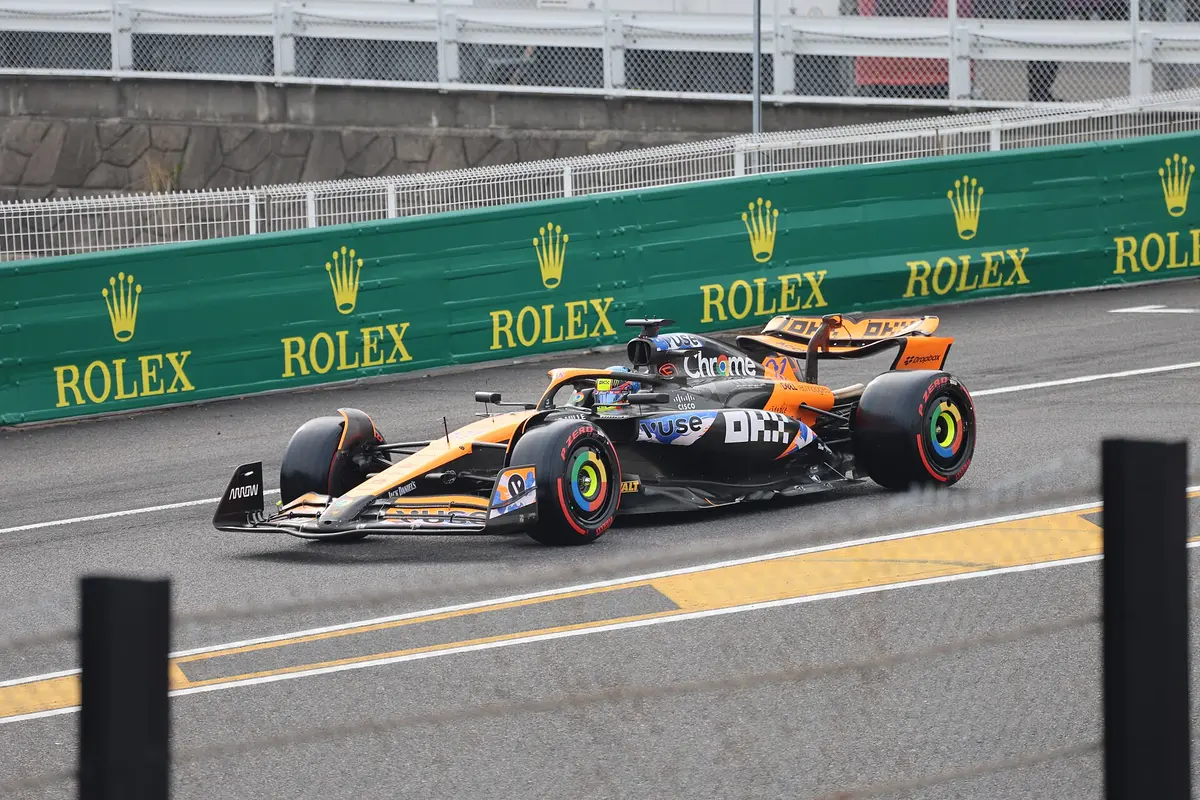
Photo: Cineyas / CC-BY-SA-4.0
McLaren chief executive Zak Brown has once again placed himself at the centre of one of Formula 1's most persistent and divisive governance debates, renewing his long-standing criticism of multi-ownership structures and close inter-team ties as reports emerge of Mercedes exploring a potential minority stake in Alpine. The development, first flagged by SkySports F1, has reignited a conversation that touches on competitive fairness, regulatory integrity, and the long-term commercial architecture of the sport — themes that resonate deeply with fans and insiders alike as F1 navigates a transformative 2026 season under sweeping new technical regulations.
Brown's position is well established. He has consistently argued that allowing one team — or its parent company — to hold financial or operational influence over a rival is fundamentally incompatible with the premise of fair sporting competition. His latest intervention signals that, far from softening his stance, the McLaren boss views any Mercedes-Alpine arrangement with the same scepticism he has directed at similar structures in the past. In a paddock already crackling with tension over performance hierarchies and the new active aerodynamics era, this controversy adds another layer of complexity to an already charged atmosphere.
What Is the Mercedes-Alpine Minority Stake Proposal?
According to the source reporting from SkySports F1, Mercedes has shown interest in potentially acquiring a minority stake in Alpine. The precise terms of any proposed deal, the ownership percentage under discussion, and whether any formal bid has been tabled remain unconfirmed in the public domain. Nevertheless, the mere suggestion of such an arrangement has been sufficient to prompt a sharp response from Brown, whose McLaren team competes directly with both Mercedes and Alpine on the 2026 grid.
Alpine, currently fielding Pierre Gasly and Franco Colapinto in 2026, is the rebranded successor of the Renault works team and has experienced significant turbulence in recent seasons at both a sporting and corporate level. Mercedes, meanwhile, operates its own works team with George Russell and Andrea Kimi Antonelli and supplies power units to customer teams. A minority stake in Alpine would represent a new dimension to Mercedes' already considerable influence across the F1 ecosystem — and it is precisely that broadening of influence that concerns Brown and, by extension, a segment of the broader paddock.
Zak Brown's Core Argument: Why Multi-Ownership Threatens Competitive Integrity
Brown's criticism of multi-ownership is not new, but it is sharpened by context. His argument rests on a straightforward premise: if a single entity holds financial interests in more than one competing team, the incentive structures that underpin genuine sporting competition are inevitably distorted. Decisions that should be driven purely by on-track performance — strategy calls, resource allocation, driver selection, technical development priorities — risk being influenced, consciously or otherwise, by broader commercial considerations that span multiple teams.
The concern is not necessarily that bad actors will deliberately manipulate race outcomes, but rather that structural conflicts of interest create an environment where the perception of fairness is compromised. In a sport where millions of fans invest emotionally and financially in the belief that every team is competing to win on merit, even the shadow of cross-ownership influence is corrosive to trust. Brown has articulated this point repeatedly, and his renewed intervention suggests he believes Formula 1's governing bodies have yet to draw a sufficiently firm line.
There is also a competitive dimension that is impossible to ignore. McLaren is currently one of the sport's front-running operations, a position achieved through significant investment and internal development. The prospect of a major power unit manufacturer — one that also runs its own works team — gaining financial leverage over a third competitor introduces asymmetries that Brown clearly regards as unacceptable. If Mercedes were to hold a stake in Alpine, questions would inevitably arise about the terms of Alpine's power unit supply, data sharing arrangements, and whether the two entities' strategic interests were truly independent.
The Regulatory Landscape: What Rules Currently Govern Ownership in F1?
Formula 1's Concorde Agreement and the FIA's Sporting Regulations do contain provisions designed to prevent conflicts of interest between competing constructors. However, critics — Brown among them — have long argued that these provisions contain ambiguities and that enforcement has been inconsistent. The regulations typically prohibit an entity from having a controlling interest in more than one competing team, but minority stakes occupy a greyer area that has historically been subject to interpretation rather than outright prohibition.
This regulatory grey zone is precisely what makes the Mercedes-Alpine situation so contentious. A minority stake, by definition, does not confer control — but it does confer influence, access to financial information, and potentially board representation. In highly competitive industries, even minority shareholders can exert meaningful influence over strategic direction, particularly when they are also a key commercial partner, such as a power unit supplier. The interaction between ownership stakes and supplier relationships creates a web of potential conflicts that existing regulations may not be fully equipped to address.
The 2026 season has already seen significant structural change in F1's competitive landscape. The introduction of radical new technical regulations — including active aerodynamics and a revised power unit formula — has reshuffled the performance hierarchy across the grid. New entrants Cadillac have made their F1 debut, Audi are competing under their own name for the first time following the rebrand from Sauber, and several teams are adapting to new driver line-ups. Against this backdrop of upheaval, questions about governance and ownership feel particularly acute.
Wider Paddock Implications: Who Else Has Skin in This Game?
Brown's public stance invites scrutiny of his own motivations — McLaren, after all, is a direct competitor to both Mercedes and Alpine, and any arrangement that strengthens either rival's resources is naturally unwelcome. However, dismissing his argument as purely self-interested would be to ignore a concern that is shared, if often expressed more quietly, by others across the paddock. Teams that lack the financial heft of a manufacturer backer are particularly sensitive to any development that effectively concentrates resources or influence in fewer hands.
The F1 multi-ownership debate has historical precedent. The sport has seen various forms of cross-team relationships over the decades, from customer car controversies to technical partnership arrangements that blurred the lines between competitor and collaborator. Each episode has generated fierce debate, and the governance responses — whether from the FIA, the Formula 1 group, or through the Concorde Agreement — have rarely satisfied all parties. Brown's intervention is, in this sense, part of a recurring cycle, but the specific context of the 2026 regulatory reset gives it fresh urgency.
For Alpine themselves, the calculus is different. The team has faced financial pressures and performance challenges, and access to capital from a party as well-resourced as Mercedes — even in a minority capacity — could represent a meaningful stabilising force. The question is whether any such benefit to Alpine's short-term stability would come at an acceptable cost to the sport's broader competitive framework.
Technical and Strategic Implications for the 2026 Grid
From a purely technical standpoint, any formal financial relationship between Mercedes and Alpine would raise immediate questions about the scope of their existing power unit supply arrangement and whether it would expand or evolve. In 2026, power unit development is at a critical juncture, with all manufacturers adapting to the new regulations that place greater emphasis on electrical deployment. The terms under which a customer team receives technical support from a manufacturer-shareholder could, in theory, differ meaningfully from a standard arm's-length supply agreement — and those differences, however subtle, could have measurable on-track consequences.
Strategic information flow is another area of concern. Teams accumulate vast quantities of commercially sensitive data — from aerodynamic testing results to tyre performance models to driver feedback loops. The governance structures that keep this data siloed between competitors are predicated on the assumption that each team is a fully independent entity. Minority ownership arrangements complicate those assumptions and, in the absence of robust ring-fencing mechanisms, create at least a theoretical pathway for sensitive information to cross competitive boundaries.
Key Takeaways
- McLaren CEO Zak Brown has publicly criticised the reported interest of Mercedes in acquiring a minority stake in Alpine, renewing his long-standing opposition to multi-ownership in F1.
- The core concern is competitive integrity: financial ties between competing teams risk distorting the incentive structures that underpin fair sporting competition.
- Existing F1 regulations address controlling interests but leave minority stakes in a regulatory grey zone that has historically resisted clear resolution.
- Any Mercedes-Alpine arrangement would raise specific questions about power unit supply terms, data sharing, and the independence of strategic decision-making at both teams.
- The debate is set against the backdrop of a significant 2026 regulatory reset, making governance questions about competitive fairness especially sensitive across the paddock.
- Brown's intervention reflects a broader, if often privately expressed, concern among teams about the concentration of influence in the hands of large manufacturer entities.
Frequently Asked Questions
What is Zak Brown's objection to the Mercedes-Alpine minority stake?
Brown's objection centres on competitive integrity. He has consistently argued that any financial relationship between competing teams creates structural conflicts of interest that undermine fair sporting competition, regardless of whether the stake is controlling or minority in nature. His concern is that shared financial interests distort the decision-making of entities that are supposed to be fully independent competitors.
What does a minority stake in Alpine mean for the team's independence?
A minority stake does not confer legal control over Alpine's operations, but it does create a financial relationship that may bring with it board representation, access to financial information, and heightened commercial interdependency with the stakeholding party. Critics argue that when the minority stakeholder is also a competing constructor and power unit supplier, the potential for influence — even if indirect — is significant and difficult to ring-fence through governance mechanisms alone.
Are cross-team ownership arrangements currently banned in Formula 1?
F1 regulations prohibit entities from holding a controlling interest in more than one competing team, but minority stakes occupy a less clearly defined regulatory space. The precise application of existing rules to a situation such as the reported Mercedes-Alpine interest would likely require interpretation by the FIA and the commercial rights holder, and it is the ambiguity of this grey zone that critics like Brown argue needs to be addressed with greater clarity.
How does this controversy fit into the broader 2026 F1 season context?
The 2026 season is already one of the most structurally significant in recent F1 history, with new technical regulations, new entrants in Cadillac and Audi, and reshuffled driver line-ups across the grid. Governance debates about ownership and competitive fairness are therefore particularly sensitive, as teams and manufacturers are simultaneously navigating unprecedented technical change while also jostling for commercial and political positioning within the sport's evolving ecosystem.
Conclusion
Zak Brown's renewed criticism of multi-ownership in Formula 1, prompted by the reported Mercedes interest in a minority stake in Alpine, is more than a routine paddock dispute. It speaks to fundamental questions about what kind of sport Formula 1 wants to be — and whether its governance structures are sophisticated enough to keep pace with the increasingly complex commercial arrangements that major manufacturers are inclined to pursue. As the 2026 season unfolds under new regulations and with a reconfigured grid, the pressure on the FIA and the Formula 1 group to provide definitive clarity on cross-ownership rules has rarely been greater.
Brown's voice carries weight precisely because McLaren's own trajectory — from near-collapse to consistent front-runner — is a testament to what independent, single-team focus can achieve. His argument is not simply protectionist; it is a coherent defence of the competitive model that makes Formula 1 credible as a sporting contest. Whether the sport's governing bodies agree, and whether they are willing to translate that agreement into enforceable regulation, remains the central question this controversy demands they answer.
In this article
Written with AI assistance. How this site works