Verstappen Relishes Nurburgring Green Hell Challenge 2026
Max Verstappen relishes the Nurburgring Green Hell challenge in 2026, embracing motorsport's most demanding circuit as the four-time champion continues his Red Bull title defence.
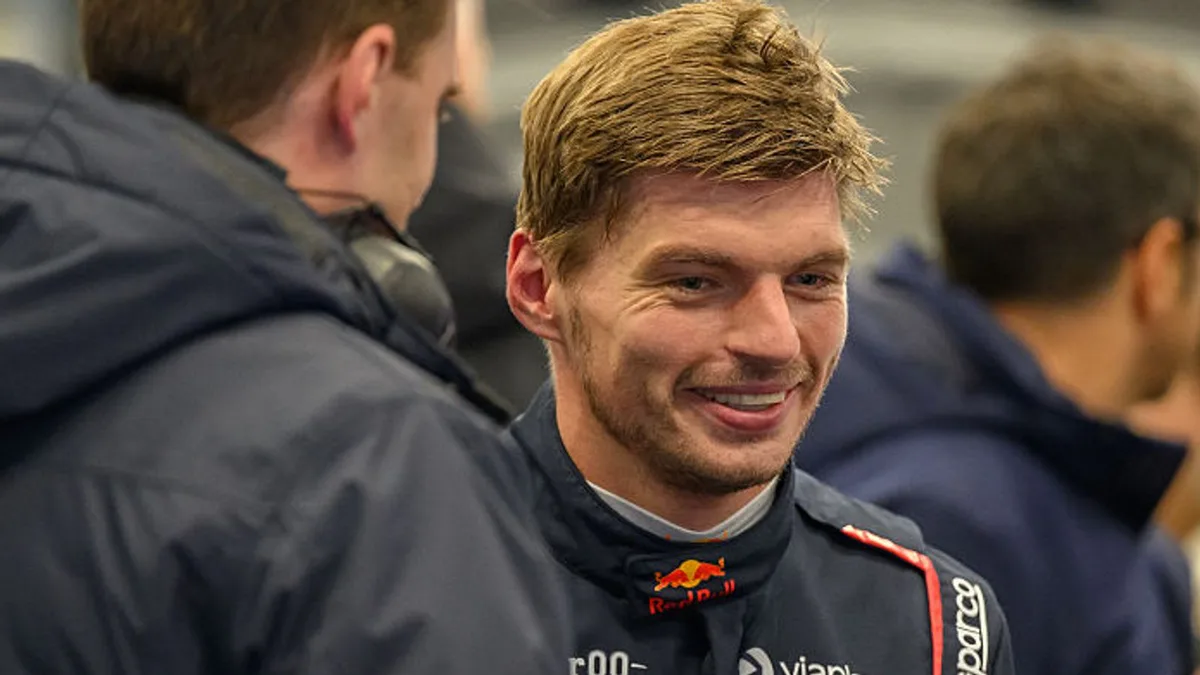
Photo: Verstappen.com Racing
Max Verstappen Embraces the Nurburgring Green Hell in 2026
Max Verstappen, the four-time Formula 1 World Champion and Red Bull's standard-bearer heading into the 2026 season, is once again preparing to take on the legendary Nurburgring Nordschleife — the circuit immortalised as the 'Green Hell'. According to GPfans, Verstappen not only accepts the terrifying challenge of one of motorsport's most unforgiving venues but actively relishes it. For a driver of his calibre, the Nurburgring transcends a standard race weekend: it is a primal test of car control, bravery, and technical mastery across 20.83 kilometres of the most demanding tarmac on Earth.
Why the Nurburgring Green Hell Is Unlike Any Other Circuit
The Nurburgring Nordschleife winds for 20.83 kilometres through the Eifel mountains of Germany, featuring more than 300 metres of elevation change from its lowest to highest points and a weather system so volatile it can shift from sunshine to fog to rain within a single lap. It earned the 'Green Hell' nickname from Sir Jackie Stewart after his victory in the 1968 German Grand Prix — a race run in a rainstorm and thick fog — and the circuit has retained that fearsome reputation across six decades of motorsport history.
For any professional racing driver, the Nordschleife represents the ultimate arena. The sheer variety of corner types, the notorious bumps and crests where cars can become momentarily airborne, and the ever-present threat of rapidly changing conditions mean that milliseconds of misjudgement can have severe consequences. It is a place that exposes weakness in both man and machine with ruthless efficiency.
That Verstappen relishes this challenge speaks volumes about his character and his raw driving talent. Throughout his career at Red Bull, Verstappen has consistently demonstrated an appetite for circuits that demand the very highest levels of commitment and precision. His car control in treacherous conditions, his ability to process rapidly changing grip levels mid-corner, and his fearless approach to high-speed sections make him particularly well-suited to everything the Nordschleife demands.
Verstappen in 2026: Still the Benchmark Under New Regulations
Entering the 2026 Formula 1 season, Verstappen continues to be the reference point every team is chasing. Red Bull, now running alongside rookie Isack Hadjar — promoted from Racing Bulls for this campaign — have had to adapt to the sweeping regulatory changes that define the 2026 landscape. The introduction of active aerodynamics systems, capable of adjusting downforce in real time, alongside the revised power unit formula, has reshuffled the competitive order across the entire paddock.
McLaren's Lando Norris and Oscar Piastri, Ferrari's Charles Leclerc and Lewis Hamilton (now in his second year at Maranello), and Mercedes' George Russell are all pressing hard for supremacy. Yet even amid this intensified competition, Verstappen's willingness to attack circuits like the Nurburgring with full commitment underlines why he remains one of the sport's defining figures. Where others perceive danger, Verstappen identifies opportunity — a mindset that underpinned his four World Championship titles and continues to shape every lap he turns in 2026.
The Technical Challenge of Racing the Green Hell in 2026
From an engineering perspective, preparing a 2026-specification Formula 1 car for the Nurburgring presents teams with a uniquely complex puzzle. The circuit's extraordinary length and the sheer variety of its corner profiles demand an aerodynamic setup balanced enough to handle both high-speed flowing sections and tighter, more technical passages — all within the same lap.
Suspension tuning is equally critical. The Nordschleife's famous bumps and crests load and unload tyres in ways rarely encountered at purpose-built modern circuits, placing extreme demands on mechanical components and requiring drivers to manage traction and stability through constantly shifting feedback from the car beneath them.
Under the 2026 regulations, the active aero systems give engineers new tools — but also new variables. Getting the interaction between the active aerodynamics and the Nurburgring's rapidly changing demands calibrated correctly is precisely the kind of challenge that separates elite engineering groups from the rest. For Verstappen and Red Bull, this weekend at the Nurburgring is as much an intellectual exercise as a physical one, with every data point from practice carrying heightened strategic significance given how little margin for error the Green Hell allows.
Why Verstappen's Attitude Towards the Nurburgring Matters
In the modern era of Formula 1, where driver feedback and psychological resilience are increasingly recognised as performance differentiators, Verstappen's openly enthusiastic approach to the Nurburgring is more than a personality footnote. It signals a driver operating at the peak of his confidence, one who views the sport's most demanding environments not as obstacles but as stages on which to demonstrate what separates him from the field.
This attitude also provides vital context for Red Bull's technical direction in 2026. Knowing that their lead driver actively embraces the Nurburgring's demands allows engineers to push setup philosophy in directions that reward commitment and attack, rather than softening the car's character to manage a driver's apprehension. That alignment between driver mentality and engineering ambition has historically been one of Red Bull's most potent competitive weapons.
Key Takeaways
- Max Verstappen relishes the Nurburgring Nordschleife challenge, viewing it as an opportunity rather than a threat.
- The Nordschleife is 20.83 km long with over 300 metres of elevation change, and earned the 'Green Hell' nickname from Sir Jackie Stewart following his 1968 German Grand Prix victory in rain and fog.
- Verstappen's four World Championship titles have been built on exactly the kind of fearless, high-commitment driving style the Nurburgring rewards.
- Red Bull's 2026 line-up pairs Verstappen with promoted rookie Isack Hadjar, with the team adapting to new active aero and power unit regulations.
- The 2026 regulatory overhaul has intensified competition across McLaren, Ferrari, Mercedes, and Red Bull, making every circuit performance critical.
- Verstappen's attitude towards the Green Hell gives Red Bull's engineers freedom to pursue an aggressive, attack-oriented car setup philosophy.
Frequently Asked Questions
Why does Max Verstappen enjoy racing at the Nurburgring?
Verstappen has consistently demonstrated a preference for circuits that demand high levels of commitment, car control, and precision. The Nurburgring Nordschleife — with its 20.83 km length, dramatic elevation changes, and unpredictable weather — provides exactly those conditions. Rather than treating the Green Hell as a threat, Verstappen relishes it as an arena where his strengths as a driver are most acutely rewarded.
Where does the Nurburgring's 'Green Hell' nickname come from?
The 'Green Hell' nickname was coined by Formula 1 legend Sir Jackie Stewart after he won the 1968 German Grand Prix at the Nurburgring in a rainstorm and thick fog. The combination of the circuit's terrifying length, volatile weather, dense surrounding forest, and extreme demands on drivers made the name immediately iconic, and it has defined the track's identity ever since.
How do the 2026 F1 regulations affect performance at the Nurburgring?
The 2026 regulations introduce active aerodynamics systems that can adjust downforce levels in real time, offering engineers new setup flexibility at a circuit as varied as the Nordschleife. However, these systems also introduce new variables — calibrating the active aero response to the Nurburgring's unique mix of high-speed sections, technical passages, and unpredictable conditions is one of the defining engineering challenges of the current season.
Conclusion
Max Verstappen's relish for the Nurburgring Green Hell is a defining characteristic of a champion who has built his legacy on embracing the sport's hardest tests. As the 2026 Formula 1 season unfolds under a new regulatory era, the four-time World Champion's attitude towards one of motorsport's most legendary circuits offers a compelling window into the mindset that keeps him at the apex of the sport. When the Green Hell calls, Verstappen answers — and that willingness to attack where others hesitate remains one of his most powerful competitive advantages.
In this article
Written with AI assistance. How this site works