Sir Frank Williams: F1 Legend Born April 16, 1942
Explore the life of Sir Frank Williams, born April 16, 1942, and his journey from a struggling privateer to the titan of Formula 1 in the 1980s and 1990s.
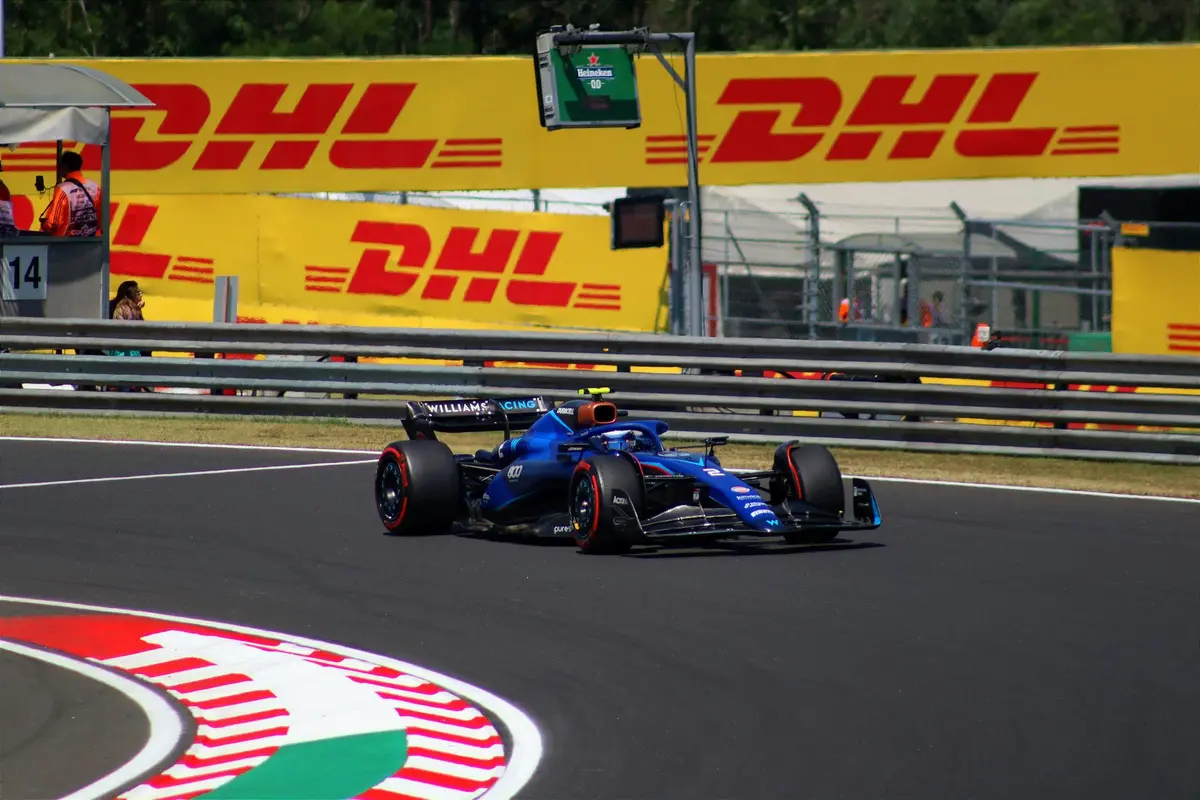
On This Day: In 1942, the legendary Sir Frank Williams was born in South Shields, England. His relentless ambition transformed Williams Grand Prix Engineering into a dominant force, securing nine Constructors' Championships and seven Drivers' Titles between 1980 and 1997 with iconic machinery like the Williams FW14B and the Renault-powered Williams FW15C.
The Humble Origins of a 'Garagista'
Long before the carbon fiber and active suspension of the 1990s, Sir Frank Williams was a man driven by pure mechanical passion. Starting as a racing driver and later a grocery salesman to fund his dreams, Frank entered the paddock as a privateer. His early years in the 1960s and 1970s were defined by grit and financial peril. However, everything changed in 1977 when he founded Williams Grand Prix Engineering with a brilliant young engineer named Patrick Head.
The Rise to World Dominance
The breakthrough came in the ground-effect era. In 1979, the Williams FW07 proved to be a revelation, and by 1980, Alan Jones secured the team's first World Championship. This heralded a golden age of British engineering. Throughout the 1980s, Sir Frank Williams navigated the brutal transition into the Turbo era, partnering with Honda to produce the fire-breathing Williams FW11 and FW11B. These cars, driven by the likes of Nelson Piquet and Nigel Mansell, redefined what was possible with forced induction and raw horsepower.
The High-Tech Revolution of the 1990s
While Sir Frank Williams suffered a life-altering road accident in 1986, his resolve never wavered. Under his leadership, the team pioneered the most technologically advanced era in the sport's history. The early 1990s saw the development of the 'Computer Car'—the Williams FW14B. Featuring active suspension, traction control, and a screaming Renault V10 engine, Nigel Mansell used it to crush the competition in 1992. This was followed by Alain Prost’s clinical 1993 title in the Williams FW15C, a car often cited as the most complex racing machine ever to hit the tarmac.
A Legacy Written in Silver and Blue
By the time Jacques Villeneuve secured the 1997 World Championship in the Williams FW19, the team had firmly established itself as the benchmark for excellence. Sir Frank Williams was the quintessential team principal of the mechanical era—a man who valued engineering prowess and driver bravery above all else. His legacy remains etched in the screams of V10 engines and the iconic liveries of the 1980s and 1990s, a testament to what a single-minded vision can achieve in the world of Grand Prix racing.
#F1 #F1History #BringBackV10s #OTDIn this article
Written with AI assistance. How this site works