McLaren Sign 11-Year-Old Harry Williams: Youngest Ever
McLaren have signed 11-year-old Harry Williams as the youngest driver in their academy's history — two years younger than Lewis Hamilton was when he joined in 1998.
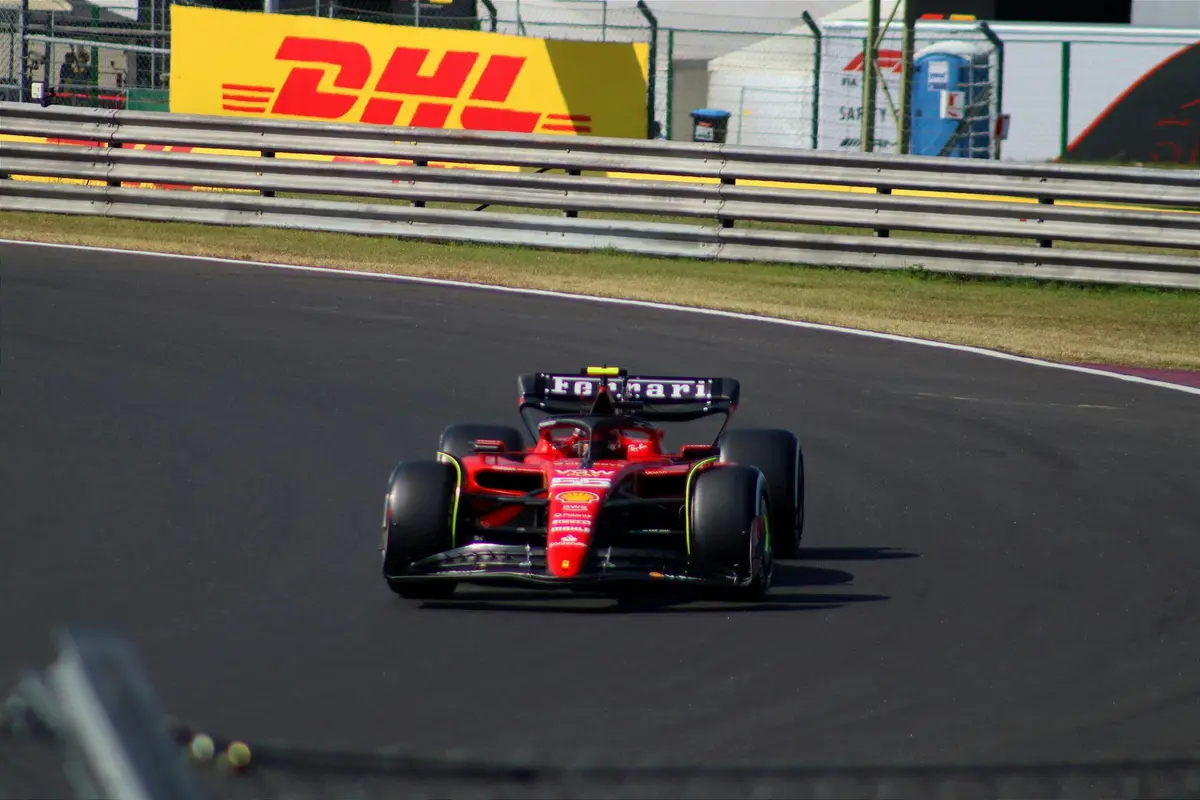
McLaren have made history in their junior development programme by signing 11-year-old Harry Williams, making him the McLaren youngest ever signing in the team's storied academy history. The milestone is particularly striking when placed alongside one of Formula 1's most celebrated origin stories: Williams is a full two years younger than Lewis Hamilton was when he joined the McLaren and Mercedes-Benz Young Driver Support Programme in 1998 at the age of 13. In the fiercely competitive world of 2026 Formula 1, where teams are investing earlier and earlier in talent identification amid sweeping new technical regulations, this signing signals just how dramatically the driver development pipeline has evolved over the past three decades.
The news has sent ripples through the paddock and the wider motorsport community, prompting serious questions about the ethics of signing children so young, the structure and responsibilities of modern junior academies, and what it truly means — practically and philosophically — for a pre-teen to be formally aligned with a Formula 1 constructor. To understand the full significance of this moment, it is necessary to examine the history of McLaren's talent programme, the generational benchmark set by Lewis Hamilton, and the broader industry-wide trend of ever-earlier driver recruitment that has been accelerating through the 2020s.
McLaren's Youngest Ever Signing: Who Is Harry Williams?
Beyond the headline age, the specific details of Harry Williams's background, nationality, and karting record are not yet widely publicised — which is itself typical of signings at this level. Teams are invariably selective about the information they release around very young prospects, both to protect the child from undue pressure and to manage external expectations during what is an inherently fragile stage of development. What McLaren have confirmed, and what the BBC has reported, is the defining fact: at 11 years old, Harry Williams is now the youngest driver ever to enter the McLaren young driver programme. That statement of intent from the Woking-based outfit is significant in and of itself.
McLaren's junior academy has a well-documented track record of identifying and nurturing elite talent. The programme's most celebrated alumnus is, of course, Lewis Hamilton, whose signing in 1998 was itself considered remarkable for involving a 13-year-old. Hamilton went on to win seven World Championships across spells with McLaren and Mercedes, cementing his status as arguably the greatest driver in the history of the sport. Now in his second year at Ferrari in 2026, Hamilton's legacy as the gold standard of academy product development continues to define how the industry measures junior programme success. The fact that McLaren have now committed to a driver two full years younger than Hamilton was at that watershed moment underlines how profoundly the competitive dynamics of talent-scouting have shifted.
Junior karting circuits across Europe — particularly in the United Kingdom, Italy, and Spain — routinely scout children as young as seven or eight in the entry-level cadet kart classes. By the time a driver reaches 11, those in the upper tier of talent identification will typically have amassed several years of competitive experience, national titles, and in many cases international podiums. McLaren's decision to formalise their relationship with Williams at this stage strongly suggests he has demonstrated an exceptional and already distinguishable level of ability on the karting circuit.
The Lewis Hamilton Benchmark: 1998 and Its Lasting Legacy
The comparison to Lewis Hamilton is not incidental — it is the precise and entirely appropriate lens through which this signing will be viewed, given the historical weight it carries. In 1998, McLaren boss Ron Dennis signed a 13-year-old karting champion named Lewis Hamilton to the team's Young Driver Support Programme. According to contemporaneous reports and Dennis's own well-documented account of the moment, he was persuaded of Hamilton's exceptional potential after the youngster approached him at an awards dinner, notebook in hand, and asked for his autograph — before telling him he intended to race in Formula 1 one day. Dennis was sufficiently impressed to follow through, and the rest is motorsport history.
Hamilton's formal signing in 1998 at the age of 13 was, at the time, considered extraordinarily young for a junior Formula 1 programme. The McLaren and Mercedes-Benz Young Driver Support Programme provided financial backing, mentorship, and a structured pathway through the junior single-seater categories. Hamilton progressed through Formula Renault, Formula Three, and GP2, before making his Formula 1 debut with McLaren in 2007 — winning the championship in his second season in 2008. That nine-year journey from 13-year-old karting prodigy to World Champion became the aspirational blueprint for every subsequent junior programme in the paddock.
The signing of Harry Williams at 11 years old means that McLaren are now committing to a driver at an even earlier developmental stage — one at which the physiological, psychological, and technical maturation required for professional motorsport is, by any measure, still very much in progress. That is not a criticism; it is a reflection of how the talent identification game has escalated across the sport. Red Bull's famous junior programme, Ferrari's Driver Academy, and Mercedes' young driver structure have all contributed to an environment in which teams feel genuine competitive pressure to identify the best prospects before rivals do.
The 2026 Context: Why Junior Academies Matter More Than Ever
The timing of this signing is not coincidental. Formula 1 in 2026 is operating under the most significant regulatory overhaul in a generation, with new power unit regulations, revised aerodynamic philosophies incorporating active aero systems, and the introduction of the overtake boost mechanism reshaping the competitive order. In this environment, teams are thinking in longer time horizons than ever before — both technically and in terms of personnel. A driver signed today at 11 years old could, in theory, be entering Formula 2 or Formula 3 around 2031-2033, and potentially knocking on an F1 door in the mid-2030s.
McLaren's 2026 race programme is currently led by Lando Norris and Oscar Piastri — arguably the most formidable driver pairing on the current grid. But academy programmes are not built around the immediate season; they are insurance policies for the next decade. The Woking team's decision to secure Williams now is consistent with a philosophy of long-term competitive positioning that has defined elite sport across multiple disciplines.
It also reflects the increasingly professionalised structure of junior karting. The FIA Karting Academy, the Rotax Max Challenge, and various national cadet championships have become highly organised feeder systems where scouts from Formula 1 teams operate with the same rigour applied to first-team recruitment. A child achieving notable results in these categories at age 10 or 11 is no longer flying under the radar — they are on the radar of every major team's talent department.
Ethical Considerations: Signing Children at 11
Any fair and complete analysis of this story must address the ethical dimension. Signing an 11-year-old to a professional sports organisation raises legitimate questions about pressure, expectation management, and the potential long-term psychological impact on a child who may or may not ultimately fulfil the extraordinary potential being projected onto them at such a young age. The sporting world has grappled with similar questions in football, tennis, and gymnastics for decades.
Junior programme agreements at this level typically do not involve the kind of contractual obligations that might constrain an adult professional; they are usually structured as support arrangements with relatively limited binding terms, specifically to allow the child's development to proceed without undue commercial pressure. McLaren, with the benefit of nearly three decades of junior programme experience since Hamilton's signing, will be acutely aware of how to structure such a relationship responsibly. Nevertheless, the public attention generated by this announcement — and the inevitable comparisons to Hamilton — will themselves create a level of expectation that the Williams family and McLaren's academy staff will need to manage carefully.
Key Takeaways
- Harry Williams, aged 11, is now officially the McLaren youngest ever signing in the team's junior programme history.
- Williams is two full years younger than Lewis Hamilton was when McLaren signed the seven-time World Champion in 1998 at age 13.
- Lewis Hamilton's 1998 signing by McLaren — announced officially on 3rd April 1998 — remains the defining benchmark for junior Formula 1 development programmes globally.
- The signing reflects an industry-wide trend of increasingly early talent identification across all major Formula 1 junior academies in 2026.
- McLaren's current F1 race programme, led by Lando Norris and Oscar Piastri, is entirely separate from the academy pipeline — Williams is a long-term development investment.
- Ethical frameworks around signing young children to professional sports organisations will rightly come under scrutiny following this announcement.
Frequently Asked Questions
How old was Lewis Hamilton when McLaren signed him?
Lewis Hamilton was 13 years old when McLaren officially signed him to their Young Driver Support Programme in 1998. The announcement was made on 3rd April 1998, and Hamilton had been identified as an exceptional karting talent. He went on to make his Formula 1 debut with McLaren in 2007 and won the World Championship in 2008.
Who is Harry Williams and why has McLaren signed him?
Harry Williams is an 11-year-old driver who has become the youngest signing in McLaren's junior programme history, as reported by the BBC. Specific details of his karting record have not been widely publicised, but his recruitment at this age strongly indicates he has demonstrated standout ability in junior karting competition. McLaren's signing represents a long-term talent identification investment rather than any imminent pathway to Formula 1.
What is McLaren's junior driver programme and how does it work?
McLaren's young driver programme is an academy structure designed to identify, fund, and develop promising motorsport talent through the junior single-seater categories — typically covering karting, Formula 4, Formula 3, Formula 2, and beyond. The programme provides financial support, coaching, and structured career guidance. Its most famous graduate is Lewis Hamilton, who was signed in 1998 and went on to win seven Formula 1 World Championships.
Is signing an 11-year-old to an F1 academy normal in 2026?
While it remains at the younger end of the spectrum, the trend across Formula 1 junior academies has been moving toward earlier and earlier recruitment throughout the 2020s. Red Bull, Ferrari, and Mercedes all operate highly active scouting networks at the karting level. The signing of an 11-year-old is historically unprecedented for McLaren specifically, but reflects a broader competitive escalation in talent identification across the sport in 2026.
Conclusion
The signing of Harry Williams as McLaren's youngest ever recruit is a genuinely historic moment in the story of Formula 1's talent development ecosystem. It speaks to a sport that is thinking further ahead than ever before, investing in potential at an age that would have seemed almost unimaginable even fifteen years ago. The Lewis Hamilton comparison — 13 years old in 1998, now the benchmark against which this 11-year-old is being measured — is both inspiring and sobering, a reminder of just how rare the journey from junior academy signing to World Champion truly is.
For McLaren specifically, this is a continuation of a development philosophy that has defined their identity as much as any chassis or power unit. The McLaren youngest ever signing story is one that will be revisited many times in the years ahead — either as the origin story of a future champion, or as a cautionary tale about the weight of expectation placed on young shoulders. In 2026, with the sport undergoing its most significant technical revolution in years, the ambition to find the next great talent before anyone else does has never been stronger. Harry Williams's journey is just beginning, and the Formula 1 world will be watching.
In this article
Written with AI assistance. How this site works