McLaren 2026: Norris, Piastri and the Title Defence
McLaren 2026 is the defence of a constructors' crown under the sport's most radical regulation set. Inside: Norris's Laureus and TIME 100 halo, Piastri's miserable start, Stella's Mercedes HPP headaches, the Miami upgrade push and the Palou and Ricciardo subplots shaping the title defence.
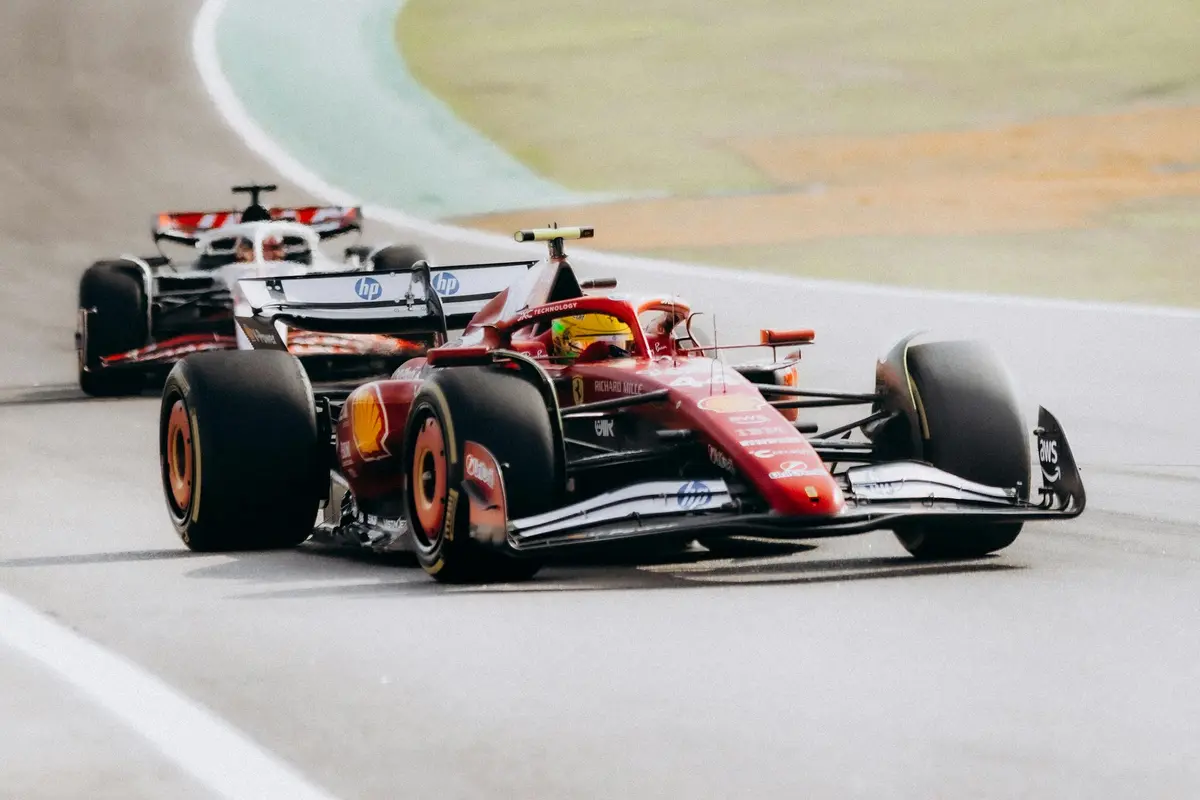
McLaren 2026 opens with the team in an unfamiliar role: reigning constructors' world champions, and the reference benchmark every rival on the 2026 grid is chasing. After a breakthrough 2025 campaign that finally returned the Woking outfit to the top of the standings, Andrea Stella's squad now has to do something even harder than winning a title; it has to keep one. With Lando Norris and Oscar Piastri retained as the most stable driver pairing on the grid, a new MCL40 built around the radical 2026 power unit and Active Aero regulations, and a full commercial rebrand to match, McLaren 2026 is arguably the most scrutinised operation in the paddock. This pillar gathers every strand of that story, from pre-season branding and driver narratives through technical headaches and off-track legal closure, into a single guide to how the title defence is taking shape.
Title Defence Setup: Technical Identity and Branding
The McLaren 2026 campaign effectively began not on a race day but on Sunday 22 February 2026, when the team used the final hours of Bahrain pre-season testing to unveil its new apparel and merchandise collection. It looked at first glance like a commercial exercise, but in a season defined by the most radical technical overhaul in a generation, the apparel launch doubled as the team's first definitive public statement of intent for the year. The Melbourne season opener, on 8 March, sat just two weeks away, and McLaren wanted the narrative around the MCL40 locked in before the lights went out.
The collection itself leaned hard on what Stella's engineers have been calling an efficiency-first philosophy. Advanced recycled polymers and high-breathability fabrics were used to echo the lightweighting strategies applied to the MCL40 chassis. Active Aero branding featured prominently, a direct nod to the 2026 regulation allowing movable front and rear wings to reduce drag on straights and add downforce through corners. Manual Override, the driver-triggered electrical boost replacing DRS, made it onto merchandise and into marketing copy. In other words, McLaren used the kit to educate its fan base on the complexity of 2026 before anyone had turned a competitive lap.
The strategic subtext was clear. While Ferrari was still integrating Lewis Hamilton, and Red Bull was onboarding rookie Isack Hadjar, McLaren went into 2026 with the most settled environment on the grid. Norris and Piastri have the most stable driver-management structure in the field, a luxury that directly translates into data correlation and set-up coherence. The apparel launch, in McLaren's own framing, was a psychological marker that the Melbourne spec of the MCL40 was frozen, the story for year one of the new regulations was written, and the title holders were ready to defend.
Norris's Year: Laureus, TIME 100 and a Clash Over Regulations
No driver enters McLaren 2026 under more pressure than Lando Norris, and nobody has capitalised on the off-track spotlight more effectively. Within weeks of pre-season testing closing, Norris had been nominated for a Laureus World Sports Award, a global sporting honour typically reserved for figures whose influence has reached well beyond their own discipline. The nomination, confirmed from Sakhir in early March, framed Norris not as an emerging talent but as a mature, championship-calibre reference point for the 2026 generation.
The cultural recognition did not stop there. Norris was also named on TIME Magazine's 100 Most Influential People of 2026 list, alongside global political and cultural figures including US President Donald Trump. The TIME 100 placement was a genuine inflection point for him personally: a graduation from F1 star to global icon, and for Formula 1 itself, a reminder that its biggest names now operate in a sphere of influence that stretches into politics, technology and mainstream entertainment. For McLaren, the halo effect matters commercially, and it underpins the sponsor portfolio funding the 2026 development push.
On track, Norris used the Bahrain launch of McLaren's formal title defence, on Thursday 5 March 2026, to reframe himself as a defending champion rather than a challenger. The messaging was deliberate. Norris has spent the winter mastering the 2026 ERS-K regenerative braking maps and perfecting Boost Button management while rivals were still learning new steering-wheel layouts. That edge showed up immediately in his comments about the 50/50 power split between the Internal Combustion Engine and the energy recovery system, which now contribute equally to total output.
The ideological rift around those regulations erupted at the Bahrain Grand Prix on 8 March, when George Russell publicly criticised aspects of the 2026 rule set. Norris pushed back sharply, defending both the direction of the regulations and McLaren's implementation of them. The sub-text was unmistakable. While Mercedes receives the same power unit as McLaren, the integration of 2026 cooling demands and energy recovery software is handled independently, and Norris's comments made clear he believes McLaren has read the regulations more cleanly than most. The Russell clash became the first genuine psychological skirmish of the defence, and Norris, reinforced by Laureus and TIME, walked out of it looking every inch a title holder.
Piastri's Year: Performance Secret, Miserable Start and the Hamilton Comparison
Oscar Piastri's year has followed almost the opposite arc. Before the season began, Piastri opened up about what he called his McLaren F1 performance secret: staying true to his authentic, off-track personality. In a candid revelation he admitted that conforming to a manufactured public persona had previously added cognitive load, whereas allowing his real character to show has freed up mental bandwidth for corner-entry data, brake bias adjustments and tyre-degradation feedback. For a series that demands absolute psychological clarity at 300 km/h, that self-awareness was framed, correctly, as one of McLaren's most underrated competitive weapons for 2026.
And then the races started. By mid-March 2026 Piastri was openly describing a miserable start to his year. On Wednesday 18 March, with the paddock still processing the radical 50/50 power split, Piastri delivered the line that has defined his season so far: if you don't laugh, you'll cry. The McLaren MCL41 had not quite responded to the 2026 regulation set the way winter simulations suggested it would. Reports from the garage pointed to inefficient energy harvesting and clipping, where stored electrical power runs out before the end of a long straight, leaving the car vulnerable to rivals in wheel-to-wheel combat. Active Aero deployment, which requires perfect synchronisation between movable wings and energy recovery, had been harder to nail in race trim than in pre-season running.
Piastri's stoic humour has arguably been the thing holding the engineering feedback loop together. In a season where technical DNFs and software glitches are expected to be common as manufacturers refine their 2026 packages, maintaining morale inside Woking is as important as wind-tunnel hours. Stella's culture, which explicitly values driver well-being alongside outright pace, means Piastri has been able to deliver honest, unfiltered radio debriefs about what the MCL41 is and is not doing. That quality of data, more than any single pole lap, is what the team is currently banking on.
The external pressure has not been gentle. Former Formula 1 driver Nelson Piquet Jr ignited a fierce paddock debate by describing Piastri's debut season as nothing special compared with Lewis Hamilton's legendary 2007 McLaren rookie campaign. The verdict was blunt, and it landed precisely when Piastri was publicly navigating the worst phase of his career at the team. Against the specific yardstick of Hamilton taking then-reigning champion Fernando Alonso to the final race of the season, very few rookies in history would pass muster. Piastri supporters rightly point out that his debut brought podium finishes, mature racecraft and a methodical development arc. In 2026 he is a more complete driver, still only in his mid-twenties, racing against the very Hamilton now at Ferrari. The Piquet Jr comparison may sting, but the scoreboard will ultimately be the judge.
Technical Challenges: Mercedes HPP, Stella's PU Hurdle and the Miami Upgrade
Under the bodywork, the defining story of McLaren 2026 is its relationship with Mercedes High Performance Powertrains. McLaren is a customer of the new Mercedes 2026 power unit, which embodies the 50/50 hybrid split, an enlarged battery and the removal of the MGU-H. That customer status has not been friction-free. Reports from the opening phase of the season describe Mercedes HPP data-sharing issues that have frustrated McLaren's own integration work, with the customer side arguing it is not receiving information at the cadence or granularity needed to match the works Mercedes team's pace on energy deployment maps.
Andrea Stella has publicly framed 2026 as a system-wide integration exercise, ensuring the aerodynamics department and the power unit technicians work in total lockstep to exploit the Active Aero rules. The Team Principal has also been candid about the scale of the PU hurdle McLaren faces. Customers receive the same hardware as the works team, but the integration of 2026 cooling requirements, battery packaging and energy recovery software is handled independently. That independence is both a curse and, longer term, an opportunity. If McLaren can decode the Mercedes power unit's full performance envelope on its own terms, it gains an edge that the works team cannot easily copy.
The response to the early-season deficit is set to arrive in Miami. McLaren is expected to bring a major Miami upgrade package, widely interpreted as a direct, calculated challenge to Mercedes' early-season pace. Speculation centres on step-change improvements to aerodynamic efficiency tied to the Active Aero system, with likely refinements to hybrid energy deployment and the Manual Override strategy. Miami's semi-permanent street-style layout, balancing long straights with technical sections, makes it an ideal venue to validate such a comprehensive update. For Norris and Piastri it is the first real chance to close the gap to Mercedes in race trim, and for Stella it is a statement that McLaren intends to fight its title defence with aggressive in-season development rather than a conservative, race-by-race approach.
The underlying technical picture is complex. The MCL41 appears fundamentally strong in mechanical grip, but early races have exposed vulnerabilities in its energy harvesting cycle and clipping behaviour. Fix those, and Norris and Piastri are back in the mix for wins at virtually every circuit. Leave them unresolved, and even the most stable driver pairing on the grid cannot defend a constructors' crown against a Mercedes works team that has mastered its own power unit ahead of its customers. Miami, accordingly, has become the first genuine pivot point of McLaren 2026.
Off-Track: Palou Closure, Miami Cancellations and a Ricciardo What-If
Away from the cockpit, the McLaren story in 2026 has been shaped by three off-track threads that refuse to stay quiet. The first is a welcome one. The long-running Alex Palou legal saga, in which McLaren Racing pursued the IndyCar driver over a breached contract worth millions of dollars in damages, has finally been closed out. Zak Brown has confirmed that Palou's recent statements fully cleared McLaren's reputation following accusations made during the dispute. For a CEO who spent years defending the organisation's handling of the affair, the closure is vindication and, crucially, the removal of a distraction that has hung over McLaren's commercial and motorsport operations on both sides of the Atlantic.
The second thread is less comfortable. Reports of Miami Grand Prix cancellations, tied to specific F1 race weekend activities in 2026, have cast a long shadow over what was expected to be a high-profile weekend for McLaren. The team had planned the Florida round as a celebratory chapter, timed to coincide with its long-anticipated upgrade push and its rapidly growing American sponsor footprint. Any disruption directly affects McLaren's ability to gather crucial data, develop car set-up and score championship points during a season in which every session of track time is irreplaceable given the newness of the active aero philosophy. The Miami Grand Prix cancellations do not just knock one race weekend off course; they disrupt carefully laid plans for a team that had specific reasons to look forward to this particular round.
The third thread is a retrospective bombshell. As the 2026 season entered its opening stages, a former Ferrari boss publicly claimed that Daniel Ricciardo could have won a world title during his earlier McLaren stint had circumstances aligned differently. The comment landed at a curious moment, with Norris and Piastri now leading the McLaren charge and Hamilton comparisons already floating around Piastri thanks to Piquet Jr. It reopened a familiar debate about McLaren's cycle of rebuilds and missed windows in the late 2010s, and it provided an uncomfortable counterpoint to Stella's carefully constructed narrative of stability. For the current driver pairing, the Ricciardo what-if is a reminder that reigning champions cannot afford to waste the window they are in, however carefully it has been opened.
Key Takeaways
- Stability is the weapon. McLaren 2026 retains the most settled driver pairing on the grid in Norris and Piastri, a luxury rivals with new signings simply cannot match.
- Norris is the reference driver. The Laureus nomination, TIME 100 inclusion and title-defence launch in Bahrain reframe him as a defending world-level figure, not a challenger.
- Piastri is in a recovery arc. A miserable start, an unflattering Piquet Jr / Hamilton comparison and very public humour make him the driver with the most to gain from mid-season development.
- Mercedes HPP integration is the technical bottleneck. Data-sharing friction and the 50/50 power split are Stella's biggest PU hurdles, and both sit behind the MCL41's early-season energy clipping issues.
- Miami is the pivot. A major upgrade package at the Miami Grand Prix is framed as a direct challenge to Mercedes, with Miami GP cancellation reports adding real-world uncertainty to the plan.
- Off-track clouds are clearing. The Palou legal saga is closed, Brown is publicly vindicated, and the residual Ricciardo what-if serves mostly as motivation not to waste the current window.
Frequently Asked Questions
Are McLaren the reigning constructors' world champions going into 2026?
Yes. McLaren enters the 2026 season as the defending constructors' world champions after their 2025 triumph, which is why the entire year is framed as a title defence rather than a challenger campaign. That status dictates Andrea Stella's strategic choices, from the decision to retain Norris and Piastri to the aggressive Miami upgrade timing.
Who is McLaren's reference driver for the 2026 title defence?
Lando Norris. The Laureus World Sports Award nomination, TIME 100 Most Influential People of 2026 placement and the formal title-defence launch in Bahrain all point to Norris as the team's championship lead, the driver around whom the MCL40 and MCL41 have been refined.
Why has Oscar Piastri described his 2026 start as miserable?
Piastri has publicly linked the difficult start to the MCL41's struggles with the new 2026 power unit regulations, specifically energy clipping on long straights, Active Aero synchronisation and Manual Override deployment. He has used humour, most notably if you don't laugh, you'll cry, to protect team morale while Stella's engineers work through those integration issues.
What is the McLaren Miami upgrade package and why does it matter?
The Miami upgrade is a major development package, expected at the Miami Grand Prix, that directly targets Mercedes' early-season performance advantage. Speculation centres on aerodynamic efficiency improvements around Active Aero and refinements to hybrid energy deployment. In the context of McLaren 2026, it is less a routine update and more the first structural response to the Mercedes HPP data-sharing friction that has shaped the season so far.
Conclusion
McLaren 2026 is already the most layered story in Formula 1. On one side of the garage a global icon is actively defending a world title, reinforced by Laureus recognition, TIME 100 status and a Bahrain clash with George Russell that he walked out of looking stronger than he walked in. On the other side a young Australian is working through the hardest phase of his McLaren career, flanked by an external Hamilton comparison from Nelson Piquet Jr and a very real performance deficit caused by Mercedes HPP integration friction. Andrea Stella has a PU hurdle to clear, a Miami upgrade to land, a Palou legal saga finally closed behind him and a set of Miami Grand Prix cancellation reports to navigate through. Yet the underlying picture is clear. The team has the grid's most stable driver pairing, a coherent Active Aero philosophy, a championship-grade reference driver and a clear catalyst in the Miami upgrade. If McLaren 2026 can convert that platform into points from Miami onwards, the defence will not just hold; it will define the new regulatory era.
In this article
Written with AI assistance. How this site works