Helmut Marko: Verstappen Trust Issues Remove 'Max Factor' in 2026
Helmut Marko admits Max Verstappen's lack of trust in Red Bull's 2026 car has removed the critical 'Max factor' — a major concern amid the new regulations.
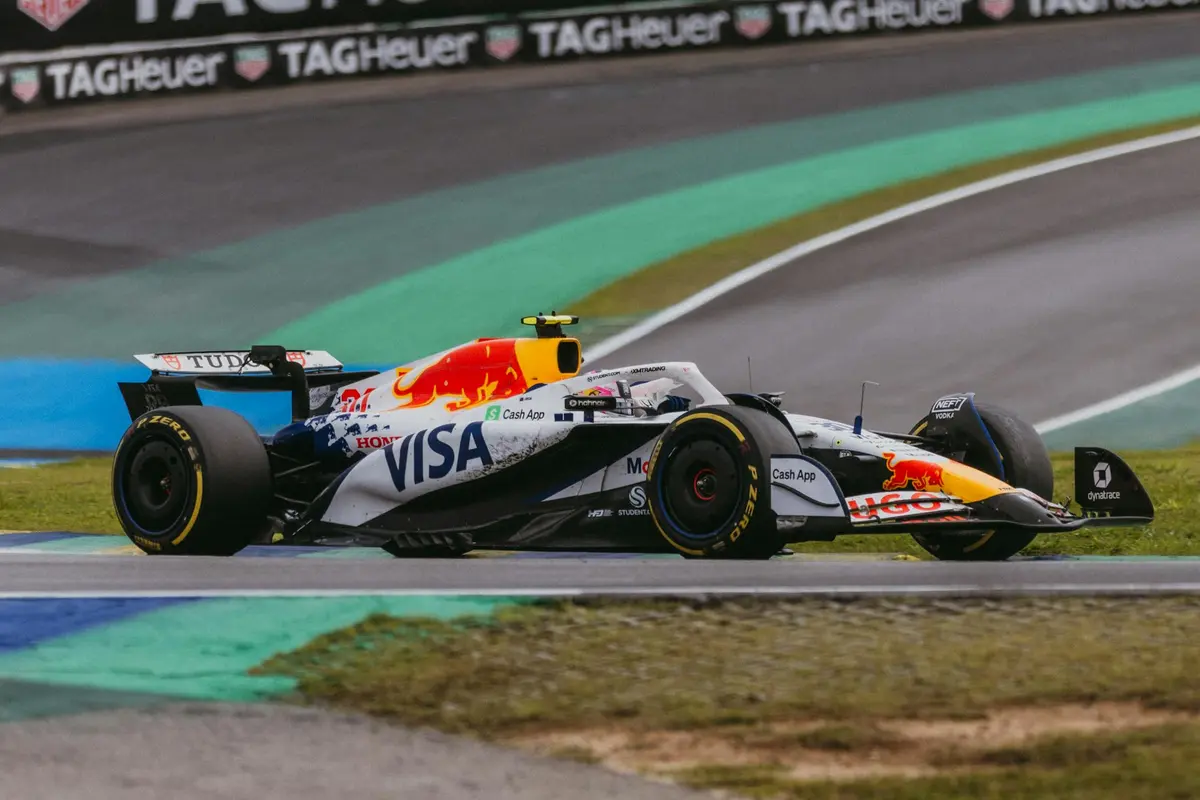
Former Red Bull advisor Helmut Marko has made a striking admission regarding Max Verstappen's relationship with Red Bull's 2026 challenger, claiming that the four-time world champion's lack of confidence in the new car has effectively stripped the team of what he calls the 'Max factor'. The statement carries enormous weight heading into what is already one of the most technically turbulent seasons in recent Formula 1 history, with sweeping regulation changes reshaping the entire grid.
Marko's Admission: What 'The Max Factor' Really Means
Helmut Marko's use of the term 'Max factor' is not just colourful language — it is a precise description of the competitive edge that Max Verstappen has provided Red Bull Racing in recent seasons. The Dutchman's ability to extract performance from machinery that teammates and rivals could not match became a cornerstone of Red Bull's dominance during the turbo-hybrid era. When a driver of Verstappen's calibre stops trusting his car, the downstream effects are significant: reduced risk-taking on the limit, a tendency to manage rather than attack, and an inevitable loss of those crucial tenths that separate race wins from podium finishes.
Marko's claim that Verstappen's trust in the 2026 Red Bull has been undermined points to a potentially deep-seated concern about the car's behaviour and predictability. In Formula 1, a driver's confidence in their machine is as important as raw performance data. If Verstappen does not believe the car will respond as expected at the limit — particularly through high-speed corners or under braking — he will instinctively pull back from the edge. That self-imposed margin is precisely where championship points are won and lost.
It is worth noting that Marko's willingness to speak so candidly about this issue publicly suggests the concern is both genuine and significant enough that it cannot simply be managed behind closed doors. Whether his comments are intended as a motivational challenge to the team, a transparent acknowledgment of the car's shortcomings, or something in between, the admission is a rare moment of vulnerability from a programme that has long projected an air of invincibility.
The 2026 Regulation Context: Why Trust Is Harder to Build
The 2026 Formula 1 season represents one of the most comprehensive overhauls the sport has undertaken in years. New technical regulations have fundamentally changed the aerodynamic philosophy of the cars, with the introduction of active aerodynamics and an 'overtake boost' system altering the dynamic between mechanical grip, downforce deployment, and driver input. These are not incremental changes — they demand that even the most experienced drivers recalibrate their instincts from the ground up.
For Verstappen, who has spent years mastering the characteristics of Red Bull's previous generation of cars and built an almost symbiotic relationship with the RB platform, adapting to a fundamentally different machine presents a unique psychological as well as physical challenge. Active aero systems, in particular, change the way a car responds mid-corner and under braking, meaning the feedback loop between driver and car is materially different from anything he has experienced before at Red Bull.
Across the paddock, every team and driver is navigating the same learning curve to varying degrees. However, Red Bull's challenge may be compounded by the fact that their 2026 car development cycle has apparently not yet generated the level of driver confidence that Verstappen requires to operate at his absolute ceiling. Given that the 2026 grid also features intensified competition — McLaren remain a serious threat with Lando Norris and Oscar Piastri, Ferrari have Lewis Hamilton now in his second year with the Scuderia alongside Charles Leclerc, and Mercedes continue to develop with George Russell leading the charge — any gap in Verstappen's confidence levels is immediately exploitable by rivals.
Isack Hadjar and Red Bull's Internal Pressure
Adding another layer of complexity to Red Bull's 2026 situation is the promotion of Isack Hadjar from Racing Bulls to the senior Red Bull seat alongside Verstappen. Hadjar, a highly rated young talent, represents the next generation of Red Bull's driver programme. While his presence does not directly cause Verstappen's trust concerns, it does mean that Red Bull must simultaneously manage the development of a rookie at the highest level while also addressing a confidence deficit in their lead driver — a delicate balancing act for any technical and management structure.
Key Takeaways
- Helmut Marko has publicly stated that Max Verstappen's lack of trust in Red Bull's 2026 car has removed the team's critical competitive edge — the so-called 'Max factor'.
- Driver confidence is a fundamental performance variable in Formula 1; without it, even the most talented drivers cannot extract maximum lap time.
- The 2026 technical regulations — including active aerodynamics and the overtake boost system — have created an unprecedented adaptation challenge for all drivers, including Verstappen.
- Red Bull's rivals, including McLaren, Ferrari, and Mercedes, are well-positioned to capitalise on any performance deficit from Verstappen's side.
- The simultaneous integration of rookie Isack Hadjar adds further operational complexity to Red Bull's 2026 campaign.
- Marko's public candour on this issue is itself noteworthy, suggesting the challenge is both real and urgent.
Frequently Asked Questions
What does Helmut Marko mean by the 'Max factor'?
Helmut Marko uses the term 'Max factor' to describe the unique competitive advantage that Max Verstappen provides Red Bull when he is fully confident in his car and operating at the absolute limit of his ability. According to Marko, Verstappen's lack of trust in Red Bull's 2026 challenger has diminished this edge, making the team less competitive than it would otherwise be with a fully committed Verstappen at the wheel.
Why might Verstappen lack trust in Red Bull's 2026 car?
The 2026 Formula 1 regulations introduced sweeping changes including active aerodynamics and new power unit regulations, fundamentally altering how cars generate and deploy downforce. These changes require drivers to completely recalibrate their instincts. If the Red Bull 2026 car has not yet demonstrated the predictability and consistency that Verstappen demands, it is entirely plausible that his confidence at the limit remains compromised — regardless of the car's raw pace on paper.
How serious is the Verstappen trust issue for Red Bull's 2026 championship hopes?
Extremely serious, if Marko's assessment is accurate. Max Verstappen's ability to outperform the theoretical capability of his machinery has been a cornerstone of Red Bull's recent success. Without that contribution, Red Bull are reduced to competing purely on car performance — and in the highly competitive 2026 grid, that margin for error is exceptionally narrow. Teams like McLaren, Ferrari, and Mercedes are all capable of challenging for race wins, meaning any Verstappen underperformance could have championship-defining consequences.
Conclusion
Helmut Marko's candid admission that Max Verstappen's trust deficit in Red Bull's 2026 car has eliminated the 'Max factor' is one of the most significant pieces of insider commentary to emerge from the paddock this season. It lays bare the human element at the heart of Formula 1's most technical sport: that even the greatest car means little if the driver inside it is not fully committed. As the 2026 season develops under its revolutionary new regulations, the question of whether Red Bull can rebuild Verstappen's confidence — and restore that priceless competitive edge — may well define the shape of the entire championship battle.
In this article
Written with AI assistance. How this site works