Gianpiero Lambiase Leaves Red Bull for McLaren in 2028
Gianpiero Lambiase, Max Verstappen's long-time race engineer at Red Bull, will leave at the end of 2027 and join McLaren in a senior race-engineering role in 2028.
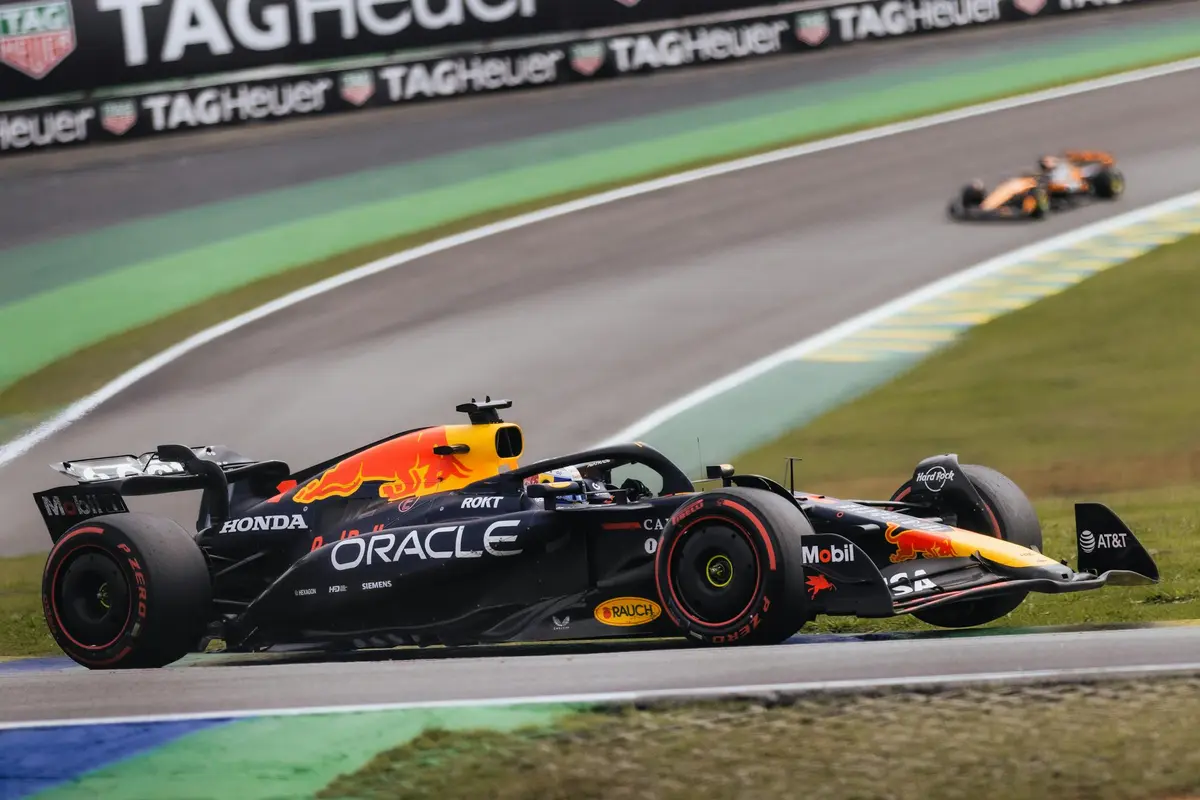
In what may prove to be one of the most consequential personnel moves in Formula 1 this decade, Gianpiero Lambiase — Max Verstappen's race engineer, trusted confidant, and one of the most recognisable voices in the sport — will depart Red Bull Racing at the end of the 2027 season. He will join McLaren in 2028 in a senior race-engineering role. The news sends shockwaves through the paddock and raises immediate, serious questions about the future competitive balance of the two teams who have dominated F1 conversations in recent years.
Lambiase is far more than a voice on the radio. Over his years at Red Bull, he has been central to translating Verstappen's raw, instinctive feedback into actionable engineering strategy, forging the kind of driver-engineer partnership that defines championship-winning campaigns. His departure to McLaren represents not just the loss of a talented individual, but potentially the transfer of institutional knowledge, communication culture, and race-day operational expertise from Milton Keynes to Woking.
Why the Lambiase Departure Is a Seismic Shift for Red Bull Racing
To understand the magnitude of this move, one must appreciate the singular nature of the relationship between Gianpiero Lambiase and Max Verstappen. Their dynamic — candid, at times combative, always deeply professional — has been one of the defining soundtracks of multiple championship seasons. Lambiase's ability to manage Verstappen's intensity, deliver critical information under pressure, and advocate for the driver's needs within a complex engineering structure has been a competitive asset as tangible as any aerodynamic upgrade.
Red Bull Racing now faces a dual challenge heading into the post-2027 period. First, they must identify and develop a replacement engineer capable of building a similarly productive rapport with Verstappen — a task that is considerably easier said than done. Driver-engineer relationships of this calibre are not manufactured overnight; they are earned through thousands of hours of simulator work, debrief sessions, and high-pressure race weekends. Second, the team must ensure that the institutional knowledge Lambiase carries — Red Bull's communication philosophy, strategic instincts, and Verstappen-specific technical language — does not become a direct tool for a rival.
Because make no mistake: Lambiase will not arrive at McLaren as a passive hire. In a senior race-engineering role, his understanding of how a top-tier team prepares for and executes a race weekend at the highest level will inform McLaren's own processes. For a team that has spent years methodically closing the gap to the very best, this is precisely the kind of high-value acquisition that accelerates progress.
McLaren's Strategic Masterstroke
McLaren's recruitment of Lambiase fits a clear and deliberate pattern. The Woking-based team has, over recent seasons, rebuilt itself from the inside out — investing in infrastructure, talent, and culture. Securing Lambiase for 2028 underscores that ambition does not stop at the garage door. With Lando Norris and Oscar Piastri forming one of the most exciting driver pairings in the current 2026 grid, adding a race engineer of Lambiase's stature to the senior operational team signals that McLaren intends to compete not just for victories but for sustained championship dominance.
Lando Norris, who has been with McLaren since 2019 and has matured into one of the sport's premier talents, would stand to benefit enormously from working alongside an engineer who has spent years at the coalface of championship-winning campaigns. Oscar Piastri, now in his fourth season with the team in 2026 having joined in 2023, similarly brings the kind of technical hunger and precise feedback style that a methodical operator like Lambiase tends to thrive with.
The move also carries a symbolic weight. McLaren poaching a figure so intimately associated with Red Bull's success sends a message to the rest of the paddock: the team is not content to be competitive — it intends to be the benchmark.
Context: The 2026 Landscape and What It Means Looking Ahead
It is important to frame this news within the current state of Formula 1. The 2026 season represents one of the most significant regulatory overhauls in the sport's modern era, with the introduction of new power unit regulations, revised aerodynamic philosophies, and the active aero systems that have fundamentally altered how cars are set up and driven. Audi has made its full Formula 1 debut — rebranded from the former Sauber operation — while Cadillac has entered as the sport's eleventh team, bringing Sergio Perez and Valtteri Bottas to the grid.
In this environment of flux and recalibration, personnel stability is more valuable than ever. Teams that retain their best human assets while the technical regulations are still being understood gain compounding advantages. Conversely, losing a figure like Lambiase during this period — even if the departure is not effective until 2028 — creates uncertainty within Red Bull's operational structure at precisely the moment when cohesion is critical.
Max Verstappen, the four-time world champion who has been with Red Bull since 2016, will have known about this development and the coming transition. How that knowledge influences his own long-term thinking about his future at Red Bull — beyond 2027 — will be one of the most closely watched storylines in the months ahead. It would be premature to draw conclusions, but in Formula 1, where perception shapes momentum, the ripple effects of Lambiase's exit will be felt well before he actually walks through McLaren's doors.
Technical and Strategic Implications for Both Teams
From a purely operational standpoint, the transition presents specific challenges and opportunities. For Red Bull, the period between now and the end of 2027 is simultaneously a window for Lambiase to contribute to what could be another championship push, and a period of necessary succession planning. Identifying an internal candidate — someone already familiar with Verstappen's working style and Red Bull's engineering culture — would be the most sensible mitigation strategy. Promoting from within preserves continuity and minimises the risk of disruptive cultural mismatches.
For McLaren, the challenge is different: integration. Lambiase will arrive in 2028 carrying methodologies and instincts forged at a rival team. The task for McLaren's leadership will be to harness that expertise while ensuring it is adapted to and enriched by McLaren's own evolving identity, rather than simply transplanting Red Bull's playbook into a different garage.
There is also the question of what role Lambiase specifically occupies at McLaren. Described as a senior race-engineering role, this suggests he may not be working directly as a personal engineer to Norris or Piastri, but rather operating at a higher strategic or operational level — potentially shaping how the entire race-engineering department functions. If that is the case, his influence could be even broader than a single driver assignment would suggest.
Key Takeaways
- Gianpiero Lambiase will leave Red Bull Racing at the end of the 2027 Formula 1 season after years as Max Verstappen's race engineer and a central figure in the team's success.
- Lambiase will join McLaren in 2028 in a senior race-engineering capacity, representing one of the most significant personnel transfers between rival teams in recent memory.
- The move raises immediate questions about Red Bull's ability to maintain its operational excellence and Verstappen's satisfaction with the team's direction beyond 2027.
- McLaren's acquisition aligns with the team's broader strategy of building championship-calibre infrastructure around its already formidable 2026 driver lineup of Lando Norris and Oscar Piastri.
- The news arrives during the transformative 2026 regulatory era, where personnel stability and institutional knowledge carry outsized strategic value.
- The full competitive impact will not be felt until 2028, but the psychological and motivational ripple effects within both teams begin now.
Frequently Asked Questions
Who is Gianpiero Lambiase and why is he so important to Red Bull?
Gianpiero Lambiase is Max Verstappen's race engineer at Red Bull Racing and one of the team's most influential operational figures. He has served as Verstappen's primary point of contact during races, managing communication, strategy, and technical feedback in real time. Their partnership has been widely regarded as one of the most effective driver-engineer relationships in the sport.
When exactly will Gianpiero Lambiase join McLaren?
According to the confirmed report, Lambiase will depart Red Bull at the end of the 2027 Formula 1 season and join McLaren in 2028. He is expected to take on a senior race-engineering role within McLaren's operational structure.
How does this affect Max Verstappen's future at Red Bull Racing?
While no direct statement has been made linking Lambiase's departure to Verstappen's own future, the loss of such a close and trusted collaborator inevitably invites speculation. Verstappen has been with Red Bull since 2016 and is under contract, but the departure of key personnel around him will be a factor closely monitored by observers assessing his long-term commitment to the team.
What does this signing mean for McLaren's 2028 championship ambitions?
Bringing in Lambiase at a senior level signals that McLaren is investing heavily in the human capital required to sustain and build on any success achieved in 2026 and 2027. With Norris and Piastri already forming a potent driver combination, adding elite engineering leadership could be the difference-maker in a closely contested future championship battle.
Conclusion
The confirmation that Gianpiero Lambiase will leave Red Bull Racing for McLaren in 2028 is, without exaggeration, one of the most consequential personnel stories Formula 1 has produced in years. It is a story about loyalty and ambition, about the economics of elite talent, and about the perpetual arms race — technical and human — that defines this sport at its highest level.
Red Bull must now plan for life without one of its most trusted operational cornerstones, while simultaneously managing the perceptions of a driver who has come to rely on Lambiase as perhaps his most important professional ally. McLaren, meanwhile, adds another piece to a puzzle it has been carefully assembling for years — one that grows increasingly formidable with each strategic acquisition.
In the cutthroat world of Formula 1, talent — whether it sits in a cockpit or speaks through a radio headset — is the ultimate currency. Gianpiero Lambiase is about to become the most expensive engineer in the paddock, not in financial terms alone, but in terms of the competitive knowledge and strategic capital he carries with him from Milton Keynes to Woking. The 2028 season just became considerably more compelling to anticipate.
In this article
Written with AI assistance. How this site works