F1 2026 Beyond the Track: Hollywood, Fashion and Celebrity Crossovers
F1 pop culture 2026 explored: the BAFTA-winning Hamilton film, Kardashian sightings, Ricciardo at Coachella and F1's new cultural footprint.
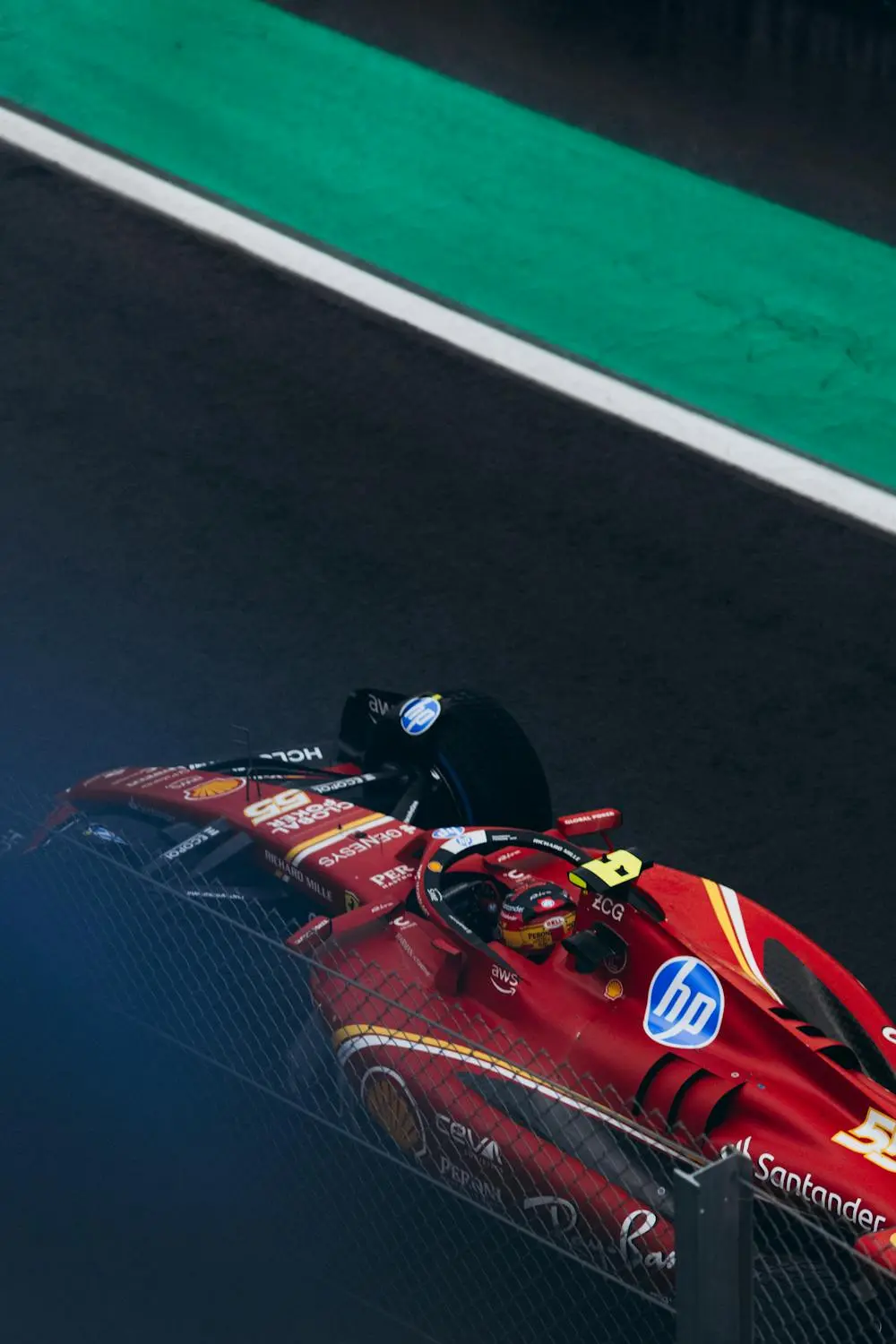
F1 pop culture 2026 has become the most discussed sporting-entertainment convergence of the decade. Formula 1 is no longer merely a racing championship played out in front of dedicated motorsport fans across thirty-something race weekends a year. In 2026 the sport has become a fully-fledged pillar of global pop culture, with a BAFTA-winning Hollywood blockbuster, a paddock that routinely hosts Kardashians and A-list actors, a retired fan-favourite popping up at Coachella, and a commercial footprint that now rivals the world's largest entertainment franchises. This pillar piece pulls together the threads of Formula 1's 2026 cultural moment, from Lewis Hamilton's film legacy to Daniel Ricciardo's festival appearances, and asks what it all signals about where the sport goes next.
F1 Pop Culture 2026: How Racing Became Mainstream Entertainment
To understand the scale of F1 pop culture 2026, it helps to reflect on how far the sport has come in under a decade. When Liberty Media took over the commercial rights in 2017, Formula 1 was still widely perceived as a European, male-skewed, technically inaccessible niche with an ageing fanbase and an indifferent United States market.
That picture is unrecognisable in 2026. The sport now hosts three races in the United States — Miami, Austin and Las Vegas — each drawing celebrity turnouts that would not look out of place at the Met Gala. Netflix's Drive to Survive has been followed by a theatrical blockbuster, a BAFTA win, and a merchandising and fashion ecosystem that sees team kit worn on red carpets and in music videos. Formula 1 has moved decisively from sport-with-entertainment-overtones to entertainment-with-a-sporting-core.
The timing of this cultural ascendance could hardly be more strategically significant. The 2026 season has delivered the most radical technical overhaul in a generation, featuring a 50/50 power split between internal combustion and electrical power, a Manual Override boost button replacing DRS-only overtaking, and Active Aero wings that reshape the car for corners and straights. In previous eras that engineering complexity would have risked alienating casual viewers. In 2026, the sport has built an entertainment wrapper that makes the technical story more compelling rather than less.
That combination of sporting drama and mainstream cultural relevance is what separates F1 pop culture 2026 from anything the sport has managed before. It is why executives at Cadillac (Sergio Perez and Valtteri Bottas) and at Audi (Nico Hulkenberg and Gabriel Bortoleto, rebranded from Sauber) are confident their nine-figure investments will pay off. Formula 1 is no longer a bet on motorsport. It is a bet on global entertainment infrastructure.
The Hamilton Film Legacy: Hollywood Crosses Into the Grid
If F1 pop culture 2026 has a single totemic piece of IP, it is the Lewis Hamilton co-produced Hollywood blockbuster released the previous summer. The film, which captivated global audiences and reignited mainstream interest in the sport, has positioned F1 as a cultural juggernaut far beyond the pit lane — and the ripple effects are being felt well into the 2026 season and beyond.
What makes the production so remarkable is that it was never obvious it would work. Bringing Formula 1 authentically to the silver screen required extraordinary cooperation between the sport's commercial rights holders, the ten (now eleven) teams, and the drivers themselves, many of whom appear in the film or contributed technical expertise to the production. Hamilton, now in his second year racing for Ferrari, leveraged his unparalleled standing in the sport to ensure the film carried genuine credibility. Directors and producers received access to real circuits, current-generation machinery, and active race weekends in a way that no prior fictional motorsport film had ever achieved.
That authenticity translated directly into box office success. Audiences who had been introduced to the sport through Drive to Survive came to the cinema expecting a heightened dramatisation of the paddock they already recognised, and the film delivered. Equally important, the film functioned as a bridge to the 2026 regulatory era: by dramatising high-speed manoeuvres, energy deployment and overtaking strategy, it pre-educated the public on concepts that would become central to the new season. When casual viewers now hear pundits discuss Active Aero or Manual Override, they have a cinematic frame of reference to draw on.
Hamilton's role as co-producer is emblematic of his ambition to shape F1's narrative both on and off the track. Having secured a record-equalling seven world championships across his storied career, Hamilton made the landmark decision to join Ferrari ahead of the 2025 season — a move that captured the imagination of the entire motorsport world. Now, in 2026, Hamilton is not only racing for the Scuderia alongside Charles Leclerc but simultaneously influencing how the sport is perceived at a cultural level through his film production work. That dual impact — on-track performance combined with off-track cultural influence — positions Hamilton as arguably the most complete figure in Formula 1's modern era.
The film's success also signals a broader structural shift in how Formula 1 positions itself as an entertainment brand. Much like Drive to Survive brought a younger, more diverse audience to the sport from 2019 onwards, the Hamilton-produced blockbuster takes that mainstream crossover to an entirely new level. It is the difference between a weekly documentary series aimed at existing fans and a cinematic event designed to pull entirely new audiences into the F1 ecosystem for the first time.
The F1 BAFTA Win and Commercial Reach
The British Academy Film Awards win for the Formula 1 movie is not merely a win for the production team; it is a strategic triumph for the sport's owners and every one of the eleven teams now competing on the 2026 grid. A BAFTA confers a level of cultural prestige that Drive to Survive, for all its commercial success, never quite reached. Netflix's series made F1 accessible. The BAFTA-winning film has made F1 prestigious.
That distinction matters because it changes the kinds of commercial conversations the sport can now have. Luxury brands, watchmakers, fashion houses and global banks evaluate sponsorship portfolios through cultural prestige as much as pure audience reach. For team commercial directors preparing 2027 and 2028 sponsorship decks, the BAFTA is a talking point with tangible dollar-value implications.
It is no coincidence that the film's accolade arrived at a pivotal moment for the sport. The 2026 season introduces the most significant driver-market shift in history, with Lewis Hamilton's continued presence in the Ferrari garage alongside Charles Leclerc, Isack Hadjar's promotion to Red Bull alongside Max Verstappen, Andrea Kimi Antonelli's second season partnering George Russell at Mercedes, and Franco Colapinto's first full campaign alongside Pierre Gasly at Alpine. For new entrants like Audi and Cadillac, this mainstream visibility is worth hundreds of millions in sponsorship valuation. Being a commercial partner of Formula 1 in 2026 means being adjacent to an award-winning piece of popular culture, not merely a racing series.
Paddock Celebrity: Hamilton, Kardashian and the Brand of F1
Few stories capture the paddock-meets-Hollywood dimension of F1 pop culture 2026 as vividly as the repeated sightings of Lewis Hamilton and Kim Kardashian together. Hamilton has once again been spotted alongside the entrepreneur and reality TV star, fuelling so far unconfirmed rumours of a romantic relationship. While neither Hamilton nor Kardashian has publicly addressed the speculation, the repeated appearances together have been enough to set social media abuzz and to draw significant attention from both the motorsport world and the mainstream celebrity press.
It is critical to be clear about what is and is not known. As of the time of writing, any relationship between Lewis Hamilton and Kim Kardashian remains entirely unconfirmed. No statement has been issued by either party, and no source close to either individual has publicly verified the nature of their connection. What is confirmed is simply this: the two have been seen together on more than one occasion, and that alone has been sufficient to generate widespread discussion.
The more interesting question for this pillar is why that story has travelled so far so fast. Lewis Hamilton is not merely a racing driver — he is one of the most recognisable and culturally influential athletes on the planet. His personal life, fashion choices, activism and social connections routinely command mainstream media coverage in a way few sportspeople can match. Kim Kardashian, meanwhile, is one of the most followed and scrutinised public figures in the world, with a business empire spanning beauty, fashion and media. A confirmed relationship between the two would represent a collision of two enormous cultural brands, generating international headlines well beyond the usual F1 audience.
For Formula 1 as a sport — which has invested heavily in its crossover appeal to new audiences, particularly in the United States — the visibility that comes with Hamilton's celebrity associations is not insignificant. The sport's growing popularity in North America makes the potential Hamilton-Kardashian connection especially noteworthy from a commercial and cultural standpoint. Every tabloid photo of Hamilton at a restaurant in Los Angeles is, functionally, a free advert for the sport. Every social-media discussion of the pair's latest sighting introduces F1 as a reference point in conversations that would previously have had nothing to do with motorsport.
That is what makes F1 pop culture 2026 structurally different from earlier eras. A driver's relationship status is now a legitimate commercial lever. Hamilton's off-track footprint — spanning music, fashion, film production and high-profile personal associations — ensures he remains a headline figure regardless of weekend results. For Ferrari, Hamilton's cultural relevance is almost as valuable as his race pace. For Formula 1 as a whole, he is the embodiment of the sport's new identity as a global entertainment brand with racing at its core.
Off-Season Lifestyle: Ricciardo at Coachella and Drivers as Personalities
If Lewis Hamilton represents the Hollywood-adjacent top of F1 pop culture 2026, Daniel Ricciardo represents the lifestyle-culture layer that keeps the sport visible in places it would never naturally appear. The former Red Bull and McLaren driver was recently spotted at Coachella, the iconic California music and arts festival, in what has become something of a trademark moment for the Australian — turning up unexpectedly and stealing attention with ease. As one outlet aptly put it, Ricciardo is "like an Aussie driver whack-a-mole," always popping up when you least expect him.
For newer fans, Daniel Ricciardo is an eight-time Grand Prix winner whose career spanned some of the sport's most competitive eras. His trademark late-braking overtakes and podium "shoey" celebrations made him a fan favourite across the globe. After a difficult final chapter that saw him lose his Racing Bulls seat during the 2024 season, Ricciardo has been without a full-time F1 drive — yet his public profile has barely dimmed.
His continued visibility at high-profile cultural events like Coachella speaks to the unique crossover appeal Ricciardo cultivated during his racing career. Few motorsport athletes have managed to bridge the gap between sport and mainstream pop culture as effectively as the Western Australian. His social-media presence, his appearances in entertainment collaborations and now his festival-circuit outings all reinforce a brand that transcends the pit lane. In many respects, Ricciardo demonstrates that an F1 driver's cultural footprint can outlast their racing career — a new reality that current drivers are acutely aware of as they build their own off-track businesses and media ventures.
Ricciardo is only the most visible example of a broader trend. Across the 2026 grid, drivers are consciously operating as personalities in parallel with racers. Lando Norris's fashion and gaming collaborations, Charles Leclerc's music production, George Russell's advocacy work and Oscar Piastri's carefully curated minimalism are each case studies in the same underlying truth: the commercial value of an F1 seat is now tied as much to cultural presence as to raw performance. With fresh 2026 narratives — Isack Hadjar's promotion to Red Bull, Andrea Kimi Antonelli's second season at Mercedes, and Franco Colapinto's first full campaign with Alpine — there is no shortage of storylines for the wider culture to latch onto.
It also means that when a driver like Ricciardo is out of a race seat, they do not disappear from the ecosystem. Conversations about Ricciardo's potential return never fully fade. In an era where driver narratives are as commercially important as lap times, that kind of organic attention is valuable to the driver, to his former teams, and to the sport as a whole. The whack-a-mole always pops back up, and the sport benefits every time he does.
What F1 Pop Culture 2026 Means for the Sport's Future Audience
So what does it all add up to? The 2026 season is defined by the pursuit of sustainability without sacrificing the show. The new cars are shorter, narrower, and lighter, featuring a Manual Override mode — a driver-controlled electrical boost designed to replace the traditional DRS-only overtaking model — and Active Aero wings that reshape the car for straights and corners. The technical story is dense, ambitious, and at times hard to explain. Without the entertainment wrapper the sport has built, there is a real risk that casual fans would tune out of the regulation detail and drift away.
Instead, the opposite is happening. The BAFTA-winning film, the celebrity paddock culture, the lifestyle appearances at festivals, and the ever-present rumour mill around stars like Hamilton mean that Formula 1 is showing up in the cultural conversation even for people who have never watched a Grand Prix. Those people sample the sport when the film is on a streaming service, or when a Kardashian story makes the tabloids, or when a former driver pops up at Coachella. A fraction of them stay, and the audience compounds.
For the sport's commercial partners — from Cadillac and Audi as new manufacturers, to global luxury sponsors, to broadcasters in previously underweighted regions — that compounding audience is the real prize. The technical parity sought by the 2026 rules, combined with the commercial windfall from the film's success, means teams have more resources than ever to close the gap to the front-runners. That translates into closer racing, more genuine contenders, and more drivers with a plausible claim to stardom. The on-track product and the off-track narrative reinforce each other in a way that previous eras of the sport could only dream of.
The question that remains is sustainability. Pop-culture momentum is notoriously fickle. The challenge for Formula 1 over the next three to five seasons will be to keep investing in the cultural layer — blockbuster sequels, thoughtful driver-personality development, deeper integration with music, film and fashion — without letting the sporting core become diluted. The opportunity is a sport whose golden age continues indefinitely, anchored by world-class racing and amplified by world-class storytelling.
Key Takeaways
- F1 pop culture 2026 is defined by a rare convergence of award-winning cinema, celebrity paddock culture and a landmark technical reset that together have made the sport a genuine global entertainment pillar.
- Lewis Hamilton's co-produced Hollywood blockbuster, capped by a BAFTA win, has given the sport a level of cultural prestige that earlier crossover properties could not match.
- Paddock celebrity — including the unconfirmed Hamilton-Kardashian sightings — signals how far F1's brand has travelled beyond traditional motorsport audiences, particularly in the United States.
- Daniel Ricciardo's Coachella appearance and similar off-track moments show that F1 driver personalities now operate as lifestyle brands that transcend active race seats.
- The 2026 grid — featuring Cadillac's debut, Audi's rebrand from Sauber, and blockbuster driver moves — provides the narrative fuel that continues to feed the sport's cultural momentum.
Frequently Asked Questions
What is F1 pop culture 2026 and why does it matter?
F1 pop culture 2026 refers to the convergence of Formula 1 with mainstream entertainment — Hollywood film, celebrity media, fashion and festival culture — that has reached unprecedented levels this season. It matters because the sport's cultural footprint now directly drives its commercial value, sponsorship inventory and audience growth in markets such as the United States.
Did the Lewis Hamilton Formula 1 movie actually win a BAFTA?
Yes. The Formula 1 movie co-produced by Lewis Hamilton has officially secured a BAFTA, elevating the film from a commercially successful blockbuster to a prestige cultural product. The win arrived in early 2026 during pre-season testing in Bahrain and is widely viewed inside the paddock as a strategic triumph for the sport's owners and all eleven teams.
Are Lewis Hamilton and Kim Kardashian actually in a relationship?
As of the latest available information, any relationship between Lewis Hamilton and Kim Kardashian remains unconfirmed. The two have been spotted together on more than one occasion, prompting speculation, but neither party has publicly addressed the rumours. Coverage of the sightings reinforces Hamilton's unique status as an athlete whose off-track life commands global attention.
What is Daniel Ricciardo doing in 2026 and could he return to F1?
Daniel Ricciardo was recently spotted at Coachella and continues to maintain a high public profile through lifestyle appearances and media engagement. He has been without a full-time F1 seat since losing his Racing Bulls drive during the 2024 season. Source reporting does not confirm any specific comeback plans, but his sustained visibility keeps the door open to future opportunities in or around motorsport.
Conclusion
Formula 1's cultural moment is far more than a marketing footnote — it is a strategic inflection point for the sport's global identity. With Lewis Hamilton serving as both an active Ferrari competitor and a driving creative force behind the BAFTA-winning blockbuster, with paddock celebrity stories commanding international headlines, and with former stars like Daniel Ricciardo keeping F1 visible in places as unlikely as Coachella, the boundaries between elite sport and mainstream entertainment continue to dissolve. F1 pop culture 2026 is not a distraction from the racing. It is the frame that allows a new generation of fans to fall in love with the racing in the first place. As the new season unfolds with its radical regulations, debut teams and fresh storylines, Formula 1 finds itself better placed than ever to convert cultural curiosity into long-term fan loyalty — and to prove that its golden age is only just beginning.
In this article
Written with AI assistance. How this site works