Ayrton Senna: The Definitive Legacy
From Toleman at Monaco 1984 to the final McLaren era, the definitive Ayrton Senna legacy: Estoril 1985, Jerez 1986, the Interlagos miracles of 1991 and 1993, Donington's Lap of the Gods, and the 1990 Prost heartbreak that made it all mean more.
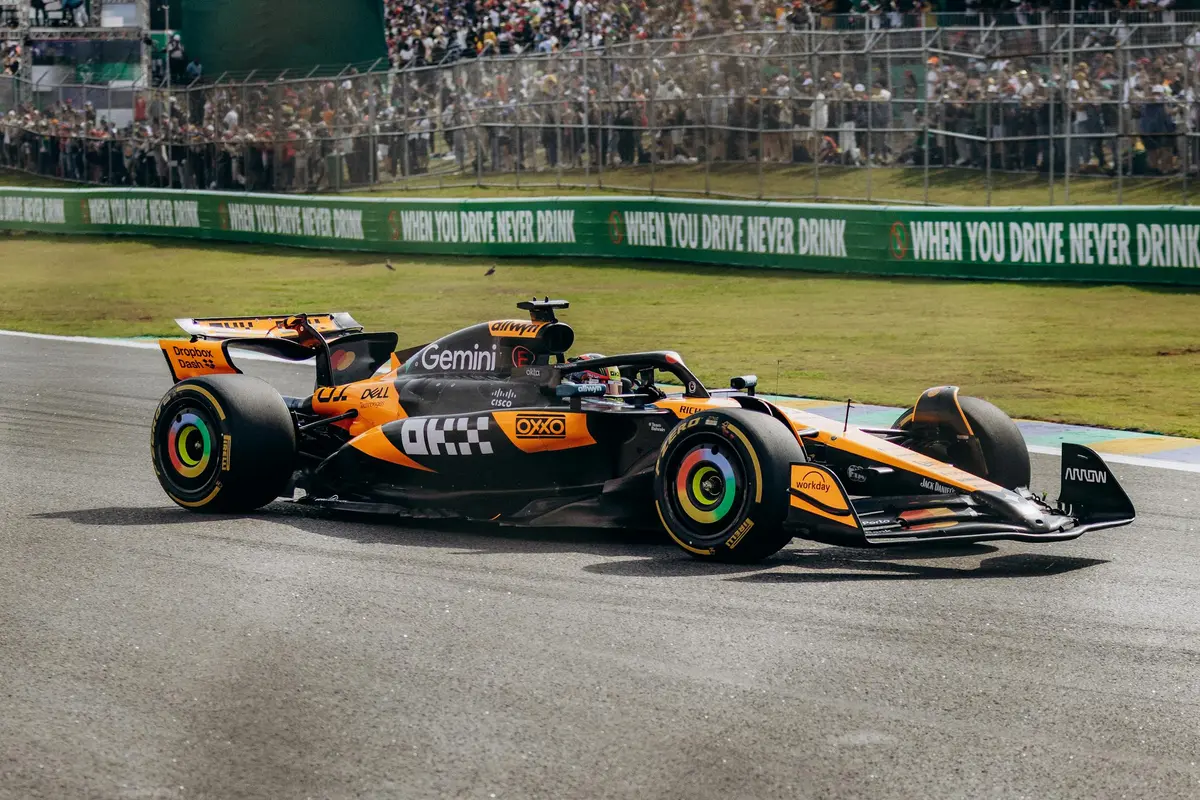
The Ayrton Senna legacy is not a collection of statistics, nor a sequence of championships to be counted off on a clerk's hand. It is a decade-long braid of rain-soaked Estoril, sixth-gear Interlagos, a single immortal opening lap at Donington Park, and a thousand smaller moments in which a manual gear lever, a turbocharged engine, and a driver's unshielded courage came together to redefine what Grand Prix racing could feel like. From his arrival at Toleman in 1984 to his final season in 1994, Senna compressed a lifetime of artistry into eleven campaigns, and each of those campaigns produced at least one performance still discussed in hushed tones by the people who were there.
This pillar is an archivist's survey of that body of work, focused strictly on the years 1984 through 1994. It merges the overlapping accounts of his two great Interlagos home victories, revisits the rivalries that shaped him, and closes with the market and cultural weight his memorabilia now carries. Every car mentioned is a car Senna drove or raced against. Every technology referenced, from the Renault EF15 V6 turbo to the customer Ford HB V8, belongs to the world as he knew it. This is the Senna of the black-and-gold Lotus and the red-and-white McLaren era, the driver who turned every chassis he piloted into an extension of his own hands. The Ayrton Senna legacy begins, as all great stories do, with an underfunded British constructor and a wet Saturday in 1984.
The Rise: Toleman, Estoril, and the Arrival of a Phenomenon
Ayrton Senna's 1984 debut season with Toleman is the stuff of legend. Joining a small, underfunded British constructor, the young Brazilian immediately demonstrated the raw, almost supernatural talent that would later define an era. The Toleman TG184, powered by a Hart turbocharged engine, was never the fastest car on the grid, yet in Senna's hands it transcended its limitations in ways that still define how we talk about driver ability versus machinery. The most iconic moment of that debut campaign came at the 1984 Monaco Grand Prix, where Senna, driving through torrential rain on a treacherous street circuit, was closing in on race leader Alain Prost at an almost impossible rate before race officials controversially red-flagged the race. That single afternoon announced a future world champion.
For 1985, Senna moved to Team Lotus, trading the Hart four-cylinder for the Renault-powered Lotus 97T. The machine, designed by the brilliant Gerard Ducarouge, was a masterpiece of carbon fibre and Kevlar construction. Beneath the rear bodywork sat the Renault EF15 V6 engine, a power unit that in qualifying trim produced upwards of 900 horsepower, tamed only by a manual gear lever and a driver brave enough to manage its brutal lag.
On Saturday, 20 April 1985, the air at the Circuito do Estoril was thick with the scent of high-octane fuel and the scream of unrestricted V6 engines. Senna hustled the black-and-gold John Player Special Lotus 97T with surgical precision, dancing the car through the long, right-hand Parabolica and stopping the clocks at 1:21.007. Even the great Alain Prost, driving the formidable McLaren MP4/2B, could not get within four-tenths of a second of the Brazilian's benchmark. Keke Rosberg, piloting the Williams FW10, was nearly a full second adrift. It was the first of 65 career pole positions and the opening note of what would become the defining qualifying voice of the era.
Sunday, 21 April 1985 confirmed that Saturday had not been a fluke. The Portuguese Grand Prix at Estoril was held under conditions so treacherous that many veterans found themselves spinning off the circuit into the catch fencing. As the lights turned green, Senna vanished into a cloud of spray. While rivals struggled with hydroplaning and near-zero visibility, the Brazilian drove as if on dry tarmac. By the end of the first lap he already held a commanding lead. Alain Prost famously spun out on the main straight, unable to cope with the standing water that Senna seemed to glide over. When the chequered flag flew, only Michele Alboreto in the Ferrari 156/85 remained on the lead lap, and even he finished one minute and two seconds behind the Lotus. It was the first of forty-one career victories, and the day the racing world learned that wet weather now had a surname.
The Piquet Rivalry: Rio 1986 and the Jerez Photo-Finish
By 1986, Brazilian Formula 1 had become a civil war. Ayrton Senna, in the black-and-gold Lotus 98T, was the raw young artist; Nelson Piquet, a two-time world champion freshly installed in the Williams FW11, was the tactical veteran. The season opener at the Autodromo Internacional Nelson Piquet in Jacarepagua was less a race than a coronation of Brazilian motorsport dominance. Senna took a blistering pole position, his Lotus fitted with the fire-breathing Renault EF15 V6 turbo. However, the Williams FW11, powered by the formidable Honda RA166E V6 turbo capable of producing well over 1,000 horsepower in qualifying trim, held the true measure of race pace.
As the lights went out, the afternoon became a tactical battle of tyre preservation and turbo-lag management. Nigel Mansell, Piquet's teammate, saw his race end on the opening lap after a botched attempt to pass Senna deposited the Williams in the barriers. That left the two Brazilian icons alone at the front. By lap three, Piquet used the immense straight-line speed of the FW11 to draft past the Lotus. Once in clear air, the Williams, designed by Patrick Head and Frank Dernie, executed a flawless two-stop strategy as Senna wrestled the handling of the 98T through the long, humid stints. When the chequered flag fell after sixty laps, Piquet crossed the line 34 seconds ahead of Senna, with Jacques Laffite's Ligier JS27 completing a day that belonged utterly to Brazil. The technical battle was a showcase of the era's raw, unassisted driving: no power steering, no paddle shift, just a manual gearbox and three pedals.
The rivalry found its sharpest expression three weeks later. On 13 April 1986, the Spanish Grand Prix returned to the calendar at the newly constructed Circuito de Jerez. Senna took pole in the Lotus 98T, but the race became a tactical masterpiece against Mansell's Williams FW11. High temperatures punished the Goodyear tyres and, realising he could not pass on track with aging rubber, Mansell made a bold late pit stop for a fresh set with only a handful of laps remaining. He emerged more than twenty seconds behind and began carving through the field, dispatching Alain Prost's McLaren MP4/2C with ease and setting his sights on the black-and-gold Lotus.
By the final lap, Mansell was glued to the gearbox of the 98T. Senna, masterfully placing his car to defend every line, used the Renault turbo's power to hold the inside line through the final hairpins. As they exited the final corner onto the start-finish straight, Mansell pulled out of the slipstream, the Williams surging forward on its superior grip. The two cars crossed the line side by side in a blur of mechanical fury. The timing clocks registered a gap of just 0.014 seconds, roughly the length of a front wing, and one of the closest finishes in the history of the sport. Prost finished third, watching the duel from a safe distance. The Ayrton Senna legacy in this era was forged precisely in such margins: a driver willing to hold his line at 180 mph while a Williams-Honda tried to prise him loose with fresher rubber and an extra hundred horsepower.
The Interlagos Miracles: 1991 and 1993
Heading into the 1991 season, Senna was already a double World Champion, yet a victory in his home country had always eluded him. The pressure from the Brazilian Torcida at Interlagos was immense. On 24 March 1991, driving the Honda V12-powered McLaren MP4/6, he started from pole position and initially controlled the race with the authority of a man settling old debts. Then, with roughly twenty laps remaining, the gearbox on the McLaren began to disintegrate. First fourth gear vanished. Then third. Then fifth. By the final seven laps, the Brazilian was forced to navigate the tight, undulating corners of Interlagos using only sixth gear.
Driving a high-downforce car through the slow, technical corners of Interlagos in a single tall gear was thought to be impossible. It required immense physical effort and surgical throttle control to prevent the engine from stalling in the hairpins, while also maintaining enough momentum to hold off a charging Riccardo Patrese in the Williams FW14-Renault. To complicate matters, rain began to fall on the circuit in the closing minutes, turning the high-speed struggle into something closer to a survival exercise. The physical toll was staggering. The sheer torque required to pull the car through the corners in sixth gear caused violent muscle spasms in Senna's shoulders and neck.
When he finally took the chequered flag, 2.9 seconds ahead of Patrese, his radio screams of agony and triumph became one of the most iconic sounds in the history of the sport. The aftermath saw a scene unlike any other. Senna was so physically exhausted that he had to be lifted from his cockpit by medical staff. On the podium, he struggled to raise the trophy, his right arm visibly trembling, his body ravaged by 71 laps of wrestling a manual machine into submission. It was a victory of pure mechanical grit over technical adversity, a hallmark of the pre-electronic era where the driver's physical connection to the machine was absolute.
Two years later, on 28 March 1993, Interlagos delivered its second miracle. The paddock had arrived convinced the season was already decided. The Williams FW15C, piloted by Alain Prost and Damon Hill, was a masterpiece of early-1990s engineering, equipped with active suspension, traction control, and a screaming Renault V10. In contrast, Senna's McLaren MP4/8 relied on a customer Ford HB V8 that could not match the French rival on outright horsepower. Starting from the second row, Senna initially trailed the Williams duo as they pulled away on a dry track.
Then, on lap 27, a violent tropical downpour swept across the circuit. The track became a river, catching out many experienced drivers. Most shocking was the exit of championship leader Alain Prost, whose Williams collided with Christian Fittipaldi's Minardi in the treacherous conditions, ending his race in the gravel trap. Once the safety car, a Fiat Tempra that is itself now a relic of the era, pulled in, Senna showcased his unmatched prowess in mixed conditions. He hunted down Damon Hill on a drying line and passed the Williams on lap 42 to take a lead he would not relinquish.
When the chequered flag fell, Senna claimed his second home win and, in a neat piece of symbolism, McLaren's 100th Grand Prix victory. The scene that followed is etched into Formula 1 folklore. Thousands of fans breached the fences, swarming the track and forcing Senna to stop his McLaren MP4/8 before he could even reach the pits. He was carried aloft, draped in the Brazilian flag. It was, in the words of the Paulistano press the next morning, a victory of spirit over technology.
Donington 1993: The Lap of the Gods
Three weeks after the second Interlagos triumph, the Formula 1 circus arrived at Donington Park for the European Grand Prix, a circuit that had not hosted a Grand Prix since the pre-war era. Once again, Senna's McLaren MP4/8 faced the technically superior Williams FW15C. Once again, it rained. And once again, raw talent proved the great equaliser.
The race began under a heavy English downpour. Starting from fourth on the grid, Senna initially dropped to fifth behind Karl Wendlinger's Sauber. What followed was a demonstration of peerless car control. Within a single circuit of the 2.5-mile track, Senna dispatched Michael Schumacher at the Esses, overran Wendlinger on the outside of Craner Curves, dived inside Damon Hill at McLean's, and finally lunged past Alain Prost at the Melbourne Hairpin. By the time he crossed the start-finish line to complete lap one, he was leading the field. Period footage shows the McLaren flashing between rooster tails of spray, its Ford HB V8 finding traction where more powerful cars could only wheelspin.
The race remained a chaotic affair as the weather fluctuated between heavy rain and a drying line. While Prost struggled with seven pit stops, often finding himself on the wrong tyres at the wrong time, Senna demonstrated an instinctive feel for grip. In one of the most famous strategic gambles of the era, Senna drove through the pit lane without stopping for tyres; because the pit lane at Donington was a shortcut that bypassed the final hairpin, he actually set the fastest lap of the race while technically pitting. By the time the chequered flag fell, he had lapped every driver on the grid except the second-placed Damon Hill, finishing a staggering 1 minute and 23 seconds ahead of the Williams. It remains a definitive moment of the 1990s, proving that even as electronic driver aids proliferated, the raw talent of a master could still overcome a significant mechanical disadvantage.
Prost's Ferrari Masterclass: Interlagos 1990 Heartbreak
No honest reading of the Ayrton Senna legacy can omit the days it did not end in triumph, and the 1990 Brazilian Grand Prix stands as perhaps the cruellest of them all. After a decade at the abrasive Jacarepagua circuit in Rio, the 1990 race marked a triumphant return to a revamped Interlagos. The circuit had been shortened and modernised, but it retained its soul-stirring undulations and the fierce, partisan atmosphere of the Paulistas. For Senna, this was more than a race; it was a homecoming. Driving the formidable McLaren MP4/5B powered by the Honda V10, he claimed pole position to the delight of the capacity crowd.
From the lights, Senna looked untouchable. He built a commanding ten-second lead over the field, the McLaren dancing through the Senna S with mechanical precision. Behind him, Alain Prost, in the gorgeous Ferrari 641, played the long game. The Ferrari's 3.5-litre V12 engine wailed through the valley, but it lacked the sheer grunt of the Honda-powered McLarens on the long climb toward the finish line. Disaster struck on lap 40. While attempting to lap the Tyrrell 018 of Satoru Nakajima at the tight Bico de Pato corner, the two cars made contact. The impact shattered Senna's front wing. Forced to limp back to the pits for a replacement nose, his lead evaporated as the Interlagos crowd fell into a stunned silence.
Prost's victory was a masterclass in patience and tyre management. The Ferrari 641, designed by John Barnard, was the first car to truly master the semi-automatic gearbox, allowing Prost to keep his hands on the wheel and focus on his lines through the bumpy Interlagos surface. Despite pressure from Gerhard Berger in the second McLaren, Prost remained unflappable. Crossing the line to take his 40th career victory, he proved the Scuderia was once again a championship force. Senna eventually recovered to finish third, but the day belonged to the Frenchman. For the archivist, 1990 Interlagos is the necessary counterweight to 1991 and 1993: a reminder that the miracles only mean anything because the heartbreaks were real.
Memorabilia and the Ayrton Senna Legacy Today
One of the most evocative artefacts in Formula 1 history is set to go under the hammer: a Toleman from the maiden 1984 season of the legendary three-time world champion is heading to auction for an eye-watering price. The news, first reported by MotorSportWeek.com, has sent shockwaves through the collector community and reignited global fascination with Senna's extraordinary journey from rookie to icon. For fans of the sport, both old and new, this Ayrton Senna Toleman auction represents far more than a transaction. It is a rare opportunity to own a tangible piece of motorsport mythology.
The Toleman TG184 produced only a limited number of chassis across the 1984 season, and vehicles that can be directly and authentically traced to Senna's hands are extraordinarily scarce. Provenance is everything in motorsport collecting, and a verified Senna Toleman commands not just financial value but historical gravitas that very few racing artefacts can rival. The price tag being described as eye-watering is entirely consistent with recent trends in the Formula 1 memorabilia market; championship-winning cars from the sport's turbo era have regularly eclipsed seven and eight-figure sums at prestigious auction houses. A car associated with Senna, universally regarded as one of the greatest drivers in the history of the sport, occupies an entirely different emotional and commercial stratosphere.
The timing is poignant. More than three decades have passed since the Toleman TG184 first carried a young Brazilian around Monaco in the rain, and yet the emotional pull of that chassis is undiminished. Whoever acquires it will not merely own a racing car; they will become the custodian of the precise moment the sport first understood that something extraordinary had arrived. That is the true currency of the Ayrton Senna legacy: not podiums, not poles, but the ability of a single chassis, a single lap, a single wet afternoon, to reach across decades and still make grown paddock veterans go quiet.
Key Takeaways
- Senna's 1984 Toleman debut, capped by the rain-shortened Monaco Grand Prix, announced him as a generational talent before he had ever won a race.
- At Estoril in April 1985 he took his first pole position and first victory in consecutive days, driving the Lotus 97T to a dominant wet-weather masterclass.
- The 1986 season pitted him against compatriot Nelson Piquet in Rio and Nigel Mansell at Jerez, where he won by just 0.014 seconds in one of the closest finishes in Formula 1 history.
- His home victories at Interlagos in 1991 and 1993 remain the emotional heart of his career: the first won with only sixth gear and muscle spasms, the second in a tropical downpour that humbled the all-conquering Williams FW15C.
- Donington Park 1993 produced what many regard as the greatest opening lap ever driven, with Senna leading by the end of lap one and winning by 1 minute 23 seconds.
- The 1990 Brazilian Grand Prix reminds us that even masters are human; a collision with Satoru Nakajima handed Alain Prost a debut Ferrari win on Senna's home turf.
- A verified 1984 Toleman is now heading to auction at an eye-watering price, confirming the extraordinary and still-growing cultural weight of his legacy.
Frequently Asked Questions
What made Senna's 1984 Monaco drive so significant?
Driving the underpowered Toleman TG184-Hart in torrential rain, Senna was scything through the field and closing rapidly on race leader Alain Prost when officials controversially red-flagged the race. It was only his sixth Grand Prix, yet the performance announced a future world champion and permanently altered how the paddock assessed raw driver talent versus machinery.
How did Senna win the 1991 Brazilian Grand Prix with a broken gearbox?
With roughly twenty laps remaining at Interlagos, the McLaren MP4/6's transverse manual gearbox began to fail; fourth, third and fifth gears vanished in succession. For the final seven laps Senna was forced to drive the entire circuit in sixth gear only, nursing the Honda V12 through slow corners without stalling while holding off Riccardo Patrese's Williams FW14 in closing rain. He won by 2.9 seconds and had to be lifted from the cockpit.
Why is Donington 1993 called the Lap of the Gods?
On the opening lap of the European Grand Prix, in heavy rain, Senna passed Karl Wendlinger, Michael Schumacher, Damon Hill and Alain Prost to take the lead of the race before completing a single tour of the 2.5-mile circuit. In a car considered inferior to the active-suspension Williams FW15C, he went on to win by 1 minute 23 seconds, a performance widely cited as the finest single lap in Grand Prix history.
What makes a 1984 Toleman worth so much at auction today?
Authentic, provenance-verified chassis associated with Senna are exceptionally rare, and the 1984 Toleman TG184 is directly linked to his legendary Monaco drive, the moment the wider motorsport world first recognised his talent. Combined with limited production numbers and the general rise of turbo-era Formula 1 cars at auction, a genuine Senna Toleman sits in an emotional and commercial stratosphere that few racing artefacts can rival.
Conclusion
Across eleven seasons between 1984 and 1994, Ayrton Senna compressed the entire emotional vocabulary of Grand Prix racing into a body of work that still anchors how the sport understands itself. The Toleman at Monaco, the Lotus at Estoril, the Lotus at Jerez by fourteen-thousandths of a second, the McLaren at Interlagos in sixth gear and again in the rain, the McLaren at Donington rewriting what an opening lap could be, and yes, the Ferrari of Alain Prost sweeping past a broken front wing on a silent Interlagos afternoon. Every one of these moments is part of the same archive, and none can be understood without the others. The Ayrton Senna legacy is precisely that completeness: a driver who met every circuit, every condition, and every rival on his own terms, and who left behind a catalogue of performances that remains the gold standard against which every wet-weather master, every qualifying specialist, and every home-crowd favourite is still measured today.
In this article
Written with AI assistance. How this site works