Alpine F1 2026: Gasly, Colapinto and the Team's Rebuild
Alpine F1 2026 brings Briatore back, Gasly leading the charge, Colapinto full-time, Doohan chasing a return, and a 24% stake race that is reshaping Enstone.
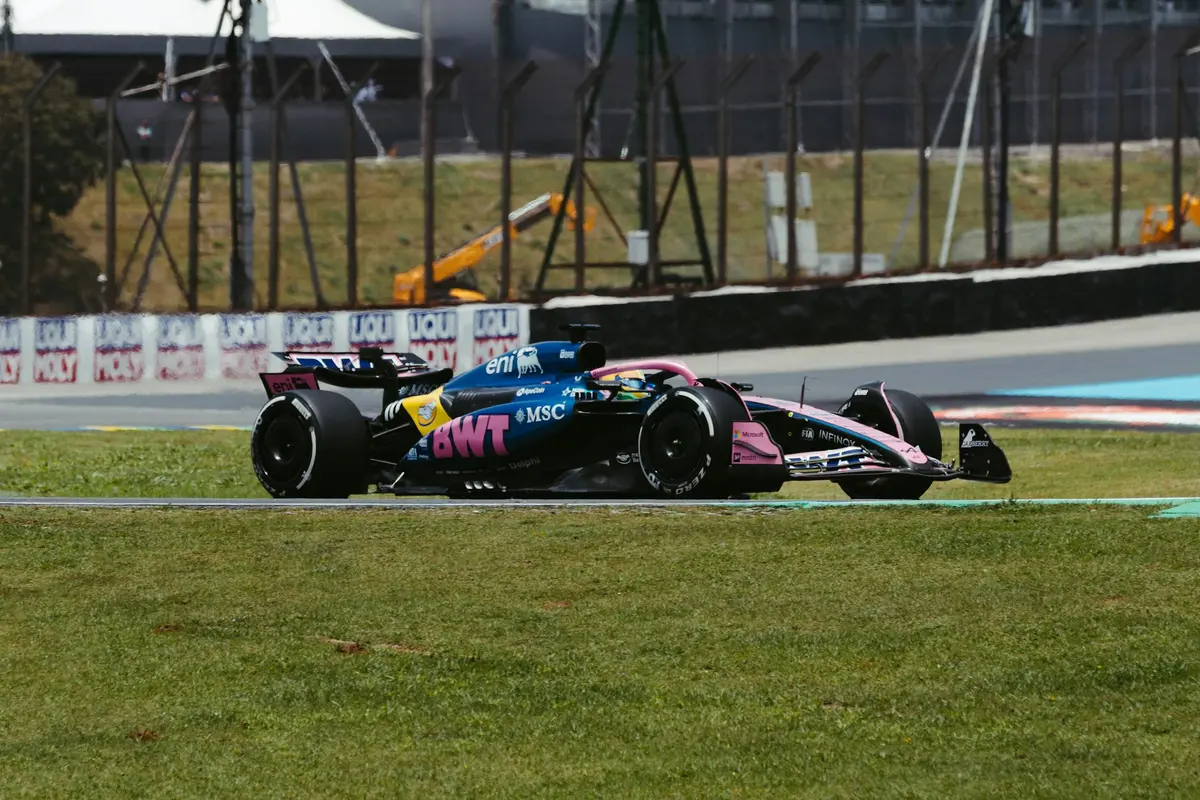
The Alpine F1 2026 story is one of the most intriguing sub-plots of the new technical era. After several seasons of midfield stagnation, leadership upheaval, and driver-lineup drama, the Enstone-Viry operation has entered the sweeping regulatory reset with a clearer hierarchy, a sharper identity, and a pair of drivers who are already reshaping the team's competitive narrative. Flavio Briatore has returned in a senior role, Pierre Gasly is leading the charge as the experienced spearhead, Franco Colapinto has arrived as the full-season second driver, and Jack Doohan - in and out of the cockpit across a turbulent transition - is now plotting a route back via sportscar racing. Against that backdrop, Alpine is also quietly at the centre of ownership manoeuvring, with a fresh bidder circling the 24 per cent minority stake and persistent paddock chatter about a Mercedes-related equity angle. This pillar pulls every thread together to explain exactly where Alpine F1 2026 stands and what the remainder of the season could deliver.
Alpine's 2026 Setup: Briatore's Return and the Driver Lineup Decisions
The shape of Alpine F1 2026 was defined long before the lights went out in Bahrain. Flavio Briatore returned to the team in a senior strategic role, reasserting influence over an organisation he helped build into a championship-winning force in the mid-2000s. His remit in 2026 is broader than a typical advisory seat: sources inside Enstone describe a hands-on presence across commercial, driver, and political matters, with Team Principal Oliver Oakes continuing to run the technical operation day-to-day. That division of labour - Briatore driving the external narrative and deal-making, Oakes owning the engineering programme - has given Alpine a dual-headed leadership structure that is, at last, pulling in the same direction.
The driver lineup decisions that flowed from Briatore's return were among the most consequential of the off-season. Jack Doohan, who had made his F1 debut with Alpine and started the transition into the 2026 rules as a race driver, was eventually moved aside to make room for Franco Colapinto on a full-season contract. Pierre Gasly, whose multi-year commitment was already in place, was confirmed as the team's lead driver. The logic was simple: Gasly offered proven Grand Prix racecraft and technical feedback, while Colapinto delivered raw pace, a significant South American commercial footprint, and the kind of sim-native adaptability that the 2026 regulations explicitly reward.
That reshuffle was not without controversy. Doohan's exit before the season settled into a rhythm was framed by some as harsh given how briefly he had been allowed to prove himself. But in the context of the technical upheaval - a 50/50 power unit split between the internal combustion engine and the battery, Active Aero across both axles, a driver-controlled Manual Override boost, and a chassis architecture that is smaller, narrower, and lighter than its predecessor - Alpine's leadership concluded that they needed two drivers already operating near the ceiling of the new rulebook. Gasly and Colapinto, on paper, were the combination most likely to deliver that from race one.
Gasly's Lead-Driver Year: Ferrari and McLaren as the Summer Target
Pierre Gasly has approached 2026 with the unmistakable body language of a driver who believes his team is finally ready. That belief crystallised into a public target early in the European leg of the season: Alpine, Gasly declared, must be capable of fighting on the same level as Ferrari and McLaren by the summer break. It was a bold statement, rooted not in driver optimism but in a genuinely promising opening to the campaign and in Gasly's own understanding of what the new regulations make possible.
To grasp the weight of that target, consider the benchmark. Ferrari arrived in 2026 with Charles Leclerc and Lewis Hamilton forming one of the most formidable driver partnerships in the sport's history. McLaren continued their push toward outright championship dominance with Lando Norris and Oscar Piastri. For Alpine - a team that had spent recent seasons fighting to stay relevant in the midfield - to even frame themselves in the same conversation was a significant statement of intent. Gasly did not say it lightly.
The technical rationale is real. The 2026 rules essentially doubled the electrical contribution of the power unit, with the MGU-K now producing roughly 350 kW. As a Renault works operation, Alpine has invested heavily in both chassis and power unit development to exploit that shift. The team's early-season data suggested that their thermal management of the battery system - the unglamorous but decisive factor in avoiding end-of-straight clipping - was among the best on the grid. Combined with an Active Aero implementation that Gasly has described as seamless between Z-mode (high downforce) and X-mode (low drag), the A526 appears to give its lead driver a car whose operating window is wider than anything Alpine has produced in years.
Gasly's summer-break target also reflects a sophisticated reading of the calendar. The first half of a modern F1 season typically features back-to-back flyaway rounds and European races that stress reliability and setup versatility - precisely the areas where Alpine has historically faltered. By staking Alpine's credibility on that timeline, Gasly is effectively asking his engineers, aerodynamicists, and strategists to hold their development nerve. Whispers of interest from Ferrari and McLaren in Gasly for 2027 have only sharpened the urgency: if Alpine delivers, he has every reason to stay; if it stalls, the silly season will come for him. That tension is now central to the Alpine F1 2026 storyline.
Colapinto's Full Season: Race Pace and Early-Season Learning
Franco Colapinto's arrival at Alpine as a full-time race driver for 2026 has been the revelation the team hoped for. The Argentine, who had already impressed during an earlier mid-season F1 debut elsewhere on the grid, walked into Enstone with a reputation for raw pace and an aggressive, late-braking driving style. What he has added in 2026 is something harder to coach: an immediate, intuitive grasp of how the new generation of F1 cars actually want to be driven.
Pre-season testing in Bahrain set the tone. On the final day, Colapinto spoke publicly about a "crucial difference" in the 2026 technical regulations that had accelerated his integration into the team. That difference, in his own framing, was the way Alpine's software integration - the brain managing the transitions between Active Aero modes and the electrical deployment strategy - had been made to feel predictable and transparent from the cockpit. For a rookie-level driver stepping into the biggest rules reset in a generation, that kind of systemic trust is gold.
Technically, Colapinto's strengths map neatly onto what the 2026 car demands. The Alpine A126 chassis is shorter, narrower, and lighter than its predecessor, which has shifted rotational inertia in a way that rewards aggressive turn-in and late braking - the exact profile of Colapinto's natural style. His mastery of the Manual Override - the 2026 driver-activated boost that delivers a short burst of additional electrical deployment when trailing another car - has been a standout feature of his early races. On long runs, his pace has repeatedly matched Gasly's, which for a driver in only his first full season is a genuinely remarkable data point.
The learning curve has not been flawless. On-track flashpoints have already arrived, most notably a clash with TGR Haas driver Esteban Ocon that triggered an unfortunate wave of online abuse directed at the Haas driver. FIA President Mohammed Ben Sulayem intervened publicly, reinforcing the "United Against Online Abuse" campaign and reminding the paddock that inevitable wheel-to-wheel contact in the high-closing-speed 2026 era must not spill over into personal attacks. For Colapinto, the incident was a reminder that operating inside an Alpine-Renault works structure places him under a kind of scrutiny he has not previously experienced. His ability to absorb that pressure and keep delivering is arguably the most important soft-skill question of his rookie campaign.
Doohan's F1 Return Goal and the Driver-Academy Feeder Dynamics
Jack Doohan's 2026 story is not a footnote to the Alpine narrative - it is a parallel thread that reveals how the team's driver-academy and feeder dynamics actually function. The Australian made his F1 debut with Alpine, was in the cockpit as the 2026 transition began, and then found himself on the outside as the Gasly-Colapinto pairing was confirmed. Rather than retreat, Doohan has publicly declared his determination to return to Formula 1 and pivoted into sportscar racing as the vehicle to keep his profile and racecraft sharp.
Doohan's approach has precedent. The history of F1 is littered with drivers who have used sportscars, IndyCar, or touring cars as a means of staying visible while waiting for the right opportunity back on the grid. The sportscar environment brings skills that complement, rather than replace, F1 craft - tyre management across long stints, disciplined co-driver communication, and an ability to adapt to changing conditions across many hours of racing. At 21 years of age, Doohan has runway on his side, and the 2026 grid, for all its tightness now, will inevitably churn as teams re-evaluate their lineups ahead of 2027.
What Doohan's situation also illuminates is how Alpine's broader feeder pipeline operates in the new era. The team's academy investments and management relationships still play a central role in the 2026 Alpine-Renault talent structure, even when a particular driver is not on the senior race seat. Briatore's return has, by multiple accounts, sharpened that pipeline: decisions are being made more decisively, contracts are being shaped more commercially, and the path from junior categories to the Alpine F1 seat is being re-drawn with a clearer set of performance checkpoints. Doohan's determined public messaging - that his F1 return is a matter of when, not if - plays directly into that system. A strong sportscar result keeps his stock visible to the Enstone hierarchy and to the wider paddock as the 2027 silly season begins to form.
Alpine-Mercedes Stake Rumour and the Business Context
Off-track, Alpine F1 2026 has been defined almost as much by ownership chatter as by on-track results. The long-running saga over a 24 per cent minority stake in the team took a fresh twist when a new, unnamed bidder entered the race, intensifying competition for a slice of one of the most strategically attractive assets in modern Formula 1. Paddock reporting has also kept alive the possibility of a Mercedes-related equity angle, although nothing formal has been confirmed. What is clear is that the valuation of F1 teams continues to soar, and the Alpine minority stake is now a premium asset that serious investors are willing to bid aggressively to secure.
The appeal is easy to articulate. Alpine is a works-adjacent operation with a full Renault power unit programme, a deep Enstone chassis and aerodynamics capability, and a driver pairing - Gasly and Colapinto - with enormous commercial reach across Europe and South America. Under Oakes's technical direction and Briatore's commercial influence, the team has also been undergoing a rigorous restructuring designed to maximise the potential of the new regulations. For an investor, the 24 per cent stake is not merely a balance-sheet position; it is a seat at the table during a period of unprecedented growth for the sport, with a team that has credible upside across sporting results, media rights, and global sponsorship.
The timing of the bidding interest matters too. European-leg upgrades have begun flooding the pit lane, and financial stability is critical if Alpine is to keep pace with the R&D budgets of well-funded newcomers like Audi and Cadillac. A successful sale of the minority stake would give the team capital to accelerate development cycles on the A526 chassis, refine the Active Aero logic, and continue optimising energy deployment strategies that are now decisive in race results. The Mercedes-stake rumour, whether or not it ever crystallises into a formal deal, is a signal that blue-chip motorsport capital sees Alpine as a team on the way up rather than a midfield relic. For Gasly and Colapinto, the reassurance is simple: the car under them is backed by a project that the market believes in.
Season Outlook: Where Alpine Goes From Here
The outlook for the remainder of Alpine F1 2026 is genuinely open-ended in a way that has not been true of the team for years. The technical platform is sound, the driver pairing is complementary, the leadership is focused, and the commercial structure is the subject of serious investor interest. The question now is execution. Can Enstone and Viry keep delivering upgrades at the cadence the 2026 rules demand? Can Gasly sustain the qualifying and race-day form that makes his Ferrari-and-McLaren summer target a realistic benchmark rather than a soundbite? Can Colapinto keep converting long-run pace into points finishes without the kind of wheel-to-wheel incident that complicates his rookie trajectory?
The midfield around Alpine is brutal. Audi arrived with Nico Hulkenberg and Gabriel Bortoleto, Cadillac entered with Sergio Perez and Valtteri Bottas, TGR Haas has rebuilt itself into a consistent points threat with Esteban Ocon and Oliver Bearman, and Racing Bulls remain in the mix. In that environment, every tenth matters and every strategic call is magnified. Alpine's advantage - if the team can keep extracting it - is a combination of works power-unit integration and an Active Aero implementation that gives their drivers confidence at the limit. Colapinto's presence also injects a competitive freshness into the team that has been missing for several seasons.
Doohan's sportscar chapter will run in parallel, keeping Alpine's driver-academy narrative alive even as the race seats stay locked. The ownership story will continue to evolve, likely through a combination of formal announcements and strategic leaks. Briatore will keep shaping the political and commercial narrative. And every race weekend, independent driver ratings in outlets like Autosport will offer a real-time, externally validated view of whether Gasly and Colapinto are extracting what the A526 has to give. Strong and consistent scores matter not just for PR, but for sponsor confidence and for the team's credibility in the next round of driver-market negotiations.
Key Takeaways
- Briatore's return has given Alpine a sharper commercial and political edge while Oliver Oakes continues to run the technical programme at Enstone.
- Gasly's summer target - fighting Ferrari and McLaren before the mid-season break - is the defining public benchmark of Alpine F1 2026.
- Colapinto's full-season debut has already delivered long-run pace matching Gasly and a striking intuitive grasp of Active Aero and Manual Override systems.
- Doohan's sportscar pivot is a calculated career strategy aimed at a 2027 F1 return, keeping him visible within Alpine's broader feeder structure.
- The 24 per cent stake bidding race, including persistent Mercedes-linked chatter, underlines Alpine's rising market value during a decisive technical era.
- The 2026 midfield - with Audi, Cadillac, TGR Haas, and Racing Bulls all credible threats - means Alpine must execute flawlessly to deliver on Gasly's public ambition.
Frequently Asked Questions
Who are Alpine's drivers for the 2026 F1 season?
Alpine's 2026 driver lineup is Pierre Gasly as the experienced lead driver and Franco Colapinto as the full-season second driver, with Jack Doohan - briefly in the cockpit during the transition - now pursuing sportscar racing while targeting an F1 return.
What is Pierre Gasly's summer-break target for Alpine F1 2026?
Gasly has publicly stated that Alpine must be capable of fighting at the same level as Ferrari and McLaren by the 2026 summer break, citing a promising start to the campaign and the team's works power-unit integration as reasons to believe the target is achievable.
What role does Flavio Briatore play at Alpine in 2026?
Briatore has returned to Alpine in a senior strategic role, driving commercial, political, and driver-related decisions while Team Principal Oliver Oakes continues to lead the technical programme at Enstone - giving the team a dual-headed leadership structure aimed at maximising the 2026 opportunity.
Why is the 24 per cent Alpine F1 stake attracting new bidders?
The 24 per cent Alpine minority stake is a premium asset because it offers access to a works F1 operation with a proven Enstone chassis capability, a Renault power-unit programme, and a commercially strong Gasly-Colapinto driver pairing - all during a regulatory reset that has theoretically compressed the performance gap between teams.
Conclusion
The Alpine F1 2026 story is ultimately one of a team that has stopped drifting and started executing. Briatore's return, Gasly's leadership, Colapinto's immediate impact, Doohan's determined comeback plan, and serious investor interest in the 24 per cent minority stake are not isolated sub-plots - they are interconnected signals that Enstone is, at last, moving with purpose. The technical platform is competitive, the commercial structure is attracting blue-chip attention, and the driver pairing has the right blend of experience and raw speed to deliver on ambitious targets. If Alpine can sustain the momentum of their opening rounds through the European summer, Gasly's Ferrari-and-McLaren benchmark will look less like bravado and more like a credible statement of where this team actually belongs. The rest of 2026 will be the test of whether that promise becomes permanence.
In this article
Written with AI assistance. How this site works