Williams FW47 Weight Problem: Japanese GP Impact Explained
Williams' FW47 is carrying over 20kg of excess weight in 2026, delaying development and costing significant laptime, as highlighted at the Japanese GP.
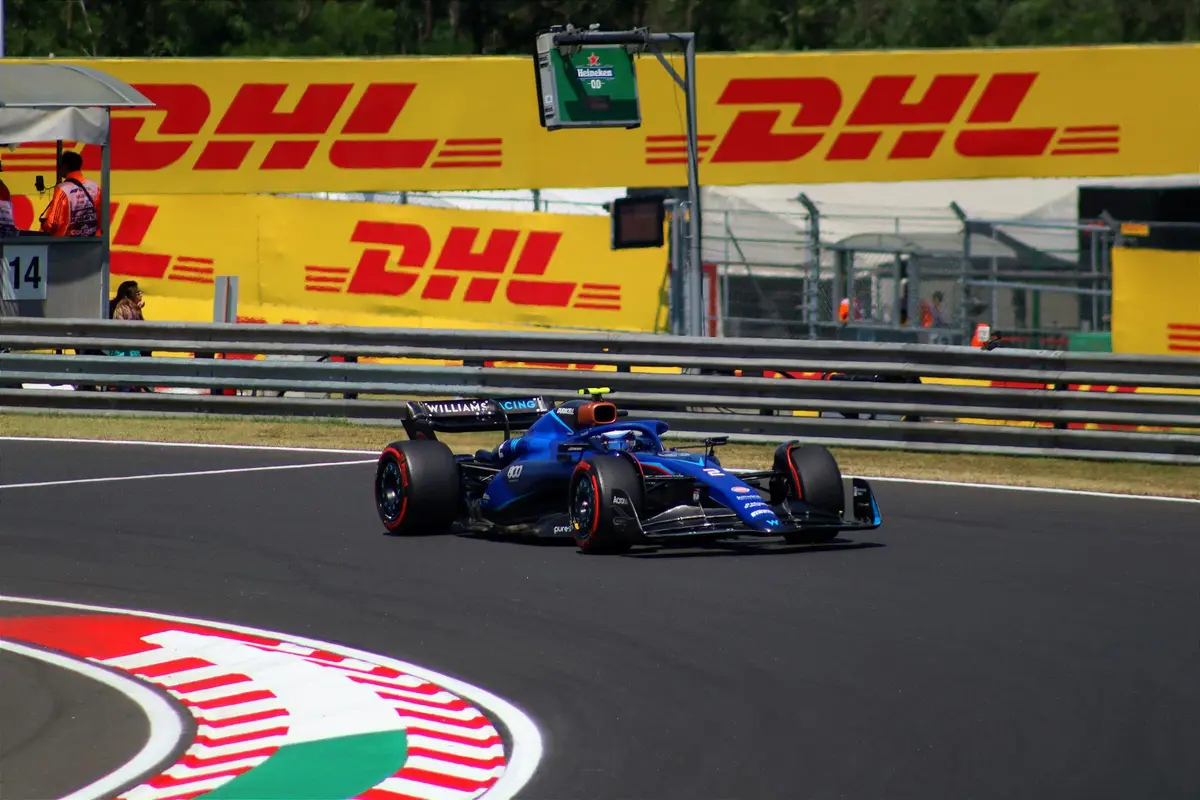
Williams FW47 Weight Problem Surfaces at the Japanese Grand Prix
A curious and largely overlooked storyline emerged from the Japanese Grand Prix weekend involving Williams and their 2026 contender, the FW47. According to a report from Autosport, Williams is carrying an estimated excess weight of over 20 kilograms compared to the competitive baseline — a significant handicap in a Formula 1 environment where even a single kilogram of additional mass can cost meaningful laptime. The Williams FW47 weight problem has quietly become one of the more pressing technical narratives of the early 2026 season, and its implications stretch well beyond a single race weekend in Japan.
Detailed Analysis: What Does 20kg of Excess Weight Actually Mean?
In Formula 1, weight is not just a number — it is a performance currency. The 2026 regulations introduced a new generation of cars built around revised power unit architecture and a dramatically altered aerodynamic philosophy, including Active Aero systems (active aerodynamic surfaces that automatically adjust their angle and configuration to maximise downforce or reduce drag depending on circuit demand). In this new technical landscape, every gram matters more than ever.
Carrying over 20 kilograms above the optimal weight target is an enormous burden. As a rough rule of thumb, each additional kilogram in an F1 car costs approximately 0.03 to 0.04 seconds per lap, depending on circuit characteristics. Extrapolating that across 20kg, Williams could theoretically be surrendering somewhere between 0.6 and 0.8 seconds per lap in pure weight-induced deficit — before any other performance variables are considered. At a technically demanding circuit like Suzuka, which rewards mechanical precision and aerodynamic efficiency across its sweeping high-speed corners, this kind of penalty is deeply consequential.
The Williams FW47 weight problem has reportedly delayed development in several areas of the car. This is a critical detail. In the modern F1 development cycle, teams typically run a rolling programme of upgrades throughout the season. When excess weight forces engineers to prioritise mass reduction over performance-generating upgrades, the development roadmap is fundamentally distorted. Resources that could be channelled into downforce-generating components, floor revisions, or suspension geometry improvements must instead be redirected toward stripping mass from existing structures — a reactive rather than proactive approach.
Alex Albon's race at the Japanese Grand Prix was highlighted as carrying particular significance in this context. While the source text does not detail the specific outcome of Albon's race, the fact that Autosport flagged a 'curious aspect' of his performance suggests there were moments — likely in qualifying pace or race degradation — where the weight disadvantage manifested in observable, data-confirmable ways. Williams' engineering team will undoubtedly have a granular picture of exactly where those losses are occurring, lap sector by lap sector.
Context: The Williams FW47 Weight Problem in the 2026 Season Narrative
Williams enters 2026 as a team in transition, building on the foundations laid in recent seasons as they push toward consistent midfield competitiveness and beyond. The 2026 regulations presented every constructor with a clean-sheet design challenge, and it is not uncommon for teams to arrive at the first race weekend carrying more weight than intended — the manufacturing and design process for an entirely new car generation rarely goes perfectly to plan.
However, a 20kg+ deficit is not a minor overshoot. It suggests a structural challenge within the FW47's design or manufacturing process that will require a sustained, methodical response. Williams has acknowledged this and is reportedly implementing a gradual weight-reduction programme. The word 'gradual' is important here: it signals that the fix is not an overnight solution, and the team may be carrying this handicap for several more race weekends before meaningful mass is shed from the car.
In the context of a tightly contested 2026 midfield — where teams like Audi (Nico Hulkenberg and Gabriel Bortoleto), Alpine (Pierre Gasly and Franco Colapinto), and Racing Bulls (Liam Lawson and Arvid Lindblad) are all fighting for the same points positions — Williams cannot afford to give up eight-tenths of a second per lap indefinitely. Every race weekend the weight programme remains incomplete is a race weekend where the team's true performance potential is artificially suppressed.
Key Takeaways
- Williams' FW47 is estimated to be carrying over 20kg of excess weight, representing one of the most significant known performance deficits on the 2026 grid.
- The Williams FW47 weight problem has forced the team to delay upgrades in multiple development areas, distorting their 2026 technical roadmap.
- Alex Albon's Japanese Grand Prix performance drew attention to how this weight penalty is manifesting in real race conditions.
- Williams has confirmed a gradual weight-reduction programme, though the timeline for meaningful improvement remains unclear and the deficit will likely persist for several more rounds.
Frequently Asked Questions
How much laptime is Williams losing due to the FW47 weight problem in 2026?
Based on established F1 engineering benchmarks of approximately 0.03–0.04 seconds per kilogram, Williams' estimated 20kg+ excess weight could be costing the FW47 somewhere between 0.6 and 0.8 seconds per lap in pure weight-induced deficit. This figure varies by circuit and does not account for additional indirect effects, such as increased tyre degradation from carrying the extra mass.
Why has the Williams FW47 weight problem delayed the team's 2026 development programme?
When a car is significantly overweight, the engineering team must prioritise mass-reduction efforts above performance-generating upgrades. Components that would otherwise improve downforce or aerodynamic efficiency must be redesigned or replaced with lighter alternatives, consuming both resource and time that would typically be allocated to outright performance development. This reactive development cycle puts Williams at a compounding disadvantage as the season progresses.
What is Williams' plan to fix the FW47 excess weight issue during the 2026 season?
According to the source reporting, Williams is pursuing a gradual weight-reduction programme for the FW47. The team has acknowledged the issue and is working to systematically remove mass from the car over the course of the season. However, the programme is described as gradual rather than immediate, suggesting that the full resolution of the weight deficit will take multiple race weekends to achieve.
Conclusion: Can Williams Recover in Time to Compete?
The Williams FW47 weight problem is not a crisis, but it is a serious and compounding technical challenge that demands urgent resolution. For Alex Albon and his teammate, every race weekend where the deficit persists is an opportunity cost — points potentially left on the table against rivals who are not operating under the same handicap. As Williams' weight-reduction programme advances, the team's genuine 2026 competitiveness will gradually be revealed. The coming race weekends will be critical in determining whether Williams can claw back lost development ground and put the FW47's true performance potential on display.