Villoresi’s Valentino Victory: The Ferrari 500 Dominates Turin
Luigi Villoresi led a Ferrari 1-2-3 at the 1952 Valentino Grand Prix, proving the dominance of the Lampredi-powered Ferrari 500 in Turin.
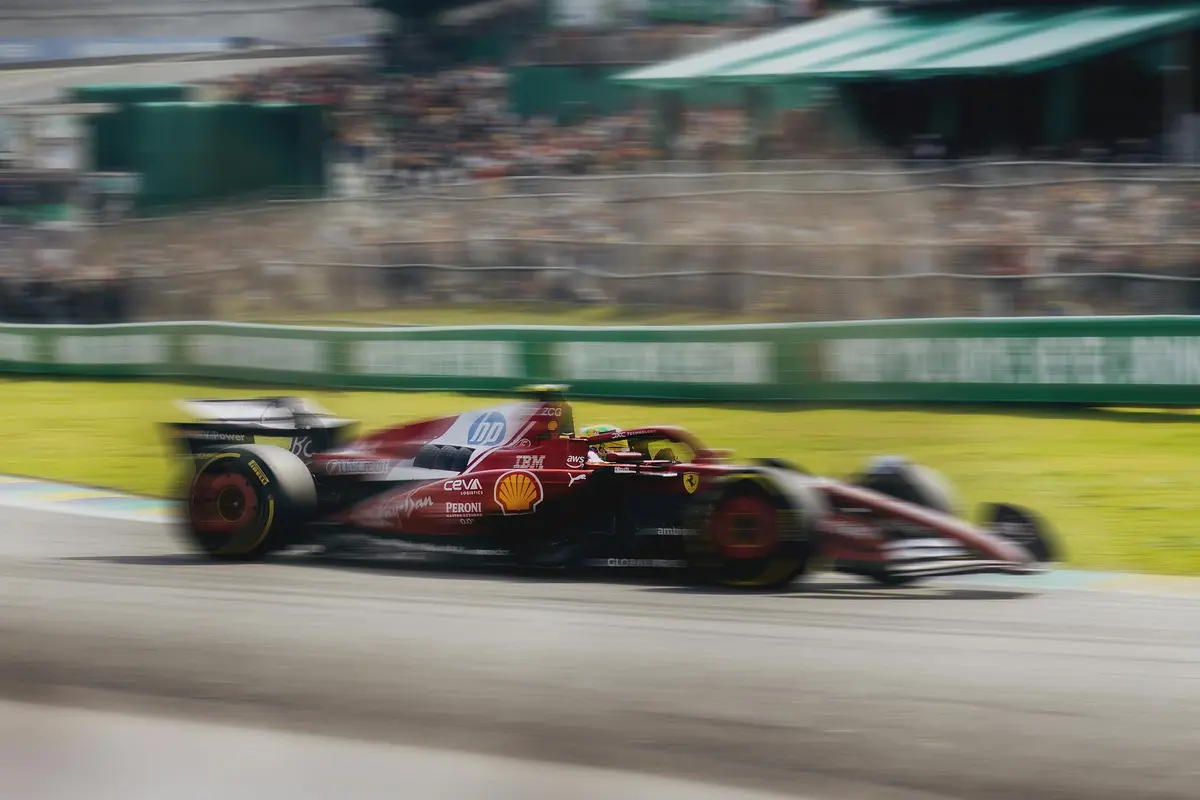
On This Day, April 6, 1952, Luigi Villoresi triumphed at the Valentino Grand Prix in Turin, driving the legendary Ferrari 500. This non-championship event showcased the early dominance of the 2.0-liter Formula 2 regulations, which defined the World Championship era from 1952 to 1953, featuring a sweeping Ferrari 1-2-3 finish in the Parco del Valentino.
The Dawn of the F2 Era in Turin
As the 1952 season began, the motorsport world faced a crisis. With the withdrawal of Alfa Romeo and the lack of competitive Formula 1 machinery, the FIA governing body made the radical decision to run the World Championship to Formula 2 specifications. The VI Gran Premio del Valentino, held on April 6, 1952, served as a crucial proving ground for the new mechanical hierarchy. In the absence of Alberto Ascari, who was busy preparing for his upcoming attempt at the Indianapolis 500, the spotlight fell on his teammate, the veteran Luigi Villoresi.
The race was held on a challenging 4.2-kilometer street circuit winding through Turin’s public park. Despite the damp conditions and the technical nature of the track, the superior balance of the Maranello-built chassis was immediately evident. The field featured a mix of Maserati A6GCM cars and the privateer HWM-Alta entries, but none could match the pace of the works Ferraris.
The Mastery of the Ferrari 500
The Ferrari 500 remains one of the most successful designs in the history of the Scuderia. Under the hood sat a 2.0-liter, naturally aspirated, inline-four engine designed by Aurelio Lampredi. This engine was a masterpiece of low-end torque and reliability, providing a distinct advantage over the complex V12 units of previous years. On the streets of Turin, Luigi Villoresi utilized the linear power delivery of the Ferrari 500 to navigate the tight corners and slippery asphalt with surgical precision.
By the end of the 60-lap race, the Scuderia had asserted total control. Luigi Villoresi crossed the line first, followed closely by his teammate Piero Taruffi. Completing the podium was Rudi Fischer in a privately entered Ferrari 500 for the Ecurie Espadon, cementing a dominant 1-2-3 result for the Prancing Horse. The victory wasn't just about speed; it was a demonstration of the mechanical robustness that would allow Ferrari to win every single World Championship race of the 1952 season.
The 1952 Valentino Grand Prix Legacy
The Valentino Grand Prix marked one of the final times a major Grand Prix was held in the heart of Turin. For the crowd of Tifosi lining the park, seeing Luigi Villoresi conquer the field in a front-engined, red machine was a moment of national pride. It also signaled the beginning of a golden era for the Lampredi-powered fours, which would eventually carry Alberto Ascari to two consecutive World Titles.
While this event did not award championship points, its impact on the technical development of the 1950s cannot be overstated. It proved that light, agile cars with high power-to-weight ratios were the future of road racing, long before the aerodynamic revolutions of the late 20th century. Today, we remember April 6 as the day the Luigi Villoresi Ferrari 500 combination turned Turin into a sea of red.
#F1 #F1History #RetroF1 #TifosiIn this article