Verstappen 2026 Retirement: Red Bull's Biggest Threat
Max Verstappen has confirmed he is genuinely considering retirement at the end of 2026, citing the new regulations — a crisis Red Bull cannot ignore.
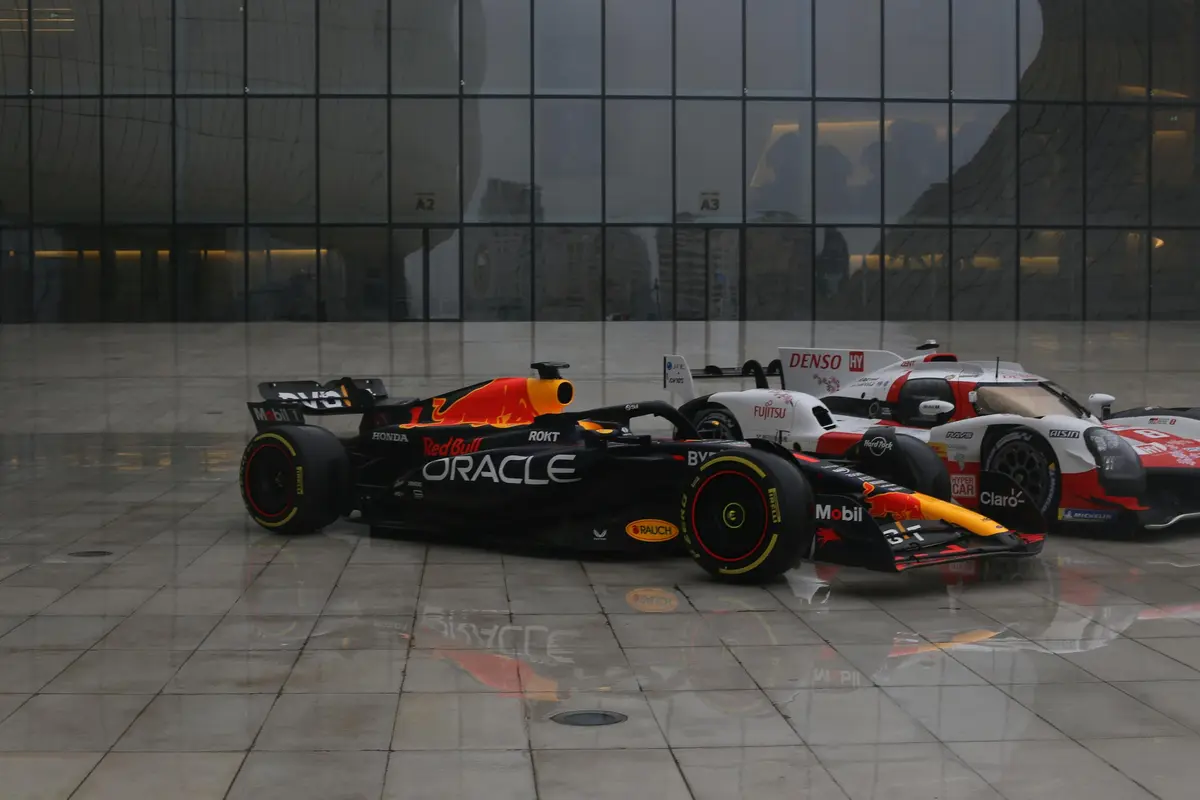
Verstappen 2026 Retirement Talk Sends Shockwaves Through Red Bull
Four-time Formula 1 World Champion Max Verstappen has sent a clear and startling message to the paddock: he is genuinely considering retirement at the end of the 2026 season. Speaking to the sport's media, Verstappen made no attempt to dismiss the speculation, instead confirming that the new 2026 technical regulations are central to his thinking. For Red Bull Racing, a team that has built its entire recent identity around Verstappen's dominance, this is not just a headline — it is a full-blown strategic crisis that could redefine the Milton Keynes outfit's medium-term future in the sport.
Detailed Analysis: Why the 2026 Regulations Are Driving Verstappen Away
To understand the gravity of Verstappen's Verstappen 2026 retirement comments, one must first appreciate the scale of the regulatory change Formula 1 has undertaken this season. The 2026 rules represent arguably the most sweeping overhaul in the sport's modern era, combining a radical new power unit specification — one that shifts to a roughly 50/50 split between internal combustion and electrical energy — with a completely redesigned aerodynamic philosophy centred around Active Aero systems.
Active Aero refers to movable bodywork components, such as front and rear wing elements, that automatically adjust their angle and configuration depending on whether the car needs maximum downforce in corners or minimum drag on straights. The intention is to eliminate the need for a traditional Drag Reduction System (DRS) and create more dynamic, varied racing. However, Verstappen has long been known for his preference for a car that behaves predictably and mechanically — a philosophy that led to Red Bull's ground-effect masterpiece of 2022-2024. The more electronic, software-dependent nature of the 2026 cars appears to be fundamentally at odds with his driving instincts.
Furthermore, the 2026 power unit regulations have introduced what engineers refer to as a Boost Button — a driver-deployable system that allows a short burst of additional electrical power at the driver's discretion during a lap. While this adds a strategic element to overtaking, it also places far greater emphasis on energy management and software optimisation, areas that arguably dilute the raw, mechanical talent that has defined Verstappen's career. For a driver who famously drove his 2022 championship with imperious car control, a formula built more on algorithm than instinct is an uncomfortable proposition.
Red Bull's position is further complicated by their ongoing transition following the departure of Adrian Newey, whose genius underpinned the aerodynamic concepts Verstappen thrived in. Without Newey, and facing a drastically altered technical landscape, Red Bull must prove they can build a 2026-spec car that plays to Verstappen's strengths. If they cannot, the Verstappen 2026 retirement threat becomes significantly more credible — and more imminent.
Context: How This Fits the 2026 Season Narrative
The 2026 Formula 1 season has arrived with a sense of genuine uncertainty not seen since the sport's last major reset in 2022. Every team is operating on a steep learning curve, and the championship fight is inherently more open than in recent years. For Red Bull Racing, that uncertainty is magnified by the fact that their primary asset — Verstappen himself — is publicly questioning his appetite to continue. Isack Hadjar, Verstappen's young teammate, represents the team's future-proofing effort, but no junior talent can replace the commercial, competitive, and psychological weight that a four-time champion brings to a constructor. The Verstappen 2026 retirement scenario, if it materialises, would force Red Bull into a high-stakes driver market scramble at a time when the team desperately needs stability on and off the track. Rival teams, from Ferrari with Lewis Hamilton to McLaren's formidable Norris-Piastri pairing, will be watching events at Red Bull very closely.
Key Takeaways
- Max Verstappen has publicly confirmed he is genuinely considering retirement at the end of 2026, citing the new technical regulations as the primary driver of his uncertainty.
- The 2026 regulations — featuring Active Aero, new power unit architecture, and a driver-deployable Boost Button — represent a fundamental shift away from the mechanical, high-downforce formula Verstappen has mastered.
- Red Bull Racing faces compounding challenges: the post-Newey aerodynamic transition, a radically new car concept, and now the very real prospect of losing the driver who has defined their era.
- The broader 2026 championship picture is already more competitive and open than any season in recent memory, meaning Red Bull cannot afford further internal disruption.
Frequently Asked Questions
Why is Max Verstappen considering retirement at the end of 2026?
According to Verstappen himself, speaking to Formula 1 media, his consideration of retirement at the end of the 2026 season is directly linked to his view of the new 2026 technical regulations. The heavy emphasis on Active Aero, electrical power deployment, and software-driven performance appears misaligned with the driving style and car philosophy he has thrived under throughout his championship-winning years at Red Bull.
How would a Verstappen retirement impact Red Bull Racing's future?
A Red Bull Racing exit for Verstappen would be a seismic event for the team. Verstappen is not only their lead driver but also their primary marketing asset, the anchor of their sponsorship portfolio, and the benchmark around which the entire car is developed. Replacing him — particularly during a complex regulatory transition period — would require an immediate, aggressive move in an increasingly competitive driver market, with no guarantee of a comparable replacement being available.
What are the 2026 F1 regulations that Verstappen objects to?
The 2026 Formula 1 regulations introduced a substantially revised power unit with a near-equal split between internal combustion and electrical energy output, alongside a new Active Aero concept that replaces traditional DRS with automatically adjusting bodywork. A driver-controlled Boost Button for short bursts of extra electrical power has also been introduced. These changes place greater emphasis on energy management, software optimisation, and electronic systems — a stark contrast to the high-downforce, mechanically focused era that defined Verstappen's four world titles.
Conclusion: Red Bull's Next Move Is Critical
The clock is now ticking for Red Bull Racing. Max Verstappen's candid comments about potentially walking away from Formula 1 at the end of 2026 are not the words of a driver playing contract games — they are the words of a champion genuinely wrestling with whether the sport's new direction aligns with his identity as a racing driver. Red Bull must demonstrate, both through their 2026 car's performance trajectory and through their internal dialogue with Verstappen, that they can build a machine he wants to drive. How the team responds to this challenge over the coming months may well define the next chapter — or the ending — of the most dominant driver partnership in recent Formula 1 history.