Max Verstappen Mercedes Move: Red Bull's Future at Stake
Jolyon Palmer warns that Max Verstappen Mercedes move talks could reignite in 2026, putting Red Bull Racing's dynasty under serious threat.
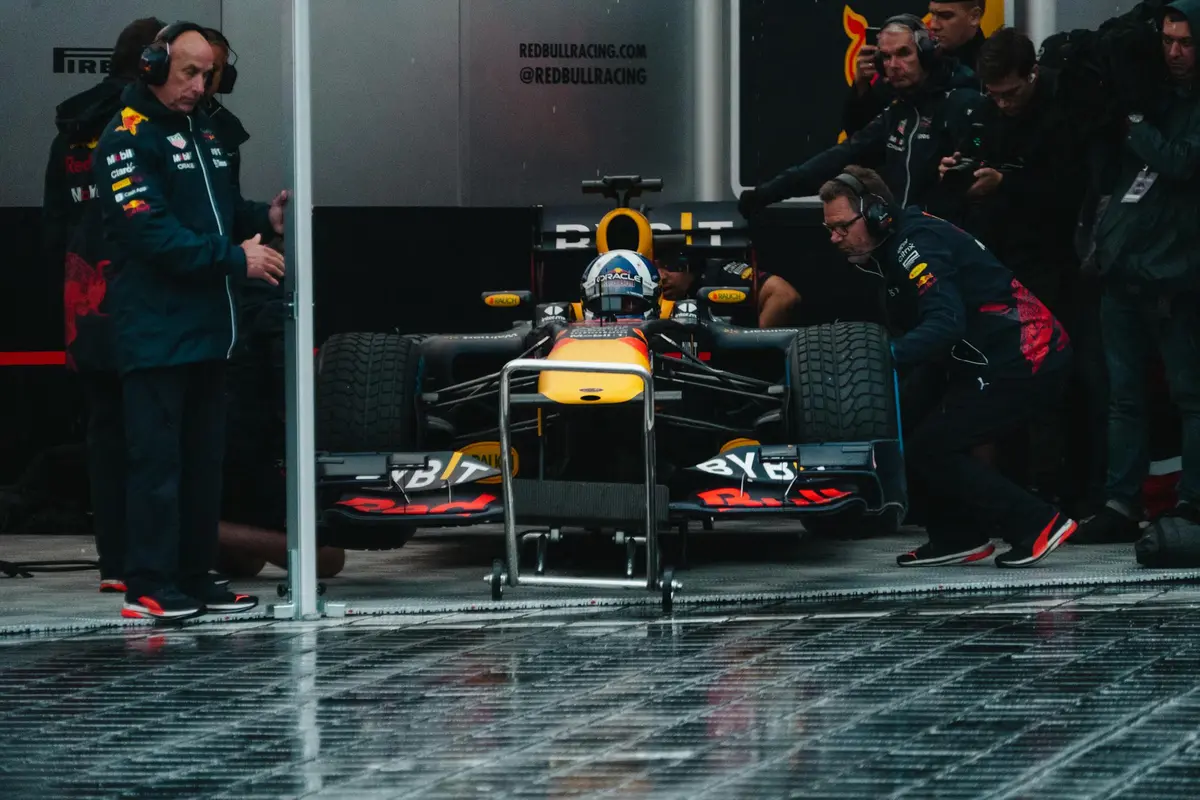
Max Verstappen Mercedes Move Back in Focus as Palmer Issues Warning
The 2026 Formula 1 season is still finding its rhythm, but off-track storylines are already threatening to overshadow the racing itself. Former F1 driver and pundit Jolyon Palmer has predicted that Max Verstappen Mercedes move talks could reignite, reviving one of the most explosive transfer sagas in recent memory. Palmer believes Verstappen may re-enter serious negotiations with the Silver Arrows — a development that would send shockwaves through the paddock and fundamentally reshape the competitive landscape. For Red Bull Racing, the implications could not be more significant. The team built its modern dynasty around Verstappen, and the prospect of losing him remains their greatest existential threat.
Detailed Analysis: Why This Rumour Has Renewed Traction
To understand why Palmer's prediction carries weight, it is essential to revisit the context. Rumours of a Verstappen-Mercedes union were red-hot in 2025, fuelled by reports of Verstappen's dissatisfaction at Red Bull and Mercedes' need for a generational talent following the departures that reshaped the grid. That union never materialised, but the underlying tensions that drove those rumours have not simply evaporated.
In 2026, the Formula 1 grid has been completely restructured. The new technical regulations — featuring revolutionary hybrid power units, Active Aero systems (where aerodynamic surfaces adjust dynamically to optimise drag and downforce in real-time), and the reintroduction of significant ground-effect philosophy — have levelled the competitive field in ways not seen since 2022. Red Bull's dominance is no longer guaranteed. If the RB26 underperforms relative to expectations in the early part of this season, Verstappen's contractual patience may once again be tested.
Palmer's insight is particularly relevant because he understands the internal culture of F1 teams. Verstappen is not merely a driver — he is the centrepiece of Red Bull's entire commercial and technical identity. His simulator work, his feedback loops with the engineering team, and his influence on car development are irreplaceable. Losing him mid-contract cycle, or even facing the distraction of renewed transfer speculation, would destabilise Red Bull's 2026 championship campaign precisely when maximum focus is required.
For Mercedes, the calculus is equally compelling. George Russell has proven himself a capable front-runner, and rookie Andrea Kimi Antonelli brings extraordinary promise. However, Mercedes has historically pursued the very best talent available. If team principal Toto Wolff believes a window exists to secure Verstappen, history suggests he will push it open. The Max Verstappen Mercedes move narrative is therefore not merely gossip — it is a strategic chess match between two of F1's most powerful entities.
Red Bull's Strategic Dilemma in the 2026 Season
Red Bull Racing enters 2026 in a uniquely vulnerable position. The team retains Verstappen alongside Isack Hadjar, a talented but unproven rookie who cannot yet carry the team's championship burden alone. The new power unit regulations have disrupted every team's development roadmap, and Red Bull's partnership with Ford — under the new Red Bull Powertrains banner — is still maturing. A Max Verstappen Mercedes move, even if purely speculative at this stage, introduces a layer of uncertainty that no constructor wants when adapting to an entirely new technical era.
The 2026 regulations also introduced the Boost Button concept — a manual driver-activated hybrid deployment override that delivers a short burst of additional power — which rewards drivers with elite racecraft and instinctive energy management. Verstappen's mastery of such systems is one of his defining competitive advantages. Any team that secures him gains not just speed, but an extraordinarily intelligent technical collaborator.
Furthermore, Red Bull must now also consider the psychological dimension. If Verstappen senses that internal momentum is shifting — whether in terms of car competitiveness, political stability within the organisation, or long-term project confidence — history shows he is willing to explore his options. The departure of key figures in Red Bull's technical structure in recent years has already raised questions about institutional continuity.
Context: How This Fits the 2026 Narrative
The 2026 season represents a genuine reset for Formula 1. With Cadillac now on the grid featuring Sergio Perez and Valtteri Bottas, and Audi entering with Nico Hulkenberg and Gabriel Bortoleto, the competitive field is broader than it has been in over a decade. Ferrari's combination of Charles Leclerc and Lewis Hamilton presents perhaps the most formidable driver pairing in the sport. Against this backdrop, Red Bull cannot afford internal instability.
Jolyon Palmer's prediction serves as a timely reminder that the Max Verstappen Mercedes move saga was never truly resolved — it was merely deferred. As the 2026 season develops, the results on track will either silence this speculation or amplify it dramatically. Red Bull's early-season performance will be the single most important factor in determining whether these talks remain hypothetical or become very real, very quickly.
Key Takeaways
- Jolyon Palmer predicts Max Verstappen could re-enter transfer talks with Mercedes in 2026, reviving a saga that dominated headlines in 2025.
- Red Bull Racing faces a uniquely vulnerable period, adapting to new 2026 regulations with an unproven second driver in Isack Hadjar.
- Mercedes, with George Russell and rookie Andrea Kimi Antonelli, still has the resources and ambition to pursue elite talent if an opportunity arises.
- Red Bull's early 2026 on-track performance will be the critical variable determining whether Verstappen speculation escalates into genuine negotiation.
Frequently Asked Questions
Could Red Bull Racing replace Max Verstappen if he leaves for Mercedes in 2026?
Replacing Verstappen would be Red Bull Racing's most significant challenge in years. Isack Hadjar is a promising talent, but the team would likely need to pursue a marquee signing to maintain championship competitiveness. Options on the current grid are limited, making retention their clear priority.
How would a Max Verstappen exit impact Red Bull's 2026 constructors' championship bid?
The impact would be severe. Verstappen's contributions extend beyond race results — his technical feedback, simulator hours, and development insight are deeply embedded in Red Bull's engineering process. Losing him during the critical early phase of the 2026 regulatory era could set the team back by a full season or more in car development.
What contract situation is Max Verstappen currently in with Red Bull Racing?
Verstappen holds a long-term contract with Red Bull Racing, but high-profile contracts in Formula 1 have historically contained performance-related release clauses. The precise terms of his current deal have not been publicly confirmed, meaning the possibility of a negotiated exit cannot be entirely ruled out if both parties were motivated to explore it.
Conclusion: The Clock Is Ticking for Red Bull
The 2026 Formula 1 season is still in its infancy, but the pressure on Red Bull Racing is already mounting. Jolyon Palmer's warning about renewed Max Verstappen Mercedes move talks is not sensationalism — it is a grounded assessment from someone who understands how these decisions evolve. For Red Bull, the best and perhaps only answer to this speculation is performance. A competitive, reliable RB26 that puts Verstappen in championship contention will quiet the rumours far more effectively than any contract clause. The next race weekends are not just about points — they are about preserving the foundation of Red Bull's future.