Verstappen's Formula E Hate: What It Means for F1 2026
Toto Wolff hopes Verstappen won't quit F1 after the Dutchman branded 2026 cars 'Formula E on Steroids' — a remark with major implications for the season.
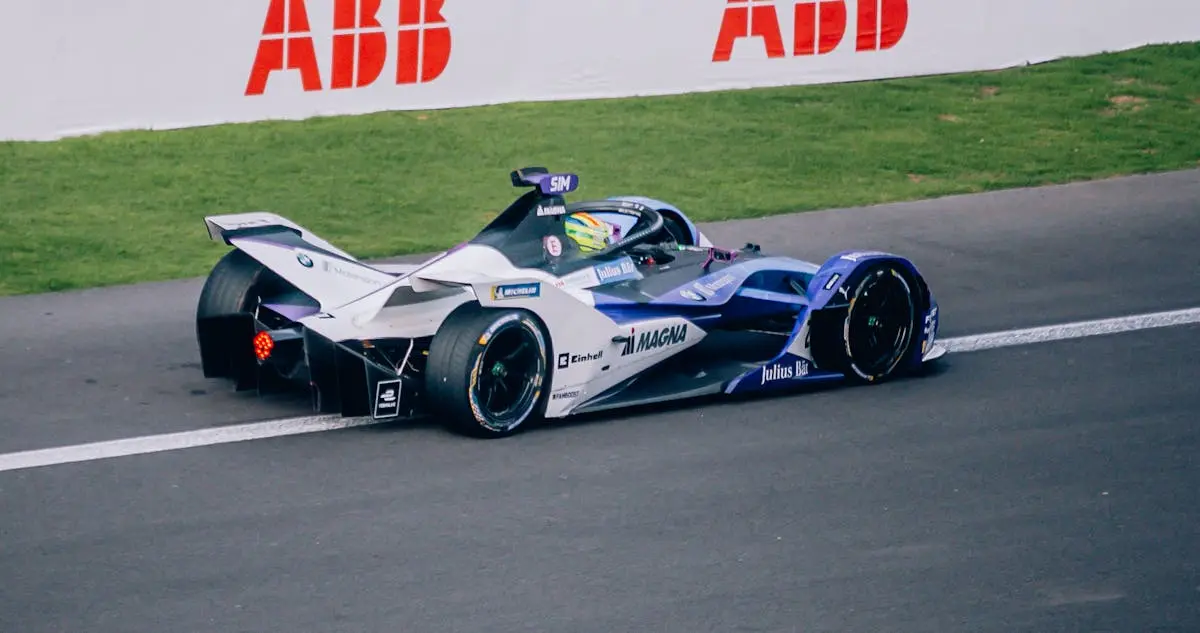
Introduction: Wolff Breaks Silence on Verstappen's F1 2026 Future
In one of the most candid admissions of the 2026 Formula 1 season, Mercedes team principal Toto Wolff has publicly stated his hope that Max Verstappen will not walk away from Formula 1 — and the reason behind his concern is striking. Verstappen, the three-time World Champion, has reportedly made no secret of his disdain for the new 2026 F1 regulations, likening the experience to what he calls 'Formula E on Steroids'. That phrase, cutting and specific, speaks volumes about the Dutchman's frustration with a regulatory era that has fundamentally altered the DNA of a Formula 1 car. Wolff's comments confirm that the threat of Verstappen's departure is being taken seriously at the highest levels of the sport.
Detailed Analysis: Unpacking the 'Formula E on Steroids' Criticism
When Max Verstappen describes the 2026 Formula 1 cars as 'Formula E on Steroids', he is not simply venting frustration. The comment is a precise technical critique that deserves careful unpacking. The 2026 F1 regulations introduced radically simplified aerodynamic packages, smaller dimensions, and — critically — a new hybrid power unit framework that dramatically increases the electrical power contribution relative to the internal combustion engine. The ratio of electrical deployment to ICE output has shifted so significantly that some engineers estimate electrical power now accounts for nearly 50% of total power delivery in certain phases of a lap.
This is, structurally, not entirely dissimilar to what Formula E has been doing for over a decade. Formula E's Gen3 Evo cars — the current machinery in Season 12 of the championship — produce 350kW (470hp equivalent) from a fully electric powertrain, with Active All-Wheel Drive available during qualifying, race starts, and Attack Mode. The Gen4 car, arriving next season, will push those boundaries even further. Verstappen's critique suggests he feels the 2026 F1 cars have crossed a philosophical line — that the raw, combustion-forward character he fell in love with has been diluted beyond recognition.
For Toto Wolff to publicly acknowledge this frustration and express hope that Verstappen won't quit is significant. It implies that internal conversations — whether between Verstappen and Red Bull, or more broadly across the paddock — have reached a level of seriousness that warrants public comment. Wolff, a master of paddock politics, rarely speaks without purpose. His words function simultaneously as a message to Verstappen (you are valued, don't leave the sport) and to the FIA and commercial rights holder (the regulations are alienating the sport's biggest star).
There is also a competitive dimension. Verstappen remains the benchmark against which every team measures itself. His potential absence from Formula 1 would reshape the entire 2026 championship picture, deflate television audiences, and weaken the sport's global narrative at a moment when it is trying to expand into new markets. The stakes of losing him are enormous — and Wolff knows it.
Context: Formula E's Shadow Over the 2026 F1 Season
The fact that Formula E is now being invoked as a reference point — even a negative one — inside Formula 1 conversations is itself a landmark moment. For years, Formula E was dismissed by F1 purists as a secondary series. Now, its technical philosophy has become so influential that it shapes how drivers perceive the pinnacle of motorsport itself.
Formula E's Season 12 is currently underway, with the Jaguar TCS Racing pair of Antonio Felix da Costa and Mitch Evans, and Porsche's Pascal Wehrlein and Nico Muller among the championship contenders. The series has built genuine credibility through street circuits, close racing, and aggressive energy management — and its fingerprints are now all over F1's 2026 ruleset. Whether that is a compliment or a crisis depends entirely on which side of the pitlane you stand.
For Verstappen, a driver defined by mechanical feel, high-speed cornering mastery, and an aggressive relationship with the throttle, a more electrically governed car represents a genuine identity conflict. The 2026 F1 season is still in its early stages, and how teams adapt — and whether drivers like Verstappen find renewed appreciation for the new formula — will define the entire narrative arc of the year.
Key Takeaways
- Wolff publicly hopes Verstappen will not leave F1, confirming the threat is real and being discussed seriously within the paddock.
- Verstappen's 'Formula E on Steroids' remark is a pointed technical critique of the 2026 F1 regulations' increased electrical power dependency — not merely an emotional outburst.
- Formula E's Gen3 Evo philosophy — 350kW fully electric power, Active AWD, Attack Mode — now directly influences how the F1 paddock characterises the 2026 ruleset, marking a significant shift in the sport's cultural dynamic.
- The commercial and competitive consequences of a Verstappen F1 exit would be seismic, making Wolff's intervention as much a business statement as a personal one.
Frequently Asked Questions
Why does Max Verstappen compare 2026 Formula 1 to Formula E on Steroids?
Verstappen's comparison stems from the 2026 F1 regulations' heavy reliance on electrical power delivery, which reduces the traditional dominance of the internal combustion engine. Much like Formula E — where the Gen3 Evo car delivers all 350kW electrically — the new F1 hybrid framework shifts the driving experience away from the combustion-forward character Verstappen has thrived in throughout his career.
How does Formula E's Active AWD system differ from what 2026 F1 cars use?
Formula E's Active All-Wheel Drive system deploys front-axle electrical power during qualifying laps, race starts, and Attack Mode activations — a defined, rule-governed burst of additional traction and performance. The 2026 F1 hybrid system operates on a different architecture but shares the philosophical direction of making electrical deployment a primary performance lever, which is the core of Verstappen's frustration.
Could Verstappen's dissatisfaction with Formula E-style regulations lead him to leave Formula 1?
While no formal retirement announcement has been made, Toto Wolff's public comments suggest the possibility is being taken seriously in the paddock. Verstappen has a history of speaking bluntly about his preferences, and if the 2026 F1 driving experience continues to conflict with his instincts, the sport cannot take his long-term commitment for granted. His next contract decision will be one of the most closely watched stories of the season.
Conclusion: A Defining Moment for F1's 2026 Identity
The 2026 Formula 1 season is still in its formative weeks, and already its defining tension has emerged: can the sport's greatest current talent find his place within a regulatory framework he instinctively rejects? Toto Wolff's intervention brings that question into sharp public focus. For Formula E, the irony is notable — a series once dismissed is now central to Formula 1's identity debate. As both championships evolve through 2026, the philosophical conversation Verstappen has sparked may prove just as consequential as any lap time. The paddock, and the sport's governing bodies, will be watching his next move very closely indeed.
In this article