Japanese Grand Prix 2026: Suzuka Technical Deep Dive
Explore the technical complexity of the Japanese Grand Prix 2026 at Suzuka, featuring 2026 power units, Active Aero, and the latest F1 grid analysis.
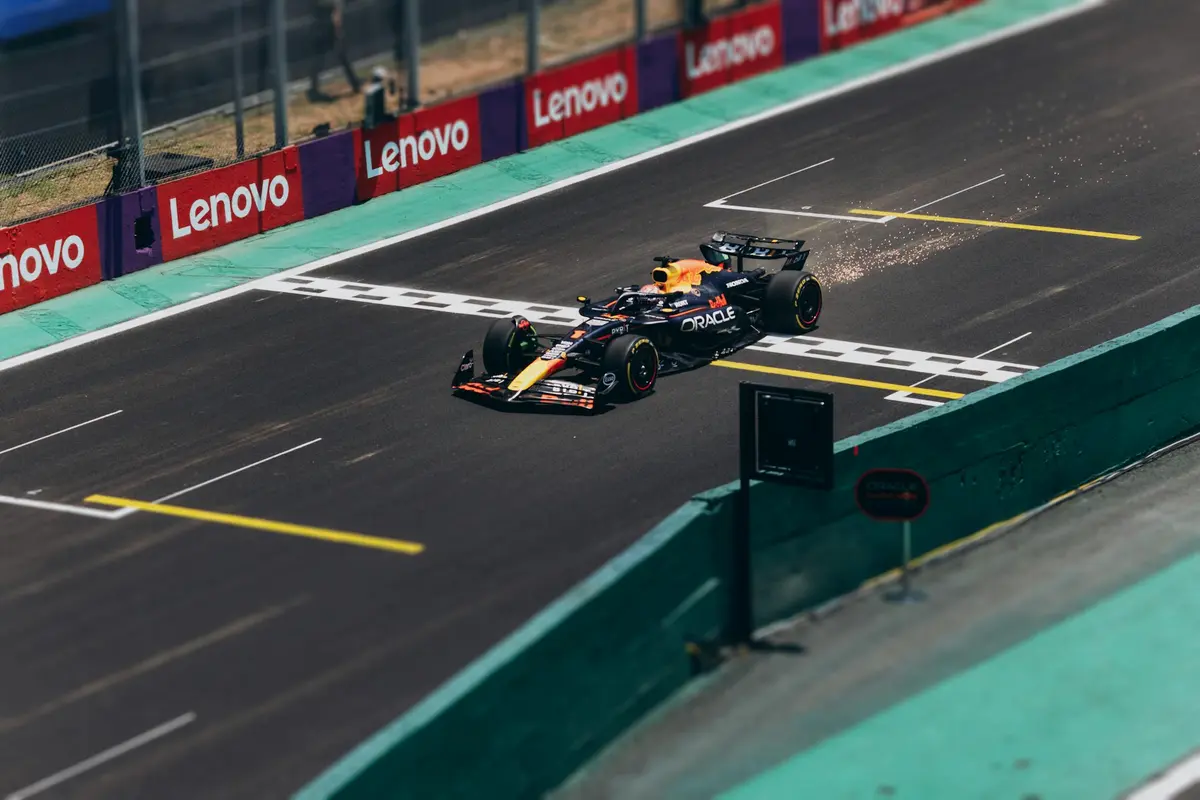
Introduction to the Japanese Grand Prix 2026
As the Formula 1 circus descends upon the Mie Prefecture, the Japanese Grand Prix 2026 stands as a monumental fixture in a season defined by radical transformation. Today, Sunday, March 29, 2026, we look toward Suzuka—a circuit that F1Technical’s senior writer Balazs Szabo rightly identifies as carrying immense numerical weight and historical depth. In the context of the 2026 regulations, Suzuka is no longer just a driver’s favorite; it is the ultimate laboratory for the new era of power units and active aerodynamics. With the championship battle beginning to take shape, the technical complexity of this figure-eight layout provides the sternest test yet for the 2026 grid.
Technical Analysis: Suzuka’s Numerical Weight in 2026
The Japanese Grand Prix 2026 represents a unique challenge due to the high-speed nature of the First Sector and the technical precision required through the Spoon Curve and 130R. Under the 2026 technical regulations, cars now feature Active Aero—a system that adjusts wing angles in real-time to balance drag and downforce—which will be under constant flux through the Esses. Engineers are particularly focused on the 50/50 power split between the Internal Combustion Engine (ICE) and the Battery. Suzuka’s long run from 130R to the Casio Triangle is a prime zone for the Manual Override, a driver-activated power boost from the ERS-K designed to aid overtaking in the absence of traditional DRS.
The "numerical weight" Szabo refers to isn't just historical; it’s data-driven. The energy recovery demands at Suzuka are grueling. With fewer heavy braking zones compared to a street circuit, teams like McLaren and Ferrari are finding that harvesting enough energy to deploy the Boost Button (the interface for maximum ERS output) requires a delicate balance of chassis-to-power-unit integration. The high-speed lateral loads also test the 2026-spec narrower tires, forcing Pirelli to bring their hardest compounds to withstand the abrasive surface of this legendary track.
The Impact of Active Aero at the Esses
In the 2026 season, the implementation of Active Aero has changed how drivers approach the iconic Esses. Previously, a high-downforce setup was a static compromise. Now, the Japanese Grand Prix 2026 sees cars shedding drag on the short chutes between corners and snapping back to high-downforce mode the moment the steering angle increases. This transition must be seamless; any lag in the aero-mapping could result in a catastrophic loss of grip at 250km/h, making the technical complexity of the 2026 machinery the primary talking point in the paddock.
The 2026 Narrative: A New Order at Suzuka
The context of the Japanese Grand Prix 2026 is further enriched by the shifting dynamics of the grid. We are seeing the first real clash between the established giants and the new powerhouses. Ferrari, led by the veteran pairing of Charles Leclerc and Lewis Hamilton, faces a stiff challenge from the Adrian Newey-designed Aston Martin of Fernando Alonso. Meanwhile, the entry of Audi and Cadillac has added a new layer of strategic depth to the midfield. Audi, with Nico Hülkenberg and Gabriel Bortoleto, has shown impressive straight-line efficiency, which could be a decisive factor during the run up to the finish line.
Red Bull, now fielding Max Verstappen alongside the rising star Isack Hadjar, remains the benchmark for aerodynamic efficiency, but the 2026 power unit parity has closed the gap. The narrative at Suzuka is no longer just about who has the best car, but who has mastered the energy management software. As we move deeper into the season, the results at the Japanese Grand Prix 2026 will likely dictate the development path for the European leg of the championship.
Key Takeaways from Suzuka
- Energy Management: The 50/50 power split in 2026 makes energy harvesting at Suzuka more critical than ever, with limited heavy braking zones.
- Aero Transitions: The 2026 Active Aero systems face their toughest test in the high-speed directional changes of Sector 1.
- New Entrants: Audi and Cadillac are looking to leverage their unique power unit architectures on a track that rewards efficiency.
- Driver Skill: The Manual Override mode introduces a new tactical element to overtaking at the Casio Triangle and into Turn 1.
Frequently Asked Questions
How has the F1 2026 regulation change impacted performance at Suzuka?
The F1 2026 regulations have introduced Active Aero and a 50/50 power split between electric and internal combustion. At Suzuka, this means cars are faster on the straights due to reduced drag but require more precise energy management to ensure the battery isn't depleted before the end of the lap.
Which teams are leading the F1 2026 constructors' standings heading into Japan?
While the season is still evolving, the F1 2026 standings are currently a tight battle between McLaren, Ferrari, and Red Bull, with Aston Martin emerging as a serious threat thanks to their technical partnership with Adrian Newey and Honda.
How does the F1 2026 Manual Override mode function on Suzuka's long straights?
The Manual Override in F1 2026 allows a trailing driver to access additional electrical deployment once they reach a certain speed, providing a power boost to facilitate overtaking on straights like the run to 130R, replacing the previous DRS system.
Conclusion
The Japanese Grand Prix 2026 is more than just another race on the calendar; it is a testament to the enduring legacy of Suzuka and the cutting-edge future of Formula 1. As Balazs Szabo noted, the technical complexity here is unparalleled. Whether it is the mastery of the new power units or the tactical use of the Manual Override, the winner at Suzuka will have proven they are the masters of the 2026 era. As we look ahead to the race, all eyes remain on the telemetry, where the true story of this championship will be written in the data of the world's most demanding circuit.